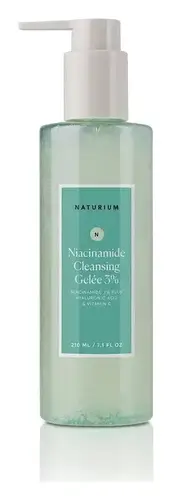
What's inside
What's inside
 Key Ingredients
Benefits
Concerns
Ingredients Side-by-side
Caprylyl/Capryl Glucoside
CleansingGlycerin
Humectant


Decyl Glucoside
Cleansing
Ascorbic Acid
Antioxidant





Retinol
Skin Conditioning




Kojic Acid
Antioxidant
Collagen
Moisturising
Hyaluronic Acid
Humectant
Curcuma Longa Root Powder
Skin ConditioningSodium Chloride
MaskingWater
Skin ConditioningButyrospermum Parkii Butter
Skin Conditioning


Tocopherol
Antioxidant

Olea Europaea Fruit Oil
Masking

Parfum
Masking

CI 19140
Cosmetic ColorantCI 16035
Cosmetic ColorantGlycerin
Humectant
Water
Skin ConditioningPropylene Glycol
Humectant
Sodium Palmitate
CleansingSodium Stearate
CleansingPotassium Laurate
EmulsifyingSodium Laurate
CleansingCoco-Betaine
Cleansing
Disodium Laureth Sulfosuccinate
CleansingSucrose
Humectant
Sorbitol
Humectant
Decyl Glucoside
Cleansing
Niacinamide
Smoothing

Chlorella Vulgaris Powder
Skin ConditioningMelaleuca Alternifolia Leaf Oil
Antioxidant
Melaleuca Alternifolia Leaf Extract
Perfuming
Stearic Acid
Cleansing
Citric Acid
Buffering
Salicylic Acid
Masking


Hordeum Vulgare Leaf Powder
HumectantHouttuynia Cordata Extract
Skin Conditioning
Glycyrrhiza Uralensis Root Extract
Skin Conditioning
Leontopodium Alpinum Extract
Skin ConditioningOlea Europaea Fruit Oil
Masking
Argania Spinosa Kernel Oil
Emollient
Camellia Sinensis Seed Oil
Humectant
Adansonia Digitata Seed Extract
Skin ConditioningCentella Asiatica Extract
Cleansing
Lactobionic Acid
Buffering
Hydrolyzed Potato Protein
Skin ConditioningHydrolyzed Wheat Protein
Skin ConditioningHydrolyzed Rice Protein
Skin ConditioningHydrolyzed Oat Protein
Skin ConditioningDisodium EDTA
Limonene
Perfuming

Glycerin, Water, Propylene Glycol, Sodium Palmitate, Sodium Stearate, Potassium Laurate, Sodium Laurate, Coco-Betaine, Disodium Laureth Sulfosuccinate, Sucrose, Sorbitol, Decyl Glucoside, Niacinamide, Chlorella Vulgaris Powder, Melaleuca Alternifolia Leaf Oil, Melaleuca Alternifolia Leaf Extract, Stearic Acid, Citric Acid, Salicylic Acid, Hordeum Vulgare Leaf Powder, Houttuynia Cordata Extract, Glycyrrhiza Uralensis Root Extract, Leontopodium Alpinum Extract, Olea Europaea Fruit Oil, Argania Spinosa Kernel Oil, Camellia Sinensis Seed Oil, Adansonia Digitata Seed Extract, Centella Asiatica Extract, Lactobionic Acid, Hydrolyzed Potato Protein, Hydrolyzed Wheat Protein, Hydrolyzed Rice Protein, Hydrolyzed Oat Protein, Disodium EDTA, Limonene
Ingredients Explained
These ingredients are found in both products.
Ingredients higher up in an ingredient list are typically present in a larger amount.
Decyl Glucoside is a plant-derived surfactant and emulsion stabilizer. It is created by reacting glucose with the fatty acids from plants.
Like all surfactants, it works by lowering the surface tension between water and oil. This makes it so that dirt, sebum, and makeup can be lifted off your skin and rinsed away. It also produces a dense and creamy foam.
Because it has a neutral charge, it is compatible with a wide range of ingredients and stays stable across a broad pH range/water hardiness conditions.
Patch testing has shown it to have the lowest irritation potential among common cleansing surfactants (like SLS).
Typical use levels range from 5-20% in rinse-off cleansers.
One thing worth knowing: The American Contact Dermatitis Society named the parent family, alkyl glucosides, "Allergen of the Year" in 2017. The prevalence of allergy is pretty low but be sure to patch test if you've reacted to "gentle" or sulfate-free cleansers before.
This ingredient is fungal acne safe because the fatty alcohol portion of this ingredient is not within the C11-24 chain length that Malassezia can metabolize.
Learn more about Decyl GlucosideGlycerin (or glycerol) is a compound naturally found in your skin. It's a powerhouse humectant that pulls water into the stratum corneum.
Topically, glycerin does several things at once:
Your skin makes glycerin on its own (mostly from sebaceous oil breakdown) and shuttles it to your outermost layer of skin, or your epidermis, via aquaporin-3.
Aquaporin-3 is a transporter that is essential for normal skin hydration, elasticity, and repair. Interestingly, mice lacking in AQP3 have dry and less elastic skin that can be fully corrected with glycerin.
This ingredient is non-irritating, plays well with almost every ingredient, and works across all skin types. Typical use is anywhere between 3-10% but can go up to 79% in some leave-on products.
Just know very high concentrations (>40%) can feel tacky in low humidity.
Glycerin is the name for this ingredient in American English. British English uses Glycerol/Glycerine.
Learn more about GlycerinThis ingredient is also known as olive oil. It has been used in skincare for centuries and science largely backs up its reputation as a nourishing emollient.
The main components of olive oil are oleic acid (55-83%), linoleic acid (3.5-20%), and palmitic acid (7-20%). Oleic acid promotes skin regeneration and helps regulate inflammatory responses.
Squalene is also naturally present in olive oil and exhibits moisturizing and antioxidant properties.
The polyphenols in olive oil also show anti-aging promise; one clinical study found a measurable improvement in skin appearance after 30 days of topical serum use.
Just be aware that applying olive oil directly to skin can weaken the barrier and cause redness. One study with volunteers found even people without sensitive skin experienced a significant reduction in stratum corneum integrity and induced mild erythema.
It's best to use this ingredient as part of a carefully crafted formula (instead of putting it on skin directly from the bottle).
Because it has a 2-3 on the comedogenic scale, it is a moderate risk for acne-prone skin. However, the overall formulation of a product matters more than a few ingredients with comedogenic ratings.
This ingredient may not be fungal acne safe because of the oleic and palmitic acid content. These fall within the C11-24 fatty acid range that the Malassezia yeast can metabolize to grow.
Overall, olive oil is a well-studied and nourishing skincare ingredient.
Learn more about Olea Europaea Fruit OilWater. It's the most common cosmetic ingredient of all. You'll usually see it at the top of ingredient lists, meaning that it makes up the largest part of the product.
So why is it so popular? Water most often acts as a solvent - this means that it helps dissolve other ingredients into the formulation.
You'll also recognize water as that liquid we all need to stay alive. If you see this, drink a glass of water. Remember to stay hydrated!
Learn more about Water