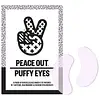
This brightening eye mask is formulated around Niacinamide and Tranexamic Acid to fade the look of dark spots and brighten dull-looking skin.
This anti-aging eye mask is formulated around Niacinamide and Caffeine to soften the look of wrinkles and fade the look of dark spots.

What's inside
What's inside
 Key Ingredients
Benefits
Concerns
No concerns
Ingredients Side-by-side
Water
Skin ConditioningGlycerin
Humectant


Dipropylene Glycol
HumectantPolyacrylic Acid
Emulsion StabilisingAgar
MaskingNiacinamide
Smoothing









Sodium Polyacrylate
Absorbent
Tranexamic Acid
Astringent
Kojic Acid
Antioxidant

Arbutin
Antioxidant
Alpha-Arbutin
Antioxidant
Caffeine
Skin Conditioning
Dipotassium Glycyrrhizate
Humectant
Glutathione
Adenosine
Skin Conditioning
Hydroxyacetophenone
Antioxidant
Caprylyl Glycol
Emollient
Cellulose Gum
Emulsion StabilisingXanthan Gum
EmulsifyingDisodium EDTA
ChelatingTartaric Acid
Buffering


Aluminum Glycinate
AstringentCetyl Ethylhexanoate
EmollientCaprylyl/Capryl Glucoside
CleansingWater, Glycerin, Dipropylene Glycol, Polyacrylic Acid, Agar, Niacinamide, Sodium Polyacrylate, Tranexamic Acid, Kojic Acid, Arbutin, Alpha-Arbutin, Caffeine, Dipotassium Glycyrrhizate, Glutathione, Adenosine, Hydroxyacetophenone, Caprylyl Glycol, Cellulose Gum, Xanthan Gum, Disodium EDTA, Tartaric Acid, Aluminum Glycinate, Cetyl Ethylhexanoate, Caprylyl/Capryl Glucoside
Water
Skin ConditioningButylene Glycol
Humectant
Glycerin
Humectant
Niacinamide
Smoothing
Sodium Hyaluronate
Humectant
Caffeine
Skin Conditioning
Kojic Acid
Antioxidant
Acetyl Hexapeptide-8
Humectant
Palmitoyl Tetrapeptide-7
Skin Conditioning
Palmitoyl Tripeptide-1
Skin Conditioning
Hydroxyacetophenone
Antioxidant
Ascorbic Acid
Antioxidant
Arginine
Masking
Rosa Canina Fruit Oil
Emollient

Gardenia Taitensis Flower Extract
Skin ConditioningBetaine
Humectant
Polyglyceryl-10 Laurate
Skin Conditioning
Panthenol
Skin Conditioning
Carbomer
Emulsion StabilisingXanthan Gum
EmulsifyingAminobutyric Acid
Passiflora Edulis Fruit Extract
Skin ConditioningEthyl Hexanediol
SolventCaprylic/Capric Triglyceride
Masking
Hydrogenated Lecithin
Emulsifying
Polyglyceryl-10 Diisostearate
Emulsifying
Sodium Lactate
Buffering
Ethylhexylglycerin
Skin ConditioningMenadione
MaskingTocopheryl Acetate
Antioxidant
Polysorbate 20
Emulsifying
Caprylyl Glycol
Emollient
1,2-Hexanediol
Skin Conditioning
Polyvinyl Alcohol
Water, Butylene Glycol, Glycerin, Niacinamide, Sodium Hyaluronate, Caffeine, Kojic Acid, Acetyl Hexapeptide-8, Palmitoyl Tetrapeptide-7, Palmitoyl Tripeptide-1, Hydroxyacetophenone, Ascorbic Acid, Arginine, Rosa Canina Fruit Oil, Gardenia Taitensis Flower Extract, Betaine, Polyglyceryl-10 Laurate, Panthenol, Carbomer, Xanthan Gum, Aminobutyric Acid, Passiflora Edulis Fruit Extract, Ethyl Hexanediol, Caprylic/Capric Triglyceride, Hydrogenated Lecithin, Polyglyceryl-10 Diisostearate, Sodium Lactate, Ethylhexylglycerin, Menadione, Tocopheryl Acetate, Polysorbate 20, Caprylyl Glycol, 1,2-Hexanediol, Polyvinyl Alcohol
Reviews
Ingredients Explained
These ingredients are found in both products.
Ingredients higher up in an ingredient list are typically present in a larger amount.
Caffeine is a naturally occurring plant compound found in coffee beans, tea leaves, cocoa pods, and guarana.
As an antioxidant, caffeine protects your skin from free radical damage caused by UV exposure and envionrmnetal stressors.
Early research also shows that caffeine can help calm redness, soothe irritated skin, and support hair growth by stimulating microcirculation in the scalp.
You might have seen eye creams marketing caffeine as a depuffing ingredient. This is because it is a vasoconstrictor meaning it can temporarily constrict blood vessels, though clinical evidence for this specific use is still limited.
Most skincare products contain this ingredient at concentrations between 1-6%. It is able to penetrate skin easily regardless of skin type or thickness.
Just so you know, a very small number of case reports describe caffeine-induced allergy. This ingredient is generally well-tolerated, non-irritating, and non-sensitizing for the majority of people.
Learn more about CaffeineCaprylyl Glycol is a humectant, skin conditioner, emollient, and preservative booster derived from either caprylic acid or synthetically created.
Typical use levels vary from 0.3-1% as a preservative booster and go up to 2% to condition skin.
Because it is not a free-fatty acid, this ingredient is fungal acne safe (there's nothing for Malassezia to feed on).
Learn more about Caprylyl GlycolGlycerin (or glycerol) is a compound naturally found in your skin. It's a powerhouse humectant that pulls water into the stratum corneum.
Topically, glycerin does several things at once:
Your skin makes glycerin on its own (mostly from sebaceous oil breakdown) and shuttles it to your outermost layer of skin, or your epidermis, via aquaporin-3.
Aquaporin-3 is a transporter that is essential for normal skin hydration, elasticity, and repair. Interestingly, mice lacking in AQP3 have dry and less elastic skin that can be fully corrected with glycerin.
This ingredient is non-irritating, plays well with almost every ingredient, and works across all skin types. Typical use is anywhere between 3-10% but can go up to 79% in some leave-on products.
Just know very high concentrations (>40%) can feel tacky in low humidity.
Glycerin is the name for this ingredient in American English. British English uses Glycerol/Glycerine.
Learn more about GlycerinHydroxyacetophenone is a small phenolic molecule that earns its place in a formulas as an antioxidant and preservative booster.
As a phenol, it is able to neutralize free radicals to protect both the product and the skin from oxidative stress.
Though it can't kill microbes on its own, it works as a good supporting agent when combined with other preservatives like Phenoxyethanol or 1,2-Hexanediol.
This ingredient naturally occurs as piceol in Norwegian spruce needles (~0.4-1.1% dry weight and in cloudberries). Though the cosmetic-grade material is synthesized for purity and consistency.
You'll usually see it used at low levels and suppliers recommend up to 1% added to a water phase.
Safety testing was done at concentrations like 0.05% in SPF products and 0.5% in a Human Repeated Insult Patch Test. The safety evidence is assuring; this ingredient is safe for cosmetics in current use and also holds safety status as a food flavoring as well.
An honest caveat: the "soothing" and "anti-inflammatory" claims come mostly from supplier marketing rather than published clinical trials. The Cosmetic Ingredient Review's own literature search found no useful efficacy studies on this ingredient.
So the antioxidant and preservative-boosting roles are the well supported ones while the calming benefit is plausible but thinly evidenced.
Overall, this is a well-tolerated, low-irritation multitasker that quietly helps a formula stay fresh and stable.
Learn more about HydroxyacetophenoneKojic Acid is a naturally occurring organic acid that is produced during the fermentation of certain fungi. It is one of the most well-studied brightening ingredients (tyrosinase inhibitors) out there.
That's why you'll see Kojic Acid in products that target dark spots, hyperpigmentation, and general uneven skin tone. It also pairs well with other brightening actives like Alpha Arbutin, Glycolic Acid, and Vitamin C derivatives.
By latching onto the copper that the enzyme tyrosinase needs to function, Kojic Acid prevents less pigment from being made. It's so well-established that researchers regularly use it as the go-to benchmark when testing new brightening ingredients.
Some other perks include documented antioxidant and antimicrobial properties. The The CIR (Cosmetic Ingredient Review) Expert Panel concluded Kojic Acid is safe for use in cosmetic products at concentrations up to 1% and the EU's SCCS (Scientific Committee on Consumer Safety) considers it safe as a skin lightening agent at concentrations up to 0.7%.
One thing to know about Kojic Acid is that stability is its weak spot; it is sensitive to light, heat, and air exposure and will oxidize/turn brown in formulations. Its derivative, Kojic Dipalmitate, was developed as a stable alternative.
Some individuals have reported contact sensitization so be sure to patch test if you have reactive or sensitive skin.
Fun fact: It was first discovered in 1907 and naturally occurs in the production of sake, soy sauce, and miso.
Learn more about Kojic AcidNiacinamide is a multitasking form of vitamin B3 that strengthens the skin barrier, reduces pores and dark spots, regulates oil, and improves signs of aging.
And the best part? It's gentle and well-tolerated by most skin types, including sensitive and reactive skin.
You might have heard of "niacin flush", or the reddening of skin that causes itchiness. Niacinamide has not been found to cause this.
In very rare cases, some individuals may not be able to tolerate niacinamide at all or experience an allergic reaction to it.
If you are experiencing flaking, irritation, and dryness with this ingredient, be sure to double check all your products as this ingredient can be found in all categories of skincare.
When incorporating niacinamide into your routine, look out for concentration amounts. Typically, 5% niacinamide provides benefits such as fading dark spots. However, if you have sensitive skin, it is better to begin with a smaller concentration.
When you apply niacinamide to your skin, your body converts it into nicotinamide adenine dinucleotide (NAD). NAD is an essential coenzyme that is already found in your cells as "fuel" and powers countless biological processes.
In your skin, NAD helps repair cell damage, produce new healthy cells, support collagen production, strengthen the skin barrier, and fight environmental stressors (like UV and pollution).
Our natural NAD levels start to decline with age, leading to slower skin repair, visible aging, and a weaker skin barrier. By providing your skin niacinamide, you're recharging your skin's NAD levels. This leads to stronger, healthier, and younger looking skin.
Another name for vitamin B3 is nicotinamide. This vitamin is water-soluble and our bodies don't store it. We obtain Vitamin B3 from either food or skincare. Meat, fish, wheat, yeast, and leafy greens contain vitamin B3.
The type of niacinamide used in skincare is synthetically created.
Learn more about NiacinamideWater. It's the most common cosmetic ingredient of all. You'll usually see it at the top of ingredient lists, meaning that it makes up the largest part of the product.
So why is it so popular? Water most often acts as a solvent - this means that it helps dissolve other ingredients into the formulation.
You'll also recognize water as that liquid we all need to stay alive. If you see this, drink a glass of water. Remember to stay hydrated!
Learn more about WaterXanthan gum is used as a stabilizer and thickener within cosmetic products. It helps give products a sticky, thick feeling - preventing them from being too runny.
On the technical side of things, xanthan gum is a polysaccharide - a combination consisting of multiple sugar molecules bonded together.
Xanthan gum is a pretty common and great ingredient. It is a natural, non-toxic, non-irritating ingredient that is also commonly used in food products.
Learn more about Xanthan Gum

