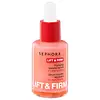
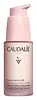
Sephora Collection Lift & Firm Plumping Booster Serum Versus Caudalie Resveratrol Lift Instant Firming Serum
This anti-aging serum is formulated around Bakuchiol to soften the look of wrinkles and refine skin texture.
This anti-aging serum is formulated around Palmitoyl Grapevine Shoot Extract and Hyaluronic Acid to soften the look of wrinkles and brighten dull-looking skin.

What's inside
What's inside
 Key Ingredients
Benefits
Concerns
Ingredients Side-by-side
Water
Skin ConditioningPropanediol
Solvent

Coco-Caprylate/Caprate
Emollient
Pentylene Glycol
Skin Conditioning
Glyceryl Stearate Citrate
Emollient

Tocopheryl Acetate
Antioxidant


Bakuchiol
Antimicrobial







Polyacrylate Crosspolymer-6
Emulsion StabilisingHydroxyethyl Acrylate/Sodium Acryloyldimethyl Taurate Copolymer
Emulsion StabilisingSodium Benzoate
Masking
Helianthus Annuus Seed Oil
Emollient
Glyceryl Caprylate
EmollientTocopherol
Antioxidant
Glyceryl Stearate
Emollient
Polysorbate 60
Emulsifying
Sorbitan Isostearate
Emulsifying
Rosmarinus Officinalis Leaf Extract
AntimicrobialWater, Propanediol, Coco-Caprylate/Caprate, Pentylene Glycol, Glyceryl Stearate Citrate, Tocopheryl Acetate, Bakuchiol, Polyacrylate Crosspolymer-6, Hydroxyethyl Acrylate/Sodium Acryloyldimethyl Taurate Copolymer, Sodium Benzoate, Helianthus Annuus Seed Oil, Glyceryl Caprylate, Tocopherol, Glyceryl Stearate, Polysorbate 60, Sorbitan Isostearate, Rosmarinus Officinalis Leaf Extract
Water
Skin ConditioningButylene Glycol
Humectant
Glycerin
Humectant
Hexyldecanol
Emollient
Hexyldecyl Laurate
EmollientSqualane
Emollient
Tocopheryl Acetate
Antioxidant
C20-22 Alkyl Phosphate
EmulsifyingPalmitoyl Grapevine Shoot Extract
Antioxidant
C20-22 Alcohols
Emulsion Stabilising
Potassium Cetyl Phosphate
EmulsifyingPolyacrylate Crosspolymer-6
Emulsion StabilisingHelianthus Annuus Seed Oil
Emollient
Caprylyl Glycol
Emollient
Parfum
Masking



Hydrolyzed Hyaluronic Acid
Humectant
Sodium Dehydroacetate
Preservative
Hyaluronic Acid
Humectant
Adenosine
Skin Conditioning
Sodium Hydroxide
BufferingAcetyl Dipeptide-1 Cetyl Ester
Skin Conditioning
Pentylene Glycol
Skin Conditioning
Sodium Phytate
ChelatingKhaya Senegalensis Bark Extract
Skin ProtectingMaltodextrin
Absorbent
Linalool
Perfuming
Limonene
Perfuming
Paeonia Lactiflora Root Extract
Skin ConditioningCoumarin
Perfuming
Nicotiana Benthamiana Hexapeptide-40 Sh-Polypeptide-47
Water, Butylene Glycol, Glycerin, Hexyldecanol, Hexyldecyl Laurate, Squalane, Tocopheryl Acetate, C20-22 Alkyl Phosphate, Palmitoyl Grapevine Shoot Extract, C20-22 Alcohols, Potassium Cetyl Phosphate, Polyacrylate Crosspolymer-6, Helianthus Annuus Seed Oil, Caprylyl Glycol, Parfum, Hydrolyzed Hyaluronic Acid, Sodium Dehydroacetate, Hyaluronic Acid, Adenosine, Sodium Hydroxide, Acetyl Dipeptide-1 Cetyl Ester, Pentylene Glycol, Sodium Phytate, Khaya Senegalensis Bark Extract, Maltodextrin, Linalool, Limonene, Paeonia Lactiflora Root Extract, Coumarin, Nicotiana Benthamiana Hexapeptide-40 Sh-Polypeptide-47
Reviews
Ingredients Explained
These ingredients are found in both products.
Ingredients higher up in an ingredient list are typically present in a larger amount.
Helianthus Annuus Seed Oil is a plant oil derived from the seeds of a sunflower.
It is rich in fatty acids, primarily linoleic acid and oleic acid. This gives it emollient and skin conditioning properties.
The reason this ingredient is so effective is because it forms a thin film on the skin that reduces transepidermal water loss (TEWL) while supplying linoleic acid to the stratum corneum to improve barrier strength.
The high linoleic acid content is particularly noteworthy for acne-prone skin.
Research suggests that acne-prone skin tends to be deficient in linoleic acid in sebum. Topical application may help replenish this to support a healthier follicular environment and less comedone-promoting sebum.
One randomized study found sunflower seed oil preserved skin barrier integrity in adult volunteers with and without atopic dermatitis (outperforming olive oil).
This ingredient is well-studied, gentle, and an effective emollient suitable for most skin types.
On fungal acne: This ingredient may not be Fungal acne (Malassezia folliculitis) safe. This is because it contains fatty acids with carbon chain lengths in the C11-C24 range.
Learn more about Helianthus Annuus Seed OilPentylene Glycol (1,2-pentanediol) is a multitasking little diol with three main roles in a formula:
Research on alkanediols (the family pentylene glycol belongs to) show they work by disrupting microbial cell membranes. This disruption helps the primary preservative system in a product work more effectively at lower doses.
On the safety side, the Cosmetic Ingredient Review Expert Panel has concluded this ingredient to be safe as used in current cosmetic practices + concentrations.
Typical use levels in a formula run about 1-5%.
Learn more about Pentylene GlycolPolyacrylate Crosspolymer-6 is a texture enhancer and pH adjuster.
It is be used to thicken water-based products and create a gel-texture with a velvet feel.
One manufacturer claims this ingredient to have a pH range of 2-8 and to be biodegradable.
This ingredient is also known as Sepimax Zen.
Learn more about Polyacrylate Crosspolymer-6Tocopheryl Acetate is a stable, shelf-friendly form of vitamin E.
Formulators love it because plain vitamin E oxidizes quickly once it hits air. This acetate version stays stable and resists going off, helping to extend a product's shelf life.
It's actually inactive on its own and works like a slow-release "storage" form; the enzymes in your skin called esterases gradually convert it into active vitamin E over time.
One in vivo study showed 5% of the acetate in the living layer of the epidermis converted to vitamin E after 5 days of application. This study also found the skin gained protection against UV damage even though the conversion was slow and small.
Once converted, vitamin E acts as a skin's main fat-soluble antioxidant that fights free radicals to protect skin from damage.
Topical vitamin E generally boosts the skin's photoprotection, and it reduced UV-damage in animal models.
This ingredient has some brightening potential but it's more of a prevention ingredient than spot-fader. Cell studies show it can slow down melanin production but it's worth noting that it's not the most powerful brightener out there.
Overall, it has a pretty solid safety profile and has been found to be non-irritating and non-comedogenic. Allergic reactions may happen but stay rare due to how widely the ingredient gets used.
The concentration will vary depending on the formula; industry data shows 0.1% in baby lotions, 3% in lipsticks, and 5% in foot powders. You can also find this ingredient at 100% in a pure vitamin E oil.
Most leave-on skincare keeps it at the lower end, often between 0.5-1%.
Learn more about Tocopheryl AcetateWater. It's the most common cosmetic ingredient of all. You'll usually see it at the top of ingredient lists, meaning that it makes up the largest part of the product.
So why is it so popular? Water most often acts as a solvent - this means that it helps dissolve other ingredients into the formulation.
You'll also recognize water as that liquid we all need to stay alive. If you see this, drink a glass of water. Remember to stay hydrated!
Learn more about Water

