This barrier-repair essence is formulated around Galactomyces Ferment Filtrate and Niacinamide to strengthen the skin barrier and soften the look of wrinkles.
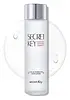
This brightening essence is formulated around Arbutin and Galactomyces Ferment Filtrate to fade the look of dark spots and calm redness.

What's inside
What's inside
 Key Ingredients
Benefits
Concerns
Ingredients Side-by-side



Water
Skin ConditioningGlycerin
Humectant


Butylene Glycol
Humectant
Arbutin
Antioxidant



Galactomyces Ferment Filtrate
Humectant




Aloe Barbadensis Leaf Juice
Skin Conditioning
Phenoxyethanol
Preservative
Camellia Sinensis Leaf Extract
Antimicrobial

Acanthopanax Senticosus Extract
Skin ConditioningPortulaca Oleracea Extract
Skin Conditioning
Chamomilla Recutita Flower Water
Masking1,2-Hexanediol
Skin Conditioning
Aloe Barbadensis Leaf Extract
Emollient
Panax Ginseng Root Extract
Emollient
Centella Asiatica Extract
Cleansing
Adenosine
Skin Conditioning
Nelumbo Nucifera Leaf Extract
Skin ConditioningZanthoxylum Piperitum Fruit Extract
Skin ConditioningEucalyptus Globulus Leaf Extract
Perfuming
Hamamelis Virginiana Leaf Extract
Skin Conditioning

Houttuynia Cordata Extract
Skin Conditioning
Carica Papaya Fruit Extract
Skin ConditioningSophora Angustifolia Root Extract
Skin ConditioningDisodium EDTA
ChelatingCordyceps Sinensis Extract
Antioxidant
Morus Alba Bark Extract
Skin ConditioningArtemisia Annua Extract
Masking
Oryza Sativa Extract
Absorbent
Nelumbium Speciosum Flower Extract
Skin ConditioningSaccharomyces Ferment
Skin Conditioning
Caprylyl Glycol
Emollient
Asiaticoside
Antioxidant
Hydrolyzed Collagen
Emollient
Hydrolyzed Chitin
Skin ConditioningHyaluronic Acid
Humectant
Water, Glycerin, Butylene Glycol, Arbutin, Galactomyces Ferment Filtrate, Aloe Barbadensis Leaf Juice, Phenoxyethanol, Camellia Sinensis Leaf Extract, Acanthopanax Senticosus Extract, Portulaca Oleracea Extract, Chamomilla Recutita Flower Water, 1,2-Hexanediol, Aloe Barbadensis Leaf Extract, Panax Ginseng Root Extract, Centella Asiatica Extract, Adenosine, Nelumbo Nucifera Leaf Extract, Zanthoxylum Piperitum Fruit Extract, Eucalyptus Globulus Leaf Extract, Hamamelis Virginiana Leaf Extract, Houttuynia Cordata Extract, Carica Papaya Fruit Extract, Sophora Angustifolia Root Extract, Disodium EDTA, Cordyceps Sinensis Extract, Morus Alba Bark Extract, Artemisia Annua Extract, Oryza Sativa Extract, Nelumbium Speciosum Flower Extract, Saccharomyces Ferment, Caprylyl Glycol, Asiaticoside, Hydrolyzed Collagen, Hydrolyzed Chitin, Hyaluronic Acid
Reviews
Ingredients Explained
These ingredients are found in both products.
Ingredients higher up in an ingredient list are typically present in a larger amount.
Adenosine is a purine nucleoside that your body already makes in every cell. In skincare, it acts mainly as a skin conditioning and anti-aging agent.
The way it works is fairly well mapped out:
Your skin has cells called fibroblasts that build collagen (the stuff that keeps skin firm and smooth). Adenosine basically flips a switch on these cells that tells them to get to work making more collagen and other proteins. These cells slow down on their own as skin ages, so Adenosine helps give them a little nudge to keep going.
The clinical backing is pretty solid too.
A blind, randomized, placebo-controlled trial of 126 women aged 45-65 tested a 0.1% cream twice daily and found real improvements in crow's feet and frown lines using a precise 3D skin-mapping technique; these changes showed up by week 3 and held at 2 months.
A later study using Adenosine-loaded dissolving microneedle patches reported gains in wrinkle depth, dermal density, elasticity, and hydration.
On concentrations, South Korea's Ministry of Food and Drug Safety has set 0.04% as the approved functional anti-wrinkle level. You'll typically see this ingredient used somewhere in the 0.04-0.1% range since it works at low doses.
This ingredient has been found safe for cosmetics with the data showing no irritation or sensitization.
Overall, this is a great ingredient for any anti-aging routine and has no photosensitizing effect, so it suits both AM and PM use.
Learn more about AdenosineButylene Glycol (or BG) is used within cosmetic products for a few different reasons:
Overall, Butylene Glycol is a safe and well-rounded ingredient that works well with other ingredients.
Though this ingredient works well with most skin types, some people with sensitive skin may experience a reaction such as allergic rashes, closed comedones, or itchiness.
Learn more about Butylene GlycolDisodium EDTA is a chelating agent. It grabs onto and deactivates metal ions that sneak into your products from water, packaging, or air.
This ingredient mainly works behind the scenes and helps with:
On top of that, this ingredient can counteract the effects of hard water by binding to the minerals in it.
One thing worth knowing is that Disodium EDTA has been shown to be a mild penetration enhancer. It can help other ingredients absorb into skin more effectively which can be a double-edged sword (great for actives, but can also make the active too strong if you have sensitive skin).
Clinical patch testing showed no significant skin irritation at typical use concentrations and minimal dermal absorption.
You'll most likely see this ingredient near the end of an ingredient list. It's typically found in concentrations less than 1%.
Learn more about Disodium EDTAGalactomyces Ferment Filtrate (GFF) is a byproduct of fermenting Galactomyces yeast (the same yeast traditionally used to brew sake, Japan's beloved rice wine).
Sake brewers have long been known for their remarkably youthful hands. This is what actually first sparked scientific interest in GFF's skin benefits.
GFF works by stimulating filaggrin production in the skin. Filaggrin is a protein that binds structural proteins in the outer skin layer together to form a tight barrier that shields against allergens, bacteria, and moisture loss.
It's also a key building block of our natural moisturizing factors (NMF), or the network of compounds that keep skin plump and hydrated.
By boosting filaggrin, GFF helps strengthen both our barrier and our skin's ability to retain moisture.
Beyond hydration, GFF has notable antioxidant properties that help protect against oxidative stress and UV-induced inflammation.
Research also suggests it may help regulate sebum and keratin production. This could be an interesting option for those concerned about oiliness or skin texture.
Fungal acne:
This ingredient doesn't contain fatty acids or oils that could feed Malassezia, and the yeast used to make it (Galactomyces) is a different genera of fungi from Malassezia. The presence of one doesn't stimulate the other.
However, there is a concern raised by some communities that this ingredient could trigger a reaction in people who are broadly sensitive to yeast/fungal-derived ingredients.
Learn more about Galactomyces Ferment FiltrateThis extract comes from Purslane, a succulent. It has anti-inflammatory, antioxidant, and hydrating properties.
Purslane is very nutritious. It contains omega-3 fatty acids, NMFs, many vitamins, minerals, and antioxidants. The vitamins found in purslane include: Vitamin C, Vitamin A, and Vitamin E.
Fun fact: Purslane is a succulent with an extensive habitat. It is used in traditional Korean medicine to treat irritated skin.
Nowadays, purslane is becoming a superfood due to its highly nutritious content.
Learn more about Portulaca Oleracea Extract

