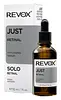
This anti-aging serum is formulated around Panthenol and Ascorbic Acid to soften the look of wrinkles and refine skin texture.
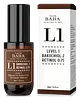
This anti-aging serum is formulated around Bakuchiol and Niacinamide to soften the look of wrinkles and refine skin texture.


What's inside
What's inside
 Key Ingredients
Benefits
Concerns
Ingredients Side-by-side
Water
Skin ConditioningHydrolyzed Elastin
EmollientPanthenol
Skin Conditioning




Propylene Glycol
Humectant

Glycerin
Humectant
PEG-40 Hydrogenated Castor Oil
Emulsifying

Phospholipids
Skin Conditioning
Caprylic/Capric Glycerides
EmollientAscorbic Acid
Antioxidant





Retinal
Skin Conditioning




Phenoxyethanol
Preservative
Hydroxyethylcellulose
Emulsion StabilisingSodium PCA
Humectant
Wheat Amino Acids
Skin ConditioningSodium Hyaluronate
Humectant
Hydroxyproline
Skin ConditioningEthylhexylglycerin
Skin ConditioningPPG-1-PEG-9 Lauryl Glycol Ether
EmulsifyingDisodium EDTA
ChelatingCitric Acid
Buffering
Water, Hydrolyzed Elastin, Panthenol, Propylene Glycol, Glycerin, PEG-40 Hydrogenated Castor Oil, Phospholipids, Caprylic/Capric Glycerides, Ascorbic Acid, Retinal, Phenoxyethanol, Hydroxyethylcellulose, Sodium PCA, Wheat Amino Acids, Sodium Hyaluronate, Hydroxyproline, Ethylhexylglycerin, PPG-1-PEG-9 Lauryl Glycol Ether, Disodium EDTA, Citric Acid
Aloe Barbadensis Leaf
Masking
Propanediol
Solvent
Glycereth-26
Humectant
Isononyl Isononanoate
EmollientGlycerin
Humectant
Bakuchiol
Antimicrobial
Niacinamide
Smoothing
1,2-Hexanediol
Skin Conditioning
Cetearyl Olivate
Sorbitan Olivate
Emulsifying
Retinal
Skin Conditioning
Panthenol
Skin Conditioning
Sodium Hyaluronate
Humectant
Adenosine
Skin Conditioning
Allantoin
Skin Conditioning
Carbomer
Emulsion StabilisingXanthan Gum
EmulsifyingCetearyl Alcohol
Emollient



Tocopheryl Acetate
Antioxidant
Tromethamine
BufferingDimethicone
Emollient
Polysorbate 20
Emulsifying
Disodium EDTA
ChelatingRosa Damascena Callus
Antimicrobial
Lavandula Angustifolia Flower
Skin Conditioning
Camellia Sinensis Leaf
Perfuming
Melissa Officinalis Leaf Extract
Skin ConditioningArtemisia Vulgaris Extract
Skin Conditioning
Aloe Barbadensis Leaf, Propanediol, Glycereth-26, Isononyl Isononanoate, Glycerin, Bakuchiol, Niacinamide, 1,2-Hexanediol, Cetearyl Olivate, Sorbitan Olivate, Retinal, Panthenol, Sodium Hyaluronate, Adenosine, Allantoin, Carbomer, Xanthan Gum, Cetearyl Alcohol, Tocopheryl Acetate, Tromethamine, Dimethicone, Polysorbate 20, Disodium EDTA, Rosa Damascena Callus, Lavandula Angustifolia Flower, Camellia Sinensis Leaf, Melissa Officinalis Leaf Extract, Artemisia Vulgaris Extract
Ingredients Explained
These ingredients are found in both products.
Ingredients higher up in an ingredient list are typically present in a larger amount.
Disodium EDTA is a chelating agent. It grabs onto and deactivates metal ions that sneak into your products from water, packaging, or air.
This ingredient mainly works behind the scenes and helps with:
On top of that, this ingredient can counteract the effects of hard water by binding to the minerals in it.
One thing worth knowing is that Disodium EDTA has been shown to be a mild penetration enhancer. It can help other ingredients absorb into skin more effectively which can be a double-edged sword (great for actives, but can also make the active too strong if you have sensitive skin).
Clinical patch testing showed no significant skin irritation at typical use concentrations and minimal dermal absorption.
You'll most likely see this ingredient near the end of an ingredient list. It's typically found in concentrations less than 1%.
Learn more about Disodium EDTAGlycerin (or glycerol) is a compound naturally found in your skin. It's a powerhouse humectant that pulls water into the stratum corneum.
Topically, glycerin does several things at once:
Your skin makes glycerin on its own (mostly from sebaceous oil breakdown) and shuttles it to your outermost layer of skin, or your epidermis, via aquaporin-3.
Aquaporin-3 is a transporter that is essential for normal skin hydration, elasticity, and repair. Interestingly, mice lacking in AQP3 have dry and less elastic skin that can be fully corrected with glycerin.
This ingredient is non-irritating, plays well with almost every ingredient, and works across all skin types. Typical use is anywhere between 3-10% but can go up to 79% in some leave-on products.
Just know very high concentrations (>40%) can feel tacky in low humidity.
Glycerin is the name for this ingredient in American English. British English uses Glycerol/Glycerine.
Learn more about GlycerinPanthenol is a common ingredient that helps hydrate and soothe the skin. It is found naturally in our skin and hair.
There are two forms of panthenol: D and L.
D-panthenol is also known as dexpanthenol. Most cosmetics use dexpanthenol or a mixture of D and L-panthenol.
Panthenol is famous due to its ability to go deeper into the skin's layers. Using this ingredient has numerous pros (and no cons):
Like hyaluronic acid, panthenol is a humectant. Humectants are able to bind and hold large amounts of water to keep skin hydrated.
This ingredient works well for wound healing. It works by increasing tissue in the wound and helps close open wounds.
Once oxidized, panthenol converts to pantothenic acid. Panthothenic acid is found in all living cells.
This ingredient is also referred to as pro-vitamin B5.
Learn more about PanthenolRetinal (aka retinaldehyde) is a form of retinoid that formulators use mainly as an antiaging and skin-renewing active.
What makes it special is its position in the retinoid family; skin converts it to retinoic acid (the prescription gold standard) in just one step.
Because retinal only requires 1 conversion step to become retinoic acid, it's the strongest over-the-counter retinoid. It also works at lower concentrations than retinol, since retinal is about 10x more bioavailable.
Studies back up its efficacy in skin:
A foundational trial showed that applying 0.05-0.5% retinal for 1-3 months produced a dose-dependent and significant increase in epidermal thickness + cell turnover markers.
And a head-to-head comparison of 0.05% retinal against a 0.05% retinoid acid found both formulations were effective for the basis of wrinkle/skin roughness features, but retinoic acid caused more local irritation.
More recent controlled trials confirm it improves wrinkles, dermal density, and firmness over 12-24 weeks, with significant improvements in skin texture and firmness (particularly with the higher 0.1% concentration).
Retinal also has one trick the other retinoids do not: it directly fights against acne bacteria since a clinical study showed retinaldehyde-treated areas displayed a significant decrease in counts of viable P. acnes.
This makes it a great pick for people who want to treat aging and breakouts.
Typical cosmetic use sits in the 0.05-0.1% range with 0.05% being the gentle starting point and 0.1% giving stronger results.
Like all retinoids, retinal works best with nightly use, a good moisturizer, and daytime sunscreen. It can cause some irritation so ease into it slowly rather than going all in.
The "ramp up" method works well: start with Retinal once a week to give your skin time to adjust, which keeps irritation low.
Slowly add more nights until you reach your goal frequency once your skin feels comfortable.
Retinoids also make your skin more sensitive to the sun in the first few weeks, so wear sunscreen every morning and protect your skin from direct sun while you build up tolerance.
Learn more about RetinalSodium Hyaluronate is the salt form of hyaluronic acid. It is a long sugar chain that is naturally found in your skin, joints, and connective tissue that maintains hydration and elasticity.
In skincare, it works as a humectant. It pulls water from the environment and deeper layers of skin and binds it to the surface.
Interestingly, the size of the molecule affects its behavior:
Some clinical evidence links low molecular weight versions to improved wrinkle depth, elasticity, anti-inflammatory effects, and barrier repair.
Many serums use a blend of both weights so you can get surface hydration plus longer-lasting and deeper effects.
You'll typically see concentrations between 0.1-2% for this ingredient.
Learn more about Sodium Hyaluronate

