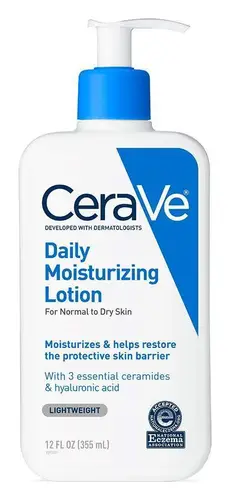
This barrier-repair moisturizer is formulated around Ceramide Ng to strengthen the skin barrier and hydrate skin.
This calming moisturizer is formulated around Urea and Ceramide NP to calm redness and hydrate skin.

What's inside
What's inside
 Key Ingredients
Benefits
Concerns
Ingredients Side-by-side
Water
Skin ConditioningParaffinum Liquidum
Emollient


Glycerin
Humectant


Cetearyl Alcohol
Emollient





Cannabis Sativa Seed Oil
Emollient
Canola Oil
Emollient
Lanolin
Emollient
Cetearyl Glucoside
Emulsifying
Cetyl Alcohol
Emollient
Lonicera Caprifolium Flower Extract
Perfuming
Sodium Hyaluronate
Humectant


Lonicera Japonica Flower Extract
Skin ConditioningGlucose
Humectant
Ceramide Ng
Skin Conditioning

Palmitoyl Hexapeptide-12
Skin Conditioning
Hydroxyacetophenone
Antioxidant
Tocopherol
Antioxidant


C12-15 Alkyl Benzoate
AntimicrobialTribehenin
Emollient
PEG-10 Phytosterol
EmulsifyingEthylhexylglycerin
Skin ConditioningWater, Paraffinum Liquidum, Glycerin, Cetearyl Alcohol, Cannabis Sativa Seed Oil, Canola Oil, Lanolin, Cetearyl Glucoside, Cetyl Alcohol, Lonicera Caprifolium Flower Extract, Sodium Hyaluronate, Lonicera Japonica Flower Extract, Glucose, Ceramide Ng, Palmitoyl Hexapeptide-12, Hydroxyacetophenone, Tocopherol, C12-15 Alkyl Benzoate, Tribehenin, PEG-10 Phytosterol, Ethylhexylglycerin
Water
Skin ConditioningCanola Oil
Emollient
Caprylic/Capric Triglyceride
Masking
Urea
Buffering

Polyglyceryl-3 Methylglucose Distearate
Emulsifying
Cetyl Ricinoleate
Emollient
Hydrogenated Polydecene
EmollientGlycerin
Humectant
Dimethicone
Emollient
Ceramide NP
Skin Conditioning
Ceramide AP
Skin Conditioning
Ceramide EOP
Skin Conditioning
Phytosphingosine
Skin Conditioning
Cholesterol
Emollient
Sodium Lauroyl Lactylate
EmulsifyingCarbomer
Emulsion StabilisingXanthan Gum
EmulsifyingTocopheryl Acetate
Antioxidant
Allantoin
Skin Conditioning
Maltooligosyl Glucoside
Skin ConditioningHydrogenated Starch Hydrolysate
HumectantGlyceryl Caprylate
EmollientPhenoxyethanol
Preservative
Hydroxyacetophenone
Antioxidant
Sodium Hydroxide
BufferingWater, Canola Oil, Caprylic/Capric Triglyceride, Urea, Polyglyceryl-3 Methylglucose Distearate, Cetyl Ricinoleate, Hydrogenated Polydecene, Glycerin, Dimethicone, Ceramide NP, Ceramide AP, Ceramide EOP, Phytosphingosine, Cholesterol, Sodium Lauroyl Lactylate, Carbomer, Xanthan Gum, Tocopheryl Acetate, Allantoin, Maltooligosyl Glucoside, Hydrogenated Starch Hydrolysate, Glyceryl Caprylate, Phenoxyethanol, Hydroxyacetophenone, Sodium Hydroxide
Ingredients Explained
These ingredients are found in both products.
Ingredients higher up in an ingredient list are typically present in a larger amount.
Canola Oil is a plant-oil and low-erucic-acid variety of rapeseed. Like other seed oils, it functions as an emollient that softens skin and slows water loss.
Its fatty acid profile is mostly linoleic acid (55-65%) with some oleic, palmitic, and stearic acids. There are also some small amounts of vitamin E and plant sterols.
The sterol content is pretty interesting:
In a controlled human study, a single application of canola oil and especially its sterol-enriched fraction reduced visible irritation, redness, and water loss caused by SLS. Plain canola oil and most other tested oils did little on healthy, un-irritated skin.
It's pretty much just a calm, moisturizing oil that helps with soothing if your skin is already irritated.
Fun fact: Canadian growers bred the low-erucic variety in the 1970's, and the name stands for "Canadian oil, Low Acid").
Since canola oil is made up of C18 fatty acids, it may not be fungal acne safe. The Malassezia yeast feeds on chain lengths C11-24.
This ingredient shows up on a lot of "pore-clogging" lists but there's no real evidence behind that. It doesn't even have a comedogenic rating from an actual study; the numbers you'll find online come from blogs citing other blogs.
Some people still find it breaks them out. So if that's you, definitely trust your skin.
Learn more about Canola OilGlycerin (or glycerol) is a compound naturally found in your skin. It's a powerhouse humectant that pulls water into the stratum corneum.
Topically, glycerin does several things at once:
Your skin makes glycerin on its own (mostly from sebaceous oil breakdown) and shuttles it to your outermost layer of skin, or your epidermis, via aquaporin-3.
Aquaporin-3 is a transporter that is essential for normal skin hydration, elasticity, and repair. Interestingly, mice lacking in AQP3 have dry and less elastic skin that can be fully corrected with glycerin.
This ingredient is non-irritating, plays well with almost every ingredient, and works across all skin types. Typical use is anywhere between 3-10% but can go up to 79% in some leave-on products.
Just know very high concentrations (>40%) can feel tacky in low humidity.
Glycerin is the name for this ingredient in American English. British English uses Glycerol/Glycerine.
Learn more about GlycerinHydroxyacetophenone is a small phenolic molecule that earns its place in a formulas as an antioxidant and preservative booster.
As a phenol, it is able to neutralize free radicals to protect both the product and the skin from oxidative stress.
Though it can't kill microbes on its own, it works as a good supporting agent when combined with other preservatives like Phenoxyethanol or 1,2-Hexanediol.
This ingredient naturally occurs as piceol in Norwegian spruce needles (~0.4-1.1% dry weight and in cloudberries). Though the cosmetic-grade material is synthesized for purity and consistency.
You'll usually see it used at low levels and suppliers recommend up to 1% added to a water phase.
Safety testing was done at concentrations like 0.05% in SPF products and 0.5% in a Human Repeated Insult Patch Test. The safety evidence is assuring; this ingredient is safe for cosmetics in current use and also holds safety status as a food flavoring as well.
An honest caveat: the "soothing" and "anti-inflammatory" claims come mostly from supplier marketing rather than published clinical trials. The Cosmetic Ingredient Review's own literature search found no useful efficacy studies on this ingredient.
So the antioxidant and preservative-boosting roles are the well supported ones while the calming benefit is plausible but thinly evidenced.
Overall, this is a well-tolerated, low-irritation multitasker that quietly helps a formula stay fresh and stable.
Learn more about HydroxyacetophenoneWater. It's the most common cosmetic ingredient of all. You'll usually see it at the top of ingredient lists, meaning that it makes up the largest part of the product.
So why is it so popular? Water most often acts as a solvent - this means that it helps dissolve other ingredients into the formulation.
You'll also recognize water as that liquid we all need to stay alive. If you see this, drink a glass of water. Remember to stay hydrated!
Learn more about Water