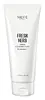
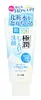
Nacific Fresh Herb Origin Cleansing Foam - Calendula Versus Hada Labo Gokujyun Hyaluronic Acid Face Wash
This mild gel cleanser is made to cleanse without leaving your skin tight or dry.


What's inside
What's inside
 Key Ingredients
Benefits
Concerns
Ingredients Side-by-side
Water
Skin ConditioningGlycerin
Humectant


Myristic Acid
Cleansing



Lauric Acid
Cleansing
Potassium Hydroxide
BufferingPropylene Glycol Laurate
Skin ConditioningPalmitic Acid
Emollient
Glyceryl Stearate
Emollient
PEG-32
HumectantStearic Acid
Cleansing
Cocamidopropyl Betaine
Cleansing

PEG-100 Stearate
Surfactant
Calendula Officinalis Flower Water
Masking
Propolis Extract
Skin Conditioning



Sodium Hyaluronate
Humectant

Citrus Aurantium Bergamia Fruit Oil
Masking

Pelargonium Graveolens Flower Oil
Masking
Lavandula Hybrida Oil
Emollient
Cananga Odorata Flower Oil
Masking
Sodium Chloride
MaskingPolyquaternium-7
Arachidic Acid
Cleansing
PEG-90m
Emulsion StabilisingSodium Benzoate
Masking
Silica
Abrasive


Butylene Glycol
Humectant
Disodium EDTA
ChelatingPhenoxyethanol
Preservative
Chlorphenesin
Antimicrobial
Caprylyl Glycol
Emollient
Ethylhexylglycerin
Skin Conditioning1,2-Hexanediol
Skin Conditioning
Water, Glycerin, Myristic Acid, Lauric Acid, Potassium Hydroxide, Propylene Glycol Laurate, Palmitic Acid, Glyceryl Stearate, PEG-32, Stearic Acid, Cocamidopropyl Betaine, PEG-100 Stearate, Calendula Officinalis Flower Water, Propolis Extract, Sodium Hyaluronate, Citrus Aurantium Bergamia Fruit Oil, Pelargonium Graveolens Flower Oil, Lavandula Hybrida Oil, Cananga Odorata Flower Oil, Sodium Chloride, Polyquaternium-7, Arachidic Acid, PEG-90m, Sodium Benzoate, Silica, Butylene Glycol, Disodium EDTA, Phenoxyethanol, Chlorphenesin, Caprylyl Glycol, Ethylhexylglycerin, 1,2-Hexanediol
Water
Skin ConditioningGlycerin
Humectant
Glycylglycine
Butylene Glycol
Humectant
Hydroxypropyl Starch Phosphate
Cocamidopropyl Betaine
Cleansing
PEG-400
Emulsion StabilisingDecyl Glucoside
Cleansing
Zinc Lauroyl Aspartate
Tea-Cocoyl Glycinate
Cleansing
Sodium Stearoyl Glutamate
CleansingGlyceryl Stearate
Emollient
Hyaluronic Acid
Humectant
Hydroxypropyltrimonium Hyaluronate
Citric Acid
Buffering

Stearic Acid
Cleansing
Lauric Acid
Cleansing
PEG-32
HumectantDisodium EDTA
ChelatingPolyquaternium-7
Hydroxypropyl Methylcellulose
Emulsion StabilisingPolyquaternium-52
Methylparaben
Preservative

Propylparaben
Preservative
BHT
Antioxidant
Water, Glycerin, Glycylglycine, Butylene Glycol, Hydroxypropyl Starch Phosphate, Cocamidopropyl Betaine, PEG-400, Decyl Glucoside, Zinc Lauroyl Aspartate, Tea-Cocoyl Glycinate, Sodium Stearoyl Glutamate, Glyceryl Stearate, Hyaluronic Acid, Hydroxypropyltrimonium Hyaluronate, Citric Acid, Stearic Acid, Lauric Acid, PEG-32, Disodium EDTA, Polyquaternium-7, Hydroxypropyl Methylcellulose, Polyquaternium-52, Methylparaben, Propylparaben, BHT
Reviews
Ingredients Explained
These ingredients are found in both products.
Ingredients higher up in an ingredient list are typically present in a larger amount.
Butylene Glycol (or BG) is used within cosmetic products for a few different reasons:
Overall, Butylene Glycol is a safe and well-rounded ingredient that works well with other ingredients.
Though this ingredient works well with most skin types, some people with sensitive skin may experience a reaction such as allergic rashes, closed comedones, or itchiness.
Learn more about Butylene GlycolCocamidopropyl Betaine is a fatty acid created by mixing similar compounds in coconut oil and dimethylaminopropylamine, a compound with two amino groups.
This ingredient is a surfactant and cleanser. It helps gather the dirt, pollutants, and other impurities in your skin to be washed away. It also helps thicken a product and make the texture more creamy.
Being created from coconut oil means Cocamidopropyl Betaine is hydrating for the skin.
While Cocamidopropyl Betaine was believed to be an allergen, a study from 2012 disproved this. It found two compounds in unpure Cocamidopropyl Betaine to be the irritants: aminoamide and 3-dimethylaminopropylamine. High-grade and pure Cocamidopropyl Betaine did not induce allergic reactions during this study.
Learn more about Cocamidopropyl BetaineDisodium EDTA is a chelating agent. It grabs onto and deactivates metal ions that sneak into your products from water, packaging, or air.
This ingredient mainly works behind the scenes and helps with:
On top of that, this ingredient can counteract the effects of hard water by binding to the minerals in it.
One thing worth knowing is that Disodium EDTA has been shown to be a mild penetration enhancer. It can help other ingredients absorb into skin more effectively which can be a double-edged sword (great for actives, but can also make the active too strong if you have sensitive skin).
Clinical patch testing showed no significant skin irritation at typical use concentrations and minimal dermal absorption.
You'll most likely see this ingredient near the end of an ingredient list. It's typically found in concentrations less than 1%.
Learn more about Disodium EDTAGlycerin (or glycerol) is a compound naturally found in your skin. It's a powerhouse humectant that pulls water into the stratum corneum.
Topically, glycerin does several things at once:
Your skin makes glycerin on its own (mostly from sebaceous oil breakdown) and shuttles it to your outermost layer of skin, or your epidermis, via aquaporin-3.
Aquaporin-3 is a transporter that is essential for normal skin hydration, elasticity, and repair. Interestingly, mice lacking in AQP3 have dry and less elastic skin that can be fully corrected with glycerin.
This ingredient is non-irritating, plays well with almost every ingredient, and works across all skin types. Typical use is anywhere between 3-10% but can go up to 79% in some leave-on products.
Just know very high concentrations (>40%) can feel tacky in low humidity.
Glycerin is the name for this ingredient in American English. British English uses Glycerol/Glycerine.
Learn more about GlycerinGlyceryl Stearate is made by reacting glycerin with stearic acid (typically sourced from plant oils like palm or coconut). It's an emulsifier, emollient, and mild occlusive.
Emulsifiers help ingredients like oil and water stay mixed so your formula stays nicely blended and uniform in texture.
This ingredient is typically used in concentrations between 1-10%. Studies have found it to be non-sensitizing, non-phototoxic, and non-photoallergenic.
A close cousin of this ingredient is Glyceryl Stearate SE ("self-emulsifying"). This just has a small amount of sodium or potassium stearate added so it can emulsify without a co-emulsifier.
Since this ingredient is an ester of a C18 fatty acid, it may not be fungal acne safe. The Malassezia yeast can potentially metabolize within the C11-C24 range.
Fun fact: The human body also creates Glyceryl Stearate naturally.
Learn more about Glyceryl StearateLauric Acid is a saturated fatty acid naturally found in coconut oil, palm kernel oil, and even breast milk.
In cosmetics, it is an:
Lab studies have found that lauric acid is surprisingly good at killing acne-causing bacteria. However, these tests were done on bacteria in a petri dish and not on real skin, so we can't say for certain it works the same in a formulation on a real face.
The comedogenic rating of 4 comes from the 1972 rabbit ear model using undiluted ingredients. Comedogenicity is highly individual and one comedogenic ingredient cannot predict how a formula will behave on skin.
This ingredient is not fungal acne safe and research has confirmed Malassezia can use it as a food source. Even though "fungal acne" has the word "acne" in it, they are completely different. Regular acne is driven by a bacteria called Cutibacterium acnes, clogged pores, and excess oil. Fungal acne isn't really acne; it's caused by an overgrowth of a yeast called Malassezia that already lives on everyone's skin. Because one is bacterial and the other is fungal, they respond to different ingredients.
Learn more about Lauric AcidPEG-32 is a synthetic and water-soluble polymer with 32 repeating units. It has humectant, solvent, and emulsifying properties.
As a solvent and emulsifier, it helps dissolve and blend ingredients. It is also able to attract water as a humectant to help hydrate skin. According to a manufacturer, this ingredient is non-greasy, gentle, and mildly scented.
Japanese manufacturers will sometimes call this ingredient PEG 1540.
Learn more about PEG-32Polyquaternium-7 is a light to clear colored liquid. It is commonly found in haircare products for its film-forming and anti-static properties.
According to a manufacturer, it is a non-paraben and specially developed for negatively charged surfactant systems. This makes it a great hairstyle holder and helps to improve wet hair detangling without adding buildup.
Stearic Acid is a fatty acid that is already found in your skin. It's one of the free fatty acids that works alongside ceramides and cholesterols to maintain your barrier.
In cosmetics, it is a multitasker:
Safety-wise, the CIR Expert Panel has concluded it to be safe in cosmetics when formulated to be non-irritating and non-sensitizing.
Free stearic acid is a C18 fatty acid that the Malassezia yeast can substrate, so this ingredient may not be fungal acne safe.
Learn more about Stearic AcidWater. It's the most common cosmetic ingredient of all. You'll usually see it at the top of ingredient lists, meaning that it makes up the largest part of the product.
So why is it so popular? Water most often acts as a solvent - this means that it helps dissolve other ingredients into the formulation.
You'll also recognize water as that liquid we all need to stay alive. If you see this, drink a glass of water. Remember to stay hydrated!
Learn more about Water

