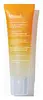
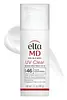
Murad Multi-Vitamin Clear Coat Broad Spectrum SPF 50 Versus EltaMD, Inc UV Clear Broad-Spectrum SPF 46
This chemical sunscreen covers most of the UV range, lighter on the deep UVA that drives aging.
This hybrid sunscreen covers the full UV range and blocks ~98% of UVB at SPF 46.

What's inside
What's inside
 Key Ingredients
Benefits
Concerns
Ingredients Side-by-side
C13-15 Alkane
SolventDimethicone/Vinyl Dimethicone Crosspolymer
Skin Conditioning
Isodecyl Neopentanoate
EmollientHomosalate
Skin Conditioning

Butyloctyl Salicylate
Skin Conditioning
Ethylhexyl Salicylate
UV Absorber
Octocrylene
UV Absorber

Polyamide-3
Butyl Methoxydibenzoylmethane
UV Absorber
Sclareolide
Masking
Salvia Hispanica Seed Oil
Emollient


Tetrahexyldecyl Ascorbate
Antioxidant






Tocopheryl Acetate
Antioxidant
Linoleic Acid
Cleansing



7-Dehydrocholesterol
Emulsion StabilisingLinolenic Acid
Cleansing
Ethylhexylglycerin
Skin ConditioningZea Mays Oil
Emulsifying
Tocopherol
Antioxidant
Pentaerythrityl Tetra-Di-T-Butyl Hydroxyhydrocinnamate
Antioxidant
Oleic Acid
Emollient
Palmitic Acid
Emollient
Stearic Acid
Cleansing
C13-15 Alkane, Dimethicone/Vinyl Dimethicone Crosspolymer, Isodecyl Neopentanoate, Homosalate, Butyloctyl Salicylate, Ethylhexyl Salicylate, Octocrylene, Polyamide-3, Butyl Methoxydibenzoylmethane, Sclareolide, Salvia Hispanica Seed Oil, Tetrahexyldecyl Ascorbate, Tocopheryl Acetate, Linoleic Acid, 7-Dehydrocholesterol, Linolenic Acid, Ethylhexylglycerin, Zea Mays Oil, Tocopherol, Pentaerythrityl Tetra-Di-T-Butyl Hydroxyhydrocinnamate, Oleic Acid, Palmitic Acid, Stearic Acid
Zinc Oxide 9%
Cosmetic Colorant
Ethylhexyl Methoxycinnamate 7.5%
UV Absorber
Water
Skin ConditioningCyclopentasiloxane
Emollient
Niacinamide
Smoothing

Octyldodecyl Neopentanoate
EmollientHydroxyethyl Acrylate/Sodium Acryloyldimethyl Taurate Copolymer
Emulsion StabilisingButylene Glycol
Humectant
Phenoxyethanol
Preservative
Polyisobutene
Triethoxycaprylylsilane
Tocopheryl Acetate
Antioxidant
PEG-7 Trimethylolpropane Coconut Ether
Emulsifying
Oleth-3 Phosphate
SurfactantIodopropynyl Butylcarbamate
Preservative
Lactic Acid
Buffering
Sodium Hyaluronate
Humectant
Phosphoric Acid
BufferingZinc Oxide 9%, Ethylhexyl Methoxycinnamate 7.5%, Water, Cyclopentasiloxane, Niacinamide, Octyldodecyl Neopentanoate, Hydroxyethyl Acrylate/Sodium Acryloyldimethyl Taurate Copolymer, Butylene Glycol, Phenoxyethanol, Polyisobutene, Triethoxycaprylylsilane, Tocopheryl Acetate, PEG-7 Trimethylolpropane Coconut Ether, Oleth-3 Phosphate, Iodopropynyl Butylcarbamate, Lactic Acid, Sodium Hyaluronate, Phosphoric Acid
Reviews
Ingredients Explained
These ingredients are found in both products.
Ingredients higher up in an ingredient list are typically present in a larger amount.
Tocopheryl Acetate is a stable, shelf-friendly form of vitamin E.
Formulators love it because plain vitamin E oxidizes quickly once it hits air. This acetate version stays stable and resists going off, helping to extend a product's shelf life.
It's actually inactive on its own and works like a slow-release "storage" form; the enzymes in your skin called esterases gradually convert it into active vitamin E over time.
One in vivo study showed 5% of the acetate in the living layer of the epidermis converted to vitamin E after 5 days of application. This study also found the skin gained protection against UV damage even though the conversion was slow and small.
Once converted, vitamin E acts as a skin's main fat-soluble antioxidant that fights free radicals to protect skin from damage.
Topical vitamin E generally boosts the skin's photoprotection, and it reduced UV-damage in animal models.
This ingredient has some brightening potential but it's more of a prevention ingredient than spot-fader. Cell studies show it can slow down melanin production but it's worth noting that it's not the most powerful brightener out there.
Overall, it has a pretty solid safety profile and has been found to be non-irritating and non-comedogenic. Allergic reactions may happen but stay rare due to how widely the ingredient gets used.
The concentration will vary depending on the formula; industry data shows 0.1% in baby lotions, 3% in lipsticks, and 5% in foot powders. You can also find this ingredient at 100% in a pure vitamin E oil.
Most leave-on skincare keeps it at the lower end, often between 0.5-1%.
Learn more about Tocopheryl Acetate

