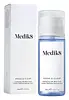
Medik8 Press and Clear Tonic Versus Wildfleur 2.0% Salicylic Acid + Flavonoids-Willowherb Clarifying Toner
This acne toner is formulated around Salicylic Acid and Tranexamic Acid to clear breakouts and refine the look of pores.
This acne toner is formulated around Salicylic Acid and Zinc PCA to clear breakouts and refine skin texture.


What's inside
What's inside
 Key Ingredients
Benefits
Concerns
Ingredients Side-by-side
Water
Skin ConditioningPropanediol
Solvent

Glycereth-26
Humectant
Salicylic Acid
Masking










Tranexamic Acid
Astringent



Dimethyl Isosorbide
SolventCyclodextrin
AbsorbentAloe Barbadensis Leaf Juice
Skin Conditioning
Saccharomyces Ferment Filtrate
Humectant
Lecithin
Emollient
Oryza Sativa Lees Extract
Skin ConditioningXanthan Gum
EmulsifyingEthylhexylglycerin
Skin ConditioningButylene Glycol
Humectant
Sclerotium Gum
Emulsion Stabilising1,2-Hexanediol
Skin Conditioning
Pullulan
Disodium EDTA
ChelatingSodium Hydroxide
BufferingPolyacrylate Crosspolymer-6
Emulsion StabilisingPhenoxyethanol
Preservative
Buteth-3
SolventHydroxyacetophenone
Antioxidant
Sodium Metabisulfite
Antioxidant
Sodium Benzotriazolyl Butylphenol Sulfonate
UV AbsorberTributyl Citrate
SolventPotassium Sorbate
Preservative
Silica
Abrasive
Sodium Benzoate
Masking
Citric Acid
Buffering
Water, Propanediol, Glycereth-26, Salicylic Acid, Tranexamic Acid, Dimethyl Isosorbide, Cyclodextrin, Aloe Barbadensis Leaf Juice, Saccharomyces Ferment Filtrate, Lecithin, Oryza Sativa Lees Extract, Xanthan Gum, Ethylhexylglycerin, Butylene Glycol, Sclerotium Gum, 1,2-Hexanediol, Pullulan, Disodium EDTA, Sodium Hydroxide, Polyacrylate Crosspolymer-6, Phenoxyethanol, Buteth-3, Hydroxyacetophenone, Sodium Metabisulfite, Sodium Benzotriazolyl Butylphenol Sulfonate, Tributyl Citrate, Potassium Sorbate, Silica, Sodium Benzoate, Citric Acid
Water
Skin ConditioningMethylpropanediol
SolventButylene Glycol
Humectant
Salicylic Acid
Masking
1,2-Hexanediol
Skin Conditioning
Epilobium Angustifolium Extract
Skin ConditioningAllantoin
Skin Conditioning
Zinc PCA
Humectant
Centella Asiatica Extract
Cleansing
Salix Alba Bark Extract
Astringent
Pinus Palustris Leaf Extract
TonicUlmus Davidiana Root Extract
Skin Conditioning
Oenothera Biennis Flower Extract
AstringentHydroxyacetophenone
Antioxidant
Polysorbate 20
Emulsifying
Sodium Phytate
ChelatingSodium Hydroxide
BufferingMentha Piperita Leaf Extract
Skin ConditioningPhenoxyethanol
Preservative
Ethylhexylglycerin
Skin ConditioningPueraria Lobata Root Extract
HumectantWater, Methylpropanediol, Butylene Glycol, Salicylic Acid, 1,2-Hexanediol, Epilobium Angustifolium Extract, Allantoin, Zinc PCA, Centella Asiatica Extract, Salix Alba Bark Extract, Pinus Palustris Leaf Extract, Ulmus Davidiana Root Extract, Oenothera Biennis Flower Extract, Hydroxyacetophenone, Polysorbate 20, Sodium Phytate, Sodium Hydroxide, Mentha Piperita Leaf Extract, Phenoxyethanol, Ethylhexylglycerin, Pueraria Lobata Root Extract
Reviews
Ingredients Explained
These ingredients are found in both products.
Ingredients higher up in an ingredient list are typically present in a larger amount.
1,2-Hexanediol is a synthetic liquid and another multi-functional powerhouse.
It is a:
- Humectant, drawing moisture into the skin
- Emollient, helping to soften skin
- Solvent, dispersing and stabilizing formulas
- Preservative booster, enhancing the antimicrobial activity of other preservatives
Butylene Glycol (or BG) is used within cosmetic products for a few different reasons:
Overall, Butylene Glycol is a safe and well-rounded ingredient that works well with other ingredients.
Though this ingredient works well with most skin types, some people with sensitive skin may experience a reaction such as allergic rashes, closed comedones, or itchiness.
Learn more about Butylene GlycolEthylhexylglycerin is created from glycerin. It is a multitasker ingredient that:
The CIR Expert Panel found minimal skin absorption or sensitization of any kind in a safety assessment. Though this ingredient is considered well-tolerated, a small number of cases of allergic dermatitis have been published since 2002. Just be sure to patch test if you are unsure.
Industry-reported use ranges from 8% in rinse-off products and 2% in leave-on formulations.
Learn more about EthylhexylglycerinHydroxyacetophenone is a small phenolic molecule that earns its place in a formulas as an antioxidant and preservative booster.
As a phenol, it is able to neutralize free radicals to protect both the product and the skin from oxidative stress.
Though it can't kill microbes on its own, it works as a good supporting agent when combined with other preservatives like Phenoxyethanol or 1,2-Hexanediol.
This ingredient naturally occurs as piceol in Norwegian spruce needles (~0.4-1.1% dry weight and in cloudberries). Though the cosmetic-grade material is synthesized for purity and consistency.
You'll usually see it used at low levels and suppliers recommend up to 1% added to a water phase.
Safety testing was done at concentrations like 0.05% in SPF products and 0.5% in a Human Repeated Insult Patch Test. The safety evidence is assuring; this ingredient is safe for cosmetics in current use and also holds safety status as a food flavoring as well.
An honest caveat: the "soothing" and "anti-inflammatory" claims come mostly from supplier marketing rather than published clinical trials. The Cosmetic Ingredient Review's own literature search found no useful efficacy studies on this ingredient.
So the antioxidant and preservative-boosting roles are the well supported ones while the calming benefit is plausible but thinly evidenced.
Overall, this is a well-tolerated, low-irritation multitasker that quietly helps a formula stay fresh and stable.
Learn more about HydroxyacetophenonePhenoxyethanol is one of the most widely used preservatives in skincare (and for good reason!).
It has a large spectrum of antimicrobial activity and especially effective bacteria, yeast, and mold while only having a weak effect on your skin's natural microbiome.
On a cellular level, it disrupts the cell membranes of microbes by poking holes that make the cell leak. This shuts down the chemical reactions the microbe needs to make energy so it can no longer survive.
Another perk of this ingredient is that it stays functional across a wide pH range (3-10).
You'll often see it paired with boosters like Ethylhexylglycerin; one study showed that a 1:9 ratio of Ethylhexylglycerin to Phenoxyethanol damages bacterial membranes as effectively as doubling the Phenoxyethanol concentration on its own.
Typical use concentrations range from 0.3-1% depending on the formula, and this ingredient is capped at 1% int the EU.
Safety-wise, the fear mongering does not hold up to the evidence. The EU's Scientific Committee on Consumer Safety and FDA consider it safe as a preservative at up to 1%, including for children of all ages.
Adverse systemic effects only showed up in animal studies at exposures roughly 200x higher than what people get from cosmetics. And despite its very widespread use, this ingredient is a rare sensitizer and allergic reactions are uncommon.
Learn more about PhenoxyethanolSalicylic Acid (also known as beta hydroxy acid or BHA) is a well-known ingredient for treating skin that struggles with acne and clogged pores. It exfoliates both the skin's surface and deep within the pores to help clear out buildup, control oil, and reduce inflammation.
Unlike AHAs (alpha hydroxy acids), salicylic acid is oil-soluble. This allows it to penetrate into pores which makes it especially effective for treating blackheads and preventing future breakouts.
Salicylic acid is also known for its soothing properties. It has a similar structure to aspirin and can calm inflamed or irritated skin, making it a good option for acne-prone skin that is also sensitive.
Concentrations of 0.5-2% are recognized by the U.S. FDA as an over-the-counter topical acne product.
It can cause irritation and/or dryness if one's skin already has a compromised moisture barrier, so it's best to focus on repairing that before introducing this ingredient into your routine.
While salicylic acid does not increase sun sensitivity, it’s still important to wear sunscreen daily to protect your skin.
If you are looking for the ingredient called BHA or Butylated Hydroxyanisole, click here.
Learn more about Salicylic AcidSodium Hydroxide is also known as lye or caustic soda. It is used to adjust the pH of products; many ingredients require a specific pH to be effective.
In small amounts, sodium hydroxide is considered safe to use. However, large amounts may cause chemical burns due to its high alkaline.
Your skin has a natural pH and acid mantle. This acid mantle helps prevent harmful bacteria from breaking through. The acid mantle also helps keep your skin hydrated.
"Alkaline" refers to a high pH level. A low pH level would be considered acidic.
Learn more about Sodium HydroxideWater. It's the most common cosmetic ingredient of all. You'll usually see it at the top of ingredient lists, meaning that it makes up the largest part of the product.
So why is it so popular? Water most often acts as a solvent - this means that it helps dissolve other ingredients into the formulation.
You'll also recognize water as that liquid we all need to stay alive. If you see this, drink a glass of water. Remember to stay hydrated!
Learn more about Water

