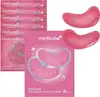
This anti-aging eye mask is formulated around Sodium DNA and Beta-Glucan to soften the look of wrinkles and hydrate skin.
This anti-aging eye mask is formulated around Niacinamide and Adenosine to soften the look of wrinkles and brighten dull-looking skin.

What's inside
What's inside
 Key Ingredients
Benefits
Concerns
Ingredients Side-by-side
Water
Skin ConditioningGlycerin
Humectant


Propanediol
Solvent
Carrageenan



Beta-Glucan
Skin Conditioning

Chondrus Crispus Extract
Skin Conditioning
Ceratonia Siliqua Gum
EmollientSodium Hyaluronate
Humectant

Hydrogenated Castor Oil
Emollient


Chlorphenesin
Antimicrobial
Hydroxyacetophenone
Antioxidant
Cyanocobalamin
Skin ConditioningCollagen
Moisturising
Caffeine
Skin Conditioning
Sodium DNA
Skin Conditioning
Arginine
Masking
Niacinamide
Smoothing






Palmitoyl Pentapeptide-4
Skin Conditioning
Hyaluronic Acid
Humectant
Hydrolyzed Vegetable Protein
Skin ConditioningNicotinamide Adenine Dinucleotide
Skin ConditioningRetinol
Skin Conditioning

Water, Glycerin, Propanediol, Carrageenan, Beta-Glucan, Chondrus Crispus Extract, Ceratonia Siliqua Gum, Sodium Hyaluronate, Hydrogenated Castor Oil, Chlorphenesin, Hydroxyacetophenone, Cyanocobalamin, Collagen, Caffeine, Sodium DNA, Arginine, Niacinamide, Palmitoyl Pentapeptide-4, Hyaluronic Acid, Hydrolyzed Vegetable Protein, Nicotinamide Adenine Dinucleotide, Retinol
Water
Skin ConditioningGlycerin
Humectant
Butylene Glycol
Humectant
Niacinamide
Smoothing
Chondrus Crispus Extract
Skin Conditioning
1,2-Hexanediol
Skin Conditioning
Chondrus Crispus
Masking
Hydroxyacetophenone
Antioxidant
Ceratonia Siliqua Gum
EmollientAgar
MaskingAllantoin
Skin Conditioning
Sucrose
Humectant
Ultramarines
Ethylhexylglycerin
Skin ConditioningAdenosine
Skin Conditioning
Dipotassium Glycyrrhizate
Humectant
Maltodextrin
Absorbent
Potassium Chloride
Polyglyceryl-10 Laurate
Skin Conditioning
Polyglyceryl-10 Myristate
Skin Conditioning
Benzophenone-4
UV Absorber
Titanium Dioxide
Cosmetic Colorant
Calcium Aluminum Borosilicate
Caffeine
Skin Conditioning
Sodium Citrate
BufferingCalcium Titanium Borosilicate
Abrasive
Synthetic Fluorphlogopite
Dipropylene Glycol
HumectantMethyl Diisopropyl Propionamide
MaskingSodium Hyaluronate
Humectant
CI 75470
Cosmetic ColorantTin Oxide
Abrasive
Hydrolyzed Collagen
Emollient
Propanediol
Solvent
CI 77510
Cosmetic ColorantHyaluronic Acid
Humectant
Hydrolyzed Hyaluronic Acid
Humectant
Ascorbic Acid
Antioxidant
Polyglyceryl-6 Laurate
Emulsifying
Caprylic/Capric Triglyceride
Masking
Hydrogenated Lecithin
Emulsifying
Adenosine Triphosphate
Skin ConditioningNicotinamide Adenine Dinucleotide
Skin ConditioningResveratrol
Antioxidant
Sh-Octapeptide-4
Antioxidant
Sh-Decapeptide-7
Antioxidant
Acetyl Hexapeptide-8
Humectant
Glutathione
Oligopeptide-29
Antioxidant
Oligopeptide-32
Antiseborrhoeic
Palmitoyl Pentapeptide-4
Skin Conditioning
Palmitoyl Tripeptide-1
Skin Conditioning
Acetyl Tetrapeptide-5
Humectant
Acetyl Tetrapeptide-9
Skin Conditioning
Acetyl Tetrapeptide-2
Skin Conditioning
Acetyl Octapeptide-3
Humectant
Acetyl Hexapeptide-1
Skin Conditioning
Alanine
Masking
Acetyl Dipeptide-1 Cetyl Ester
Skin Conditioning
Acetyl Sh-Pentapeptide-1
Skin Conditioning
Biotinoyl Tripeptide-1
Copper Tripeptide-1
Skin Conditioning
Dipeptide-4
Skin Conditioning
Hexapeptide-9
Skin Conditioning
Hexapeptide-11
Skin Conditioning
Hexapeptide-12
Skin Conditioning
Myristoyl Pentapeptide-17
Skin Conditioning
Myristoyl Hexapeptide-16
Skin Conditioning
Myristoyl Pentapeptide-4
Skin Conditioning
Nonapeptide-1
Skin Conditioning
Nicotinoyl Tripeptide-1
Antioxidant
Nonapeptide-7
Skin Conditioning
Nicotinoyl Tripeptide-35
Antioxidant
Nicotinoyl Dipeptide-26
Skin Conditioning
Nicotinoyl Dipeptide-23
Skin Conditioning
Octapeptide-2
Skin Conditioning
Palmitoyl Tripeptide-5
Skin Conditioning
Palmitoyl Hexapeptide-12
Skin Conditioning
Pentapeptide-13
Skin Conditioning
Palmitoyl Tetrapeptide-10
Skin Conditioning
Palmitoyl Tripeptide-38
Skin Conditioning
Palmitoyl Tripeptide-29
Skin Conditioning
Palmitoyl Tripeptide-8
Skin Conditioning
Tripeptide-1
Skin Conditioning
Tetrapeptide-44
Skin Conditioning
Tetrapeptide-30
Skin Conditioning
Tripeptide-10 Citrulline
Skin Conditioning
Tripeptide-32
Skin Conditioning
Tripeptide-29
Skin Conditioning
Sh-Polypeptide-22
Skin Conditioning
Sh-Oligopeptide-1
Skin Conditioning
Sh-Polypeptide-1
Skin Conditioning
Sh-Polypeptide-9
Skin Conditioning
Sh-Oligopeptide-2
Skin Conditioning
Sh-Polypeptide-11
Sh-Polypeptide-3
Skin Conditioning
Sh-Polypeptide-16
Skin Protecting
Sh-Polypeptide-62
Antioxidant
Water, Glycerin, Butylene Glycol, Niacinamide, Chondrus Crispus Extract, 1,2-Hexanediol, Chondrus Crispus, Hydroxyacetophenone, Ceratonia Siliqua Gum, Agar, Allantoin, Sucrose, Ultramarines, Ethylhexylglycerin, Adenosine, Dipotassium Glycyrrhizate, Maltodextrin, Potassium Chloride, Polyglyceryl-10 Laurate, Polyglyceryl-10 Myristate, Benzophenone-4, Titanium Dioxide, Calcium Aluminum Borosilicate, Caffeine, Sodium Citrate, Calcium Titanium Borosilicate, Synthetic Fluorphlogopite, Dipropylene Glycol, Methyl Diisopropyl Propionamide, Sodium Hyaluronate, CI 75470, Tin Oxide, Hydrolyzed Collagen, Propanediol, CI 77510, Hyaluronic Acid, Hydrolyzed Hyaluronic Acid, Ascorbic Acid, Polyglyceryl-6 Laurate, Caprylic/Capric Triglyceride, Hydrogenated Lecithin, Adenosine Triphosphate, Nicotinamide Adenine Dinucleotide, Resveratrol, Sh-Octapeptide-4, Sh-Decapeptide-7, Acetyl Hexapeptide-8, Glutathione, Oligopeptide-29, Oligopeptide-32, Palmitoyl Pentapeptide-4, Palmitoyl Tripeptide-1, Acetyl Tetrapeptide-5, Acetyl Tetrapeptide-9, Acetyl Tetrapeptide-2, Acetyl Octapeptide-3, Acetyl Hexapeptide-1, Alanine, Acetyl Dipeptide-1 Cetyl Ester, Acetyl Sh-Pentapeptide-1, Biotinoyl Tripeptide-1, Copper Tripeptide-1, Dipeptide-4, Hexapeptide-9, Hexapeptide-11, Hexapeptide-12, Myristoyl Pentapeptide-17, Myristoyl Hexapeptide-16, Myristoyl Pentapeptide-4, Nonapeptide-1, Nicotinoyl Tripeptide-1, Nonapeptide-7, Nicotinoyl Tripeptide-35, Nicotinoyl Dipeptide-26, Nicotinoyl Dipeptide-23, Octapeptide-2, Palmitoyl Tripeptide-5, Palmitoyl Hexapeptide-12, Pentapeptide-13, Palmitoyl Tetrapeptide-10, Palmitoyl Tripeptide-38, Palmitoyl Tripeptide-29, Palmitoyl Tripeptide-8, Tripeptide-1, Tetrapeptide-44, Tetrapeptide-30, Tripeptide-10 Citrulline, Tripeptide-32, Tripeptide-29, Sh-Polypeptide-22, Sh-Oligopeptide-1, Sh-Polypeptide-1, Sh-Polypeptide-9, Sh-Oligopeptide-2, Sh-Polypeptide-11, Sh-Polypeptide-3, Sh-Polypeptide-16, Sh-Polypeptide-62
Reviews
Ingredients Explained
These ingredients are found in both products.
Ingredients higher up in an ingredient list are typically present in a larger amount.
Caffeine is a naturally occurring plant compound found in coffee beans, tea leaves, cocoa pods, and guarana.
As an antioxidant, caffeine protects your skin from free radical damage caused by UV exposure and envionrmnetal stressors.
Early research also shows that caffeine can help calm redness, soothe irritated skin, and support hair growth by stimulating microcirculation in the scalp.
You might have seen eye creams marketing caffeine as a depuffing ingredient. This is because it is a vasoconstrictor meaning it can temporarily constrict blood vessels, though clinical evidence for this specific use is still limited.
Most skincare products contain this ingredient at concentrations between 1-6%. It is able to penetrate skin easily regardless of skin type or thickness.
Just so you know, a very small number of case reports describe caffeine-induced allergy. This ingredient is generally well-tolerated, non-irritating, and non-sensitizing for the majority of people.
Learn more about CaffeineCeratonia Siliqua Gum is extracted from the seeds of the carob tree. You might know this ingredient as Carob Gum or Locust Bean Gum. It is used to stabilize other ingredients and improve the texture of products.
Carob gum is made up of long-chain polysaccharides. This makes it a natural thickener.
Yes! This ingredient comes from the seeds of a tree. The name 'Locust Bean Gum' can be misleading.
Learn more about Ceratonia Siliqua GumThis ingredient comes from the red seaweed that grows along the North Atlantic. It's the same alga that gives us carrageenan, the thickener in your oat milk.
The extract is mostly big sulfated sugar molecules (polysaccharides) plus some minerals and protein.
What those sugars do is simple and useful: they hold onto water and form a light film on the skin. That means they boost hydration, add a bit of slip, and leave a soft, cushiony feel.
It also helps with texture and thickness.
You'll see claims about anti-aging and "second skin" effects but those come mostly from supplier marketing.
The real research is cell-culture stuff and there's no human trial on this ingredient specifically (yet). So for now, treat it as a nice hydrator and texture helper, not an active.
Safety-wise, it's pretty solid. The Cosmetic Ingredient Review panel rated it safe as used, human sensitization tests came back negative, and it wasn't irritating in skin or eye tests.
Typical use levels are 0.5% or lower.
You'll see algae listed as a 5/5 on a lot of pore-clogging charts and that number doesn't come from anywhere; it's not in the original rabbit-ear studies that most comedogenic ratings trace back to.
The reasoning behind the reputation is that seaweed is high in iodine and iodine can trigger acne-like breakouts when eaten. This traces back to a 1976 letter in Archives of Dermatology describing two women whose breakouts cleared after they stopped taking high-dose kelp supplements orally.
And the reaction of these two women wasn't clogged pores at all: it was an iodine-triggered pustular rash. Later research found normal dietary iodine doesn't meaningfully affect acne either and nobody has shown topical algae delivers enough iodine to matter.
What we do have is dozens of brown and red algae ingredients found to be non-irritating and non-sensitizing, and a handful of studies that found algae compounds may actually help acne.
However, plenty of people do report breaking out from algae-containing products. Skin is individual and it's worth avoiding if yours has reacted to algae before.
Learn more about Chondrus Crispus ExtractGlycerin (or glycerol) is a compound naturally found in your skin. It's a powerhouse humectant that pulls water into the stratum corneum.
Topically, glycerin does several things at once:
Your skin makes glycerin on its own (mostly from sebaceous oil breakdown) and shuttles it to your outermost layer of skin, or your epidermis, via aquaporin-3.
Aquaporin-3 is a transporter that is essential for normal skin hydration, elasticity, and repair. Interestingly, mice lacking in AQP3 have dry and less elastic skin that can be fully corrected with glycerin.
This ingredient is non-irritating, plays well with almost every ingredient, and works across all skin types. Typical use is anywhere between 3-10% but can go up to 79% in some leave-on products.
Just know very high concentrations (>40%) can feel tacky in low humidity.
Glycerin is the name for this ingredient in American English. British English uses Glycerol/Glycerine.
Learn more about GlycerinHyaluronic acid (HA) is a glycosaminoglycan (basically a long sugar chain) that your skin already makes on its own. In your skin, HA lives in the extracellular matrix and acts as the body's moisture reservoir.
Topically, HA is a humectant that binds water and helps skin look more plump, smooth, and hydrated.
The only catch is that HA isn't a single thing; it actually comes in a wide range of molecular weights (~50 - 2,000+ kDA) and size matters.
Some clinical evidence links low molecular weight versions to improved wrinkle depth, elasticity, anti-inflammatory effects, and barrier repair.
This is why the best HA serums blend the two sizes together so you get the best of both worlds.
The majority of cosmetic HA is produced by bacterial fermentation, typically using Streptococcus or Bacillus strains. Typical use levels in skincare sit around 0.1-2%.
A clinical study using a 0.2% low-molecular weight HA gel showed improvement in facial seborrheic dermatitis with excellent tolerance.
These are some other common types of Hyaluronic Acid:
Learn more about Hyaluronic AcidHydroxyacetophenone is a small phenolic molecule that earns its place in a formulas as an antioxidant and preservative booster.
As a phenol, it is able to neutralize free radicals to protect both the product and the skin from oxidative stress.
Though it can't kill microbes on its own, it works as a good supporting agent when combined with other preservatives like Phenoxyethanol or 1,2-Hexanediol.
This ingredient naturally occurs as piceol in Norwegian spruce needles (~0.4-1.1% dry weight and in cloudberries). Though the cosmetic-grade material is synthesized for purity and consistency.
You'll usually see it used at low levels and suppliers recommend up to 1% added to a water phase.
Safety testing was done at concentrations like 0.05% in SPF products and 0.5% in a Human Repeated Insult Patch Test. The safety evidence is assuring; this ingredient is safe for cosmetics in current use and also holds safety status as a food flavoring as well.
An honest caveat: the "soothing" and "anti-inflammatory" claims come mostly from supplier marketing rather than published clinical trials. The Cosmetic Ingredient Review's own literature search found no useful efficacy studies on this ingredient.
So the antioxidant and preservative-boosting roles are the well supported ones while the calming benefit is plausible but thinly evidenced.
Overall, this is a well-tolerated, low-irritation multitasker that quietly helps a formula stay fresh and stable.
Learn more about HydroxyacetophenoneNiacinamide is a multitasking form of vitamin B3 that strengthens the skin barrier, reduces pores and dark spots, regulates oil, and improves signs of aging.
And the best part? It's gentle and well-tolerated by most skin types, including sensitive and reactive skin.
You might have heard of "niacin flush", or the reddening of skin that causes itchiness. Niacinamide has not been found to cause this.
In very rare cases, some individuals may not be able to tolerate niacinamide at all or experience an allergic reaction to it.
If you are experiencing flaking, irritation, and dryness with this ingredient, be sure to double check all your products as this ingredient can be found in all categories of skincare.
When incorporating niacinamide into your routine, look out for concentration amounts. Typically, 5% niacinamide provides benefits such as fading dark spots. However, if you have sensitive skin, it is better to begin with a smaller concentration.
When you apply niacinamide to your skin, your body converts it into nicotinamide adenine dinucleotide (NAD). NAD is an essential coenzyme that is already found in your cells as "fuel" and powers countless biological processes.
In your skin, NAD helps repair cell damage, produce new healthy cells, support collagen production, strengthen the skin barrier, and fight environmental stressors (like UV and pollution).
Our natural NAD levels start to decline with age, leading to slower skin repair, visible aging, and a weaker skin barrier. By providing your skin niacinamide, you're recharging your skin's NAD levels. This leads to stronger, healthier, and younger looking skin.
Another name for vitamin B3 is nicotinamide. This vitamin is water-soluble and our bodies don't store it. We obtain Vitamin B3 from either food or skincare. Meat, fish, wheat, yeast, and leafy greens contain vitamin B3.
The type of niacinamide used in skincare is synthetically created.
Learn more about NiacinamideThis ingredient is also called NAD+.
It is a coenzyme naturally found in every living cell where it plays a role in energy metabolism, DNA repair, and the activation of enzymes that maintain cellular health. Niacinamide is one of its key precursors.
Our NAD+ levels naturally decline with age and several DNA repair mechanisms critical to skin health are directly dependent on NAD+ to function.
In-vitro studies on human fibroblasts have shown that exogenous NAD+ can protect agsinst UV-induced extrinsic and intrinsic aging.
Here's a big caveat: NAD+ is a large, polar moleculate that has difficult penetrating the skin's stratum corneum. It also degrades quickly when exposed to light, heat, or pH changes. That's why brands prefer to use smaller, more stable precursors like NMN or NR.
The optimal stability for NAD+ is a pH of 6-7.5 and it is typically used in concentration ranges from 0.5-2%.
If you're looking for the most well-studied topical route to support your skin's NAD+, niacinamide is your best bet.
Learn more about Nicotinamide Adenine DinucleotideYou might know this ingredient as Matrixyl. It is a synthetic peptide made up of five amino acids attached to a palmitic acid, a fatty acid that helps it absorb into skin more easily.
As a signal peptide, Matrixyl acts like a little messenger. Once it reaches your skin cells, it tells them to ramp up production of collagen, elastin, and other proteins that keep skin looking firm and smooth.
A 12 week clinical study found that a moisturizer containing just 3 ppm of Matrixyl led to a significant improvement in fine-lines and wrinkles. Another study showed an 18% reduction in wrinkle depth, 37% reduction in wrinkle thickness, and a 21% improvement in skin firmness after just 28 days of twice-daily use.
The coolest part is that it works at incredibly low concentrations (like 0.0003%) and it plays well with other actives.
The CIR (Cosmetic Ingredient Review) panel found it to be non-sensitizing across multiple tests and human patch tests also showed no irritation or sensitization.
Fun fact: Matrixyl was originally developed by French company Sederma and Procter & Gamble.
Read more about other common types of peptides here:
Learn more about Palmitoyl Pentapeptide-4Propanediol is an all-star ingredient. It softens, hydrates, and smooths the skin.
It’s often used to:
Propanediol is not likely to cause sensitivity and considered safe to use. It is derived from corn or petroleum with a clear color and no scent.
Learn more about PropanediolSodium Hyaluronate is the salt form of hyaluronic acid. It is a long sugar chain that is naturally found in your skin, joints, and connective tissue that maintains hydration and elasticity.
In skincare, it works as a humectant. It pulls water from the environment and deeper layers of skin and binds it to the surface.
Interestingly, the size of the molecule affects its behavior:
Some clinical evidence links low molecular weight versions to improved wrinkle depth, elasticity, anti-inflammatory effects, and barrier repair.
Many serums use a blend of both weights so you can get surface hydration plus longer-lasting and deeper effects.
You'll typically see concentrations between 0.1-2% for this ingredient.
Learn more about Sodium HyaluronateWater. It's the most common cosmetic ingredient of all. You'll usually see it at the top of ingredient lists, meaning that it makes up the largest part of the product.
So why is it so popular? Water most often acts as a solvent - this means that it helps dissolve other ingredients into the formulation.
You'll also recognize water as that liquid we all need to stay alive. If you see this, drink a glass of water. Remember to stay hydrated!
Learn more about Water

