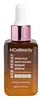
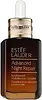
MCoBeauty. Miracle Anti-Aging Repair Serum Versus Estée Lauder Advanced Night Repair Synchronized Multi-Recovery Complex Serum
This anti-aging serum is formulated around Hydrogenated Lecithin and Adenosine to soften the look of wrinkles and strengthen the skin barrier.
This barrier-repair serum is formulated around Bifida Ferment Lysate and Sodium Hyaluronate to strengthen the skin barrier and soften the look of wrinkles.


What's inside
What's inside
 Key Ingredients
Benefits
Concerns
No concerns
Ingredients Side-by-side
Water
Skin ConditioningMethyl Gluceth-20
Humectant
Propanediol
Solvent
Butylene Glycol
Humectant
Phenoxyethanol
Preservative
Carbomer
Emulsion StabilisingArginine
Masking
Hydrogenated Lecithin
Emulsifying
Glycereth-26
Humectant
Bis-PEG-18 Methyl Ether Dimethyl Silane
EmollientEthylhexylglycerin
Skin ConditioningAdenosine
Skin Conditioning

1,2-Hexanediol
Skin Conditioning
Disodium EDTA
ChelatingDextrin
AbsorbentTheobroma Cacao Extract
Skin ConditioningSodium Hyaluronate
Humectant

Tocopherol
Antioxidant



Water
Skin ConditioningBifida Ferment Lysate
Skin Conditioning
PEG-8
HumectantPropanediol
Solvent
Bis-PEG-18 Methyl Ether Dimethyl Silane
EmollientMethyl Gluceth-20
Humectant
Glycereth-26
Humectant
PEG-75
HumectantButylene Glycol
Humectant
Adansonia Digitata Seed Extract
Skin ConditioningTripeptide-32
Skin Conditioning
Sodium Hyaluronate
Humectant
Faex Extract
Skin ConditioningLactobacillus Ferment
Skin Conditioning
Cola Acuminata Seed Extract
Skin ConditioningAnthemis Nobilis Flower Extract
Masking
Hydrolyzed Algin
Pantethine
EmollientCaffeine
Skin Conditioning
Lecithin
Emollient
Sodium Rna
Skin ConditioningBisabolol
Antioxidant
Squalane
Emollient
Glycerin
Humectant
Oleth-3 Phosphate
SurfactantCaprylyl Glycol
Emollient
Oleth-3
Emulsifying


Oleth-5
Emulsifying
Choleth-24
EmulsifyingHydrogenated Lecithin
Emulsifying
Jojoba Wax PEG-120 Esters
Surfactant

Ceteth-24
CleansingTocopheryl Acetate
Antioxidant
Carbomer
Emulsion StabilisingTriethanolamine
BufferingTetrasodium EDTA
ChelatingBHT
Antioxidant
Xanthan Gum
EmulsifyingPotassium Sorbate
Preservative
Disodium EDTA
ChelatingPhenoxyethanol
Preservative
CI 14700
Cosmetic ColorantCI 19140
Cosmetic ColorantWater, Bifida Ferment Lysate, PEG-8, Propanediol, Bis-PEG-18 Methyl Ether Dimethyl Silane, Methyl Gluceth-20, Glycereth-26, PEG-75, Butylene Glycol, Adansonia Digitata Seed Extract, Tripeptide-32, Sodium Hyaluronate, Faex Extract, Lactobacillus Ferment, Cola Acuminata Seed Extract, Anthemis Nobilis Flower Extract, Hydrolyzed Algin, Pantethine, Caffeine, Lecithin, Sodium Rna, Bisabolol, Squalane, Glycerin, Oleth-3 Phosphate, Caprylyl Glycol, Oleth-3, Oleth-5, Choleth-24, Hydrogenated Lecithin, Jojoba Wax PEG-120 Esters, Ceteth-24, Tocopheryl Acetate, Carbomer, Triethanolamine, Tetrasodium EDTA, BHT, Xanthan Gum, Potassium Sorbate, Disodium EDTA, Phenoxyethanol, CI 14700, CI 19140
Reviews
Ingredients Explained
These ingredients are found in both products.
Ingredients higher up in an ingredient list are typically present in a larger amount.
Bis-Peg-18 Methyl Ether Dimethyl Silane belongs to the siloxanes and silicones classes. It is synthetically created and has a waxy composition.
This ingredient is a humectant and emollient, meaning it helps hydrate the skin. Humectants draw moisture to your skin, while emollients prevent moisture from escaping.
Butylene Glycol (or BG) is used within cosmetic products for a few different reasons:
Overall, Butylene Glycol is a safe and well-rounded ingredient that works well with other ingredients.
Though this ingredient works well with most skin types, some people with sensitive skin may experience a reaction such as allergic rashes, closed comedones, or itchiness.
Learn more about Butylene GlycolCarbomer is a synthetic thickening and gelling agent. It's basically the ingredient that gives a lot of serums, gels, creams, and sunscreens their smooth, non-sticky texture.
Although legally permitted at very high levels, carbomers are normally used at concentrations below 1%.
It also needs to be neutralized to actually thicken, and because it is a large molecule, it doesn't really penetrate the skin barrier.
Allergy-wise, the risk is very low. Clinical studies show carbomers have low potential for skin irritation/sensitization even at concentrations up to 100%.
A 2024 UK study patch-tested 1,302 patients and found true allergy to the parent group of carbomer to be rare with no confirmed relevant reactions.
Learn more about CarbomerDisodium EDTA is a chelating agent. It grabs onto and deactivates metal ions that sneak into your products from water, packaging, or air.
This ingredient mainly works behind the scenes and helps with:
On top of that, this ingredient can counteract the effects of hard water by binding to the minerals in it.
One thing worth knowing is that Disodium EDTA has been shown to be a mild penetration enhancer. It can help other ingredients absorb into skin more effectively which can be a double-edged sword (great for actives, but can also make the active too strong if you have sensitive skin).
Clinical patch testing showed no significant skin irritation at typical use concentrations and minimal dermal absorption.
You'll most likely see this ingredient near the end of an ingredient list. It's typically found in concentrations less than 1%.
Learn more about Disodium EDTAGlycereth-26 is a synthetic ingredient and polyethylene glycol ether of Glycerin. Glycerin is already naturally found in your skin and helps keep your skin moisturized.
It is a humectant and helps add texture to products. It can make your product thicker.
As a humectant, it helps draw moisture from the air to your skin. This helps your skin stay hydrated.
Learn more about Glycereth-26Hydrogenated Lecithin is a more stable version of lecithin.
It's made by taking lecithin (a phospholipid commonly found in soybeans and egg yolks) and hydrogenating it. This just means the unsaturated fatty acids are turned into saturated ones so they don't go bad as easily.
This ingredient is an emollient, emulsifier, and penetration enhancer. As an emollient, it helps soften and hydrate skin by trapping moisture within. As an emulsifier, it prevents oil and water ingredients from separating.
Hydrogenated Lecithin can form tiny spherical structures made of phospholipid bilayers called liposomes. These liposomes are able to capture compounds inside their structure and deliver them through the skin barrier.
Because phospholipids are a natural component of our cell membranes, this ingredient is inherently compatible with skin.
A 2021 study found lecithin-based surfactants were less harsh and more tolerable comared to Sodium Lauryl Sulfate (SLS).
Learn more about Hydrogenated LecithinMethyl Gluceth-20 is a humectant. Humectants help draw moisture from the air to your skin.
It is created by combining polyethylene glycol with glucose.
Phenoxyethanol is one of the most widely used preservatives in skincare (and for good reason!).
It has a large spectrum of antimicrobial activity and especially effective bacteria, yeast, and mold while only having a weak effect on your skin's natural microbiome.
On a cellular level, it disrupts the cell membranes of microbes by poking holes that make the cell leak. This shuts down the chemical reactions the microbe needs to make energy so it can no longer survive.
Another perk of this ingredient is that it stays functional across a wide pH range (3-10).
You'll often see it paired with boosters like Ethylhexylglycerin; one study showed that a 1:9 ratio of Ethylhexylglycerin to Phenoxyethanol damages bacterial membranes as effectively as doubling the Phenoxyethanol concentration on its own.
Typical use concentrations range from 0.3-1% depending on the formula, and this ingredient is capped at 1% int the EU.
Safety-wise, the fear mongering does not hold up to the evidence. The EU's Scientific Committee on Consumer Safety and FDA consider it safe as a preservative at up to 1%, including for children of all ages.
Adverse systemic effects only showed up in animal studies at exposures roughly 200x higher than what people get from cosmetics. And despite its very widespread use, this ingredient is a rare sensitizer and allergic reactions are uncommon.
Learn more about PhenoxyethanolPropanediol is an all-star ingredient. It softens, hydrates, and smooths the skin.
It’s often used to:
Propanediol is not likely to cause sensitivity and considered safe to use. It is derived from corn or petroleum with a clear color and no scent.
Learn more about PropanediolSodium Hyaluronate is the salt form of hyaluronic acid. It is a long sugar chain that is naturally found in your skin, joints, and connective tissue that maintains hydration and elasticity.
In skincare, it works as a humectant. It pulls water from the environment and deeper layers of skin and binds it to the surface.
Interestingly, the size of the molecule affects its behavior:
Some clinical evidence links low molecular weight versions to improved wrinkle depth, elasticity, anti-inflammatory effects, and barrier repair.
Many serums use a blend of both weights so you can get surface hydration plus longer-lasting and deeper effects.
You'll typically see concentrations between 0.1-2% for this ingredient.
Learn more about Sodium HyaluronateWater. It's the most common cosmetic ingredient of all. You'll usually see it at the top of ingredient lists, meaning that it makes up the largest part of the product.
So why is it so popular? Water most often acts as a solvent - this means that it helps dissolve other ingredients into the formulation.
You'll also recognize water as that liquid we all need to stay alive. If you see this, drink a glass of water. Remember to stay hydrated!
Learn more about Water

