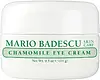
This calming eye moisturizer is formulated around Chamomilla Recutita Flower Extract and Tocopheryl Acetate to calm redness and hydrate skin.
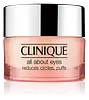
This eye moisturizer is formulated around Caffeine and Phytosphingosine to hydrate skin.

What's inside
What's inside
 Key Ingredients
Benefits
Concerns
Ingredients Side-by-side
Water
Skin ConditioningOlus Oil
Emollient




Arachis Hypogaea Oil
Skin Conditioning
Paraffinum Liquidum
Emollient

Petrolatum
Emollient
Cetyl Esters
Emollient
Tocopheryl Acetate
Antioxidant


Zea Mays Oil
Emulsifying
Cera Alba
Emollient
Cetearyl Alcohol
Emollient
Glycerin
Humectant

Sodium Borate
BufferingCeteareth-20
Cleansing
Chamomilla Recutita Flower Extract
Masking

Tocopherol
Antioxidant

Propylene Glycol
Humectant
Theobroma Cacao Seed Butter
Emollient
Diazolidinyl Urea
Preservative
Sodium Benzoate
Masking
Triethanolamine
BufferingMethylparaben
Preservative

Retinyl Palmitate
Skin Conditioning
Propylparaben
Preservative
Hydrogenated Starch Hydrolysate
HumectantSodium Chloride
MaskingCaramel
Cosmetic ColorantCI 42090
Cosmetic ColorantCI 16035
Cosmetic ColorantCI 19140
Cosmetic ColorantCI 15985
Cosmetic ColorantWater, Olus Oil, Arachis Hypogaea Oil, Paraffinum Liquidum, Petrolatum, Cetyl Esters, Tocopheryl Acetate, Zea Mays Oil, Cera Alba, Cetearyl Alcohol, Glycerin, Sodium Borate, Ceteareth-20, Chamomilla Recutita Flower Extract, Tocopherol, Propylene Glycol, Theobroma Cacao Seed Butter, Diazolidinyl Urea, Sodium Benzoate, Triethanolamine, Methylparaben, Retinyl Palmitate, Propylparaben, Hydrogenated Starch Hydrolysate, Sodium Chloride, Caramel, CI 42090, CI 16035, CI 19140, CI 15985
Cyclopentasiloxane
Emollient
Water
Skin ConditioningIsostearyl Palmitate
Emollient
Polyethylene
Abrasive
Butylene Glycol
Humectant
Polysilicone-11

Ethylene/Acrylic Acid Copolymer
Emulsion StabilisingMorus Bombycis Root Extract
Skin ConditioningCaffeine
Skin Conditioning
Phytosphingosine
Skin Conditioning
Triticum Vulgare Bran Extract
Skin ConditioningScutellaria Baicalensis Root Extract
Astringent
Whey Protein
Skin ConditioningOlea Europaea Fruit Extract
BleachingCamellia Sinensis Leaf Extract
Antimicrobial
Cholesterol
Emollient
Linoleic Acid
Cleansing
Tocopheryl Acetate
Antioxidant
Magnesium Ascorbyl Phosphate
Antioxidant

Pyridoxine Dipalmitate
Skin ConditioningSucrose
Humectant
Glycerin
Humectant
Dimethicone
Emollient
Glyceryl Laurate
Emollient
PEG/PPG-18/18 Dimethicone
Emulsifying
Petrolatum
Emollient
Cetyl PEG/PPG-10/1 Dimethicone
Emulsifying
Propylene Carbonate
SolventSodium Chloride
MaskingQuaternium-90 Bentonite
Disodium EDTA
ChelatingPhenoxyethanol
Preservative
CI 77491
Cosmetic ColorantCI 77492
Cosmetic ColorantCI 77499
Cosmetic ColorantCyclopentasiloxane, Water, Isostearyl Palmitate, Polyethylene, Butylene Glycol, Polysilicone-11, Ethylene/Acrylic Acid Copolymer, Morus Bombycis Root Extract, Caffeine, Phytosphingosine, Triticum Vulgare Bran Extract, Scutellaria Baicalensis Root Extract, Whey Protein, Olea Europaea Fruit Extract, Camellia Sinensis Leaf Extract, Cholesterol, Linoleic Acid, Tocopheryl Acetate, Magnesium Ascorbyl Phosphate, Pyridoxine Dipalmitate, Sucrose, Glycerin, Dimethicone, Glyceryl Laurate, PEG/PPG-18/18 Dimethicone, Petrolatum, Cetyl PEG/PPG-10/1 Dimethicone, Propylene Carbonate, Sodium Chloride, Quaternium-90 Bentonite, Disodium EDTA, Phenoxyethanol, CI 77491, CI 77492, CI 77499
Reviews
Ingredients Explained
These ingredients are found in both products.
Ingredients higher up in an ingredient list are typically present in a larger amount.
Glycerin (or glycerol) is a compound naturally found in your skin. It's a powerhouse humectant that pulls water into the stratum corneum.
Topically, glycerin does several things at once:
Your skin makes glycerin on its own (mostly from sebaceous oil breakdown) and shuttles it to your outermost layer of skin, or your epidermis, via aquaporin-3.
Aquaporin-3 is a transporter that is essential for normal skin hydration, elasticity, and repair. Interestingly, mice lacking in AQP3 have dry and less elastic skin that can be fully corrected with glycerin.
This ingredient is non-irritating, plays well with almost every ingredient, and works across all skin types. Typical use is anywhere between 3-10% but can go up to 79% in some leave-on products.
Just know very high concentrations (>40%) can feel tacky in low humidity.
Glycerin is the name for this ingredient in American English. British English uses Glycerol/Glycerine.
Learn more about GlycerinPetrolatum is more commonly known as petroleum jelly. It is created by mixing waxes and mineral oils.
This ingredient is effective at reducing water loss by 99%. This is because it is an occlusive. Occlusives create a hydrophobic barrier on the skin to prevent evaporation. This property makes it great for hydrating dry skin.
Pro tip: Use occlusives, such as this ingredient, on damp skin for the best results.
The quality or origin of petrolatum is only known when disclosed by the brand. Most cosmetic petrolatum has gone through several purification stages.
Another benefit of occlusives is it protects your skin against infection or allergies.
Petrolatum is fungal acne safe. It is a hydrocarbon with no fatty acid structure, so Malassezia cannot metabolize it. In-vitro studies support negligible growth stimulation as well.
It's also worth noting that petrolatum has a comedogenic rating of 0. In updated rabbit ear testing (and in human testing), petrolatum was found to be not comedogenic. This means it didn’t promote comedone formation in standard models.
Learn more about PetrolatumChances are, you eat sodium chloride every day. Sodium Chloride is also known as table salt. This ingredient has many purposes in skincare: thickener, emulsifier, and exfoliator.
You'll most likely find this ingredient in cleansers where it is used to create a gel-like texture. As an emulsifier, it also prevents ingredients from separating.
You might see people debate whether Sodium Chloride is comedogenic, but there actually haven't been any comedogenic tests done on it. Either way, the overall formulation of a product matters a lot more than any single ingredient.
You might see this ingredient used in scrubs as a primary exfoliating ingredient.
Learn more about Sodium ChlorideTocopheryl Acetate is a stable, shelf-friendly form of vitamin E.
Formulators love it because plain vitamin E oxidizes quickly once it hits air. This acetate version stays stable and resists going off, helping to extend a product's shelf life.
It's actually inactive on its own and works like a slow-release "storage" form; the enzymes in your skin called esterases gradually convert it into active vitamin E over time.
One in vivo study showed 5% of the acetate in the living layer of the epidermis converted to vitamin E after 5 days of application. This study also found the skin gained protection against UV damage even though the conversion was slow and small.
Once converted, vitamin E acts as a skin's main fat-soluble antioxidant that fights free radicals to protect skin from damage.
Topical vitamin E generally boosts the skin's photoprotection, and it reduced UV-damage in animal models.
This ingredient has some brightening potential but it's more of a prevention ingredient than spot-fader. Cell studies show it can slow down melanin production but it's worth noting that it's not the most powerful brightener out there.
Overall, it has a pretty solid safety profile and has been found to be non-irritating and non-comedogenic. Allergic reactions may happen but stay rare due to how widely the ingredient gets used.
The concentration will vary depending on the formula; industry data shows 0.1% in baby lotions, 3% in lipsticks, and 5% in foot powders. You can also find this ingredient at 100% in a pure vitamin E oil.
Most leave-on skincare keeps it at the lower end, often between 0.5-1%.
Learn more about Tocopheryl AcetateWater. It's the most common cosmetic ingredient of all. You'll usually see it at the top of ingredient lists, meaning that it makes up the largest part of the product.
So why is it so popular? Water most often acts as a solvent - this means that it helps dissolve other ingredients into the formulation.
You'll also recognize water as that liquid we all need to stay alive. If you see this, drink a glass of water. Remember to stay hydrated!
Learn more about Water

