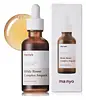
This barrier-repair ampoule is formulated around Bifida Ferment Lysate and Niacinamide to strengthen the skin barrier and soften the look of wrinkles.
This barrier-repair ampoule is formulated around Bifida Ferment Lysate and Niacinamide to strengthen the skin barrier and soften the look of wrinkles.

What's inside
What's inside
 Key Ingredients
Benefits
Concerns
No concerns
Ingredients Side-by-side
Water
Skin ConditioningButylene Glycol
Humectant

Bifida Ferment Lysate
Skin Conditioning

Glycerin
Humectant
Niacinamide
Smoothing







1,2-Hexanediol
Skin Conditioning
Pentylene Glycol
Skin Conditioning
Squalane
Emollient
Polyglyceryl-10 Laurate
Skin Conditioning

Bifida Ferment Filtrate
Skin Conditioning
Lactobacillus Ferment Lysate
Skin Conditioning
Lactococcus Ferment Lysate
Skin Conditioning
Saccharomyces Ferment Filtrate
Humectant
Carbomer
Emulsion StabilisingHydrogenated Lecithin
Emulsifying
Tromethamine
BufferingXanthan Gum
EmulsifyingPropanediol
Solvent
Ethylhexylglycerin
Skin ConditioningAdenosine
Skin Conditioning
Dextrin
AbsorbentTheobroma Cacao Seed Extract
Antioxidant
Sodium Hyaluronate
Humectant
Sodium Phytate
Lactobacillus/Pumpkin Fruit Ferment Filtrate
Skin ConditioningCutibacterium Granulosum Ferment Extract Filtrate
EmollientCaffeine
Skin Conditioning
Leontopodium Alpinum Callus Culture Extract
Antioxidant
Physalis Alkekengi Calyx Extract
Skin ConditioningHydrolyzed Algin
Aureobasidium Pullulans Ferment
Skin ConditioningEpigallocatechin Gallate
Antioxidant
Benzyl Glycol
SolventHydrolyzed Glycosaminoglycans
HumectantAsiatic Acid
Skin Conditioning
Asiaticoside
Antioxidant
Madecassic Acid
Skin Conditioning
Hydroxypropyltrimonium Hyaluronate
Sodium Hyaluronate Crosspolymer
Humectant
Hydrolyzed Hyaluronic Acid
Humectant
Sodium Acetylated Hyaluronate
Humectant
Hyaluronic Acid
Humectant
Copper Tripeptide-1
Skin Conditioning
Hydrolyzed Sodium Hyaluronate
Skin Conditioning
Acetyl Hexapeptide-8
Humectant
Potassium Hyaluronate
Skin ConditioningWater, Butylene Glycol, Bifida Ferment Lysate, Glycerin, Niacinamide, 1,2-Hexanediol, Pentylene Glycol, Squalane, Polyglyceryl-10 Laurate, Bifida Ferment Filtrate, Lactobacillus Ferment Lysate, Lactococcus Ferment Lysate, Saccharomyces Ferment Filtrate, Carbomer, Hydrogenated Lecithin, Tromethamine, Xanthan Gum, Propanediol, Ethylhexylglycerin, Adenosine, Dextrin, Theobroma Cacao Seed Extract, Sodium Hyaluronate, Sodium Phytate, Lactobacillus/Pumpkin Fruit Ferment Filtrate, Cutibacterium Granulosum Ferment Extract Filtrate, Caffeine, Leontopodium Alpinum Callus Culture Extract, Physalis Alkekengi Calyx Extract, Hydrolyzed Algin, Aureobasidium Pullulans Ferment, Epigallocatechin Gallate, Benzyl Glycol, Hydrolyzed Glycosaminoglycans, Asiatic Acid, Asiaticoside, Madecassic Acid, Hydroxypropyltrimonium Hyaluronate, Sodium Hyaluronate Crosspolymer, Hydrolyzed Hyaluronic Acid, Sodium Acetylated Hyaluronate, Hyaluronic Acid, Copper Tripeptide-1, Hydrolyzed Sodium Hyaluronate, Acetyl Hexapeptide-8, Potassium Hyaluronate
Bifida Ferment Lysate 60%
Skin Conditioning
Lactobacillus/Pumpkin Fruit Ferment Filtrate 30.1%
Skin ConditioningNiacinamide
Smoothing
Butylene Glycol
Humectant
Acetyl Hexapeptide-8
Humectant
Aureobasidium Pullulans Ferment
Skin ConditioningHydrolyzed Algin
Caffeine
Skin Conditioning
Panax Ginseng Root Extract
Emollient
Panax Ginseng Callus Culture Extract
Skin ConditioningGlycerin
Humectant
Epigallocatechin Gallate
Antioxidant
Zanthoxylum Piperitum Fruit Extract
Skin ConditioningPulsatilla Koreana Extract
Skin ConditioningUsnea Barbata Extract
Copper Tripeptide-1
Skin Conditioning
Physalis Alkekengi Fruit Extract
Skin ConditioningMethyl Gluceth-20
Humectant
Sodium Hyaluronate
Humectant
Adenosine
Skin Conditioning
Bifida Ferment Lysate 60%, Lactobacillus/Pumpkin Fruit Ferment Filtrate 30.1%, Niacinamide, Butylene Glycol, Acetyl Hexapeptide-8, Aureobasidium Pullulans Ferment, Hydrolyzed Algin, Caffeine, Panax Ginseng Root Extract, Panax Ginseng Callus Culture Extract, Glycerin, Epigallocatechin Gallate, Zanthoxylum Piperitum Fruit Extract, Pulsatilla Koreana Extract, Usnea Barbata Extract, Copper Tripeptide-1, Physalis Alkekengi Fruit Extract, Methyl Gluceth-20, Sodium Hyaluronate, Adenosine
Reviews
Ingredients Explained
These ingredients are found in both products.
Ingredients higher up in an ingredient list are typically present in a larger amount.
Acetyl Hexapeptide-8 (also known as Argireline) is a synthetic hexapeptide that is often called a "topical Botox alternative".
It works by mimicking how Botox relaxes muscles; it interferes with the signaling process that tells your facial muscles to contract. This can help soften expression lines like forehead wrinkles or crow's feet over time.
The comparison to Botox does have limits because the molecule is water-loving and relatively large.
Acetyl Hexapeptide-8 has a hard time absorbing deeply enough through the skin's outer barrier to actually reach the muscles.
So whether it truly works the way Botox does at a biological level is still up for debate, but early clinical outcomes are fairly encouraging.
A 12 week human study of a multi-ingredient regimen containing this ingredient saw:
While some studies have observed improvements in wrinkle appearance, it is important to note that more consistent results are seen in multi-ingredient formulations (vs just Acetyl Hexapeptide-8 alone).
Some research studies also used higher concentrations (up to 10%) while this ingredient is usually found in concentrations up to 0.005% in leave-on formulations.
Learn more about Acetyl Hexapeptide-8Adenosine is a purine nucleoside that your body already makes in every cell. In skincare, it acts mainly as a skin conditioning and anti-aging agent.
The way it works is fairly well mapped out:
Your skin has cells called fibroblasts that build collagen (the stuff that keeps skin firm and smooth). Adenosine basically flips a switch on these cells that tells them to get to work making more collagen and other proteins. These cells slow down on their own as skin ages, so Adenosine helps give them a little nudge to keep going.
The clinical backing is pretty solid too.
A blind, randomized, placebo-controlled trial of 126 women aged 45-65 tested a 0.1% cream twice daily and found real improvements in crow's feet and frown lines using a precise 3D skin-mapping technique; these changes showed up by week 3 and held at 2 months.
A later study using Adenosine-loaded dissolving microneedle patches reported gains in wrinkle depth, dermal density, elasticity, and hydration.
On concentrations, South Korea's Ministry of Food and Drug Safety has set 0.04% as the approved functional anti-wrinkle level. You'll typically see this ingredient used somewhere in the 0.04-0.1% range since it works at low doses.
This ingredient has been found safe for cosmetics with the data showing no irritation or sensitization.
Overall, this is a great ingredient for any anti-aging routine and has no photosensitizing effect, so it suits both AM and PM use.
Learn more about AdenosineWe don't have a description for Aureobasidium Pullulans Ferment yet.
Bifida Ferment Lysate is a postbiotic ingredient made by fermenting Bifidobacterium to extract a nutrient-rich mix of peptides, amino acids, vitamins, organic acids, and polysaccharides.
These components are basically the building blocks that your skin already uses to stay hydrated, repair itself, and maintain its barrier. That's why this ingredient helps your skin hold onto moisture and stay resilient against irritation.
One in-vitro study found that this ingredient tells your skin cells to produce more of the proteins (filaggrin, loricrin, and involucrin) for building a strong and healthy barrier. This study also found this ingredient to be a solid antioxidant that helped neutralize damage against UV and pollution.
A study with people from 2010 found that sensitive, reactive skin using a cream with 10% of this ingredient for a month became noticeably less dry, less reactive, and harder to irritate compared to the group using a plain cream.
In short, this ingredient is a well-tolerated ingredient that can help with barrier repair, antioxidant protection, and calming reactive skin.
This ingredient is generally considered fungal acne (Malassezia) safe; Bifidobacterium is a bacterium, not a yeast or fungus.
The fungal acne concern with fermented ingredients mainly applies to yeast-derived ferments like Saccharomyces and Galactomyces, because those are in the same kingdom as Malassezia and could theoretically contain residual compounds that feed it.
Bifida is a completely different organism, so on its own it doesn't provide a food source for the Malassezia yeast that causes fungal acne.
Learn more about Bifida Ferment LysateButylene Glycol (or BG) is used within cosmetic products for a few different reasons:
Overall, Butylene Glycol is a safe and well-rounded ingredient that works well with other ingredients.
Though this ingredient works well with most skin types, some people with sensitive skin may experience a reaction such as allergic rashes, closed comedones, or itchiness.
Learn more about Butylene GlycolCaffeine is a naturally occurring plant compound found in coffee beans, tea leaves, cocoa pods, and guarana.
As an antioxidant, caffeine protects your skin from free radical damage caused by UV exposure and envionrmnetal stressors.
Early research also shows that caffeine can help calm redness, soothe irritated skin, and support hair growth by stimulating microcirculation in the scalp.
You might have seen eye creams marketing caffeine as a depuffing ingredient. This is because it is a vasoconstrictor meaning it can temporarily constrict blood vessels, though clinical evidence for this specific use is still limited.
Most skincare products contain this ingredient at concentrations between 1-6%. It is able to penetrate skin easily regardless of skin type or thickness.
Just so you know, a very small number of case reports describe caffeine-induced allergy. This ingredient is generally well-tolerated, non-irritating, and non-sensitizing for the majority of people.
Learn more about CaffeineCopper Tripeptide-1 (GHK-Cu) is a skin repairing ingredient known for its ability to boost collagen, improve firmness, and support skin regeneration.
It is a complex made up of a naturally occurring peptide (glycine-histidine-lysine) and copper, an essential trace element.
While studying wound healing, researchers noticed GHK-Cu stimulated hair follicle enlargement and growth by keeping hair in its active growth phase longer. This has made it a promising ingredient for hair regrowth treatments.
Some people have reported increased facial hair. While GHK-Cu can make your hair follicles bigger, it usually doesn’t turn soft, barely-visible facial hairs into thick, dark ones.
Anecdotal reports suggest that overusing copper peptides might lead to premature aging due to excess free copper or enzyme imbalances. This claim isn’t backed by large-scale studies.
Unfortunately, there are limited human studies for this ingredient. While early results are promising, many studies are either small, in-vitro, or not rigorously controlled.
For example, there is a 1998 study that explored the effects of copper tripeptide, vitamin C, tretinoin, and melatonin on skin repair and collagen synthesis.
After one month, increased procollagen production was seen in 7 out of 10 participants using copper tripeptide (more than those using vitamin C, melatonin, or tretinoin.
While the study was exploratory, it offers early evidence that copper tripeptide may support collagen production. Larger, well-designed trials are still needed to confirm its potential and understand individual responses.
Read more about other common types of peptides here:
Learn more about Copper Tripeptide-1Epigallocatechin Gallate (EGCG) is the most abundant catechin in green tea. It is a heavyweight antioxidant in the green tea family.
In skincare, it helps protect skin from photoaging damage by scavenging UV-induced reactive oxygen species and tampering down inflammatory pathways.
UV-exposed skin cells treated with EGCG showed less of the enzyme that chews up collagen, lower inflammatory signaling, and better preserved barrier function.
EGCG nudges skin cells to make more of your skin's built in moisturizing molecules, filaggrin and hyaluronic acid, for better skin hydration.
Because it inhibits melanogenesis, it also provides a mild brightening effect.
Clinically, topical EGCG has helped calm radiation-related skin irritation and scalp seborrheic dermatitis with no major side effects.
In an 8-week split-face study, topical EGCG at 1% and 5% significantly reduced inflammatory and non-inflammatory acne.
A study from 2023 on patients with Seborrhea (a chronic skin condition caused by overactive sebaceous glands) found that using a 5% EGCG cream (alone and combined with 2% L-carnitine) and found meaningful sebum reduction plus better hydration.
Just one caveat here: Most clinical trials used 1-5% concentrations and most cosmetics contain only 0.1-1%.
The only headache related to this ingredient is stability. EGCG degrades quickly with heat, light, oxygen, and higher pH.
That's why you'll usually see it in low-pH formulas (4.5-6.5) or paired with vitamin C + vitamin E to slow its degradation. Hyaluronic acid also stabilizes it and boosts its antioxidant activity.
Learn more about Epigallocatechin GallateGlycerin (or glycerol) is a compound naturally found in your skin. It's a powerhouse humectant that pulls water into the stratum corneum.
Topically, glycerin does several things at once:
Your skin makes glycerin on its own (mostly from sebaceous oil breakdown) and shuttles it to your outermost layer of skin, or your epidermis, via aquaporin-3.
Aquaporin-3 is a transporter that is essential for normal skin hydration, elasticity, and repair. Interestingly, mice lacking in AQP3 have dry and less elastic skin that can be fully corrected with glycerin.
This ingredient is non-irritating, plays well with almost every ingredient, and works across all skin types. Typical use is anywhere between 3-10% but can go up to 79% in some leave-on products.
Just know very high concentrations (>40%) can feel tacky in low humidity.
Glycerin is the name for this ingredient in American English. British English uses Glycerol/Glycerine.
Learn more about GlycerinThis ingredient is made from brown seaweed and is often used to improve the texture of products.
According to a manufacturer, this is a lightweight ingredient and a smaller form of algin. This allows it to be easily mixed with water and improve the spreadability of products.
It also has conditioning properties that mostly sits on the surface of skin as an emollient. Some lab research has explored it in anti-aging formulas, but the results were modest.
Learn more about Hydrolyzed AlginWe don't have a description for Lactobacillus/Pumpkin Fruit Ferment Filtrate yet.
Niacinamide is a multitasking form of vitamin B3 that strengthens the skin barrier, reduces pores and dark spots, regulates oil, and improves signs of aging.
And the best part? It's gentle and well-tolerated by most skin types, including sensitive and reactive skin.
You might have heard of "niacin flush", or the reddening of skin that causes itchiness. Niacinamide has not been found to cause this.
In very rare cases, some individuals may not be able to tolerate niacinamide at all or experience an allergic reaction to it.
If you are experiencing flaking, irritation, and dryness with this ingredient, be sure to double check all your products as this ingredient can be found in all categories of skincare.
When incorporating niacinamide into your routine, look out for concentration amounts. Typically, 5% niacinamide provides benefits such as fading dark spots. However, if you have sensitive skin, it is better to begin with a smaller concentration.
When you apply niacinamide to your skin, your body converts it into nicotinamide adenine dinucleotide (NAD). NAD is an essential coenzyme that is already found in your cells as "fuel" and powers countless biological processes.
In your skin, NAD helps repair cell damage, produce new healthy cells, support collagen production, strengthen the skin barrier, and fight environmental stressors (like UV and pollution).
Our natural NAD levels start to decline with age, leading to slower skin repair, visible aging, and a weaker skin barrier. By providing your skin niacinamide, you're recharging your skin's NAD levels. This leads to stronger, healthier, and younger looking skin.
Another name for vitamin B3 is nicotinamide. This vitamin is water-soluble and our bodies don't store it. We obtain Vitamin B3 from either food or skincare. Meat, fish, wheat, yeast, and leafy greens contain vitamin B3.
The type of niacinamide used in skincare is synthetically created.
Learn more about NiacinamideSodium Hyaluronate is the salt form of hyaluronic acid. It is a long sugar chain that is naturally found in your skin, joints, and connective tissue that maintains hydration and elasticity.
In skincare, it works as a humectant. It pulls water from the environment and deeper layers of skin and binds it to the surface.
Interestingly, the size of the molecule affects its behavior:
Some clinical evidence links low molecular weight versions to improved wrinkle depth, elasticity, anti-inflammatory effects, and barrier repair.
Many serums use a blend of both weights so you can get surface hydration plus longer-lasting and deeper effects.
You'll typically see concentrations between 0.1-2% for this ingredient.
Learn more about Sodium Hyaluronate

