This hydrating emulsion is formulated around Squalane and Butyrospermum Parkii Butter to hydrate skin and strengthen the skin barrier.
This hydrating emulsion is formulated around Centella Asiatica Extract and Panax Ginseng Root Extract to hydrate skin and strengthen the skin barrier.


What's inside
What's inside
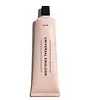 Key Ingredients
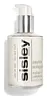
No key ingredients
Benefits
Concerns
Ingredients Side-by-side
Water
Skin ConditioningOleyl Erucate
Emollient

Squalane
Emollient


Glycerin
Humectant
Butyrospermum Parkii Butter
Skin Conditioning


Glycine Soja Oil
Emollient


Oenothera Biennis Oil
Emollient
Cetearyl Alcohol
Emollient

Cetyl Phosphate
EmulsifyingArginine
Masking
Myristyl Myristate
Emollient
Olive Glycerides
Emulsifying
Phenoxyethanol
Preservative
Oryzanol
Skin ConditioningCarbomer
Emulsion StabilisingCeramide NP
Skin Conditioning
Benzoic Acid
Masking
Glyceryl Laurate
Emollient
Sodium Hyaluronate
Humectant
Tocopherol
Antioxidant


Xanthan Gum
EmulsifyingCananga Odorata Flower Oil
Masking



Dehydroacetic Acid
Preservative
Pelargonium Graveolens Flower Oil
Masking
Rosa Damascena Flower Extract
Masking
Benzyl Benzoate
Antimicrobial
Benzyl Salicylate
Perfuming
Citronellol
Perfuming
Farnesol
Perfuming
Geraniol
Perfuming
Linalool
Perfuming
Water, Oleyl Erucate, Squalane, Glycerin, Butyrospermum Parkii Butter, Glycine Soja Oil, Oenothera Biennis Oil, Cetearyl Alcohol, Cetyl Phosphate, Arginine, Myristyl Myristate, Olive Glycerides, Phenoxyethanol, Oryzanol, Carbomer, Ceramide NP, Benzoic Acid, Glyceryl Laurate, Sodium Hyaluronate, Tocopherol, Xanthan Gum, Cananga Odorata Flower Oil, Dehydroacetic Acid, Pelargonium Graveolens Flower Oil, Rosa Damascena Flower Extract, Benzyl Benzoate, Benzyl Salicylate, Citronellol, Farnesol, Geraniol, Linalool
Water
Skin ConditioningParaffinum Liquidum
Emollient
Butylene Glycol
Humectant
Triethanolamine
BufferingPalmitic Acid
Emollient
Stearic Acid
Cleansing
Centella Asiatica Extract
Cleansing
Equisetum Arvense Extract
AstringentHumulus Lupulus Extract
AntimicrobialPanax Ginseng Root Extract
Emollient
Rosmarinus Officinalis Leaf Extract
AntimicrobialGlycerin
Humectant
Glyceryl Stearate
Emollient
Stearyl Alcohol
Emollient
Carbomer
Emulsion StabilisingParfum
Masking
Phenoxyethanol
Preservative
Benzoic Acid
Masking
Potassium Sorbate
Preservative
Sodium Benzoate
Masking
Limonene
Perfuming
Benzyl Benzoate
Antimicrobial
Coumarin
Perfuming
Citral
Perfuming
Water, Paraffinum Liquidum, Butylene Glycol, Triethanolamine, Palmitic Acid, Stearic Acid, Centella Asiatica Extract, Equisetum Arvense Extract, Humulus Lupulus Extract, Panax Ginseng Root Extract, Rosmarinus Officinalis Leaf Extract, Glycerin, Glyceryl Stearate, Stearyl Alcohol, Carbomer, Parfum, Phenoxyethanol, Benzoic Acid, Potassium Sorbate, Sodium Benzoate, Limonene, Benzyl Benzoate, Coumarin, Citral
Ingredients Explained
These ingredients are found in both products.
Ingredients higher up in an ingredient list are typically present in a larger amount.
Benzoic Acid is an organic acid that shows up in cosmetics as a preservative. It helps keep a product from spoiling by holding back the growth of yeast, mold, and some bacteria.
This ingredient also functions as a fragrance ingredient that helps mask the unpleasant scent of other ingredients.
The way it works is worth understanding; benzoic acid works when the formula is acidic. It is able to sneak into a microbe's cell and mess up how it functions to stop it from growing in an acidic product.
However, the acid switches to an inactive form and stops working if a product isn't acidic enough (above ~5 pH). This is why you'll often see it in low pH products or teamed up with other preservatives to cover the gap.
Safety wise, it's one of the better studied preservatives out there.
The Cosmetic Ingredient Review Expert Panel has concluded this ingredient to be safe for use in cosmetic formulations at concentrations up to 5%.
A large international review found this ingredient had no effects on the human body and had low irritation potential.
Just so you know, real world use is usually much lower than the 5% ceiling (usually 1% of less).
The EU caps it at 2.5% in rinse-off products, 1.7% in oral care, and 0.5% in leave-on products.
One thing worth mentioning (it's nothing to worry about): some people get a little stinging or flushing where they apply it. This isn't a true allergy; it's a temporary and harmless reaction. This is the same kind of mild tingle you might notice from sorbic acid.
Learn more about Benzoic AcidBenzyl Benzoate is usually created from the condensation of benzoic acid and benzyl alcohol. It is used as a preservative, solvent, and has a floral/balsamic scent in large amounts.
As a preservative, Benzyl Benzoate works against bacteria and fungus. It is often used to treat scabies and lice in medicine.
Solvents are used to keep ingredients together in a product. They can help dissolve ingredients to stable bases or help evenly distribute ingredients throughout the product.
Due to its fragrance, Benzyl Benzoate can be sensitizing and may cause contact dermatitis. It is a known EU allergen. We recommend speaking with a professional if you have any concerns.
Benzyl Benzoate can be naturally found in cranberries and peaches.
Learn more about Benzyl BenzoateCarbomer is a synthetic thickening and gelling agent. It's basically the ingredient that gives a lot of serums, gels, creams, and sunscreens their smooth, non-sticky texture.
Although legally permitted at very high levels, carbomers are normally used at concentrations below 1%.
It also needs to be neutralized to actually thicken, and because it is a large molecule, it doesn't really penetrate the skin barrier.
Allergy-wise, the risk is very low. Clinical studies show carbomers have low potential for skin irritation/sensitization even at concentrations up to 100%.
A 2024 UK study patch-tested 1,302 patients and found true allergy to the parent group of carbomer to be rare with no confirmed relevant reactions.
Learn more about CarbomerGlycerin (or glycerol) is a compound naturally found in your skin. It's a powerhouse humectant that pulls water into the stratum corneum.
Topically, glycerin does several things at once:
Your skin makes glycerin on its own (mostly from sebaceous oil breakdown) and shuttles it to your outermost layer of skin, or your epidermis, via aquaporin-3.
Aquaporin-3 is a transporter that is essential for normal skin hydration, elasticity, and repair. Interestingly, mice lacking in AQP3 have dry and less elastic skin that can be fully corrected with glycerin.
This ingredient is non-irritating, plays well with almost every ingredient, and works across all skin types. Typical use is anywhere between 3-10% but can go up to 79% in some leave-on products.
Just know very high concentrations (>40%) can feel tacky in low humidity.
Glycerin is the name for this ingredient in American English. British English uses Glycerol/Glycerine.
Learn more about GlycerinPhenoxyethanol is one of the most widely used preservatives in skincare (and for good reason!).
It has a large spectrum of antimicrobial activity and especially effective bacteria, yeast, and mold while only having a weak effect on your skin's natural microbiome.
On a cellular level, it disrupts the cell membranes of microbes by poking holes that make the cell leak. This shuts down the chemical reactions the microbe needs to make energy so it can no longer survive.
Another perk of this ingredient is that it stays functional across a wide pH range (3-10).
You'll often see it paired with boosters like Ethylhexylglycerin; one study showed that a 1:9 ratio of Ethylhexylglycerin to Phenoxyethanol damages bacterial membranes as effectively as doubling the Phenoxyethanol concentration on its own.
Typical use concentrations range from 0.3-1% depending on the formula, and this ingredient is capped at 1% int the EU.
Safety-wise, the fear mongering does not hold up to the evidence. The EU's Scientific Committee on Consumer Safety and FDA consider it safe as a preservative at up to 1%, including for children of all ages.
Adverse systemic effects only showed up in animal studies at exposures roughly 200x higher than what people get from cosmetics. And despite its very widespread use, this ingredient is a rare sensitizer and allergic reactions are uncommon.
Learn more about PhenoxyethanolWater. It's the most common cosmetic ingredient of all. You'll usually see it at the top of ingredient lists, meaning that it makes up the largest part of the product.
So why is it so popular? Water most often acts as a solvent - this means that it helps dissolve other ingredients into the formulation.
You'll also recognize water as that liquid we all need to stay alive. If you see this, drink a glass of water. Remember to stay hydrated!
Learn more about Water

