

What's inside
What's inside
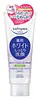 Benefits
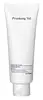
Concerns
Ingredients Side-by-side
Dipotassium Glycyrrhizate
Humectant

Myristic Acid
Cleansing




Glycerin
Humectant

Stearic Acid
Cleansing
Potassium Hydroxide
BufferingLauric Acid
Cleansing
PEG-8
HumectantPPG-8-Ceteth-20
EmulsifyingSulfuric Acid
BufferingMilk Ferment
Skin ConditioningButylene Glycol
Humectant
Sodium Lauroyl Glutamate
SurfactantLauroyl Lysine
Skin Conditioning
Silk Powder
Skin ConditioningGlycol Stearate
Emollient
Hydroxypropyl Methylcellulose
Emulsion StabilisingSodium Laureth Sulfate
Cleansing


Glyceryl Stearate Se
Emulsifying
Alcohol
Antimicrobial
Ethylparaben
Preservative


Methylparaben
Preservative
Dipotassium Glycyrrhizate, Myristic Acid, Glycerin, Stearic Acid, Potassium Hydroxide, Lauric Acid, PEG-8, PPG-8-Ceteth-20, Sulfuric Acid, Milk Ferment, Butylene Glycol, Sodium Lauroyl Glutamate, Lauroyl Lysine, Silk Powder, Glycol Stearate, Hydroxypropyl Methylcellulose, Sodium Laureth Sulfate, Glyceryl Stearate Se, Alcohol, Ethylparaben, Methylparaben
Saposhnikovia Divaricata Root Extract
AntimicrobialGlycerin
Humectant
Myristic Acid
Cleansing
Lauric Acid
Cleansing
Potassium Hydroxide
BufferingWater
Skin ConditioningPalmitic Acid
Emollient
Stearic Acid
Cleansing
Glycol Distearate
Emollient
Glyceryl Stearate
Emollient
Glyceryl Stearate Se
Emulsifying
PEG-100 Stearate
Surfactant
Lauramide DEA
Foam Boosting1,2-Hexanediol
Skin Conditioning
Butylene Glycol
Humectant
Glyceryl Caprylate
EmollientOzokerite
Emulsion StabilisingHydrogenated Vegetable Oil
Emollient
Beeswax
Emulsion Stabilising
Sodium Chloride
MaskingStearyl Stearate
Emollient
Hydrogenated Palm Acid
Capric Acid
Cleansing

Oleic Acid
Emollient
Sodium Polyacrylate
Absorbent
Cocamidopropyl Betaine
Cleansing
Parfum
Masking
Linalool
Perfuming
Limonene
Perfuming
Saposhnikovia Divaricata Root Extract, Glycerin, Myristic Acid, Lauric Acid, Potassium Hydroxide, Water, Palmitic Acid, Stearic Acid, Glycol Distearate, Glyceryl Stearate, Glyceryl Stearate Se, PEG-100 Stearate, Lauramide DEA, 1,2-Hexanediol, Butylene Glycol, Glyceryl Caprylate, Ozokerite, Hydrogenated Vegetable Oil, Beeswax, Sodium Chloride, Stearyl Stearate, Hydrogenated Palm Acid, Capric Acid, Oleic Acid, Sodium Polyacrylate, Cocamidopropyl Betaine, Parfum, Linalool, Limonene
Reviews
Ingredients Explained
These ingredients are found in both products.
Ingredients higher up in an ingredient list are typically present in a larger amount.
Butylene Glycol (or BG) is used within cosmetic products for a few different reasons:
Overall, Butylene Glycol is a safe and well-rounded ingredient that works well with other ingredients.
Though this ingredient works well with most skin types, some people with sensitive skin may experience a reaction such as allergic rashes, closed comedones, or itchiness.
Learn more about Butylene GlycolGlycerin (or glycerol) is a compound naturally found in your skin. It's a powerhouse humectant that pulls water into the stratum corneum.
Topically, glycerin does several things at once:
Your skin makes glycerin on its own (mostly from sebaceous oil breakdown) and shuttles it to your outermost layer of skin, or your epidermis, via aquaporin-3.
Aquaporin-3 is a transporter that is essential for normal skin hydration, elasticity, and repair. Interestingly, mice lacking in AQP3 have dry and less elastic skin that can be fully corrected with glycerin.
This ingredient is non-irritating, plays well with almost every ingredient, and works across all skin types. Typical use is anywhere between 3-10% but can go up to 79% in some leave-on products.
Just know very high concentrations (>40%) can feel tacky in low humidity.
Glycerin is the name for this ingredient in American English. British English uses Glycerol/Glycerine.
Learn more about GlycerinGlyceryl Stearate SE is a self-emulsifying (SE) form of Glyceryl Stearate. It comes with a small amount of soap (usually potassium or sodium stearate) that gives it the "SE" part.
That soap lets it pull oil and water together on its own which is why it shows up as an emulsifier, thickener, and emollient.
Industry survey data shows this ingredient is used around 1-5% but Glyceryl Stearate goes as high at 17% in a leave-on deodorant.
Safety-wise, it's pretty boring: it's been deemed safe for topical use in 1982 and again most recently in 2021 by the CIR. Human repeat insult patch tests come back non-irritating, non-sensitizing, non-phototoxic, and non-photoallergenic.
This ingredient does carry a comedogenic rating of 3 from the old rabbit-ear assay. Just remember testing finished products in humans showed that formulas built with "comedogenic" ingredients are not necessarily comedogenic themselves. It's worth patch testing if you're breakout prone, and always listen to your skin.
The Malassezia yeast can potentially metabolize the stearic acid in this ingredient, so it may not be fungal acne safe.
Allergy is rare: a 310-patient patch test study of common emulsifiers found this ingredient was not a meaningful reactor. Isolated case reports do exist so a true contact allergy is possible but uncommon.
Learn more about Glyceryl Stearate SeLauric Acid is a saturated fatty acid naturally found in coconut oil, palm kernel oil, and even breast milk.
In cosmetics, it is an:
Lab studies have found that lauric acid is surprisingly good at killing acne-causing bacteria. However, these tests were done on bacteria in a petri dish and not on real skin, so we can't say for certain it works the same in a formulation on a real face.
The comedogenic rating of 4 comes from the 1972 rabbit ear model using undiluted ingredients. Comedogenicity is highly individual and one comedogenic ingredient cannot predict how a formula will behave on skin.
This ingredient is not fungal acne safe and research has confirmed Malassezia can use it as a food source. Even though "fungal acne" has the word "acne" in it, they are completely different. Regular acne is driven by a bacteria called Cutibacterium acnes, clogged pores, and excess oil. Fungal acne isn't really acne; it's caused by an overgrowth of a yeast called Malassezia that already lives on everyone's skin. Because one is bacterial and the other is fungal, they respond to different ingredients.
Learn more about Lauric AcidMyristic Acid, aka tetradecanoic acid, is a naturally occurring fatty acid found in coconut oil and palm oil.
In skincare, it is an:
Research indicates that this ingredient posts a low risk of irritation and sensitization.
Since myristic acid is a C14 fatty acid, it falls within the range that Malassezia can metabolize, and therefore not fungal acne safe.
Learn more about Myristic AcidPotassium Hydroxide (also known as potash) is a strong alkaline ingredient that does one job: it nudges a product's pH up so the whole formula lands in a skin-friendly range.
It's also the base that turns oils into liquid soap during the soap making process.
An expert safety panel reviewed it and found it safe when formulations are made to be non-irritating.
As a pH adjuster, it's typically used well under 1% though regulatory caps go much higher: 5% in nail cuticle removers and 2-4.5% in hair straighteners.
Though there is some concern for irritation from raw or high pH material, a well-balanced formula will be a non-issue for the vast majority of people.
Learn more about Potassium HydroxideStearic Acid is a fatty acid that is already found in your skin. It's one of the free fatty acids that works alongside ceramides and cholesterols to maintain your barrier.
In cosmetics, it is a multitasker:
Safety-wise, the CIR Expert Panel has concluded it to be safe in cosmetics when formulated to be non-irritating and non-sensitizing.
Free stearic acid is a C18 fatty acid that the Malassezia yeast can substrate, so this ingredient may not be fungal acne safe.
Learn more about Stearic Acid

