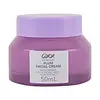
This barrier-repair moisturizer is formulated around Hyaluronic Acid and Niacinamide to strengthen the skin barrier and hydrate skin.
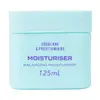
This barrier-repair moisturizer is formulated around Caprylic/Capric Triglyceride and Squalane to strengthen the skin barrier and hydrate skin.

What's inside
What's inside
 Key Ingredients
Benefits
Concerns
Ingredients Side-by-side
Water
Skin ConditioningGlycerin
Humectant


Glycereth-26
Humectant
Prunus Salicina Fruit Extract
Antioxidant
Hyaluronic Acid
Humectant

Niacinamide
Smoothing








Carbomer
Emulsion StabilisingSimmondsia Chinensis Seed Oil
Emollient


Butyrospermum Parkii Butter
Skin Conditioning


Benzyl Alcohol
Perfuming





Polyacrylamide
Betaine
Humectant
Parfum
Masking
Caprylyl Glycol
Emollient
C13-14 Isoparaffin
Emollient
Tocopherol
Antioxidant
Laureth-7
EmulsifyingSodium Hydroxide
BufferingDisodium EDTA
ChelatingLinalool
Perfuming
Limonene
Perfuming
CI 17200
Cosmetic ColorantCI 42090
Cosmetic ColorantWater, Glycerin, Glycereth-26, Prunus Salicina Fruit Extract, Hyaluronic Acid, Niacinamide, Carbomer, Simmondsia Chinensis Seed Oil, Butyrospermum Parkii Butter, Benzyl Alcohol, Polyacrylamide, Betaine, Parfum, Caprylyl Glycol, C13-14 Isoparaffin, Tocopherol, Laureth-7, Sodium Hydroxide, Disodium EDTA, Linalool, Limonene, CI 17200, CI 42090
Water
Skin ConditioningCetearyl Alcohol
Emollient
Caprylic/Capric Triglyceride
Masking
Glyceryl Stearate
Emollient
PEG-100 Stearate
Surfactant
Squalane
Emollient
Panthenol
Skin Conditioning
Isopropyl Myristate
Emollient
Ethylhexyl Palmitate
Emollient
Butyrospermum Parkii Butter
Skin Conditioning
Phenoxyethanol
Preservative
Carbomer
Emulsion StabilisingBenzyl Alcohol
Perfuming
Chlorphenesin
Antimicrobial
Citrus Aurantium Bergamia Fruit Oil
Masking
Tocopherol
Antioxidant
Xanthan Gum
EmulsifyingSodium Hydroxide
BufferingSodium Hyaluronate
Humectant
Water, Cetearyl Alcohol, Caprylic/Capric Triglyceride, Glyceryl Stearate, PEG-100 Stearate, Squalane, Panthenol, Isopropyl Myristate, Ethylhexyl Palmitate, Butyrospermum Parkii Butter, Phenoxyethanol, Carbomer, Benzyl Alcohol, Chlorphenesin, Citrus Aurantium Bergamia Fruit Oil, Tocopherol, Xanthan Gum, Sodium Hydroxide, Sodium Hyaluronate
Ingredients Explained
These ingredients are found in both products.
Ingredients higher up in an ingredient list are typically present in a larger amount.
Benzyl Alcohol is an aromatic alcohol with several roles: it's a preservative, solvent, and mild fragrance component with a floral scent.
This ingredient has been deemed safe for use in cosmetic formulations at concentrations up to 5%, and up to 10% in hair dyes. You'll typically see 0.5-2% in most rinse-off or leave-on products.
As a preservative, it works by disrupting the membrane of microbial proteins. This helps keep bacteria and fungi from growing in your products.
The sensitization picture is actually quite assuring as well:of nearly 71,000 patients patch tested with benzyl alcohol, only 0.21% showed a positive reaction with most of them being weakly positive.
This led researchers to conclude that benzyl alcohol cannot be regarded as a significant contact allergen.
It is worth noting this ingredient is classified as one of the EU's regulated fragrance allergens and restricted to 1% in finished products.
Labels must also declare it in concentrations above 0.001% in leave-on products and 0.01% in rinse-off products.
At concentrations around 5%, localized redness and itching can appear as a direct irritant response and not as a true allergic reaction.
Learn more about Benzyl AlcoholThis ingredient is also known as shea butter. It is a plant-derived extract from the nuts of the Africa shea tree and one of the most well-studied emollients.
Because it has a high concentration of fatty acids (primarily oleic, stearic, and linoleic) it is able to form a protective barrier on the skin's surface. This helps seal in moisture and prevents transepidermal water loss (TEWL).
In vitro research found an increase in skin hydration by 58% and a decrease in TEWL by 37.8% after 24 hours of applying this ingredient (pretty impressive for a single ingredient!).
Besides hydration, shea butter also contains triterpenes that have anti-inflammatory potential. In particule, lupeol cinnamate has shown the highest anti-inflammatory activity in vivo.
Shea butter also contains vitamins A and E which may contribute to antioxidant activity.
While Shea Butter has an SPF rating of about 3-4, it is not a sunscreen replacement.
This ingredient may not be fungal acne safe because its fatty acids fall within the C11-C24 range that the Malassezia yeast can metabolize.
This ingredient shows up on a lot of "pore-clogging" lists but there's no real evidence behind that. It doesn't even have a comedogenic rating from an actual study; the numbers you'll find online come from blogs citing other blogs.
Ratings for other ingredients mostly come from a 1980s rabbit ear test. This test doesn't translate well to human skin or to real products because the ingredient sits at a much lower percentage.
Some people still find it breaks them out. So if that's you, definitely trust your skin. Just know this one's based on experience and not evidence.
Learn more about Butyrospermum Parkii ButterCarbomer is a synthetic thickening and gelling agent. It's basically the ingredient that gives a lot of serums, gels, creams, and sunscreens their smooth, non-sticky texture.
Although legally permitted at very high levels, carbomers are normally used at concentrations below 1%.
It also needs to be neutralized to actually thicken, and because it is a large molecule, it doesn't really penetrate the skin barrier.
Allergy-wise, the risk is very low. Clinical studies show carbomers have low potential for skin irritation/sensitization even at concentrations up to 100%.
A 2024 UK study patch-tested 1,302 patients and found true allergy to the parent group of carbomer to be rare with no confirmed relevant reactions.
Learn more about CarbomerSodium Hydroxide is also known as lye or caustic soda. It is used to adjust the pH of products; many ingredients require a specific pH to be effective.
In small amounts, sodium hydroxide is considered safe to use. However, large amounts may cause chemical burns due to its high alkaline.
Your skin has a natural pH and acid mantle. This acid mantle helps prevent harmful bacteria from breaking through. The acid mantle also helps keep your skin hydrated.
"Alkaline" refers to a high pH level. A low pH level would be considered acidic.
Learn more about Sodium HydroxideTocopherol is a fat-soluble antioxidant known as Vitamin E.
You'll find this ingredient in the vast majority of skincare (for good reason). It works to neutralize free radicals, or unstable molecules generated by UV exposure, pollution, and other environmental stressors, before they can cause oxidative damage to your skin cells.
Topically applied tocopherol has been shown to protect against UV damage by ramping up the skin's own natural defense enzymes.
It also acts as a skin conditioning agent; some studies show that regular topical use can improve the skin's water-binding capacity over 2-4 weeks.
This ingredient is especially loved for being a team player. When combined with Vitamin C, the photoprotective effect of both ingredients roughly doubles and the combo also helps reduce UV-induced DNA damage.
This ingredient has some brightening potential but it's more of a prevention ingredient than spot-fader. Cell studies show it can slow down melanin production but it's worth noting that it's not the most powerful brightener out there.
In formulations, it also serves as a stabilizer that helps protect other oxidation-prone ingredients from degrading.
Concentrations usually range from 0.1-1% in most leave-on products.
Learn more about TocopherolWater. It's the most common cosmetic ingredient of all. You'll usually see it at the top of ingredient lists, meaning that it makes up the largest part of the product.
So why is it so popular? Water most often acts as a solvent - this means that it helps dissolve other ingredients into the formulation.
You'll also recognize water as that liquid we all need to stay alive. If you see this, drink a glass of water. Remember to stay hydrated!
Learn more about Water

