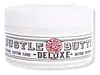
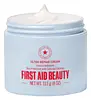
Hustle Butter Deluxe Luxury Tattoo Care Cream Versus First Aid Beauty Ultra Repair Cream Intense Hydration
This calming moisturizer is formulated around Colloidal Oatmeal and Squalane to calm redness and hydrate skin.

What's inside
What's inside
 Key Ingredients
Benefits
Concerns
Ingredients Side-by-side
Butyrospermum Parkii Butter
Skin Conditioning






Mangifera Indica Seed Butter
Skin Conditioning
Aloe Barbadensis Leaf Extract
Emollient

Cocos Nucifera Oil
Masking


Helianthus Annuus Seed Oil
Emollient

Butyrospermum Parkii Butter, Mangifera Indica Seed Butter, Aloe Barbadensis Leaf Extract, Cocos Nucifera Oil, Helianthus Annuus Seed Oil, Oryza Sativa Bran Oil, Rosmarinus Officinalis Leaf Extract, Camellia Sinensis Leaf Extract, Tocopherol, Mentha Arvensis Leaf Oil, Carica Papaya Fruit Extract, Cocos Nucifera Fruit Extract
Colloidal Oatmeal 0.5%
Absorbent
Water
Skin ConditioningStearic Acid
Cleansing
Glycerin
Humectant
C12-15 Alkyl Benzoate
AntimicrobialCaprylic/Capric Triglyceride
Masking
Glyceryl Stearate Se
Emulsifying
Glyceryl Stearate
Emollient
Cetearyl Alcohol
Emollient
Dimethicone
Emollient
Squalane
Emollient
Butyrospermum Parkii Butter
Skin Conditioning
Phenoxyethanol
Preservative
Caprylyl Glycol
Emollient
Xanthan Gum
EmulsifyingAllantoin
Skin Conditioning
Sodium Hydroxide
BufferingTetrasodium EDTA
ChelatingChrysanthemum Parthenium Extract
Skin ConditioningCamellia Sinensis Leaf Extract
Antimicrobial



Glycyrrhiza Glabra Root Extract
Bleaching
Ceramide NP
Skin Conditioning
Eucalyptus Globulus Leaf Oil
Perfuming


Colloidal Oatmeal 0.5%, Water, Stearic Acid, Glycerin, C12-15 Alkyl Benzoate, Caprylic/Capric Triglyceride, Glyceryl Stearate Se, Glyceryl Stearate, Cetearyl Alcohol, Dimethicone, Squalane, Butyrospermum Parkii Butter, Phenoxyethanol, Caprylyl Glycol, Xanthan Gum, Allantoin, Sodium Hydroxide, Tetrasodium EDTA, Chrysanthemum Parthenium Extract, Camellia Sinensis Leaf Extract, Glycyrrhiza Glabra Root Extract, Ceramide NP, Eucalyptus Globulus Leaf Oil
Reviews
Ingredients Explained
These ingredients are found in both products.
Ingredients higher up in an ingredient list are typically present in a larger amount.
This ingredient is also known as shea butter. It is a plant-derived extract from the nuts of the Africa shea tree and one of the most well-studied emollients.
Because it has a high concentration of fatty acids (primarily oleic, stearic, and linoleic) it is able to form a protective barrier on the skin's surface. This helps seal in moisture and prevents transepidermal water loss (TEWL).
In vitro research found an increase in skin hydration by 58% and a decrease in TEWL by 37.8% after 24 hours of applying this ingredient (pretty impressive for a single ingredient!).
Besides hydration, shea butter also contains triterpenes that have anti-inflammatory potential. In particule, lupeol cinnamate has shown the highest anti-inflammatory activity in vivo.
Shea butter also contains vitamins A and E which may contribute to antioxidant activity.
While Shea Butter has an SPF rating of about 3-4, it is not a sunscreen replacement.
This ingredient may not be fungal acne safe because its fatty acids fall within the C11-C24 range that the Malassezia yeast can metabolize.
This ingredient shows up on a lot of "pore-clogging" lists but there's no real evidence behind that. It doesn't even have a comedogenic rating from an actual study; the numbers you'll find online come from blogs citing other blogs.
Ratings for other ingredients mostly come from a 1980s rabbit ear test. This test doesn't translate well to human skin or to real products because the ingredient sits at a much lower percentage.
Some people still find it breaks them out. So if that's you, definitely trust your skin. Just know this one's based on experience and not evidence.
Learn more about Butyrospermum Parkii ButterCamellia Sinensis Leaf Extract (tea extract) is one of the most well-researched plant extracts in skincare with an impressive resume.
Black tea, green tea, and oolong tea are all harvested from the Camellia Sinensis plant.
Studies show green tea extract and its catechins (like epigallocatechin gallate (EGCG)) help your skin cells product energy more efficiently and reducing the number of free-radicals that can damage your skin from the inside.
In lab-grown skin models, this translated to younger, healthier, and stronger skin.
There's also good sun protection data; researchers saw less DNA damage and redness on human skin when green tea was applied before UVB exposure. And the more they applied, the better the protection.
Needless to say, this ingredient shouldn't replace your sunscreen. But it is a great supportive ingredient that you can already find in many sunscreens and antioxidant serums.
A 2009 study found a 2% green tea lotion was effective for mild-to-moderate acne thanks to its anti-inflammatory and mild antimicrobial activity.
The quality of the extract matters a lot here:
Good extracts contain 50-90% catechins while lower quality ones are mostly there for marketing. We recommend reaching out to the brand if you have questions about the quality or source of their ingredients.
Human Repeated Insult Patch Testing showed no irritation or sensitization at use concentrations (0.86% in leave-on products and up to 30% as leaf water).
Learn more about Camellia Sinensis Leaf Extract

