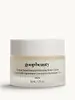
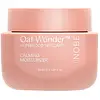
Goop Beauty 72-Hour Supercharged Hydrating Water-Cream Versus Nobe Superfood Skincare Oat Wonder Calming Moisturizer
This barrier-repair moisturizer is formulated around Niacinamide and Saccharide Isomerate to strengthen the skin barrier and hydrate skin.
This calming moisturizer is formulated around Avena Sativa Kernel Oil and Squalane to calm redness and hydrate skin.


What's inside
What's inside
 Key Ingredients
Benefits
Concerns
Ingredients Side-by-side
Water
Skin ConditioningHydrogenated Farnesene
EmollientGlycerin
Humectant


Isopentyldiol
Humectant
Cetyl Alcohol
Emollient



Niacinamide
Smoothing









Cetyl Phosphate
EmulsifyingHydroxyethyl Urea
Humectant
Beta Vulgaris Root Extract
Skin ConditioningTrehalose
Humectant
Phaseolus Angularis Seed Extract
Antioxidant
Astragalus Membranaceus Root Extract
Emollient
Olea Europaea Fruit Extract
BleachingBrassica Oleracea Acephala Leaf Extract
HumectantMorinda Citrifolia Extract
AstringentTocopheryl Acetate
Antioxidant
Arginine
Masking
Saccharide Isomerate
Humectant
Sorbitol
Humectant
Sodium Benzoate
Masking
Caprylyl Glucoside
CleansingXanthan Gum
EmulsifyingPotassium Sorbate
Preservative
Propanediol
Solvent
Coumarin
Perfuming



Sclerotium Gum
Emulsion StabilisingLecithin
Emollient
Pullulan
Citric Acid
Buffering
Silica
Abrasive
Caprylyl Glycol
Emollient
Sodium Citrate
BufferingDipteryx Odorata Seed Extract
MaskingWater, Hydrogenated Farnesene, Glycerin, Isopentyldiol, Cetyl Alcohol, Niacinamide, Cetyl Phosphate, Hydroxyethyl Urea, Beta Vulgaris Root Extract, Trehalose, Phaseolus Angularis Seed Extract, Astragalus Membranaceus Root Extract, Olea Europaea Fruit Extract, Brassica Oleracea Acephala Leaf Extract, Morinda Citrifolia Extract, Tocopheryl Acetate, Arginine, Saccharide Isomerate, Sorbitol, Sodium Benzoate, Caprylyl Glucoside, Xanthan Gum, Potassium Sorbate, Propanediol, Coumarin, Sclerotium Gum, Lecithin, Pullulan, Citric Acid, Silica, Caprylyl Glycol, Sodium Citrate, Dipteryx Odorata Seed Extract
Water
Skin ConditioningCaprylic/Capric Triglyceride
Masking
Avena Sativa Kernel Oil
Skin Conditioning
Glycerin
Humectant
Squalane
Emollient
Cetyl Alcohol
Emollient
Propanediol
Solvent
Inositol
Humectant
C12-20 Alkyl Glucoside
EmulsifyingC14-22 Alcohols
Emulsion Stabilising
Tocopherol
Antioxidant
Potassium Sorbate
Preservative
Lysolecithin
EmulsifyingSodium Benzoate
Masking
Sclerotium Gum
Emulsion StabilisingXanthan Gum
EmulsifyingPhytic Acid
Chelating
Pullulan
Silica
Abrasive
Lactic Acid
Buffering
Parfum
Masking
Geraniol
Perfuming
Linalool
Perfuming
Coumarin
Perfuming
Water, Caprylic/Capric Triglyceride, Avena Sativa Kernel Oil, Glycerin, Squalane, Cetyl Alcohol, Propanediol, Inositol, C12-20 Alkyl Glucoside, C14-22 Alcohols, Tocopherol, Potassium Sorbate, Lysolecithin, Sodium Benzoate, Sclerotium Gum, Xanthan Gum, Phytic Acid, Pullulan, Silica, Lactic Acid, Parfum, Geraniol, Linalool, Coumarin
Ingredients Explained
These ingredients are found in both products.
Ingredients higher up in an ingredient list are typically present in a larger amount.
Cetyl Alcohol is a fatty alcohol. Fatty Alcohols are most often used as an emollient or to thicken a product.
Its main roles are:
Though it has "alcohol" in the name, it is not related to denatured alcohol or ethyl alcohol.
The FDA allows products labeled "alcohol-free" to have fatty alcohols.
This ingredient may not be fungal acne safe. It is a primary fatty alcohol with a chain length above 12 carbons. A study from 2019 show Malassezia can feed on fatty alcohols in this range, so it may trigger fungal acne in those prone to it.
Learn more about Cetyl AlcoholCoumarins are a group of substances found naturally in plants. There are over 1300 types of coumarins identified. It has a natural vanilla scent.
Coumarin is an identified EU known allergy, meaning it may cause an allergic reaction when applied to the skin.
In many countries, coumarin is banned as a food additive. However, it can be found in soaps, tobacco products, and some alcohol drinks.
Plants use coumarins as a chemical defense. Some plants that have coumarins include lavender, tonka beans, and yellow clovers.
Learn more about CoumarinGlycerin (or glycerol) is a compound naturally found in your skin. It's a powerhouse humectant that pulls water into the stratum corneum.
Topically, glycerin does several things at once:
Your skin makes glycerin on its own (mostly from sebaceous oil breakdown) and shuttles it to your outermost layer of skin, or your epidermis, via aquaporin-3.
Aquaporin-3 is a transporter that is essential for normal skin hydration, elasticity, and repair. Interestingly, mice lacking in AQP3 have dry and less elastic skin that can be fully corrected with glycerin.
This ingredient is non-irritating, plays well with almost every ingredient, and works across all skin types. Typical use is anywhere between 3-10% but can go up to 79% in some leave-on products.
Just know very high concentrations (>40%) can feel tacky in low humidity.
Glycerin is the name for this ingredient in American English. British English uses Glycerol/Glycerine.
Learn more about GlycerinPotassium Sorbate is a preservative used to prevent yeast and mold in products. It is commonly found in both cosmetic and food products.
This ingredient comes from potassium salt derived from sorbic acid. Sorbic acid is a natural antibiotic and effective against fungus.
Both potassium sorbate and sorbic acid can be found in baked goods, cheeses, dried meats, dried fruit, ice cream, pickles, wine, yogurt, and more.
You'll often find this ingredient used with other preservatives.
Learn more about Potassium SorbatePropanediol is an all-star ingredient. It softens, hydrates, and smooths the skin.
It’s often used to:
Propanediol is not likely to cause sensitivity and considered safe to use. It is derived from corn or petroleum with a clear color and no scent.
Learn more about PropanediolPullulan is a low viscosity polysaccharide (a long chain carbohydrate) with binding and film forming properties when dissolved in water. It is used to create a "silicone-like" or silky feel in cosmetics without adding viscosity.
According to a manufacturer, this ingredient's ability to easily dissolves makes it a great carrier for active ingredients.
Due to it being edible and tasteless, you'll likely find this ingredient in breath freshener strips. This ingredient is produced from the starch of the fungus, Aureobasidium pullulans.
Pullulan is stable over a broad-range of pH.
Learn more about PullulanSclerotium Gum is a natural sugar-based fiber made by fermenting a fungus called Sclerotium rolfsii. It's often used as the plant-friendly alternative for synthetic thickeners like carbomer.
In skincare, it works as a thickener, gel former, and stabilizer that keeps heavy ingredients suspended so a product does not separate.
It is non-ionic and forms a triple helix in solution. This is just a fancy way of saying it builds a smooth, cushiony, and non-sticky gel that feels silkier than many other gums.
Another perk of this ingredient is that it is very sturdy and holds up across a wide pH range (~2-11). It's also good at resisting heat and hydrolysis.
Since it holds water at the skin surface, it can provide some light hydration as well.
Typical use levels are around 0.25-2%; formulators usually use 0.2-0.5% to thicken lotions and up to 2% for a firmer gel base.
This ingredient has been found safe in cosmetics with no meaningful evidence of skin sensitization.
Learn more about Sclerotium GumSilica, also known as silicon dioxide, is a naturally occurring mineral. It is used as a fine, spherical, and porous powder in cosmetics.
Though it has exfoliant properties, the function of silica varies depending on the product.
The unique structure of silica enhances the spreadability and adds smoothness, making it a great texture enhancer.
It is also used as an active carrier, emulsifier, and mattifier due to its ability to absorb excess oil.
In some products, tiny microneedles called spicules are made from silica or hydrolyzed sponge. When you rub them in, they lightly polish away dead skin layers and enhance the penetration of active ingredients.
Learn more about SilicaSodium Benzoate is a preservative. It's used in both cosmetic and food products to inhibit the growth of mold and bacteria. It is typically produced synthetically.
Both the US FDA and EU Health Committee have approved the use of sodium benzoate. In the US, levels of 0.1% (of the total product) are allowed.
Sodium benzoate works as a preservative by inhibiting the growth of bacteria inside of cells. It prevents the cell from fermenting a type of sugar using an enzyme called phosphofructokinase.
It is the salt of benzoic acid. Foods containing sodium benzoate include soda, salad dressings, condiments, fruit juices, wines, and snack foods.
Studies for using ascorbic acid and sodium benzoate in cosmetics are lacking, especially in skincare routines with multiple steps.
We always recommend speaking with a professional, such as a dermatologist, if you have any concerns.
Learn more about Sodium BenzoateWater. It's the most common cosmetic ingredient of all. You'll usually see it at the top of ingredient lists, meaning that it makes up the largest part of the product.
So why is it so popular? Water most often acts as a solvent - this means that it helps dissolve other ingredients into the formulation.
You'll also recognize water as that liquid we all need to stay alive. If you see this, drink a glass of water. Remember to stay hydrated!
Learn more about WaterXanthan gum is used as a stabilizer and thickener within cosmetic products. It helps give products a sticky, thick feeling - preventing them from being too runny.
On the technical side of things, xanthan gum is a polysaccharide - a combination consisting of multiple sugar molecules bonded together.
Xanthan gum is a pretty common and great ingredient. It is a natural, non-toxic, non-irritating ingredient that is also commonly used in food products.
Learn more about Xanthan Gum

