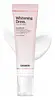
This brightening moisturizer is formulated around Niacinamide to brighten dull-looking skin and fade the look of dark spots.

What's inside
What's inside
 Key Ingredients
Benefits
Concerns
Ingredients Side-by-side
Camellia Sinensis Leaf Water
Masking
Polymethylsilsesquioxane

Diphenylsiloxy Phenyl Trimethicone
Skin Conditioning
Phenyl Trimethicone
Skin Conditioning
Caprylyl Methicone
Skin Conditioning
Trimethylsiloxysilicate
Emollient
Propylene Glycol Dibenzoate
Skin ConditioningIsododecane
EmollientMethyl Trimethicone
Skin Conditioning
Glycerin
Humectant


Butylene Glycol
Humectant
Lauryl Polyglyceryl-3 Polydimethylsiloxyethyl Dimethicone
Skin Conditioning
CI 77891
Cosmetic ColorantC13-15 Alkane
SolventPolyglyceryl-3 Polydimethylsiloxyethyl Dimethicone
Skin Conditioning
Alcohol Denat.
Antimicrobial




1,2-Hexanediol
Skin Conditioning
Acrylates/Polytrimethylsiloxymethacrylate Copolymer
Skin ConditioningSorbitan Sesquioleate
Emulsifying
Disteardimonium Hectorite
StabilisingMagnesium Sulfate
Acrylates/Dimethicone Copolymer
Skin Conditioning
Dimethicone/Vinyl Dimethicone Crosspolymer
Skin Conditioning
Caprylyl Glycol
Emollient
Ethylhexylglycerin
Skin ConditioningWater
Skin ConditioningTriethoxycaprylylsilane
Aluminum Hydroxide
EmollientTocopherol
Antioxidant





Camellia Sinensis Leaf Water, Polymethylsilsesquioxane, Diphenylsiloxy Phenyl Trimethicone, Phenyl Trimethicone, Caprylyl Methicone, Trimethylsiloxysilicate, Propylene Glycol Dibenzoate, Isododecane, Methyl Trimethicone, Glycerin, Butylene Glycol, Lauryl Polyglyceryl-3 Polydimethylsiloxyethyl Dimethicone, CI 77891, C13-15 Alkane, Polyglyceryl-3 Polydimethylsiloxyethyl Dimethicone, Alcohol Denat., 1,2-Hexanediol, Acrylates/Polytrimethylsiloxymethacrylate Copolymer, Sorbitan Sesquioleate, Disteardimonium Hectorite, Magnesium Sulfate, Acrylates/Dimethicone Copolymer, Dimethicone/Vinyl Dimethicone Crosspolymer, Caprylyl Glycol, Ethylhexylglycerin, Water, Triethoxycaprylylsilane, Aluminum Hydroxide, Tocopherol
Prunus Serrulata Flower Extract
Skin ConditioningButylene Glycol
Humectant
Cyclopentasiloxane
Emollient
Cyclohexasiloxane
Emollient
Titanium Dioxide
Cosmetic Colorant

Niacinamide
Smoothing





1,2-Hexanediol
Skin Conditioning
Cetyl PEG/PPG-10/1 Dimethicone
Emulsifying
Glycerin
Humectant
Sodium Chloride
MaskingDimethicone
Emollient
Dimethicone/Vinyl Dimethicone Crosspolymer
Skin Conditioning
Aloe Barbadensis Leaf Extract
Emollient
Aluminum Hydroxide
EmollientTriethoxycaprylylsilane
Polyglutamic Acid
Skin Conditioning
Citrus Limon Peel Oil
Masking


Citrus Grandis Peel Oil
Masking
Rosmarinus Officinalis Leaf Oil
Masking
Lavandula Angustifolia Oil
Masking
Pelargonium Graveolens Flower Oil
Masking
Disodium EDTA
ChelatingTocopheryl Acetate
Antioxidant
Zanthoxylum Piperitum Fruit Extract
Skin ConditioningUsnea Barbata Extract
Pulsatilla Koreana Extract
Skin ConditioningPrunus Serrulata Flower Extract, Butylene Glycol, Cyclopentasiloxane, Cyclohexasiloxane, Titanium Dioxide, Niacinamide, 1,2-Hexanediol, Cetyl PEG/PPG-10/1 Dimethicone, Glycerin, Sodium Chloride, Dimethicone, Dimethicone/Vinyl Dimethicone Crosspolymer, Aloe Barbadensis Leaf Extract, Aluminum Hydroxide, Triethoxycaprylylsilane, Polyglutamic Acid, Citrus Limon Peel Oil, Citrus Grandis Peel Oil, Rosmarinus Officinalis Leaf Oil, Lavandula Angustifolia Oil, Pelargonium Graveolens Flower Oil, Disodium EDTA, Tocopheryl Acetate, Zanthoxylum Piperitum Fruit Extract, Usnea Barbata Extract, Pulsatilla Koreana Extract
Ingredients Explained
These ingredients are found in both products.
Ingredients higher up in an ingredient list are typically present in a larger amount.
1,2-Hexanediol is a synthetic liquid and another multi-functional powerhouse.
It is a:
- Humectant, drawing moisture into the skin
- Emollient, helping to soften skin
- Solvent, dispersing and stabilizing formulas
- Preservative booster, enhancing the antimicrobial activity of other preservatives
Aluminum Hydroxide is a form of aluminum. It can be naturally found in nature as the mineral gibbsite. In cosmetics, Aluminum Hydroxide is used as a colorant, pH adjuster, and absorbent.
As a colorant, Aluminum Hydroxide may add opacity, or reduce the transparency. Aluminum hydroxide is contains both basic and acidic properties.
According to manufacturers, this ingredient is an emollient and humectant. This means it helps hydrate the skin.
In medicine, this ingredient is used to help relieve heartburn and help heal ulcers.
There is currently no credible scientific evidence linking aluminum hydroxide in cosmetics to increased cancer risk.
Major health organizations allow the use of aluminum hydroxide in personal care products and have not flagged it as a carcinogenic risk at typical usage levels.
Learn more about Aluminum HydroxideButylene Glycol (or BG) is used within cosmetic products for a few different reasons:
Overall, Butylene Glycol is a safe and well-rounded ingredient that works well with other ingredients.
Though this ingredient works well with most skin types, some people with sensitive skin may experience a reaction such as allergic rashes, closed comedones, or itchiness.
Learn more about Butylene GlycolThis ingredient is a silicone elastomer that works as a texture enhancer, adds a silky slip, and also helps absorb excess oil.
Because it's a large macromolecule that's insoluble in water and chemically inert, it's not expected to penetrate or be absorbed into skin.
Human patch tests with a facial lotion containing 1% of this ingredient found no sensitization.
Learn more about Dimethicone/Vinyl Dimethicone CrosspolymerGlycerin (or glycerol) is a compound naturally found in your skin. It's a powerhouse humectant that pulls water into the stratum corneum.
Topically, glycerin does several things at once:
Your skin makes glycerin on its own (mostly from sebaceous oil breakdown) and shuttles it to your outermost layer of skin, or your epidermis, via aquaporin-3.
Aquaporin-3 is a transporter that is essential for normal skin hydration, elasticity, and repair. Interestingly, mice lacking in AQP3 have dry and less elastic skin that can be fully corrected with glycerin.
This ingredient is non-irritating, plays well with almost every ingredient, and works across all skin types. Typical use is anywhere between 3-10% but can go up to 79% in some leave-on products.
Just know very high concentrations (>40%) can feel tacky in low humidity.
Glycerin is the name for this ingredient in American English. British English uses Glycerol/Glycerine.
Learn more about GlycerinTriethoxycaprylylsilane is a silicon-based surface modifier that makes sunscreens feel silky and makeup stay put.
Its main job is to coat mineral particles like titanium dioxide, zinc oxide, and color pigments in a thin, oily layer so they spread smoothly, don't clump, and stick to skin better.
This ingredient is typically used at low levels (up to 2.5% in eyeshadow and 1% in lipstick).
Learn more about Triethoxycaprylylsilane

