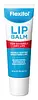
This barrier-repair lip moisturizer is formulated around Petrolatum and Urea to strengthen the lip barrier and hydrate lips.

What's inside
What's inside
 Key Ingredients
Benefits
Concerns
Ingredients Side-by-side
Petrolatum
Emollient



Water
Skin ConditioningTheobroma Cacao Seed Butter
Emollient



Lanolin
Emollient
Glyceryl Stearate
Emollient
Behenyl Alcohol
Emollient
Stearic Acid
Cleansing
Urea
Buffering


Cetyl Esters
Emollient
Palmitic Acid
Emollient
Lecithin
Emollient
Lauryl Alcohol
Emollient
Myristyl Alcohol
Emollient
Cetyl Alcohol
Emollient
Camphor
Masking

Menthol
Masking
Methylparaben
Preservative


BHA
Antioxidant
Eugenia Caryophyllus Leaf Oil
Masking

Sucralose
Skin ConditioningPropylparaben
Preservative
Aroma

Eugenol
Perfuming
Petrolatum, Water, Theobroma Cacao Seed Butter, Lanolin, Glyceryl Stearate, Behenyl Alcohol, Stearic Acid, Urea, Cetyl Esters, Palmitic Acid, Lecithin, Lauryl Alcohol, Myristyl Alcohol, Cetyl Alcohol, Camphor, Menthol, Methylparaben, BHA, Eugenia Caryophyllus Leaf Oil, Sucralose, Propylparaben, Aroma, Eugenol
Water
Skin ConditioningUrea
Buffering
Lanolin
Emollient
Cetearyl Alcohol
Emollient
Paraffinum Liquidum
Emollient
Glyceryl Stearate
Emollient
Decyl Oleate
Emollient
PEG-20 Stearate
Emulsifying
Paraffin
Skin Conditioning
Phenoxyethanol
Preservative
Sodium PCA
Humectant
Butyrospermum Parkii Butter
Skin Conditioning
Allantoin
Skin Conditioning

Glycolic Acid
Buffering







Panthenol
Skin Conditioning
Tocopheryl Acetate
Antioxidant
Benzyl Alcohol
Perfuming
Melaleuca Alternifolia Leaf Oil
Antioxidant
Arginine
Masking
Aloe Barbadensis Leaf Juice
Skin Conditioning
Parfum
Masking
Water, Urea, Lanolin, Cetearyl Alcohol, Paraffinum Liquidum, Glyceryl Stearate, Decyl Oleate, PEG-20 Stearate, Paraffin, Phenoxyethanol, Sodium PCA, Butyrospermum Parkii Butter, Allantoin, Glycolic Acid, Panthenol, Tocopheryl Acetate, Benzyl Alcohol, Melaleuca Alternifolia Leaf Oil, Arginine, Aloe Barbadensis Leaf Juice, Parfum
Reviews
Ingredients Explained
These ingredients are found in both products.
Ingredients higher up in an ingredient list are typically present in a larger amount.
Glyceryl Stearate is made by reacting glycerin with stearic acid (typically sourced from plant oils like palm or coconut). It's an emulsifier, emollient, and mild occlusive.
Emulsifiers help ingredients like oil and water stay mixed so your formula stays nicely blended and uniform in texture.
This ingredient is typically used in concentrations between 1-10%. Studies have found it to be non-sensitizing, non-phototoxic, and non-photoallergenic.
A close cousin of this ingredient is Glyceryl Stearate SE ("self-emulsifying"). This just has a small amount of sodium or potassium stearate added so it can emulsify without a co-emulsifier.
Since this ingredient is an ester of a C18 fatty acid, it may not be fungal acne safe. The Malassezia yeast can potentially metabolize within the C11-C24 range.
Fun fact: The human body also creates Glyceryl Stearate naturally.
Learn more about Glyceryl StearateLanolin is a waxy substance secreted by the sebaceous glands of wool-bearing sheep. It is an effective moisturizer that works as both a humectant and emollient.
As a humectant, it is able to absorb up to 400% of its own weight in water; this also gives it emulsifying properties as it can help stabilize water-in-oil emulsions.
On the other hand, lanolin is able to reduce transepidermal water loss (TEWL) by about 20-30%. It can also incorporate into the lipid matrix to surround skin cells and reinforce the skin barrier.
This is why you'll see lanolin as an ingredient for heavy-duty moisturizers.
You might have seen an "allergy concern" that gives lanolin a bad reputation. The rate of lanolin contact allergy in the general population is estimated to be under 0.5%, and most of these are seen in people with compromised-skin dealing with eczema, atopic dermatitis, or leg ulcers.
Healthy, intact skin tolerates lanolin well. Even people who have previously reacted to it test negative on patch tests when the test is done on normal skin.
Because lanolin comes from an animal, it is not considered vegan. Sheep secrete lanolin through sebaceous glands to help protect their skin from the environment.
Lanolin has a reputation as pore clogging but that comes almost entirely from rabbit ear testing done decades ago (and that model has aged badly).
This ingredient does have a comedogenic rating of 0-1; the tests state this score means the ingredient has low or non-existent chance of clogging your pores.
Keep in mind that the authors of the rabbit ear test proposed that a material needs to score consistently above 3 in the rabbit assay before it means anything for real skin.
A separate review found the model has serious performance problems and no correlation with human experience. Concentration matters a lot too: in one study, Acetylated Lanolin Alcohol scored 4 to 5 at full strength but dropped to a 1 when diluted to 2.5%, and finished products containing "comedogenic" ingredients didn't raise microcomedone counts in people.
Lanolin contains esters exactly in the range that the Malassezia yeast can synthesize, making this ingredient not fungal acne safe.
Learn more about LanolinUrea is also called carbamide and is the diamide of carbonic acid. In cosmetics, urea is used to hydrate the skin. It also provides exfoliation in higher concentrations.
As a humectant, urea helps draw moisture from the air and from deep within the skin. This helps hydrate your skin. Studies show urea is an effective moisturizer for dry skin conditions. 40% urea is typical in medications for treating eczema and other skin conditions.
Urea has the strongest exfoliation effect in concentrations higher than 10%. It is a keratolytic agent, meaning it breaks down the keratin protein in the top layer of skin. This helps remove dead skin cells and flaking skin.
In medicine, urea has been shown to help increase the potency of other ingredients, such as fungal treatments.
Humans and animals use urea to metabolize nitrogen-containing compounds. Urea is highly soluble in water. Once dissolved, it is neither acidic nor alkaline.
Urea is actually one of the more well-studied and well-supported ingredients out there if you have eczema.
Clinical trials have shown that urea creams in the 5 - 10% range can:
Higher concentrations (20 -30%) can also help with thickened, scaly patches but is also more likely to sting on active flares.
Skip urea if you have rosacea. The AAD (American Academy of Dermatology) lists it alongside alcohol, menthol, and fragrance as a potential irritant for rosacea-prone skin. Urea's keratolytic and penetration-enhancing properties can trigger stinging, burning, and redness.
As always, your skin is unique, so definitely check in with your dermatologist.
Learn more about UreaWater. It's the most common cosmetic ingredient of all. You'll usually see it at the top of ingredient lists, meaning that it makes up the largest part of the product.
So why is it so popular? Water most often acts as a solvent - this means that it helps dissolve other ingredients into the formulation.
You'll also recognize water as that liquid we all need to stay alive. If you see this, drink a glass of water. Remember to stay hydrated!
Learn more about Water


