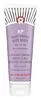
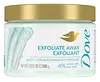
First Aid Beauty KP Bump Eraser Body Scrub With 10% AHA Versus Dove Body Love Exfoliate Away Body Scrub

What's inside
What's inside
 Key Ingredients
Benefits
Concerns
Ingredients Side-by-side
Pumice
Abrasive

Water
Skin ConditioningGlycolic Acid
Buffering









Sodium Cocoyl Isethionate
Cleansing
Lactic Acid
Buffering
Dimethicone
Emollient
Stearic Acid
Cleansing


Cetearyl Alcohol
Emollient

Sodium Hydroxide
BufferingPalmitic Acid
Emollient
Glycerin
Humectant
C12-15 Alkyl Benzoate
AntimicrobialSorbitol
Humectant
Colloidal Oatmeal
Absorbent

Tocopherol
Antioxidant

Chrysanthemum Parthenium Extract
Skin ConditioningCamellia Sinensis Leaf Extract
Antimicrobial
Glycyrrhiza Glabra Root Extract
Bleaching
Salix Nigra Bark Extract
Skin ProtectingBisabolol
Antioxidant
Hydrogenated Coconut Acid
Emollient
Xanthan Gum
EmulsifyingSteareth-20
CleansingSteareth-21
CleansingMyristic Acid
Cleansing
Sodium Isethionate
CleansingPhenoxyethanol
Preservative
Potassium Sorbate
Preservative
Sodium Benzoate
Masking
Leuconostoc/Radish Root Ferment Filtrate
Antimicrobial
EDTA
ChelatingPumice, Water, Glycolic Acid, Sodium Cocoyl Isethionate, Lactic Acid, Dimethicone, Stearic Acid, Cetearyl Alcohol, Sodium Hydroxide, Palmitic Acid, Glycerin, C12-15 Alkyl Benzoate, Sorbitol, Colloidal Oatmeal, Tocopherol, Chrysanthemum Parthenium Extract, Camellia Sinensis Leaf Extract, Glycyrrhiza Glabra Root Extract, Salix Nigra Bark Extract, Bisabolol, Hydrogenated Coconut Acid, Xanthan Gum, Steareth-20, Steareth-21, Myristic Acid, Sodium Isethionate, Phenoxyethanol, Potassium Sorbate, Sodium Benzoate, Leuconostoc/Radish Root Ferment Filtrate, EDTA
Glycerin
Humectant
Hydrated Silica
Abrasive
Sodium Lauroyl Isethionate
CleansingStearic Acid
Cleansing
Sodium Stearate
CleansingCocamidopropyl Betaine
Cleansing
Parfum
Masking

Lactic Acid
Buffering
Hydroxystearic Acid
Cleansing
Lauric Acid
Cleansing
Sodium Oleate
CleansingCetearyl Alcohol
Emollient
Synthetic Wax
Abrasive
Sodium Isethionate
CleansingSodium Chloride
MaskingSodium Benzoate
Masking
Hydroxyacetophenone
Antioxidant
Sodium Laurate
CleansingTetrasodium EDTA
ChelatingTetrasodium Etidronate
ChelatingCaprylic/Capric Triglyceride
Masking
Titanium Dioxide
Cosmetic Colorant

CI 77499
Cosmetic ColorantCI 17200
Cosmetic ColorantCI 19140
Cosmetic ColorantCI 42090
Cosmetic ColorantLimonene
Perfuming
Linalool
Perfuming
Glycerin, Hydrated Silica, Sodium Lauroyl Isethionate, Stearic Acid, Sodium Stearate, Cocamidopropyl Betaine, Parfum, Lactic Acid, Hydroxystearic Acid, Lauric Acid, Sodium Oleate, Cetearyl Alcohol, Synthetic Wax, Sodium Isethionate, Sodium Chloride, Sodium Benzoate, Hydroxyacetophenone, Sodium Laurate, Tetrasodium EDTA, Tetrasodium Etidronate, Caprylic/Capric Triglyceride, Titanium Dioxide, CI 77499, CI 17200, CI 19140, CI 42090, Limonene, Linalool
Reviews
Ingredients Explained
These ingredients are found in both products.
Ingredients higher up in an ingredient list are typically present in a larger amount.
Cetearyl alcohol is a waxy mixture of two fatty alcohols: cetyl alcohol and stearyl alcohol. It is an emollient and emulsifier.
Despite having "alcohol" in its name, it has nothing to do with drying solvent alcohols; the FDA also allows "alcohol-free" products to contain fatty alcohols like this ingredient.
It plays several roles in a formula:
Typical use levels for this ingredient sit around 1-10% and the Cosmetic Ingredient Review Expert Panel has affirmed safety at concentrations up to 25% in leave-on products.
Multiple assessments have found it to be non-irritating and non-sensitizing to most people.
However, there have been some cases of allergic contact dermatitis in patients with chronically compromised skin barriers.
Cetearyl alcohol has a comedogenic rating of 2 and irritancy rating of 1. Both of these numbers come from the 1989 study that used rabbit ears; a "2" means mildly comedogenic and a "1" means low irritancy.
Here's the catch: rabbit skin is more sensitive than human skin and throws a lot of false positives. A 1996 reappraisal found that ingredients rated 1-2 in the rabbit ear tests are generally safe for humans.
Remember comedogenic ratings are unable to assess the entire formula of a product or how it will react on your skin. Just be sure to patch test if you are unsure about certain ingredients.
This ingredient is not fungal acne safe. Cetearyl alcohol is a fatty alcohol with chain lengths that fall within the range that Malassezia can metabolize.
A 2019 study has also observed Malassezia growth in the presence of this ingredient, confirming it to be not-fungal acne safe.
Learn more about Cetearyl AlcoholGlycerin (or glycerol) is a compound naturally found in your skin. It's a powerhouse humectant that pulls water into the stratum corneum.
Topically, glycerin does several things at once:
Your skin makes glycerin on its own (mostly from sebaceous oil breakdown) and shuttles it to your outermost layer of skin, or your epidermis, via aquaporin-3.
Aquaporin-3 is a transporter that is essential for normal skin hydration, elasticity, and repair. Interestingly, mice lacking in AQP3 have dry and less elastic skin that can be fully corrected with glycerin.
This ingredient is non-irritating, plays well with almost every ingredient, and works across all skin types. Typical use is anywhere between 3-10% but can go up to 79% in some leave-on products.
Just know very high concentrations (>40%) can feel tacky in low humidity.
Glycerin is the name for this ingredient in American English. British English uses Glycerol/Glycerine.
Learn more about GlycerinLactic Acid is another well-loved alpha hydroxy acid (AHA). It is gentler than glycolic acid but still highly effective.
Its main role is to exfoliate the surface of the skin by loosening the “glue” that holds dead skin cells together. Shedding those old cells leads to smoother, softer, and more even-toned skin.
Because lactic acid molecules are larger than glycolic acid, they don’t penetrate as deeply. This means they’re less likely to sting or irritate, making it a great choice for beginners or those with sensitive skin.
Like glycolic acid, it can:
Lactic acid also acts as a humectant (like hyaluronic acid). It can draw water into the skin to improve hydration and also plays a role in the skin's natural moisturizing factor (NMF) in the form of sodium lactate.
Studies show it can boost ceramide production to strengthen the skin barrier and even help balance the skin’s microbiome.
To get results, choose products with a pH between 3-4.
Lower strengths (5-12%) focus on surface exfoliation; higher strengths (12% and up) can reach deeper in the dermis (deeper, supportive layer) to improve skin texture and firmness over time.
Though it was originally derived from milk, most modern lactic acid used in skincare is vegan. It is made through non-dairy fermentation to create a bio-identical and stable form suitable for all formulations.
When lactic acid shows up near the end of an ingredient list, it usually means the brand added just a tiny amount to adjust the product’s pH.
Legend has it that Cleopatra used to bathe in sour milk to help reduce wrinkles.
Lactic acid is truly a gentle multitasker: it exfoliates, hydrates, strengthens, and brightens. It's a great ingredient for giving your skin a smooth, glowing, and healthy look without the harshness of stronger acids.
Read more about some other popular AHA's here:
Learn more about Lactic AcidSodium Benzoate is a preservative. It's used in both cosmetic and food products to inhibit the growth of mold and bacteria. It is typically produced synthetically.
Both the US FDA and EU Health Committee have approved the use of sodium benzoate. In the US, levels of 0.1% (of the total product) are allowed.
Sodium benzoate works as a preservative by inhibiting the growth of bacteria inside of cells. It prevents the cell from fermenting a type of sugar using an enzyme called phosphofructokinase.
It is the salt of benzoic acid. Foods containing sodium benzoate include soda, salad dressings, condiments, fruit juices, wines, and snack foods.
Studies for using ascorbic acid and sodium benzoate in cosmetics are lacking, especially in skincare routines with multiple steps.
We always recommend speaking with a professional, such as a dermatologist, if you have any concerns.
Learn more about Sodium BenzoateWe don't have a description for Sodium Isethionate yet.
Stearic Acid is a fatty acid that is already found in your skin. It's one of the free fatty acids that works alongside ceramides and cholesterols to maintain your barrier.
In cosmetics, it is a multitasker:
Safety-wise, the CIR Expert Panel has concluded it to be safe in cosmetics when formulated to be non-irritating and non-sensitizing.
Free stearic acid is a C18 fatty acid that the Malassezia yeast can substrate, so this ingredient may not be fungal acne safe.
This ingredient does have a comedogenic rating of 2-3, but this doesn't mean a formula with this ingredient will clog pores.
Human testing has proved that any finished product with this ingredient won't automatically make you break out; it really comes down to concentration, formula, and your skin.
Learn more about Stearic Acid

