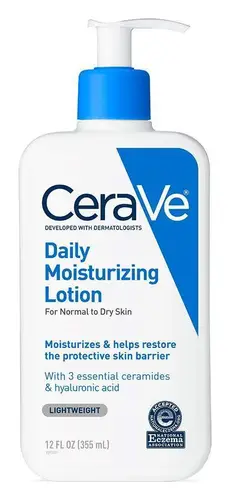
Eucerin Urea Repair Rich Replenishing Face Cream Versus CeraVe Daily Moisturizing Lotion for Normal to Dry Skin
This barrier-repair night moisturizer is formulated around Urea to strengthen the skin barrier and hydrate skin.
This barrier-repair moisturizer is formulated around Ceramide NP and Ceramide AP to strengthen the skin barrier and hydrate skin.


What's inside
What's inside
 Key Ingredients
Benefits
Concerns
Ingredients Side-by-side
Water
Skin ConditioningGlycerin
Humectant


Urea
Buffering


Cyclomethicone
Emollient
Ethylhexyl Cocoate
Emollient



Caprylic/Capric Triglyceride
Masking
Helianthus Annuus Seed Oil
Emollient
Isopropyl Stearate
Emollient
Polyglyceryl-2 Dipolyhydroxystearate
Skin Conditioning
Squalane
Emollient
Sodium Lactate
Buffering
Butyrospermum Parkii Butter
Skin Conditioning

Polyglyceryl-3 Diisostearate
Emulsifying
Hydrogenated Castor Oil
Emollient
Benzyl Alcohol
Perfuming





Magnesium Sulfate
Sodium Starch Octenylsuccinate
AbsorbentLactic Acid
Buffering




Methylparaben
Preservative

Disodium EDTA
ChelatingCeramide NP
Skin Conditioning


BHT
Antioxidant
Water, Glycerin, Urea, Cyclomethicone, Ethylhexyl Cocoate, Caprylic/Capric Triglyceride, Helianthus Annuus Seed Oil, Isopropyl Stearate, Polyglyceryl-2 Dipolyhydroxystearate, Squalane, Sodium Lactate, Butyrospermum Parkii Butter, Polyglyceryl-3 Diisostearate, Hydrogenated Castor Oil, Benzyl Alcohol, Magnesium Sulfate, Sodium Starch Octenylsuccinate, Lactic Acid, Methylparaben, Disodium EDTA, Ceramide NP, BHT
Water
Skin ConditioningGlycerin
Humectant
Caprylic/Capric Triglyceride
Masking
Cetearyl Alcohol
Emollient
Cetyl Alcohol
Emollient
Dimethicone
Emollient
Phenoxyethanol
Preservative
Polysorbate 20
Emulsifying
Ceteareth-20
Cleansing
Behentrimonium Methosulfate
SurfactantPolyglyceryl-3 Diisostearate
Emulsifying
Sodium Lauroyl Lactylate
EmulsifyingEthylhexylglycerin
Skin ConditioningPotassium Phosphate
BufferingDisodium EDTA
ChelatingDipotassium Phosphate
BufferingCeramide NP
Skin Conditioning
Ceramide AP
Skin Conditioning
Phytosphingosine
Skin Conditioning
Cholesterol
Emollient
Xanthan Gum
EmulsifyingCarbomer
Emulsion StabilisingSodium Hyaluronate
Humectant
Tocopherol
Antioxidant
Ceramide EOP
Skin Conditioning
Water, Glycerin, Caprylic/Capric Triglyceride, Cetearyl Alcohol, Cetyl Alcohol, Dimethicone, Phenoxyethanol, Polysorbate 20, Ceteareth-20, Behentrimonium Methosulfate, Polyglyceryl-3 Diisostearate, Sodium Lauroyl Lactylate, Ethylhexylglycerin, Potassium Phosphate, Disodium EDTA, Dipotassium Phosphate, Ceramide NP, Ceramide AP, Phytosphingosine, Cholesterol, Xanthan Gum, Carbomer, Sodium Hyaluronate, Tocopherol, Ceramide EOP
Reviews
Ingredients Explained
These ingredients are found in both products.
Ingredients higher up in an ingredient list are typically present in a larger amount.
Caprylic/Capric Triglyceride (aka MCT Oil) is a lightweight emollient, solvent, and texture enhancer. It is considered a skin-softener by helping to prevent moisture loss.
Though it behaves like an oil, it is not technically one due to its chemical composition. One perk of this ingredient is that it is very stable, resistant to oxidation, and unlikely to go rancid.
In practice, that translates to a long shelf life and a consistently elegant skin feel.
While there is an assumption Caprylic Triglyceride can clog pores due to it being derived from coconut oil, there is no research supporting this. Just patch test if you have concerns.
Fractionated coconut oil and MCT Oil are both listed as Caprylic/Capric Triglyceride according to INCI. This is because INCI names are based on the ingredient’s final chemical composition and not its marketing name or source.
This ingredient is treated as the gold standard fungal acne safe oil. Even though it is coconut derived, the problematic lauric acid is stripped out.
This leaves just caprylic (C8) and capric (C10) acid. These chain lengths actually trend antifungal; a 2020 study found caprylic acid was enough to disrupt Malassezia furfur cell membrane, with a caprylic acid derivative damaging membrane structures at concentrations as low as 0.2%.
Learn more about Caprylic/Capric TriglycerideCeramide NP (formerly known as Ceramide 3) is one of the skin's naturally occurring lipids.
Since ceramides are the major lipid components of the skin, they are crucial for maintaining skin barrier and hydration. Ceramide NP most closely mirrors the dominant kind in human skin amongst ceramide subtypes.
This ceramide works by slotting into gaps within the stratum corneum's lipid matrix to limit trans-epidermal water loss (TEWL) and shield the skin against external irritants.
A study with 312 patients found that using a ceramide-containing routine for 4 weeks reduced the severity of atopic dermatitis by over 61%.
Another clinical study in subjects aged 60 and older found that a ceramide body wash and moisturizer improved skin dryness and itchy skin in 15 days.
Overall, ceramides are considered non-irritating and safety tests have found little to no observable adverse effects from using this ingredient.
Ceramide NP is usually sourced from plants (like soybean or rice bran), or produced synthetically.
Learn more about Ceramide NPDisodium EDTA is a chelating agent. It grabs onto and deactivates metal ions that sneak into your products from water, packaging, or air.
This ingredient mainly works behind the scenes and helps with:
On top of that, this ingredient can counteract the effects of hard water by binding to the minerals in it.
One thing worth knowing is that Disodium EDTA has been shown to be a mild penetration enhancer. It can help other ingredients absorb into skin more effectively which can be a double-edged sword (great for actives, but can also make the active too strong if you have sensitive skin).
Clinical patch testing showed no significant skin irritation at typical use concentrations and minimal dermal absorption.
You'll most likely see this ingredient near the end of an ingredient list. It's typically found in concentrations less than 1%.
Learn more about Disodium EDTAGlycerin (or glycerol) is a compound naturally found in your skin. It's a powerhouse humectant that pulls water into the stratum corneum.
Topically, glycerin does several things at once:
Your skin makes glycerin on its own (mostly from sebaceous oil breakdown) and shuttles it to your outermost layer of skin, or your epidermis, via aquaporin-3.
Aquaporin-3 is a transporter that is essential for normal skin hydration, elasticity, and repair. Interestingly, mice lacking in AQP3 have dry and less elastic skin that can be fully corrected with glycerin.
This ingredient is non-irritating, plays well with almost every ingredient, and works across all skin types. Typical use is anywhere between 3-10% but can go up to 79% in some leave-on products.
Just know very high concentrations (>40%) can feel tacky in low humidity.
Glycerin is the name for this ingredient in American English. British English uses Glycerol/Glycerine.
Learn more about GlycerinPolyglyceryl-3 Diisostearate is a plant-derived, oil-soluble emulsifier. It keeps water-in-oil emulsions stable to prevent the ingredients from separating.
On the safety front, it's considered non-irritating and well-tolerated (it can even be found in formulations for baby skin).
This ingredient may not be fungal acne safe because research has shown that the Malassezia species can grow in the presence of fatty acid esters with chain lengths above C12 (and this one is C18).
While it does have a comedogenic rating of 4, the comedogenic rating scale was developed from rabbit ear models which has limited clinical relevance to human skin. Studies also show that comedogenic ingredients cannot predict how the overall formula will behave on human skin.
Learn more about Polyglyceryl-3 DiisostearateWater. It's the most common cosmetic ingredient of all. You'll usually see it at the top of ingredient lists, meaning that it makes up the largest part of the product.
So why is it so popular? Water most often acts as a solvent - this means that it helps dissolve other ingredients into the formulation.
You'll also recognize water as that liquid we all need to stay alive. If you see this, drink a glass of water. Remember to stay hydrated!
Learn more about Water

