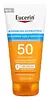
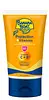
Eucerin Advanced Hydration Lightweight Sunscreen Lotion SPF50 Versus Banana Boat Protection + Vitamins Sunscreen Lotion SPF 50
This chemical sunscreen covers most of the UV range, lighter on the deep UVA that drives aging.
This hybrid sunscreen covers the full UV range and blocks ~98% of UVB at SPF 50.


What's inside
What's inside
 Key Ingredients
Benefits
Concerns
Ingredients Side-by-side
Butyl Methoxydibenzoylmethane 3%
UV Absorber
Homosalate 9%
Skin Conditioning
Ethylhexyl Salicylate 4.5%
UV Absorber
Octocrylene 9%
UV Absorber

Water
Skin ConditioningC12-15 Alkyl Benzoate
AntimicrobialNeopentyl Glycol Diheptanoate
EmollientStyrene/Acrylates Copolymer
Butylene Glycol
Humectant

Diethylhexyl Syringylidenemalonate
Skin Protecting
Vp/Eicosene Copolymer
Sodium Hyaluronate
Humectant


Glycyrrhiza Inflata Root Extract
Skin Conditioning
Glycyrrhetinic Acid
Skin Conditioning
Tocopherol
Antioxidant



Aloe Barbadensis Leaf Juice
Skin Conditioning
1,2-Hexanediol
Skin Conditioning
Hydroxyacetophenone
Antioxidant
Acrylates/C10-30 Alkyl Acrylate Crosspolymer
Emulsion StabilisingPotassium Hydroxide
BufferingDisodium EDTA
ChelatingSodium Ascorbyl Phosphate
Antioxidant



Butyl Methoxydibenzoylmethane 3%, Homosalate 9%, Ethylhexyl Salicylate 4.5%, Octocrylene 9%, Water, C12-15 Alkyl Benzoate, Neopentyl Glycol Diheptanoate, Styrene/Acrylates Copolymer, Butylene Glycol, Diethylhexyl Syringylidenemalonate, Vp/Eicosene Copolymer, Sodium Hyaluronate, Glycyrrhiza Inflata Root Extract, Glycyrrhetinic Acid, Tocopherol, Aloe Barbadensis Leaf Juice, 1,2-Hexanediol, Hydroxyacetophenone, Acrylates/C10-30 Alkyl Acrylate Crosspolymer, Potassium Hydroxide, Disodium EDTA, Sodium Ascorbyl Phosphate
Octocrylene 2.7%
UV Absorber
Water
Skin ConditioningDiisopropyl Adipate
EmollientNiacinamide
Smoothing


Cetearyl Alcohol
Emollient





Phenoxyethanol
Preservative
Carbomer
Emulsion StabilisingBenzyl Alcohol
Perfuming



Acrylates/C12-22 Alkyl Methacrylate Copolymer
Ascorbyl Glucoside
Antioxidant
Glycerin
Humectant
Chlorphenesin
Antimicrobial
Dicetyl Phosphate
EmulsifyingCeteth-10 Phosphate
CleansingCoco-Glucoside
Cleansing
Sodium Hydroxide
BufferingPropylene Glycol
Humectant
Cocos Nucifera Oil
Masking
Xanthan Gum
EmulsifyingDisodium EDTA
ChelatingCamellia Sinensis Leaf Extract
Antimicrobial
Parfum
Masking
Mica
Cosmetic ColorantTocopheryl Acetate
Antioxidant
Titanium Dioxide
Cosmetic Colorant
Iron Oxides
Octocrylene 2.7%, Water, Diisopropyl Adipate, Niacinamide, Cetearyl Alcohol, Phenoxyethanol, Carbomer, Benzyl Alcohol, Acrylates/C12-22 Alkyl Methacrylate Copolymer, Ascorbyl Glucoside, Glycerin, Chlorphenesin, Dicetyl Phosphate, Ceteth-10 Phosphate, Coco-Glucoside, Sodium Hydroxide, Propylene Glycol, Cocos Nucifera Oil, Xanthan Gum, Disodium EDTA, Camellia Sinensis Leaf Extract, Parfum, Mica, Tocopheryl Acetate, Titanium Dioxide, Iron Oxides
Reviews
Ingredients Explained
These ingredients are found in both products.
Ingredients higher up in an ingredient list are typically present in a larger amount.
Disodium EDTA is a chelating agent. It grabs onto and deactivates metal ions that sneak into your products from water, packaging, or air.
This ingredient mainly works behind the scenes and helps with:
On top of that, this ingredient can counteract the effects of hard water by binding to the minerals in it.
One thing worth knowing is that Disodium EDTA has been shown to be a mild penetration enhancer. It can help other ingredients absorb into skin more effectively which can be a double-edged sword (great for actives, but can also make the active too strong if you have sensitive skin).
Clinical patch testing showed no significant skin irritation at typical use concentrations and minimal dermal absorption.
You'll most likely see this ingredient near the end of an ingredient list. It's typically found in concentrations less than 1%.
Learn more about Disodium EDTAOctocrylene is an oil-soluble organic UV filter that mainly absorbs UVB and short wave UVA II light.
Its real superpower is teamwork: octocrylene is remarkably photostable and is most famous for stabilizing avobenzone (the workhorse UVA filter).
This ingredient is commonly used to enhance both UVB and UVA protection due to its unique property in stabilizing avobenzone. It also pulls double duty by boosting water resistance and giving formulas a smooth, spreadable feel.
The EU's Scientific Committee on Consumer Safety (SCCS) has deemed octocrylene to be safe as a UV-filter at concentrations up to 10% (capped at 9% in propellant sprays). The US also permits it up to 10%.
Two things worth knowing:
You'll usually see this ingredient used in concentrations between 2-10% (higher amounts when used as a stabilizer for avobenzone).
Learn more about OctocryleneWater. It's the most common cosmetic ingredient of all. You'll usually see it at the top of ingredient lists, meaning that it makes up the largest part of the product.
So why is it so popular? Water most often acts as a solvent - this means that it helps dissolve other ingredients into the formulation.
You'll also recognize water as that liquid we all need to stay alive. If you see this, drink a glass of water. Remember to stay hydrated!
Learn more about Water

