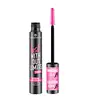
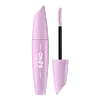
Essence Lash Without Limits Extreme Lengthening & Volume Mascara Versus Covergirl Lash Blast Bond Volume Mascara


What's inside
What's inside
 Key Ingredients
Benefits
Concerns
Ingredients Side-by-side
Water
Skin ConditioningAcrylates/Ethylhexyl Acrylate Copolymer
Copernicia Cerifera Cera
Emollient

Butylene Glycol
Humectant

Rhus Verniciflua Peel Cera
EmollientSteareth-20
CleansingSteareth-2
EmulsifyingCetearyl Alcohol
Emollient




1,2-Hexanediol
Skin Conditioning
Stearic Acid
Cleansing
Palmitic Acid
Emollient
Kaolin
Abrasive



Acacia Senegal Gum
MaskingTocopherol
Antioxidant





Ethylhexylglycerin
Skin ConditioningCaprylyl Glycol
Emollient
Hydroxyethylcellulose
Emulsion StabilisingPolyester-4
Skin ConditioningLaureth-21
CleansingSodium Phosphate
BufferingDisodium Phosphate
BufferingPotassium Hydroxide
BufferingPhenoxyethanol
Preservative
Sodium Dehydroacetate
Preservative
CI 77499
Cosmetic ColorantWater, Acrylates/Ethylhexyl Acrylate Copolymer, Copernicia Cerifera Cera, Butylene Glycol, Rhus Verniciflua Peel Cera, Steareth-20, Steareth-2, Cetearyl Alcohol, 1,2-Hexanediol, Stearic Acid, Palmitic Acid, Kaolin, Acacia Senegal Gum, Tocopherol, Ethylhexylglycerin, Caprylyl Glycol, Hydroxyethylcellulose, Polyester-4, Laureth-21, Sodium Phosphate, Disodium Phosphate, Potassium Hydroxide, Phenoxyethanol, Sodium Dehydroacetate, CI 77499
Water
Skin ConditioningParaffin
Skin Conditioning
Stearic Acid
Cleansing
Pvp
Emulsion StabilisingCetyl Alcohol
Emollient
Microcrystalline Wax
Emulsion StabilisingHydrogenated Vegetable Oil
Emollient
Arginine
Masking
Polysorbate 20
Emulsifying
Propylene Glycol
Humectant
2,3-Butanediol
HumectantStearyl Stearate
Emollient
Synthetic Wax
Abrasive
Panthenol
Skin Conditioning
Copernicia Cerifera Cera
Emollient
Euphorbia Cerifera Cera
Astringent
Caprylyl Glycol
Emollient
Butylene Glycol
Humectant
Hectorite
AbsorbentSimethicone
Emollient
Tocopheryl Acetate
Antioxidant
Biotin
AntiseborrhoeicPantolactone
Humectant
Cellulose
Absorbent
Ricinus Communis Seed Oil
Masking
Ceramide Ng
Skin Conditioning
Dextran
Acetyl Tetrapeptide-3
Skin Protecting
Trifolium Pratense Flower Extract
AstringentTocopherol
Antioxidant
CI 77491
Cosmetic ColorantCI 77492
Cosmetic ColorantCI 77499
Cosmetic ColorantCI 77007
Cosmetic ColorantWater, Paraffin, Stearic Acid, Pvp, Cetyl Alcohol, Microcrystalline Wax, Hydrogenated Vegetable Oil, Arginine, Polysorbate 20, Propylene Glycol, 2,3-Butanediol, Stearyl Stearate, Synthetic Wax, Panthenol, Copernicia Cerifera Cera, Euphorbia Cerifera Cera, Caprylyl Glycol, Butylene Glycol, Hectorite, Simethicone, Tocopheryl Acetate, Biotin, Pantolactone, Cellulose, Ricinus Communis Seed Oil, Ceramide Ng, Dextran, Acetyl Tetrapeptide-3, Trifolium Pratense Flower Extract, Tocopherol, CI 77491, CI 77492, CI 77499, CI 77007
Ingredients Explained
These ingredients are found in both products.
Ingredients higher up in an ingredient list are typically present in a larger amount.
Butylene Glycol (or BG) is used within cosmetic products for a few different reasons:
Overall, Butylene Glycol is a safe and well-rounded ingredient that works well with other ingredients.
Though this ingredient works well with most skin types, some people with sensitive skin may experience a reaction such as allergic rashes, closed comedones, or itchiness.
Learn more about Butylene GlycolCaprylyl Glycol is a humectant, skin conditioner, emollient, and preservative booster derived from either caprylic acid or synthetically created.
Typical use levels vary from 0.3-1% as a preservative booster and go up to 2% to condition skin.
Because it is not a free-fatty acid, this ingredient is fungal acne safe (there's nothing for Malassezia to feed on).
Learn more about Caprylyl GlycolCi 77499 is also hydrated iron III oxide. It is created from mixing red and black iron oxides. This helps give shades of darkness to a product.
Iron III oxides are classified as inorganic chemicals for coloring.
This ingredient comes from a palm tree native to Brazil. This ingredient is used to thicken texture and leaves behind a film when applied.
Stearic Acid is a fatty acid that is already found in your skin. It's one of the free fatty acids that works alongside ceramides and cholesterols to maintain your barrier.
In cosmetics, it is a multitasker:
Safety-wise, the CIR Expert Panel has concluded it to be safe in cosmetics when formulated to be non-irritating and non-sensitizing.
Free stearic acid is a C18 fatty acid that the Malassezia yeast can substrate, so this ingredient may not be fungal acne safe.
Learn more about Stearic AcidTocopherol is a fat-soluble antioxidant known as Vitamin E.
You'll find this ingredient in the vast majority of skincare (for good reason). It works to neutralize free radicals, or unstable molecules generated by UV exposure, pollution, and other environmental stressors, before they can cause oxidative damage to your skin cells.
Topically applied tocopherol has been shown to protect against UV damage by ramping up the skin's own natural defense enzymes.
It also acts as a skin conditioning agent; some studies show that regular topical use can improve the skin's water-binding capacity over 2-4 weeks.
This ingredient is especially loved for being a team player. When combined with Vitamin C, the photoprotective effect of both ingredients roughly doubles and the combo also helps reduce UV-induced DNA damage.
This ingredient has some brightening potential but it's more of a prevention ingredient than spot-fader. Cell studies show it can slow down melanin production but it's worth noting that it's not the most powerful brightener out there.
In formulations, it also serves as a stabilizer that helps protect other oxidation-prone ingredients from degrading.
Concentrations usually range from 0.1-1% in most leave-on products.
Learn more about TocopherolWater. It's the most common cosmetic ingredient of all. You'll usually see it at the top of ingredient lists, meaning that it makes up the largest part of the product.
So why is it so popular? Water most often acts as a solvent - this means that it helps dissolve other ingredients into the formulation.
You'll also recognize water as that liquid we all need to stay alive. If you see this, drink a glass of water. Remember to stay hydrated!
Learn more about Water

