Derma E Advanced Peptides And Collagen Moisturizer Versus Andalou Naturals Age Defying Hyaluronic DMAE Lift & Firm Cream
This anti-aging moisturizer is formulated around Palmitoyl Tripeptide-38 and Acetyl Hexapeptide-8 to soften the look of wrinkles and refine skin texture.
This anti-aging moisturizer is formulated around Sodium Hyaluronate and Resveratrol to soften the look of wrinkles and hydrate skin.

What's inside
What's inside
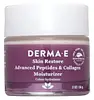 Key Ingredients
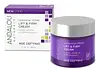
Benefits
Concerns
Ingredients Side-by-side
Water
Skin ConditioningGlycerin
Humectant


Macadamia Ternifolia Seed Oil
Emollient


Caprylic/Capric Triglyceride
Masking
Stearic Acid
Cleansing
Cetyl Alcohol
Emollient
Glyceryl Stearate Citrate
Emollient
Dimethicone
Emollient
Hydroxypropyl Cyclodextrin
MaskingPalmitoyl Tripeptide-38
Skin Conditioning


Acetyl Hexapeptide-8
Humectant
Panthenol
Skin Conditioning

Pinus Pinaster Bark Extract
Antioxidant
Glyceryl Stearate Se
Emulsifying

Acacia Seyal Gum Extract
HumectantTocopheryl Acetate
Antioxidant

Ascorbyl Palmitate
Antioxidant
Hamamelis Virginiana Bark/Leaf Extract
AstringentAesculus Hippocastanum Seed Extract
Skin ConditioningCamellia Sinensis Leaf Extract
Antimicrobial

Chamomilla Recutita Flower
Skin Conditioning
Simmondsia Chinensis Seed Oil
Emollient
Allantoin
Skin Conditioning
Xanthan Gum
EmulsifyingPotassium Sorbate
Preservative
Sodium Hydroxide
BufferingPhenoxyethanol
Preservative
Ethylhexylglycerin
Skin ConditioningParfum
Masking


Water, Glycerin, Macadamia Ternifolia Seed Oil, Caprylic/Capric Triglyceride, Stearic Acid, Cetyl Alcohol, Glyceryl Stearate Citrate, Dimethicone, Hydroxypropyl Cyclodextrin, Palmitoyl Tripeptide-38, Acetyl Hexapeptide-8, Panthenol, Pinus Pinaster Bark Extract, Glyceryl Stearate Se, Acacia Seyal Gum Extract, Tocopheryl Acetate, Ascorbyl Palmitate, Hamamelis Virginiana Bark/Leaf Extract, Aesculus Hippocastanum Seed Extract, Camellia Sinensis Leaf Extract, Chamomilla Recutita Flower, Simmondsia Chinensis Seed Oil, Allantoin, Xanthan Gum, Potassium Sorbate, Sodium Hydroxide, Phenoxyethanol, Ethylhexylglycerin, Parfum
Aloe Barbadensis Leaf Juice
Skin Conditioning
Water
Skin ConditioningButyrospermum Parkii Butter
Skin Conditioning
Glyceryl Stearate
Emollient
Argania Spinosa Kernel Oil
Emollient
Simmondsia Chinensis Seed Oil
Emollient
Malus Domestica Fruit Cell Culture Extract
Skin ConditioningDimethylaminoethanol Tartrate
EmollientSodium Hyaluronate
Humectant
Tocopherol
Antioxidant
Resveratrol
Antioxidant
Ubiquinone
Antioxidant
Helianthus Annuus Seed Oil
Emollient
Panthenol
Skin Conditioning
Allantoin
Skin Conditioning
Magnesium Ascorbyl Phosphate
Antioxidant
Bisabolol
Antioxidant
Riboflavin
Cosmetic ColorantBorago Officinalis Seed Oil
Emollient
Oenothera Biennis Oil
Emollient
Camellia Sinensis Leaf Extract
Antimicrobial
Hibiscus Sabdariffa Flower Extract
Skin ConditioningPhenethyl Alcohol
MaskingEthylhexylglycerin
Skin ConditioningRubus Idaeus Fruit
AstringentEthyl Vanillate
Perfuming
Citrus Aurantium Dulcis Peel Oil
Masking
Aloe Barbadensis Leaf Juice, Water, Butyrospermum Parkii Butter, Glyceryl Stearate, Argania Spinosa Kernel Oil, Simmondsia Chinensis Seed Oil, Malus Domestica Fruit Cell Culture Extract, Dimethylaminoethanol Tartrate, Sodium Hyaluronate, Tocopherol, Resveratrol, Ubiquinone, Helianthus Annuus Seed Oil, Panthenol, Allantoin, Magnesium Ascorbyl Phosphate, Bisabolol, Riboflavin, Borago Officinalis Seed Oil, Oenothera Biennis Oil, Camellia Sinensis Leaf Extract, Hibiscus Sabdariffa Flower Extract, Phenethyl Alcohol, Ethylhexylglycerin, Rubus Idaeus Fruit, Ethyl Vanillate, Citrus Aurantium Dulcis Peel Oil
Ingredients Explained
These ingredients are found in both products.
Ingredients higher up in an ingredient list are typically present in a larger amount.
Allantoin is a soothing ingredient known for its protective and moisturizing properties; it's basically a quiet workhorse ingredient you can find in a huge range of cosmetics.
Though it can be derived from the comfrey plant, allantoin is produced synthetically for cosmetic products to ensure purity.
Research shows it can encourage your skin cells to turn over and renew by stimulating keratinocyte and fibroblast proliferation.
It also has mild keratolytic properties to help loosen and shed dead skin cells without being harsh.
Studies also suggest allantoin can help calm inflammation by dialing down some of the chemical signals your skin sends out when it is irritated.
This ingredient is typically used in the 0.1-0.5% range, and the FDA recognizes it as a skin protectant in OTC products up to 2%.
Overall, allantoin is a wonderful addition to most routines; it is stable across a wide pH range (~4-8), works well with other ingredients, and is considered non-sensitizing/non-irritating.
Fun fact: Allantoin is naturally occurring in comfrey root, beets, chamomile, and wheat sprouts. Our bodies even produce it as a byproduct of uric acid metabolism.
Learn more about AllantoinCamellia Sinensis Leaf Extract (tea extract) is one of the most well-researched plant extracts in skincare with an impressive resume.
Black tea, green tea, and oolong tea are all harvested from the Camellia Sinensis plant.
Studies show green tea extract and its catechins (like epigallocatechin gallate (EGCG)) help your skin cells product energy more efficiently and reducing the number of free-radicals that can damage your skin from the inside.
In lab-grown skin models, this translated to younger, healthier, and stronger skin.
There's also good sun protection data; researchers saw less DNA damage and redness on human skin when green tea was applied before UVB exposure. And the more they applied, the better the protection.
Needless to say, this ingredient shouldn't replace your sunscreen. But it is a great supportive ingredient that you can already find in many sunscreens and antioxidant serums.
A 2009 study found a 2% green tea lotion was effective for mild-to-moderate acne thanks to its anti-inflammatory and mild antimicrobial activity.
The quality of the extract matters a lot here:
Good extracts contain 50-90% catechins while lower quality ones are mostly there for marketing. We recommend reaching out to the brand if you have questions about the quality or source of their ingredients.
Human Repeated Insult Patch Testing showed no irritation or sensitization at use concentrations (0.86% in leave-on products and up to 30% as leaf water).
Learn more about Camellia Sinensis Leaf ExtractEthylhexylglycerin is created from glycerin. It is a multitasker ingredient that:
The CIR Expert Panel found minimal skin absorption or sensitization of any kind in a safety assessment. Though this ingredient is considered well-tolerated, a small number of cases of allergic dermatitis have been published since 2002. Just be sure to patch test if you are unsure.
Industry-reported use ranges from 8% in rinse-off products and 2% in leave-on formulations.
Learn more about EthylhexylglycerinPanthenol is a common ingredient that helps hydrate and soothe the skin. It is found naturally in our skin and hair.
There are two forms of panthenol: D and L.
D-panthenol is also known as dexpanthenol. Most cosmetics use dexpanthenol or a mixture of D and L-panthenol.
Panthenol is famous due to its ability to go deeper into the skin's layers. Using this ingredient has numerous pros (and no cons):
Like hyaluronic acid, panthenol is a humectant. Humectants are able to bind and hold large amounts of water to keep skin hydrated.
This ingredient works well for wound healing. It works by increasing tissue in the wound and helps close open wounds.
Once oxidized, panthenol converts to pantothenic acid. Panthothenic acid is found in all living cells.
This ingredient is also referred to as pro-vitamin B5.
Learn more about PanthenolJojoba oil is one of the most well-studied plant-derived ingredients in cosmetics. It is an emollient with a special structure.
Because it is made up of 97-98% wax esters, it closely mirrors the linear monoesters found in human sebum. This makes it skin compatible, non-greasy, and lightweight.
Unlike other plant oils, jojoba wax doesn't easily penetrate skin. It mostly works in the uppermost layers as an emollient. This just means it forms a light barrier on the skin to help retain moisture.
Formulations with jojoba esters up to 90% reduced transepidermal water loss (TEWL) and increased barrier recovery by 81% (outperforming bisabolol at 47%).
Besides barrier support, the science also suggests jojoba to have anti-inflammatory effects and potential applications for skin infections, aging, and wound healing.
Fun fact: Indigenous cultures have used jojoba as a moisturizer and to help treat burns for centuries.
Fungal acne: The Malassezia yeast is known to metabolize fatty acids in the C11-24 range and jojoba's dominant fatty acid components fall into this range. This ingredient may not be fungal acne safe.
Learn more about Simmondsia Chinensis Seed OilWater. It's the most common cosmetic ingredient of all. You'll usually see it at the top of ingredient lists, meaning that it makes up the largest part of the product.
So why is it so popular? Water most often acts as a solvent - this means that it helps dissolve other ingredients into the formulation.
You'll also recognize water as that liquid we all need to stay alive. If you see this, drink a glass of water. Remember to stay hydrated!
Learn more about Water

