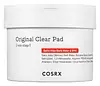
This acne exfoliating pad uses a pre-saturated pad with Salix Alba Bark Water and Betaine Salicylate to clear breakouts and refine the look of pores.
This smoothing toner pad uses a pre-saturated pad with Niacinamide and Retinol to refine skin texture and refine the look of pores.

What's inside
What's inside
 Key Ingredients

Benefits
Concerns
Ingredients Side-by-side




Water
Skin ConditioningGlycereth-26
Humectant
Glycerin
Humectant

Niacinamide
Smoothing









Dipropylene Glycol
Humectant1,2-Hexanediol
Skin Conditioning
Centella Asiatica Extract
Cleansing
Butylene Glycol
Humectant
Hydroxyethyl Urea
Humectant
Polyglyceryl-10 Laurate
Skin Conditioning

Lactobacillus Ferment Lysate
Skin Conditioning
Allantoin
Skin Conditioning
Erythritol
Humectant
Hydroxyethyl Acrylate/Sodium Acryloyldimethyl Taurate Copolymer
Emulsion StabilisingDipotassium Glycyrrhizate
Humectant
Ethylhexylglycerin
Skin ConditioningButyrospermum Parkii Butter
Skin Conditioning


Adenosine
Skin Conditioning
Olea Europaea Fruit Oil
Masking

Caprylic/Capric Triglyceride
Masking
Hydrogenated Lecithin
Emulsifying
Squalane
Emollient
Acrylates/C10-30 Alkyl Acrylate Crosspolymer
Emulsion StabilisingArginine
Masking
Sodium Phytate
Ammonium Acryloyldimethyltaurate/Vp Copolymer
Hydroxyethylcellulose
Emulsion StabilisingPolyglutamic Acid
Skin Conditioning
Glycine Soja Oil
Emollient
Sorbitan Isostearate
Emulsifying
Methyl Diisopropyl Propionamide
MaskingCamellia Sinensis Seed Extract
Humectant
Retinol
Skin Conditioning

Ceramide NP
Skin Conditioning
Cholesterol
Emollient
Phytosphingosine
Skin Conditioning
Salicylic Acid
Masking


Water, Glycereth-26, Glycerin, Niacinamide, Dipropylene Glycol, 1,2-Hexanediol, Centella Asiatica Extract, Butylene Glycol, Hydroxyethyl Urea, Polyglyceryl-10 Laurate, Lactobacillus Ferment Lysate, Allantoin, Erythritol, Hydroxyethyl Acrylate/Sodium Acryloyldimethyl Taurate Copolymer, Dipotassium Glycyrrhizate, Ethylhexylglycerin, Butyrospermum Parkii Butter, Adenosine, Olea Europaea Fruit Oil, Caprylic/Capric Triglyceride, Hydrogenated Lecithin, Squalane, Acrylates/C10-30 Alkyl Acrylate Crosspolymer, Arginine, Sodium Phytate, Ammonium Acryloyldimethyltaurate/Vp Copolymer, Hydroxyethylcellulose, Polyglutamic Acid, Glycine Soja Oil, Sorbitan Isostearate, Methyl Diisopropyl Propionamide, Camellia Sinensis Seed Extract, Retinol, Ceramide NP, Cholesterol, Phytosphingosine, Salicylic Acid
Reviews
Ingredients Explained
These ingredients are found in both products.
Ingredients higher up in an ingredient list are typically present in a larger amount.
1,2-Hexanediol is a synthetic liquid and another multi-functional powerhouse.
It is a:
- Humectant, drawing moisture into the skin
- Emollient, helping to soften skin
- Solvent, dispersing and stabilizing formulas
- Preservative booster, enhancing the antimicrobial activity of other preservatives
Allantoin is a soothing ingredient known for its protective and moisturizing properties; it's basically a quiet workhorse ingredient you can find in a huge range of cosmetics.
Though it can be derived from the comfrey plant, allantoin is produced synthetically for cosmetic products to ensure purity.
Research shows it can encourage your skin cells to turn over and renew by stimulating keratinocyte and fibroblast proliferation.
It also has mild keratolytic properties to help loosen and shed dead skin cells without being harsh.
Studies also suggest allantoin can help calm inflammation by dialing down some of the chemical signals your skin sends out when it is irritated.
This ingredient is typically used in the 0.1-0.5% range, and the FDA recognizes it as a skin protectant in OTC products up to 2%.
Overall, allantoin is a wonderful addition to most routines; it is stable across a wide pH range (~4-8), works well with other ingredients, and is considered non-sensitizing/non-irritating.
Fun fact: Allantoin is naturally occurring in comfrey root, beets, chamomile, and wheat sprouts. Our bodies even produce it as a byproduct of uric acid metabolism.
Learn more about AllantoinArginine is a semi-essential amino acid. This just means our bodies can product a bit on its own, but sometimes needs a little boost from food sources.
It is a part of your skin's natural moisturizing factor (NMF), or the water-loving molecules in your outermost layer of skin (stratum corneum) that keeps everything hydrated and happy.
Here's an interesting thing about Arginine: your skin converts it into urea through the Krebs-Henseleit urea cycle. Urea is one of the most effective humectants your skin naturally produces.
A clinical study showed applying 2.5% arginine hydrochloride to atopic dermatitis skin showed significant urea levels in the stratum corneum and improved moisture in just four weeks.
Arginine is also a precursor to nitric oxide; nitric oxide improves microcirculation and supports wound healing and collagen synthesis.
One study found that an amino acid complex containing Arginine reduced skin irritation, improved hydration, and accelerated skin repair in clinical / in-vivo studies.
Arginine itself is an amino acid and not a fatty acid, oil, or ester. On its own, it's not a direct food source for Malassezia, or the yeast that causes fungal acne.
Learn more about ArginineButylene Glycol (or BG) is used within cosmetic products for a few different reasons:
Overall, Butylene Glycol is a safe and well-rounded ingredient that works well with other ingredients.
Though this ingredient works well with most skin types, some people with sensitive skin may experience a reaction such as allergic rashes, closed comedones, or itchiness.
Learn more about Butylene GlycolGlycerin (or glycerol) is a compound naturally found in your skin. It's a powerhouse humectant that pulls water into the stratum corneum.
Topically, glycerin does several things at once:
Your skin makes glycerin on its own (mostly from sebaceous oil breakdown) and shuttles it to your outermost layer of skin, or your epidermis, via aquaporin-3.
Aquaporin-3 is a transporter that is essential for normal skin hydration, elasticity, and repair. Interestingly, mice lacking in AQP3 have dry and less elastic skin that can be fully corrected with glycerin.
This ingredient is non-irritating, plays well with almost every ingredient, and works across all skin types. Typical use is anywhere between 3-10% but can go up to 79% in some leave-on products.
Just know very high concentrations (>40%) can feel tacky in low humidity.
Glycerin is the name for this ingredient in American English. British English uses Glycerol/Glycerine.
Learn more about Glycerin

