
What's inside
What's inside
 Key Ingredients
Benefits
Concerns
Ingredients Side-by-side
Snail Secretion Filtrate
Skin Conditioning





Betaine
Humectant
Caprylic/Capric Triglyceride
Masking
Butylene Glycol
Humectant
Cetearyl Olivate

Sorbitan Olivate
Emulsifying
Cetearyl Alcohol
Emollient


Carbomer
Emulsion StabilisingEthyl Hexanediol
SolventPhenoxyethanol
Preservative
Arginine
Masking
Dimethicone
Emollient
Sodium Polyacrylate
Absorbent
Sodium Hyaluronate
Humectant

Allantoin
Skin Conditioning
Palmitic Acid
Emollient
Panthenol
Skin Conditioning
Xanthan Gum
EmulsifyingStearic Acid
Cleansing
Adenosine
Skin Conditioning
Water
Skin ConditioningMyristic Acid
Cleansing
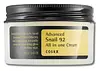
Snail Secretion Filtrate, Betaine, Caprylic/Capric Triglyceride, Butylene Glycol, Cetearyl Olivate, Sorbitan Olivate, Cetearyl Alcohol, Carbomer, Ethyl Hexanediol, Phenoxyethanol, Arginine, Dimethicone, Sodium Polyacrylate, Sodium Hyaluronate, Allantoin, Palmitic Acid, Panthenol, Xanthan Gum, Stearic Acid, Adenosine, Water, Myristic Acid
Snail Secretion Filtrate 96%
Skin Conditioning
1,2-Hexanediol
Skin Conditioning
Betaine
Humectant
Sodium Polyacrylate
Absorbent
Carbomer
Emulsion StabilisingArginine
Masking
Octyldodeceth-16
EmulsifyingPyrus Communis Fruit Extract
Skin ConditioningRosa Damascena Flower Water
Masking
Hedera Helix Leaf/Stem Extract
AntimicrobialFragaria Chiloensis Fruit Extract
Skin Conditioning
Pimpinella Anisum Fruit Extract
MaskingWater
Skin ConditioningButyl Avocadate
Skin Conditioning
Glycerin
Humectant
Butylene Glycol
Humectant
Asiaticoside
Antioxidant

Madecassic Acid
Skin Conditioning
Asiatic Acid
Skin Conditioning
Centella Asiatica Extract
Cleansing
Vaccinium Macrocarpon Fruit Extract
AstringentRubus Idaeus Fruit Extract
AstringentVaccinium Angustifolium Fruit Extract
Skin Protecting
Cornus Officinalis Fruit Extract
Skin ConditioningEuterpe Oleracea Fruit Extract
Sambucus Nigra Fruit Extract
AstringentSchisandra Chinensis Fruit Extract
Skin Conditioning
Panax Ginseng Berry Extract
Skin Conditioning
Vaccinium Myrtillus Fruit Extract
Skin ConditioningEpilobium Fleischeri Extract
Skin ConditioningPunica Granatum Fruit Extract
Antioxidant
Citric Acid
Buffering


Potassium Sorbate
Preservative
Hydrolyzed Hyaluronic Acid
Humectant
Ethylhexylglycerin
Skin ConditioningHibiscus Sabdariffa Flower Extract
Skin ConditioningPropyl Gallate
Antioxidant

Madecassoside
Antioxidant
Snail Secretion Filtrate 96%, 1,2-Hexanediol, Betaine, Sodium Polyacrylate, Carbomer, Arginine, Octyldodeceth-16, Pyrus Communis Fruit Extract, Rosa Damascena Flower Water, Hedera Helix Leaf/Stem Extract, Fragaria Chiloensis Fruit Extract, Pimpinella Anisum Fruit Extract, Water, Butyl Avocadate, Glycerin, Butylene Glycol, Asiaticoside, Madecassic Acid, Asiatic Acid, Centella Asiatica Extract, Vaccinium Macrocarpon Fruit Extract, Rubus Idaeus Fruit Extract, Vaccinium Angustifolium Fruit Extract, Cornus Officinalis Fruit Extract, Euterpe Oleracea Fruit Extract, Sambucus Nigra Fruit Extract, Schisandra Chinensis Fruit Extract, Panax Ginseng Berry Extract, Vaccinium Myrtillus Fruit Extract, Epilobium Fleischeri Extract, Punica Granatum Fruit Extract, Citric Acid, Potassium Sorbate, Hydrolyzed Hyaluronic Acid, Ethylhexylglycerin, Hibiscus Sabdariffa Flower Extract, Propyl Gallate, Madecassoside
Reviews
Ingredients Explained
These ingredients are found in both products.
Ingredients higher up in an ingredient list are typically present in a larger amount.
Arginine is a semi-essential amino acid. This just means our bodies can product a bit on its own, but sometimes needs a little boost from food sources.
It is a part of your skin's natural moisturizing factor (NMF), or the water-loving molecules in your outermost layer of skin (stratum corneum) that keeps everything hydrated and happy.
Here's an interesting thing about Arginine: your skin converts it into urea through the Krebs-Henseleit urea cycle. Urea is one of the most effective humectants your skin naturally produces.
A clinical study showed applying 2.5% arginine hydrochloride to atopic dermatitis skin showed significant urea levels in the stratum corneum and improved moisture in just four weeks.
Arginine is also a precursor to nitric oxide; nitric oxide improves microcirculation and supports wound healing and collagen synthesis.
One study found that an amino acid complex containing Arginine reduced skin irritation, improved hydration, and accelerated skin repair in clinical / in-vivo studies.
Arginine itself is an amino acid and not a fatty acid, oil, or ester. On its own, it's not a direct food source for Malassezia, or the yeast that causes fungal acne.
Learn more about ArginineBetaine is a humectant. Like hyaluronic acid, it helps attract and retain moisture in the skin. It’s known for being gentle and for helping the skin maintain balanced hydration.
Betaine is mainly used to improve hydration and support calmer skin. It helps skin cells regulate water balance because it functions as an osmolyte.
Some studies suggest betaine may support making skin tone more even.
Fun fact: Betaine naturally exists in the skin and the body. In cosmetic products, it can be either plant-derived (most commonly from sugar beets) or synthetically produced for consistency and stability.
Betaine is also known as trimethylglycine.
Learn more about BetaineButylene Glycol (or BG) is used within cosmetic products for a few different reasons:
Overall, Butylene Glycol is a safe and well-rounded ingredient that works well with other ingredients.
Though this ingredient works well with most skin types, some people with sensitive skin may experience a reaction such as allergic rashes, closed comedones, or itchiness.
Learn more about Butylene GlycolCarbomer is a high-molecular weight polymer of acrylic acid. It is used to form gels and thicken formulas.
Due to its large molecular size, carbomer has minimal skin penetration and is considered an inert ingredient.
A high amount of carbomer can cause pilling or balling up of products. Don't worry, most products contain 1% or less of carbomer.
Learn more about CarbomerSnail Secretion Filtrate is the excretion from snails. It is an effective moisturizer and promotes collagen production.
A popular nickname for this ingredient is 'Snail Mucin'.
Snail mucin has numerous skin benefits:
On top of this, Snail Secretion Filtrate contains a variety of vitamins and minerals. These include copper peptides, Vitamin A, and Vitamin E. Vitamins A and E are antioxidants. Antioxidants help fight free-radicals that damage skin cells.
Being cruelty-free means a brand does not experiment on animals.
If you're worried about the well-being of the snails, we recommend looking more into the company of the product. Many brands have developed humane methods to collect snail mucin.
There is much debate on this subject. On one hand, this ingredient comes from an animal. On the other hand, many will argue the ingredient is naturally secreted (like a natural by-product) and therefore vegan. If you have reservations, you can look into Galactomyces Ferment Filtrate or Centella Asiatica Extract as alternatives.
Learn more about Snail Secretion FiltrateSodium Polyacrylate is the sodium salt of polyacrylic acid. It is used as an absorber, emollient, and stabilizer.
This ingredient is a super-absorbent polymer - meaning it can absorb 100 to 1000 times its mass in water. As an emollient, Sodium Polyacrylate helps soften and soothe skin. Emollients work by creating a barrier to trap moisture in. This helps keep your skin hydrated.
Water. It's the most common cosmetic ingredient of all. You'll usually see it at the top of ingredient lists, meaning that it makes up the largest part of the product.
So why is it so popular? Water most often acts as a solvent - this means that it helps dissolve other ingredients into the formulation.
You'll also recognize water as that liquid we all need to stay alive. If you see this, drink a glass of water. Remember to stay hydrated!
Learn more about Water
