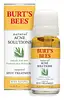
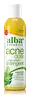
Burt's Bees Natural Acne Solutions Targeted Spot Treatment Versus Alba Botanica Acnedote Deep Clean Astringent
This acne treatment is formulated around Salicylic Acid and Melaleuca Alternifolia Leaf Oil to clear breakouts and balance excess oil.
This acne toner is formulated around Salicylic Acid and Salix Alba Bark Extract to clear breakouts and balance excess oil.

What's inside
What's inside
 Key Ingredients
Benefits
Concerns
Ingredients Side-by-side
Salicylic Acid 0.75%
Masking










Alcohol Denat.
Antimicrobial
Citrus Limon Peel Oil
Masking



Water
Skin ConditioningAchillea Millefolium Extract
CleansingBorago Officinalis Extract
Emollient

Calendula Officinalis Flower Extract
Masking
Carum Petroselinum Extract
Skin ConditioningFoeniculum Vulgare Oil
Emollient
Salix Nigra Bark Extract
Skin ProtectingMelaleuca Alternifolia Leaf Oil
Antioxidant
Eucalyptus Globulus Leaf Oil
Perfuming
Juniperus Communis Fruit Oil
Masking
Rosa Canina Seed Extract
EmollientSimmondsia Chinensis Seed Oil
Emollient


Parfum
Masking
Oenothera Biennis Seed Extract
Skin ConditioningBorago Officinalis Seed Oil
Emollient
Triticum Vulgare Germ Oil
Emollient
Corylus Avellana Seed Oil
Emollient
Tocopherol
Antioxidant


Calendula Officinalis Flower Oil
Masking
Camellia Sinensis Leaf Extract
Antimicrobial
Helianthus Annuus Seed Oil
Emollient
Rosmarinus Officinalis Leaf Extract
AntimicrobialBeta-Carotene
Skin ConditioningCanola Oil
Emollient
Glycine Soja Oil
Emollient
Ascorbyl Palmitate
Antioxidant
Retinyl Palmitate
Skin Conditioning
Limonene
Perfuming
Linalool
Perfuming
Salicylic Acid 0.75%, Alcohol Denat., Citrus Limon Peel Oil, Water, Achillea Millefolium Extract, Borago Officinalis Extract, Calendula Officinalis Flower Extract, Carum Petroselinum Extract, Foeniculum Vulgare Oil, Salix Nigra Bark Extract, Melaleuca Alternifolia Leaf Oil, Eucalyptus Globulus Leaf Oil, Juniperus Communis Fruit Oil, Rosa Canina Seed Extract, Simmondsia Chinensis Seed Oil, Parfum, Oenothera Biennis Seed Extract, Borago Officinalis Seed Oil, Triticum Vulgare Germ Oil, Corylus Avellana Seed Oil, Tocopherol, Calendula Officinalis Flower Oil, Camellia Sinensis Leaf Extract, Helianthus Annuus Seed Oil, Rosmarinus Officinalis Leaf Extract, Beta-Carotene, Canola Oil, Glycine Soja Oil, Ascorbyl Palmitate, Retinyl Palmitate, Limonene, Linalool
Salicylic Acid 2%
Masking
Water
Skin ConditioningSd Alcohol 40-B
Astringent
Glycerin
Humectant
Sorbitol
Humectant
Sodium PCA
Humectant
Aloe Barbadensis Leaf Extract
Emollient
Arnica Montana Flower Extract
Masking
Calendula Officinalis Flower Extract
Masking
Camellia Sinensis Leaf Extract
Antimicrobial
Chamomilla Recutita Flower Extract
Masking
Glycyrrhiza Glabra Rhizome/Root
EmollientLavandula Angustifolia Extract
Skin Conditioning
Lens Esculenta Fruit Extract
Skin ConditioningSalix Alba Bark Extract
Astringent
Spiraea Ulmaria Extract
AstringentCitrus Aurantium Bergamia Fruit Oil
Masking
Citrus Aurantium Dulcis Peel Oil
Masking
Mentha Piperita Oil
Masking
Limonene
Perfuming
Linalool
Perfuming
Salicylic Acid 2%, Water, Sd Alcohol 40-B, Glycerin, Sorbitol, Sodium PCA, Aloe Barbadensis Leaf Extract, Arnica Montana Flower Extract, Calendula Officinalis Flower Extract, Camellia Sinensis Leaf Extract, Chamomilla Recutita Flower Extract, Glycyrrhiza Glabra Rhizome/Root, Lavandula Angustifolia Extract, Lens Esculenta Fruit Extract, Salix Alba Bark Extract, Spiraea Ulmaria Extract, Citrus Aurantium Bergamia Fruit Oil, Citrus Aurantium Dulcis Peel Oil, Mentha Piperita Oil, Limonene, Linalool
Ingredients Explained
These ingredients are found in both products.
Ingredients higher up in an ingredient list are typically present in a larger amount.
Calendula Officinalis Flower Extract comes from the marigold flower and has been used on skin for centuries for its calming effect.
In the lab, its active compounds appear to calm inflammation and support the early "healing" phase of minor wounds.
This is why Europe's medicines regulator has approved calendula extracts as a traditional remedy for minor skin inflammation and healing small wounds.
The stronger human evidence is around would/ulcer care rather than everyday cosmetic claims; a review that pulled together 14 studies found that calendula helped calm the early, inflamed stage of a wound and helped new skin tissue form faster.
Two studies also showed it shrank leg ulcers (the kind caused by poor circulation). Results were mixed for burns and for the skin irritation people get from radiation treatment, so it's not a sure thing there.
In cosmetics, it's mostly a skin conditioning and soothing agent.
The Cosmetic Ingredient Review panel concluded that calendula-derived ingredients are safe as used and that the ingredients are not irritating, sensitizing, or photosensitizing in clinical tests (though they may be mild eye irritants).
Typical use levels are quite low; industry data reported it used at under 0.5% (one supplier noted a 10-25% extract blend used at 1-10% in the finished product). Historical use goes up to 10%.
The only thing to keep in mind is if you have daisy/ragweed allergies. Calendula is in the same family and one patch-test study found 2% of dermatitis patients reacted to marigold. Be sure to patch test if you have sensitive or allergy-prone skin.
Learn more about Calendula Officinalis Flower ExtractCamellia Sinensis Leaf Extract (tea extract) is one of the most well-researched plant extracts in skincare with an impressive resume.
Black tea, green tea, and oolong tea are all harvested from the Camellia Sinensis plant.
Studies show green tea extract and its catechins (like epigallocatechin gallate (EGCG)) help your skin cells product energy more efficiently and reducing the number of free-radicals that can damage your skin from the inside.
In lab-grown skin models, this translated to younger, healthier, and stronger skin.
There's also good sun protection data; researchers saw less DNA damage and redness on human skin when green tea was applied before UVB exposure. And the more they applied, the better the protection.
Needless to say, this ingredient shouldn't replace your sunscreen. But it is a great supportive ingredient that you can already find in many sunscreens and antioxidant serums.
A 2009 study found a 2% green tea lotion was effective for mild-to-moderate acne thanks to its anti-inflammatory and mild antimicrobial activity.
The quality of the extract matters a lot here:
Good extracts contain 50-90% catechins while lower quality ones are mostly there for marketing. We recommend reaching out to the brand if you have questions about the quality or source of their ingredients.
Human Repeated Insult Patch Testing showed no irritation or sensitization at use concentrations (0.86% in leave-on products and up to 30% as leaf water).
Learn more about Camellia Sinensis Leaf ExtractLimonene is the compound that gives citrus peel its smell.
In skincare, it shows up as a standalone fragrance ingredient or as a natural compound of citrus and other essential oils.
You'll typically see this ingredient used in very small amounts; anything above 0.001% in a leave-on product or 0.01% in a rinse-off has to be named on the label in the EU. The citrus oils that carry it sit around 0.5-1% in a finished formula.
Fresh limonene is a weak allergen; the real issue is that it slowly reacts with air and then breaks down from oxidation to create hydroperoxides (which are strong sensitizers). This is why suppliers are required to keep the peroxide value below 20 mmol.
Positive reactions in people being investigated for eczema vary:
It's worth skipping if you have a known fragrance allergy or a compromised barrier, but the risk is low for most people.
Older or long-opened products are also more likely to bother you than fresh ones due to oxidation.
Learn more about LimoneneLinalool is a small, naturally occurring scent molecule found in plants like lavender, coriander, bergamot, and more.
It is one of the two most-used fragrance ingredients in cosmetics and added purely for smell. Since it's not used for a skin benefit, there's no "effective dose". Concentration depends on the fragrance load of the product.
The EU requires it to be named on the label above 0.001% in leave-on and 0.01% in rinse-off products.
Fresh linalool is a weak sensitizer but air exposure turns some of it into hydroperoxides, which are strong sensitizers. Those oxidation products are the actual allergy concern.
Patch-test clinics see positive reactions to linalool hydroperoxides in about 4% to 12% of dermatitis patients depending on country and test concentration.
Resassuringly, one analytical study found hydroperoxide levels in real fragranced products to be orders of magnitude below what induced sensitization in animal studies with no evidence of oxidation building up during normal storage.
The practical takeaway is that linalool is fine for most people but worth avoiding if you have a confirmed fragrance contact allergy or a badly compromised barrier.
Products stored a long time after opening are also the high-risk scenario since that is when oxidation happens.
The scent of linalool is described as floral, spicy tropical, and citrus-like.
Learn more about LinaloolSalicylic Acid (also known as beta hydroxy acid or BHA) is a well-known ingredient for treating skin that struggles with acne and clogged pores. It exfoliates both the skin's surface and deep within the pores to help clear out buildup, control oil, and reduce inflammation.
Unlike AHAs (alpha hydroxy acids), salicylic acid is oil-soluble. This allows it to penetrate into pores which makes it especially effective for treating blackheads and preventing future breakouts.
Salicylic acid is also known for its soothing properties. It has a similar structure to aspirin and can calm inflamed or irritated skin, making it a good option for acne-prone skin that is also sensitive.
Concentrations of 0.5-2% are recognized by the U.S. FDA as an over-the-counter topical acne product.
It can cause irritation and/or dryness if one's skin already has a compromised moisture barrier, so it's best to focus on repairing that before introducing this ingredient into your routine.
While salicylic acid does not increase sun sensitivity, it’s still important to wear sunscreen daily to protect your skin.
If you are looking for the ingredient called BHA or Butylated Hydroxyanisole, click here.
Learn more about Salicylic AcidWater. It's the most common cosmetic ingredient of all. You'll usually see it at the top of ingredient lists, meaning that it makes up the largest part of the product.
So why is it so popular? Water most often acts as a solvent - this means that it helps dissolve other ingredients into the formulation.
You'll also recognize water as that liquid we all need to stay alive. If you see this, drink a glass of water. Remember to stay hydrated!
Learn more about Water

