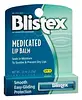
This lip moisturizer is formulated around Dimethicone and Petrolatum to hydrate lips.
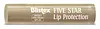
This barrier-repair lip moisturizer is formulated around Dimethicone and Bis-Diglyceryl Polyacyladipate-2 to strengthen the lip barrier and hydrate lips.

What's inside
What's inside
 Key Ingredients
Benefits
Concerns
Ingredients Side-by-side
Dimethicone 2%
Emollient

Ethylhexyl Methoxycinnamate 6.6%
UV Absorber


Ethylhexyl Salicylate 4.4%
UV Absorber
Beeswax
Emulsion Stabilising




Camphor
Masking

Cetyl Alcohol
Emollient

Cetyl Palmitate
Emollient
Euphorbia Cerifera Wax
Aroma


Isopropyl Myristate
Emollient
Lanolin
Emollient
Lanolin Oil
Emollient
Menthol
Masking
Methyl Salicylate
Perfuming
Paraffinum Liquidum
Emollient
Ozokerite
Emulsion StabilisingParaffin
Skin Conditioning
Petrolatum
Emollient
Phenoxyethanol
Preservative
Polybutene
CI 15850
Cosmetic ColorantTheobroma Cacao Seed Butter
Emollient
Titanium Dioxide
Cosmetic Colorant
Dimethicone 2%, Ethylhexyl Methoxycinnamate 6.6%, Ethylhexyl Salicylate 4.4%, Beeswax, Camphor, Cetyl Alcohol, Cetyl Palmitate, Euphorbia Cerifera Wax, Aroma, Isopropyl Myristate, Lanolin, Lanolin Oil, Menthol, Methyl Salicylate, Paraffinum Liquidum, Ozokerite, Paraffin, Petrolatum, Phenoxyethanol, Polybutene, CI 15850, Theobroma Cacao Seed Butter, Titanium Dioxide
Butyl Methoxydibenzoylmethane 3%
UV Absorber
Dimethicone 2%
Emollient
Homosalate 15%
Skin Conditioning
Ethylhexyl Salicylate 5%
UV Absorber
Bis-Diglyceryl Polyacyladipate-2
Emollient
Bis-Stearyl Dimethicone
Emollient
Butyloctyl Salicylate
Skin Conditioning
C12-15 Alkyl Benzoate
AntimicrobialCalendula Officinalis Extract
Skin Conditioning

Caprylic/Capric Triglyceride
Masking
Carthamus Tinctorius Seed Oil
Masking
Cetyl Dimethicone
Emollient
Citric Acid
Buffering

Euphorbia Cerifera Wax
Aroma
Microcrystalline Wax
Emulsion StabilisingMyristyl Myristate
Emollient
Octyldodecanol
Emollient
Oryzanol
Skin ConditioningOzokerite
Emulsion StabilisingPanthenol
Skin Conditioning
Phenoxyethanol
Preservative
Sorbic Acid
Preservative
Stearyl Behenate
Emollient
Sucralose
Skin ConditioningTetrahexyldecyl Ascorbate
Antioxidant



Tocopheryl Acetate
Antioxidant
Triticum Vulgare Germ Oil
Emollient
Butyl Methoxydibenzoylmethane 3%, Dimethicone 2%, Homosalate 15%, Ethylhexyl Salicylate 5%, Bis-Diglyceryl Polyacyladipate-2, Bis-Stearyl Dimethicone, Butyloctyl Salicylate, C12-15 Alkyl Benzoate, Calendula Officinalis Extract, Caprylic/Capric Triglyceride, Carthamus Tinctorius Seed Oil, Cetyl Dimethicone, Citric Acid, Euphorbia Cerifera Wax, Aroma, Microcrystalline Wax, Myristyl Myristate, Octyldodecanol, Oryzanol, Ozokerite, Panthenol, Phenoxyethanol, Sorbic Acid, Stearyl Behenate, Sucralose, Tetrahexyldecyl Ascorbate, Tocopheryl Acetate, Triticum Vulgare Germ Oil
Reviews
Ingredients Explained
These ingredients are found in both products.
Ingredients higher up in an ingredient list are typically present in a larger amount.
Aroma refers to an ingredient, or mixture of ingredients, that impart or mask a flavor.
The name is slightly confusing. This is because INCI associates aroma with flavor instead of smell.
Here is the official definition from the The International Cosmetic Ingredient Dictionary and Handbook:
“Aroma is a term for ingredient labeling used to identify that a product contains a material or combination of materials normally added to a cosmetic to produce or to mask a particular flavor.”
INCI shows the only purpose of aroma to be "flavouring".
However, due to regulation differences, some companies may use aroma in place of parfum.
In Canada, this ingredient only has to be listed in concentrations above 1%.
Learn more about AromaDimethicone is a type of synthetic silicone created from natural materials such as quartz. It is also known as polydimethylsiloxane.
What it does:
Dimethicone comes in different viscosities:
Depending on the viscosity, dimethicone has different properties.
Ingredients lists don't always show which type is used, so we recommend reaching out to the brand if you have questions about the viscosity.
This ingredient is unlikely to cause irritation because it does not get absorbed into skin. However, people with silicone allergies should be careful about using this ingredient.
Note: Dimethicone may contribute to pilling. This is because it is not oil or water soluble, so pilling may occur when layered with products. When mixed with heavy oils in a formula, the outcome is also quite greasy.
Learn more about DimethiconeEthylhexyl Salicylate (also called Octisalate or Octyl Salicylate) is an oil-soluble organic UV filter that's been used in sunscreen since the 1950's.
It absorbs UVB light in the 280-320 nm range with a peak absorbance around 306 nm.
You'll often see it paired with other UV filters to boost overall SPF because octisalate is a fairly week filter on its own.
The reason you'll see it so often is because it can help solubilize and stabilize the trickier filters like oxybenzone and avobenzone.
Unlike these filters, octisalate has pretty good photostability and doesn't create skin-damaging free radicals when exposed to sunlight.
The fatty-alcohol part of the molecule also gives it a light, emollient feel so it doubles as a nice texture enhancer.
Usage levels vary around the world:
Safety-wise, this ingredient has a pretty reassuring track record. The EU's Scientific Committee on Consumer Products (SCCP) found very low skin penetration in human skin tests and negative results for irritation, phototoxicity, and photoallergy.
The real-world allergy risk is pretty low too; a 2012 European study of 1,031 people recorded only 2 reactions to it (a rate of 0.19%).
You might have seen scary headlines about sunscreen getting into your blood.
In 2019, the FDA found that several chemical filters can absorb through the skin and show up in the bloodstream at small but measurable levels.
Here's the important part: these tiny levels are just a cutoff the FDA uses to decide which ingredients need more testing and doesn't mean anything harmful was found.
The researchers were clear that the results are no reason to stop wearing sunscreen.
Learn more about Ethylhexyl SalicylateOzokerite is a naturally occuring mineral wax. In cosmetics, ozokerite is used as a texture enhancer.
Ceresin wax is derived from this ingredient.
The melting point of ozokerite is 58-100 C.
Ozokerite is found all over the world including Scotland, the US, and India.
Learn more about OzokeritePhenoxyethanol is one of the most widely used preservatives in skincare (and for good reason!).
It has a large spectrum of antimicrobial activity and especially effective bacteria, yeast, and mold while only having a weak effect on your skin's natural microbiome.
On a cellular level, it disrupts the cell membranes of microbes by poking holes that make the cell leak. This shuts down the chemical reactions the microbe needs to make energy so it can no longer survive.
Another perk of this ingredient is that it stays functional across a wide pH range (3-10).
You'll often see it paired with boosters like Ethylhexylglycerin; one study showed that a 1:9 ratio of Ethylhexylglycerin to Phenoxyethanol damages bacterial membranes as effectively as doubling the Phenoxyethanol concentration on its own.
Typical use concentrations range from 0.3-1% depending on the formula, and this ingredient is capped at 1% int the EU.
Safety-wise, the fear mongering does not hold up to the evidence. The EU's Scientific Committee on Consumer Safety and FDA consider it safe as a preservative at up to 1%, including for children of all ages.
Adverse systemic effects only showed up in animal studies at exposures roughly 200x higher than what people get from cosmetics. And despite its very widespread use, this ingredient is a rare sensitizer and allergic reactions are uncommon.
Learn more about PhenoxyethanolEuphorbia Cerifera Wax (aka candelilla wax) is a vegan stand-in for beeswax. It is a plant-derived wax that functions as an astringent, emulsion stabilizer, film-former, and skin conditioner.
On skin, it forms a protective barrier that helps lock in moisture while it enhances product stability, prevents separation, and helps color last longer in makeup.
This ingredient is generally safe for use in cosmetics with one nuance: some grades of candelilla wax can naturally contain benzyl alcohol at concentrations high enough to require declaration under EU labeling rules. This isn't a concern for most people but relevant for those with fragrance sensitivities.
Candelilla wax contains fatty acids (mainly C31) and wax esters that can be used by the Malassezia yeast, so this ingredient may not be fungal acne safe.
You might see Euphorbia Cerifera "Cera" instead of "wax". This is because some brands, databases, or labels use it interchangeably; they're the same ingredient.
Learn more about Euphorbia Cerifera Wax

