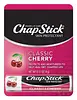
This lip moisturizer is formulated around Petrolatum to hydrate lips.
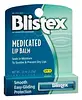
This lip moisturizer is formulated around Dimethicone and Petrolatum to hydrate lips.

What's inside
What's inside
 Key Ingredients
No key ingredients
Benefits
Concerns
Ingredients Side-by-side
Petrolatum
Emollient



Arachidyl Propionate
EmollientCamphor
Masking



Copernicia Cerifera Wax

Cetyl Alcohol
Emollient

Parfum
Masking

Isopropyl Lanolate
Emollient
Isopropyl Myristate
Emollient
Lanolin
Emollient
Paraffinum Liquidum
Emollient
Maltol
MaskingOctyldodecanol
Emollient
Paraffin
Skin Conditioning
Phenyl Trimethicone
Skin Conditioning
CI 15850
Cosmetic ColorantSaccharin
MaskingCera Alba
Emollient
Dimethicone 2%
Emollient
Ethylhexyl Methoxycinnamate 6.6%
UV Absorber

Ethylhexyl Salicylate 4.4%
UV Absorber
Beeswax
Emulsion Stabilising
Camphor
Masking
Cetyl Alcohol
Emollient
Cetyl Palmitate
Emollient
Euphorbia Cerifera Wax
Aroma
Isopropyl Myristate
Emollient
Lanolin
Emollient
Lanolin Oil
Emollient
Menthol
Masking
Methyl Salicylate
Perfuming
Paraffinum Liquidum
Emollient
Ozokerite
Emulsion StabilisingParaffin
Skin Conditioning
Petrolatum
Emollient
Phenoxyethanol
Preservative
Polybutene
CI 15850
Cosmetic ColorantTheobroma Cacao Seed Butter
Emollient
Titanium Dioxide
Cosmetic Colorant
Dimethicone 2%, Ethylhexyl Methoxycinnamate 6.6%, Ethylhexyl Salicylate 4.4%, Beeswax, Camphor, Cetyl Alcohol, Cetyl Palmitate, Euphorbia Cerifera Wax, Aroma, Isopropyl Myristate, Lanolin, Lanolin Oil, Menthol, Methyl Salicylate, Paraffinum Liquidum, Ozokerite, Paraffin, Petrolatum, Phenoxyethanol, Polybutene, CI 15850, Theobroma Cacao Seed Butter, Titanium Dioxide
Reviews
Ingredients Explained
These ingredients are found in both products.
Ingredients higher up in an ingredient list are typically present in a larger amount.
Camphor is a waxy solid with a strong scent. It is made using turpentine oil.
This ingredient is used for medicinal purposes due to its cooling effect. In medicine, camphor is a common anti-inflammation ingredient.
Camphor also possesses antibacterial and antifungal properties.
One study found camphor to be a potential anti-wrinkle ingredient. This might be due to its ability to increase elastin and collagen production. Collagen and elastin are responsible for plump and youthful looking skin.
It is best to use cosmetics with a small amount of camphor under 11%. Using topical camphor may induce irritation and redness.
In the past, camphor was traditionally made by distilling the wood of the camphor tree.
Learn more about CamphorCetyl Alcohol is a fatty alcohol. Fatty Alcohols are most often used as an emollient or to thicken a product.
Its main roles are:
Though it has "alcohol" in the name, it is not related to denatured alcohol or ethyl alcohol.
The FDA allows products labeled "alcohol-free" to have fatty alcohols.
This ingredient may not be fungal acne safe. It is a primary fatty alcohol with a chain length above 12 carbons. A study from 2019 show Malassezia can feed on fatty alcohols in this range, so it may trigger fungal acne in those prone to it.
Learn more about Cetyl AlcoholCi 15850 is the pigment color red. It is an azo dye and created synthetically.
Azo dyes need to be thoroughly purified before use. This allows them to be more stable and longer-lasting.
This ingredient is common in foundations, lipsticks, and blushes. This color is described as brown/orangey red.
It has many secondary names such as Red 6 and Red 7. According to a manufacturer, Red 6 usually contains aluminum.
Learn more about CI 15850Isopropyl Myristate is an ester made by combining isopropyl alcohol with myristic acid.
It is primarily an emollient and penetration enhancer that gives products a lightweight, silky feel without the heaviness of oils.
This ingredient is generally considered non-toxic, non-irritating, and has low absorption potential.
You might have heard that this ingredient clogs pores. This reputation comes from the older rabbit ear studies which are more sensitive than human skin to clogging.
Dermatologist Dr. Zoe Draelos has also confirmed in a peer-reviewed paper that products containing comedogenic ingredients are not necessarily comedogenic themselves.
A small subset of people (~2%) may experience contact sensitivity so patch testing is a reasonable idea if you have reactive skin.
Since this ingredient is an ester of myristic acid (a C14 fatty acid), it falls within the carbon chain range that is known to feed Malassezia. This ingredient may not be fungal acne safe.
Learn more about Isopropyl MyristateLanolin is a waxy substance secreted by the sebaceous glands of wool-bearing sheep. It is an effective moisturizer that works as both a humectant and emollient.
As a humectant, it is able to absorb up to 400% of its own weight in water; this also gives it emulsifying properties as it can help stabilize water-in-oil emulsions.
On the other hand, lanolin is able to reduce transepidermal water loss (TEWL) by about 20-30%. It can also incorporate into the lipid matrix to surround skin cells and reinforce the skin barrier.
This is why you'll see lanolin as an ingredient for heavy-duty moisturizers.
You might have seen an "allergy concern" that gives lanolin a bad reputation. The rate of lanolin contact allergy in the general population is estimated to be under 0.5%, and most of these are seen in people with compromised-skin dealing with eczema, atopic dermatitis, or leg ulcers.
Healthy, intact skin tolerates lanolin well. Even people who have previously reacted to it test negative on patch tests when the test is done on normal skin.
Because lanolin comes from an animal, it is not considered vegan. Sheep secrete lanolin through sebaceous glands to help protect their skin from the environment.
Learn more about LanolinParaffin is a solid wax that pulls its weight as an emollient, occlusive, and consistency-booster.
It softens skin and lays down a protective film to slow water loss and gives products a stable body and structure.
The cosmetic grade stuff is highly refined with a solid safety record. The CIR Expert Panel has repeatedly reaffirmed this ingredient to be safe in current practices of use and concentration.
The worry about carcinogenic compounds only applies to industrial grades, not the purified version used in skincare.
Despite its reputation, the highly reformed form is non-comedogenic and doesn't penetrate deeply into skin.
The good news for fungal-acne prone folks: the Malassezia yeast feeds on fatty acids and lipids and paraffin doesn't contain any of these (so there's nothing for the yeast to metabolize). This ingredient is considered fungal acne safe.
Learn more about ParaffinParaffinum Liquidum is a highly-refined cosmetic-grade mineral oil. It is also known as liquid paraffin.
Despite its controversial reputation, the science is pretty clear: it's one of the most well-studied and effective moisturizing ingredients out there.
As an occlusive, it forms a protective layer on the skin that locks in moisture and prevents transepidermal water loss (TEWL). This makes it especially great for compromised skin barriers.
The "it clogs your pores" myth has been around for decades; a study found that industrial-grade mineral oil may be comedogenic but cosmetic-grade mineral oil is not (these two are very, very different).
A 2017 review concluded that cosmetic use of mineral oils and waxes does not present a risk to consumers due to absorption.
Mineral oil got a bad rap from the old rabbit ear studies. When tested on actual human skin, cosmetic-grade mineral oil showed no comedogenic activity. The rating of 0 is a correction of outdated science.
Mineral oil is an inert substance with no fatty acids so there's nothing to feed Malassezia. This ingredient is fungal acne safe.
Learn more about Paraffinum LiquidumPetrolatum is more commonly known as petroleum jelly. It is created by mixing waxes and mineral oils.
This ingredient is effective at reducing water loss by 99%. This is because it is an occlusive. Occlusives create a hydrophobic barrier on the skin to prevent evaporation. This property makes it great for hydrating dry skin.
Pro tip: Use occlusives, such as this ingredient, on damp skin for the best results.
The quality or origin of petrolatum is only known when disclosed by the brand. Most cosmetic petrolatum has gone through several purification stages.
Another benefit of occlusives is it protects your skin against infection or allergies.
Petrolatum is fungal acne safe. It is a hydrocarbon with no fatty acid structure, so Malassezia cannot metabolize it. In-vitro studies support negligible growth stimulation as well.
It's also worth noting that petrolatum has a comedogenic rating of 0. In updated rabbit ear testing (and in human testing), petrolatum was found to be not comedogenic. This means it didn’t promote comedone formation in standard models.
Learn more about Petrolatum

