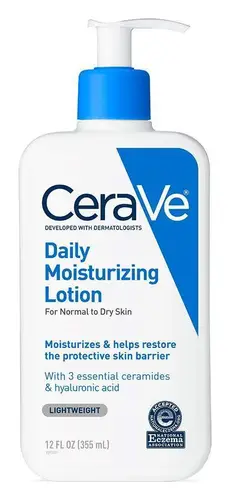
This brightening oil is formulated around Retinyl Palmitate and Helianthus Annuus Seed Oil to fade the look of dark spots and hydrate skin.
This hydrating oil is formulated around Carthamus Tinctorius Seed Oil and Simmondsia Chinensis Seed Oil to hydrate skin.


What's inside
What's inside
 Key Ingredients
No key ingredients
Benefits
Concerns
Ingredients Side-by-side
Paraffinum Liquidum
Emollient


Triisononanoin
Skin ConditioningCetearyl Ethylhexanoate
Emollient

Isopropyl Myristate
Emollient

Retinyl Palmitate
Skin Conditioning



Helianthus Annuus Seed Oil
Emollient
Tocopheryl Acetate
Antioxidant

Anthemis Nobilis Flower Oil
Masking


Lavandula Angustifolia Oil
Masking
Rosmarinus Officinalis Leaf Oil
Masking
Calendula Officinalis Extract
Skin Conditioning
Glycine Soja Oil
Emollient
Bisabolol
Antioxidant
Tocopherol
Antioxidant
Parfum
Masking
Alpha-Isomethyl Ionone
Perfuming
Amyl Cinnamal
Perfuming
Benzyl Salicylate
Perfuming
Citronellol
Perfuming
Coumarin
Perfuming
Eugenol
Perfuming
Farnesol
Perfuming
Geraniol
Perfuming
Hydroxycitronellal
Perfuming
Limonene
Perfuming
Linalool
Perfuming
CI 26100
Cosmetic ColorantParaffinum Liquidum, Triisononanoin, Cetearyl Ethylhexanoate, Isopropyl Myristate, Retinyl Palmitate, Helianthus Annuus Seed Oil, Tocopheryl Acetate, Anthemis Nobilis Flower Oil, Lavandula Angustifolia Oil, Rosmarinus Officinalis Leaf Oil, Calendula Officinalis Extract, Glycine Soja Oil, Bisabolol, Tocopherol, Parfum, Alpha-Isomethyl Ionone, Amyl Cinnamal, Benzyl Salicylate, Citronellol, Coumarin, Eugenol, Farnesol, Geraniol, Hydroxycitronellal, Limonene, Linalool, CI 26100
Carthamus Tinctorius Seed Oil
Masking
Isopropyl Myristate
Emollient
Isododecane
EmollientParfum
Masking
Helianthus Annuus Seed Oil
Emollient
Isopropyl Laurate
EmollientIsopropyl Palmitate
Emollient
Simmondsia Chinensis Seed Oil
Emollient
Ethyl Oleate
Emollient
Ethyl Stearate
Emollient
Isopropyl Alcohol
Solvent

Butyrospermum Parkii Butter Unsaponifiables
Skin Conditioning
Ethyl Linoleate
Emollient
Ethyl Palmitate
Emollient
Benzyl Salicylate
Perfuming
Limonene
Perfuming
Coumarin
Perfuming
Benzyl Alcohol
Perfuming
Juniperus Virginiana Oil
Masking
Citrus Aurantium Bergamia Fruit Oil
Masking
Citrus Nobilis Peel Oil
Masking
Cananga Odorata Flower Oil
Masking
Carthamus Tinctorius Seed Oil, Isopropyl Myristate, Isododecane, Parfum, Helianthus Annuus Seed Oil, Isopropyl Laurate, Isopropyl Palmitate, Simmondsia Chinensis Seed Oil, Ethyl Oleate, Ethyl Stearate, Isopropyl Alcohol, Butyrospermum Parkii Butter Unsaponifiables, Ethyl Linoleate, Ethyl Palmitate, Benzyl Salicylate, Limonene, Coumarin, Benzyl Alcohol, Juniperus Virginiana Oil, Citrus Aurantium Bergamia Fruit Oil, Citrus Nobilis Peel Oil, Cananga Odorata Flower Oil
Reviews
Ingredients Explained
These ingredients are found in both products.
Ingredients higher up in an ingredient list are typically present in a larger amount.
Benzyl Salicylate is a solvent and fragrance additive. It is an ester of benzyl alcohol and salicylic acid. This ingredient can be naturally found in some plants and plant extracts.
In fragrances, Benzyl Salicylate may be a solvent or a fragrance component. In synthetic musk scents, it is used as a solvent. For floral fragrances such as lilac and jasmine, it is used as a fragrance component. The natural scent of Benzyl Salicylate is described as "lightly-sweet, slightly balsamic".
While Benzyl Salicylate has been associated with contact dermatitis and allergies, emerging studies show it may not be caused by this ingredient alone.
However, this ingredient is often used with fragrances and other components that may cause allergies. It is still listed as a known allergen in the EU. We recommend speaking with a professional if you have concerns.
Another study from 2021 shows Benzyl Salicylate may have anti-inflammatory properties.
Learn more about Benzyl SalicylateCoumarins are a group of substances found naturally in plants. There are over 1300 types of coumarins identified. It has a natural vanilla scent.
Coumarin is an identified EU known allergy, meaning it may cause an allergic reaction when applied to the skin.
In many countries, coumarin is banned as a food additive. However, it can be found in soaps, tobacco products, and some alcohol drinks.
Plants use coumarins as a chemical defense. Some plants that have coumarins include lavender, tonka beans, and yellow clovers.
Learn more about CoumarinHelianthus Annuus Seed Oil is a plant oil derived from the seeds of a sunflower.
It is rich in fatty acids, primarily linoleic acid and oleic acid. This gives it emollient and skin conditioning properties.
The reason this ingredient is so effective is because it forms a thin film on the skin that reduces transepidermal water loss (TEWL) while supplying linoleic acid to the stratum corneum to improve barrier strength.
The high linoleic acid content is particularly noteworthy for acne-prone skin.
Research suggests that acne-prone skin tends to be deficient in linoleic acid in sebum. Topical application may help replenish this to support a healthier follicular environment and less comedone-promoting sebum.
One randomized study found sunflower seed oil preserved skin barrier integrity in adult volunteers with and without atopic dermatitis (outperforming olive oil).
This ingredient is well-studied, gentle, and an effective emollient suitable for most skin types.
On fungal acne: This ingredient may not be Fungal acne (Malassezia folliculitis) safe. This is because it contains fatty acids with carbon chain lengths in the C11-C24 range.
Learn more about Helianthus Annuus Seed OilIsopropyl Myristate is an ester made by combining isopropyl alcohol with myristic acid.
It is primarily an emollient and penetration enhancer that gives products a lightweight, silky feel without the heaviness of oils.
This ingredient is generally considered non-toxic, non-irritating, and has low absorption potential.
This ingredient does have a comedogenic rating of 3-5, but this doesn't mean a formula with this ingredient will clog pores.
Dermatologist Dr. Zoe Draelos has also confirmed in a peer-reviewed paper that products containing comedogenic ingredients are not necessarily comedogenic themselves.
A small subset of people (~2%) may experience contact sensitivity so patch testing is a reasonable idea if you have reactive skin.
Since this ingredient is an ester of myristic acid (a C14 fatty acid), it falls within the carbon chain range that is known to feed Malassezia. This ingredient may not be fungal acne safe.
Learn more about Isopropyl MyristateLimonene is the compound that gives citrus peel its smell.
In skincare, it shows up as a standalone fragrance ingredient or as a natural compound of citrus and other essential oils.
You'll typically see this ingredient used in very small amounts; anything above 0.001% in a leave-on product or 0.01% in a rinse-off has to be named on the label in the EU. The citrus oils that carry it sit around 0.5-1% in a finished formula.
Fresh limonene is a weak allergen; the real issue is that it slowly reacts with air and then breaks down from oxidation to create hydroperoxides (which are strong sensitizers). This is why suppliers are required to keep the peroxide value below 20 mmol.
Positive reactions in people being investigated for eczema vary:
It's worth skipping if you have a known fragrance allergy or a compromised barrier, but the risk is low for most people.
Older or long-opened products are also more likely to bother you than fresh ones due to oxidation.
Learn more about LimoneneParfum is a catch-all term for an ingredient or more that is used to give a scent to products.
Also called "fragrance", this ingredient can be a blend of hundreds of chemicals or plant oils. This means every product with "fragrance" or "parfum" in the ingredients list is a different mixture.
For instance, Habanolide is a proprietary trade name for a specific aroma chemical. When used as a fragrance ingredient in cosmetics, most aroma chemicals fall under the broad labeling category of “FRAGRANCE” or “PARFUM” according to EU and US regulations.
The term 'parfum' or 'fragrance' is not regulated in many countries. In many cases, it is up to the brand to define this term.
For instance, many brands choose to label themselves as "fragrance-free" because they are not using synthetic fragrances. However, their products may still contain ingredients such as essential oils that are considered a fragrance by INCI standards.
One example is Calendula flower extract. Calendula is an essential oil that still imparts a scent or 'fragrance'.
Depending on the blend, the ingredients in the mixture can cause allergies and sensitivities on the skin. Some ingredients that are known EU allergens include linalool and citronellol.
Parfum can also be used to mask or cover an unpleasant scent.
The bottom line is: not all fragrances/parfum/ingredients are created equally. If you are worried about fragrances, we recommend taking a closer look at an ingredient. And of course, we always recommend speaking with a professional.
Learn more about Parfum