Azure Retinol & Vitamin C Anti-Aging Under Eye Pads Versus Kracie Hadabisei One Wrinkle Care Eye Zone Mask
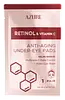
This anti-aging eye mask is formulated around Adenosine and Niacinamide to soften the look of wrinkles and brighten dull-looking skin.
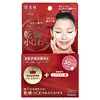
This anti-aging eye mask is formulated around Sodium Hyaluronate and Retinyl Palmitate to soften the look of wrinkles and hydrate skin.


What's inside
What's inside
 Key Ingredients
Benefits
Concerns
Ingredients Side-by-side
Water
Skin ConditioningGlycerin
Humectant


Butylene Glycol
Humectant
Alcohol
Antimicrobial




Sodium Citrate
BufferingAdenosine
Skin Conditioning

Xanthan Gum
EmulsifyingPEG-60 Hydrogenated Castor Oil
Emulsifying

Soluble Collagen
Humectant
Zeolite
AbsorbentNiacinamide
Smoothing







Allantoin
Skin Conditioning
Panthenol
Skin Conditioning
Sodium Hyaluronate
Humectant
Dipotassium Glycyrrhizate
Humectant
Helianthus Annuus Seed Oil
Emollient
Oryza Sativa Extract
Absorbent
Nelumbium Speciosum Flower Extract
Skin ConditioningMacadamia Ternifolia Seed Oil
Emollient
Caprylic/Capric Triglyceride
Masking
Hydrogenated Lecithin
Emulsifying
Retinol
Skin Conditioning
Polysorbate 20
Emulsifying
Cholesterol
Emollient
Brassica Campestris Sterols
EmollientCeteth-5
EmulsifyingCeteth-3
EmulsifyingPotassium Cetyl Phosphate
EmulsifyingTocopheryl Acetate
Antioxidant

Hydroxyacetophenone
Antioxidant
1,2-Hexanediol
Skin Conditioning
Ethylhexylglycerin
Skin ConditioningBenzyl Salicylate
Perfuming


Musk Ketone
Masking
Linalyl Acetate
Masking
Hexamethylindanopyran
Masking
Hexyl Cinnamal
Perfuming
Water, Glycerin, Butylene Glycol, Alcohol, Sodium Citrate, Adenosine, Xanthan Gum, PEG-60 Hydrogenated Castor Oil, Soluble Collagen, Zeolite, Niacinamide, Allantoin, Panthenol, Sodium Hyaluronate, Dipotassium Glycyrrhizate, Helianthus Annuus Seed Oil, Oryza Sativa Extract, Nelumbium Speciosum Flower Extract, Macadamia Ternifolia Seed Oil, Caprylic/Capric Triglyceride, Hydrogenated Lecithin, Retinol, Polysorbate 20, Cholesterol, Brassica Campestris Sterols, Ceteth-5, Ceteth-3, Potassium Cetyl Phosphate, Tocopheryl Acetate, Hydroxyacetophenone, 1,2-Hexanediol, Ethylhexylglycerin, Benzyl Salicylate, Musk Ketone, Linalyl Acetate, Hexamethylindanopyran, Hexyl Cinnamal
Water
Skin ConditioningDipropylene Glycol
HumectantGlycerin
Humectant
PEG-75
HumectantMaltitol
HumectantPEG-60 Hydrogenated Castor Oil
Emulsifying
Phenoxyethanol
Preservative
Polysorbate 20
Emulsifying
Methyl Gluceth-20
Humectant
Methylparaben
Preservative

Sodium Citrate
BufferingButylene Glycol
Humectant
Xanthan Gum
EmulsifyingCitric Acid
Buffering
Bis-Ethoxydiglycol Cyclohexane 1,4-Dicarboxylate
EmollientRoyal Jelly Extract
Skin Conditioning
Sodium Hyaluronate
Humectant
Citrus Limon Fruit Extract
Masking
Scutellaria Baicalensis Root Extract
Astringent
Retinyl Palmitate
Skin Conditioning
Zea Mays Oil
Emulsifying
BHT
Antioxidant
Tocopherol
Antioxidant
Water, Dipropylene Glycol, Glycerin, PEG-75, Maltitol, PEG-60 Hydrogenated Castor Oil, Phenoxyethanol, Polysorbate 20, Methyl Gluceth-20, Methylparaben, Sodium Citrate, Butylene Glycol, Xanthan Gum, Citric Acid, Bis-Ethoxydiglycol Cyclohexane 1,4-Dicarboxylate, Royal Jelly Extract, Sodium Hyaluronate, Citrus Limon Fruit Extract, Scutellaria Baicalensis Root Extract, Retinyl Palmitate, Zea Mays Oil, BHT, Tocopherol
Ingredients Explained
These ingredients are found in both products.
Ingredients higher up in an ingredient list are typically present in a larger amount.
Butylene Glycol (or BG) is used within cosmetic products for a few different reasons:
Overall, Butylene Glycol is a safe and well-rounded ingredient that works well with other ingredients.
Though this ingredient works well with most skin types, some people with sensitive skin may experience a reaction such as allergic rashes, closed comedones, or itchiness.
Learn more about Butylene GlycolGlycerin (or glycerol) is a compound naturally found in your skin. It's a powerhouse humectant that pulls water into the stratum corneum.
Topically, glycerin does several things at once:
Your skin makes glycerin on its own (mostly from sebaceous oil breakdown) and shuttles it to your outermost layer of skin, or your epidermis, via aquaporin-3.
Aquaporin-3 is a transporter that is essential for normal skin hydration, elasticity, and repair. Interestingly, mice lacking in AQP3 have dry and less elastic skin that can be fully corrected with glycerin.
This ingredient is non-irritating, plays well with almost every ingredient, and works across all skin types. Typical use is anywhere between 3-10% but can go up to 79% in some leave-on products.
Just know very high concentrations (>40%) can feel tacky in low humidity.
Glycerin is the name for this ingredient in American English. British English uses Glycerol/Glycerine.
Learn more about GlycerinPeg-60 Hydrogenated Castor Oil comes from hydrogenated castor oil. It is a solubilizer and emulsifier.
As a solubilizer, it helps dissolve ingredients into a water-based version. It is also an emulsifer. Emulsifier help prevent oils and water from separating. Both these properties help create evenly-spread and uniform products.
Basically, Peg-60 Hydrogenated Castor Oil helps hold ingredients together.
Learn more about PEG-60 Hydrogenated Castor OilPolysorbate 20 is a gentle, water-soluble emulsifier and mild surfactant. It stops oil and water from separating to keep your formulas blended and stable.
It also acts as a mild penetration enhancer by helping active ingredients absorb slightly better.
The common safety discussion around this ingredient involves a manufacturing byproduct called 1,4-dioxane.
Trace amounts can form during production but the EU's Scientific Committee on Consumer Safety has concluded that levels at/below 10 ppm in finished products are safe (commercial products consistently fall within acceptable margins).
True allergic reactions are uncommon and the CIR Expert Panel has confirmed this ingredient to be safe as used in cosmetics.
Because it is derived from lauric acid, it may not be fungal acne safe.
Learn more about Polysorbate 20Sodium Citrate is the sodium salts of citric acid. In skincare, it is used to alter pH levels and acts as a preservative.
Its main functions are to maintain the pH of a product and neutralize metal ions.
The acidity of our skin is maintained by our glands and skin biome; normal pH level of skin is slightly acidic (~4.75-5.5).
Being slightly acidic allows our skin to create an "acid mantle". This acid mantle is a thin barrier that protects our skin from bacteria and contaminants.
Learn more about Sodium CitrateSodium Hyaluronate is the salt form of hyaluronic acid. It is a long sugar chain that is naturally found in your skin, joints, and connective tissue that maintains hydration and elasticity.
In skincare, it works as a humectant. It pulls water from the environment and deeper layers of skin and binds it to the surface.
Interestingly, the size of the molecule affects its behavior:
Some clinical evidence links low molecular weight versions to improved wrinkle depth, elasticity, anti-inflammatory effects, and barrier repair.
Many serums use a blend of both weights so you can get surface hydration plus longer-lasting and deeper effects.
You'll typically see concentrations between 0.1-2% for this ingredient.
Learn more about Sodium HyaluronateWater. It's the most common cosmetic ingredient of all. You'll usually see it at the top of ingredient lists, meaning that it makes up the largest part of the product.
So why is it so popular? Water most often acts as a solvent - this means that it helps dissolve other ingredients into the formulation.
You'll also recognize water as that liquid we all need to stay alive. If you see this, drink a glass of water. Remember to stay hydrated!
Learn more about WaterXanthan gum is used as a stabilizer and thickener within cosmetic products. It helps give products a sticky, thick feeling - preventing them from being too runny.
On the technical side of things, xanthan gum is a polysaccharide - a combination consisting of multiple sugar molecules bonded together.
Xanthan gum is a pretty common and great ingredient. It is a natural, non-toxic, non-irritating ingredient that is also commonly used in food products.
Learn more about Xanthan Gum

