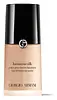
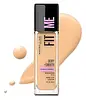
Armani Beauty Luminous Silk Perfect Glow Flawless Foundation Versus Maybelline Fit Me Dewy + Smooth Foundation


What's inside
What's inside
 Key Ingredients
Benefits
Concerns
Ingredients Side-by-side
Water
Skin ConditioningCyclopentasiloxane
Emollient
Glycerin
Humectant


Isododecane
EmollientAlcohol Denat.
Antimicrobial




Polyglyceryl-4 Isostearate
Emulsifying
Cetyl PEG/PPG-10/1 Dimethicone
Emulsifying
Hexyl Laurate
Emollient
Aluminum Starch Octenylsuccinate
Absorbent
Disteardimonium Hectorite
StabilisingPhenoxyethanol
Preservative
Acetylated Glycol Stearate
Emollient
Magnesium Sulfate
PEG-10 Dimethicone
Skin Conditioning
Trihydroxystearin
Skin Conditioning
Cellulose Gum
Emulsion StabilisingNylon-12

Limonene
Perfuming

Benzyl Salicylate
Perfuming
Benzyl Alcohol
Perfuming
Linalool
Perfuming
Pentaerythrityl Tetra-Di-T-Butyl Hydroxyhydrocinnamate
Antioxidant
Isobutane
Diphenyl Dimethicone
Emollient
Acrylonitrile/Methyl Methacrylate/Vinylidene Chloride Copolymer
Parfum
Masking
Disodium Stearoyl Glutamate
CleansingMethylparaben
Preservative
Butylphenyl Methylpropional
Perfuming
Aluminum Hydroxide
EmollientHexyl Cinnamal
Perfuming
CI 77891
Cosmetic ColorantCI 77491
Cosmetic ColorantCI 77492
Cosmetic ColorantCI 77499
Cosmetic ColorantWater, Cyclopentasiloxane, Glycerin, Isododecane, Alcohol Denat., Polyglyceryl-4 Isostearate, Cetyl PEG/PPG-10/1 Dimethicone, Hexyl Laurate, Aluminum Starch Octenylsuccinate, Disteardimonium Hectorite, Phenoxyethanol, Acetylated Glycol Stearate, Magnesium Sulfate, PEG-10 Dimethicone, Trihydroxystearin, Cellulose Gum, Nylon-12, Limonene, Benzyl Salicylate, Benzyl Alcohol, Linalool, Pentaerythrityl Tetra-Di-T-Butyl Hydroxyhydrocinnamate, Isobutane, Diphenyl Dimethicone, Acrylonitrile/Methyl Methacrylate/Vinylidene Chloride Copolymer, Parfum, Disodium Stearoyl Glutamate, Methylparaben, Butylphenyl Methylpropional, Aluminum Hydroxide, Hexyl Cinnamal, CI 77891, CI 77491, CI 77492, CI 77499
Ethylhexyl Methoxycinnamate 7%
UV Absorber
Water
Skin ConditioningCyclopentasiloxane
Emollient
Dimethicone
Emollient
Glycerin
Humectant
Isotridecyl Isononanoate
EmollientPEG-9 Polydimethylsiloxyethyl Dimethicone
Emulsifying
Disteardimonium Hectorite
StabilisingDimethicone/Polyglycerin-3 Crosspolymer
Cleansing
Sodium Chloride
MaskingPEG-10 Dimethicone
Skin Conditioning
Phenoxyethanol
Preservative
Methylparaben
Preservative
Disodium Stearoyl Glutamate
CleansingChlorphenesin
Antimicrobial
Disodium EDTA
EDTA
Acrylates Copolymer
Propylparaben
Preservative
Parfum
Masking
Tocopherol
Antioxidant




Ascorbyl Palmitate
Antioxidant
Aluminum Hydroxide
EmollientButylparaben
Masking
PEG-9
HumectantEthylparaben
Preservative
Dipropylene Glycol
HumectantAlpha-Isomethyl Ionone
Perfuming
Titanium Dioxide
Cosmetic Colorant
Iron Oxides
Ethylhexyl Methoxycinnamate 7%, Water, Cyclopentasiloxane, Dimethicone, Glycerin, Isotridecyl Isononanoate, PEG-9 Polydimethylsiloxyethyl Dimethicone, Disteardimonium Hectorite, Dimethicone/Polyglycerin-3 Crosspolymer, Sodium Chloride, PEG-10 Dimethicone, Phenoxyethanol, Methylparaben, Disodium Stearoyl Glutamate, Chlorphenesin, Disodium EDTA, EDTA, Acrylates Copolymer, Propylparaben, Parfum, Tocopherol, Ascorbyl Palmitate, Aluminum Hydroxide, Butylparaben, PEG-9, Ethylparaben, Dipropylene Glycol, Alpha-Isomethyl Ionone, Titanium Dioxide, Iron Oxides
Reviews
Ingredients Explained
These ingredients are found in both products.
Ingredients higher up in an ingredient list are typically present in a larger amount.
Aluminum Hydroxide is a form of aluminum. It can be naturally found in nature as the mineral gibbsite. In cosmetics, Aluminum Hydroxide is used as a colorant, pH adjuster, and absorbent.
As a colorant, Aluminum Hydroxide may add opacity, or reduce the transparency. Aluminum hydroxide is contains both basic and acidic properties.
According to manufacturers, this ingredient is an emollient and humectant. This means it helps hydrate the skin.
In medicine, this ingredient is used to help relieve heartburn and help heal ulcers.
There is currently no credible scientific evidence linking aluminum hydroxide in cosmetics to increased cancer risk.
Major health organizations allow the use of aluminum hydroxide in personal care products and have not flagged it as a carcinogenic risk at typical usage levels.
Learn more about Aluminum HydroxideCyclopentasiloxane (D5) is a lightweight silicone that mostly acts as an emollient and solvent in cosmetics. Its the reason your products feel silky, fast-spreading, and non-greasy.
Since D5 is volatile, it does its thing and then evaporates off the skin quickly.
The safety profile of this ingredient is reassuring; the US CIR Expert Panel concluded D5 is safe as used in cosmetics and Health Canada concluded that D5 is not harmful to human health or the environment as currently used in cosmetics
There's a study that people mention about D5 in a rat study showing tumors. This study is related to long-term inhalation of high D5 levels.
Regulatory bodies have judged this study to be not applicable in topical skincare since skin absorption of D5 is very low and we're not really inhaling huge amounts of D5.
The only restriction for this ingredient is environmental. The European Chemicals Agency (ECHA) restricted D5 in wash-off cosmetics at or above 0.1% due to their persistence in water.
Learn more about CyclopentasiloxaneDSG is used as a surfactant.
Surfactants are cleansing ingredients that help remove oil, dirt, and other impurities from the skin. They work by reducing surface tension between water and oils/dirt to allow them to be easily rinsed away.
Disteardimonium Hectorite comes from the clay mineral named hectorite. It is used to add thickness to a product.
It can also help stabilize a product by helping to disperse other ingredients.
Hectorite is a rare, white clay mineral.
Learn more about Disteardimonium HectoriteGlycerin (or glycerol) is a compound naturally found in your skin. It's a powerhouse humectant that pulls water into the stratum corneum.
Topically, glycerin does several things at once:
Your skin makes glycerin on its own (mostly from sebaceous oil breakdown) and shuttles it to your outermost layer of skin, or your epidermis, via aquaporin-3.
Aquaporin-3 is a transporter that is essential for normal skin hydration, elasticity, and repair. Interestingly, mice lacking in AQP3 have dry and less elastic skin that can be fully corrected with glycerin.
This ingredient is non-irritating, plays well with almost every ingredient, and works across all skin types. Typical use is anywhere between 3-10% but can go up to 79% in some leave-on products.
Just know very high concentrations (>40%) can feel tacky in low humidity.
Glycerin is the name for this ingredient in American English. British English uses Glycerol/Glycerine.
Learn more about GlycerinMethylparaben is a synthetic preservative and one of the most widely used in the world. It has a simple, but important job: prevent your products from going bad by stopping bacteria, yeast, and mold from growing.
Typical use levels are low, often 0.1-0.3%.
This is also one of the most heavily studied preservatives out there and major regulatory bodies have repeatedly given it the green light.
In 2023, the EU's Scientific Committee on Consumer Safety (SCCS) confirmed that this ingredient is safe up to 0.4% on its own, of up to 0.8% when mixed with other paraben esters.
Here's the science behind the noise behind parabens/hormones as well:
Methylparaben shows very weak estrogen-like activity in vitro tests (more than 1,000x weaker than your body's own estradiol). In vivo (live-organism) studies don't support a meaningful endocrine-disrupting effect either.
You get a stronger estrogenic effect from eating tofu, actually.
It's also a low sensitizer and allergic reactions are uncommon; they usually happen on damage or broken skin.
There is a caveat: France has proposed to formally re-examine its endocrine classification in 2025 so the regulatory conversation isn't fully closed as of yet.
But as it stands today, this ingredient is considered safe at permitted levels.
Learn more about MethylparabenParfum is a catch-all term for an ingredient or more that is used to give a scent to products.
Also called "fragrance", this ingredient can be a blend of hundreds of chemicals or plant oils. This means every product with "fragrance" or "parfum" in the ingredients list is a different mixture.
For instance, Habanolide is a proprietary trade name for a specific aroma chemical. When used as a fragrance ingredient in cosmetics, most aroma chemicals fall under the broad labeling category of “FRAGRANCE” or “PARFUM” according to EU and US regulations.
The term 'parfum' or 'fragrance' is not regulated in many countries. In many cases, it is up to the brand to define this term.
For instance, many brands choose to label themselves as "fragrance-free" because they are not using synthetic fragrances. However, their products may still contain ingredients such as essential oils that are considered a fragrance by INCI standards.
One example is Calendula flower extract. Calendula is an essential oil that still imparts a scent or 'fragrance'.
Depending on the blend, the ingredients in the mixture can cause allergies and sensitivities on the skin. Some ingredients that are known EU allergens include linalool and citronellol.
Parfum can also be used to mask or cover an unpleasant scent.
The bottom line is: not all fragrances/parfum/ingredients are created equally. If you are worried about fragrances, we recommend taking a closer look at an ingredient. And of course, we always recommend speaking with a professional.
Learn more about ParfumPeg-10 Dimethicone is silicone with conditioner and emulsifier properties. It mostly acts as an emollient in skincare and and humectant in haircare.
According to the manufacturer, acidic formulations decrease the stability of this ingredient. It works best in neutral or near neutral formulations.
Phenoxyethanol is a preservative that has germicide, antimicrobial, and aromatic properties. Studies show that phenoxyethanol can prevent microbial growth. By itself, it has a scent that is similar to that of a rose.
It's often used in formulations along with Caprylyl Glycol to preserve the shelf life of products.
Water. It's the most common cosmetic ingredient of all. You'll usually see it at the top of ingredient lists, meaning that it makes up the largest part of the product.
So why is it so popular? Water most often acts as a solvent - this means that it helps dissolve other ingredients into the formulation.
You'll also recognize water as that liquid we all need to stay alive. If you see this, drink a glass of water. Remember to stay hydrated!
Learn more about Water
