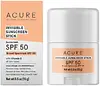
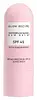
Acure Invisible Sunscreen Stick SPF 50 Versus Glow Recipe Watermelon Glow Niacinamide Dew Balm SPF 45
This chemical sunscreen covers most of the UV range, lighter on the deep UVA that drives aging.
This chemical sunscreen covers most of the UV range, lighter on the deep UVA that drives aging.

What's inside
What's inside
 Key Ingredients
Benefits
Concerns
Ingredients Side-by-side
Homosalate 15%
Skin Conditioning

Octocrylene 7.5%
UV Absorber

Ethylhexyl Salicylate 5%
UV Absorber
Butyl Methoxydibenzoylmethane 3%
UV Absorber
Octyldodecanol
Emollient
Dicaprylyl Carbonate
EmollientButyloctyl Salicylate
Skin Conditioning
Dibutyl Lauroyl Glutamide
Skin ConditioningDibutyl Ethylhexanoyl Glutamide
Skin ConditioningBisabolol
Antioxidant





Tocopherol
Antioxidant



Tetrahexyldecyl Ascorbate
Antioxidant


Helianthus Annuus Seed Oil
Emollient


Butyl Methoxydibenzoylmethane 3%
UV Absorber
Homosalate 5%
Skin Conditioning
Ethylhexyl Salicylate 5%
UV Absorber
Neopentyl Glycol Dicaprylate/Dicaprate
EmollientOctyldodecanol
Emollient
C15-19 Alkane
SolventCoco-Caprylate/Caprate
Emollient
Silica Silylate
Emollient
Butyloctyl Salicylate
Skin Conditioning
Polyester-8
Skin Conditioning
Dibutyl Lauroyl Glutamide
Skin ConditioningSqualane
Emollient
Capryloyl Glycerin/Sebacic Acid Copolymer
Skin ConditioningDibutyl Ethylhexanoyl Glutamide
Skin ConditioningVp/Eicosene Copolymer
Tocopheryl Acetate
Antioxidant
Citrullus Lanatus Seed Oil
Emollient
Parfum
Masking

Pentaerythrityl Tetra-Di-T-Butyl Hydroxyhydrocinnamate
Antioxidant
Tetrahexyldecyl Ascorbate
Antioxidant
Caprylic/Capric Triglyceride
Masking
Limnanthes Alba Seed Oil
Skin Conditioning
Glyceryl Behenate
Emollient
Sodium Hyaluronate
Humectant
Niacinamide
Smoothing

Crithmum Maritimum Extract
Skin ConditioningButyl Methoxydibenzoylmethane 3%, Homosalate 5%, Ethylhexyl Salicylate 5%, Neopentyl Glycol Dicaprylate/Dicaprate, Octyldodecanol, C15-19 Alkane, Coco-Caprylate/Caprate, Silica Silylate, Butyloctyl Salicylate, Polyester-8, Dibutyl Lauroyl Glutamide, Squalane, Capryloyl Glycerin/Sebacic Acid Copolymer, Dibutyl Ethylhexanoyl Glutamide, Vp/Eicosene Copolymer, Tocopheryl Acetate, Citrullus Lanatus Seed Oil, Parfum, Pentaerythrityl Tetra-Di-T-Butyl Hydroxyhydrocinnamate, Tetrahexyldecyl Ascorbate, Caprylic/Capric Triglyceride, Limnanthes Alba Seed Oil, Glyceryl Behenate, Sodium Hyaluronate, Niacinamide, Crithmum Maritimum Extract
Ingredients Explained
These ingredients are found in both products.
Ingredients higher up in an ingredient list are typically present in a larger amount.
Also known as Avobenzone, this ingredient is an oil-soluble used to absorb the full spectrum of UVA rays (peak 357 nm).
It's one of the most effective UVA filters available but has a major caveat of photostability: avobenzone is susceptible to photodegradation.
This means it can lose efficacy when exposed to sunlight without the help of a stabilizing agent.
Studies show antioxidants (like vitamin E or vitamin C) and some UV filters (like octocrylene and Tinosorb S) can meaningfully improve its stability in a formulation.
The maximum allowable concentration according to regulation is 3% in the US + Canada, and 5% in the EU, Australia, China, Korea, and ASEAN countries.
It has a well-support safety profile: a comprehensive 2025 review found minimal toxicity with no evidence of carcinogenicity.
Overall, avobenzone is a safe and regulated ingredient used in sunscreen for over 40 years.
Learn more about Butyl MethoxydibenzoylmethaneButyloctyl Salicylate is a chemical UV filter structurally similar to octisalate. It is a photostabilizer, SPF booster, emollient and solvent. This ingredient helps evenly spread out ingredients.
According to a manufacturer, it is suitable for pairing with micro Titanium Dioxide, Zinc Oxide, and pigments.
Photostabilizers help stabilize UV-filters and prevents them from degrading quickly.
Learn more about Butyloctyl SalicylateWe don't have a description for Dibutyl Ethylhexanoyl Glutamide yet.
We don't have a description for Dibutyl Lauroyl Glutamide yet.
Ethylhexyl Salicylate (also called Octisalate or Octyl Salicylate) is an oil-soluble organic UV filter that's been used in sunscreen since the 1950's.
It absorbs UVB light in the 280-320 nm range with a peak absorbance around 306 nm.
You'll often see it paired with other UV filters to boost overall SPF because octisalate is a fairly week filter on its own.
The reason you'll see it so often is because it can help solubilize and stabilize the trickier filters like oxybenzone and avobenzone.
Unlike these filters, octisalate has pretty good photostability and doesn't create skin-damaging free radicals when exposed to sunlight.
The fatty-alcohol part of the molecule also gives it a light, emollient feel so it doubles as a nice texture enhancer.
Usage levels vary around the world:
Safety-wise, this ingredient has a pretty reassuring track record. The EU's Scientific Committee on Consumer Products (SCCP) found very low skin penetration in human skin tests and negative results for irritation, phototoxicity, and photoallergy.
The real-world allergy risk is pretty low too; a 2012 European study of 1,031 people recorded only 2 reactions to it (a rate of 0.19%).
You might have seen scary headlines about sunscreen getting into your blood.
In 2019, the FDA found that several chemical filters can absorb through the skin and show up in the bloodstream at small but measurable levels.
Here's the important part: these tiny levels are just a cutoff the FDA uses to decide which ingredients need more testing and doesn't mean anything harmful was found.
The researchers were clear that the results are no reason to stop wearing sunscreen.
Learn more about Ethylhexyl SalicylateHomosalate is an oil-soluble organic UVB filter that has been a sunscreen staple for decades. Its job is to absorb UVB rays (~295-315 nm) and protect your skin against sunburn,
This is one of the more photostable organic UV filters; it holds up pretty well under UV and a 2022 quantum-chemistry study found it stays stable in sunlight.
It's actually so reliable that formulators often pair it with shakier ingredients like oxybenzone and avobenzone. Formulators also use it to help dissolve the other UV filters into the oil phase.
One thing to keep in mind: "stable" isn't the same as "strong". On its own, homosalate is actually a pretty weak UV filter so it's better off as a helpful team player that helps boost overall SPF protection.
The safety picture is a bit nuanced but not scary.
This ingredient has a long track record of being gentle and regulators agree it isn't an irritant; EU's Scientific Committee on Consumer Safety found that homosalate is not considered a skin irritant and doesn't raise eye-irritation flags either.
There's talk about homosalate because your skin absorbs a little bit of it into your bloodstream. A 2020 FDA-backed study found homosalate showed up in people's blood levels at the level where the FDA decides to double check.
The EU's Scientific Committee on Consumer Safety (SCCS) also found small amounts in blood and breast milk. They estimated that about 5% of what you apply gets absorbed through the skin.
Due to the debate about whether it might mess with hormones, the SCCS recommended a maximum limit of 0.5% in most products of 7.3% in face creams/pump sprays.
One important thing to keep in mind: in the US, Homosalate is currently labeled "non-GRASE" by the FDA. This sounds alarming but really just means the FDA wants more data to confirm it's safe. It's not confidently saying this ingredient is harmful.
As of now, homosalate is still completely legal and widely used while that research gets done.
The current maximum limits are:
Learn more about HomosalateOctyldodecanol is a fatty alcohol sourced from plant oils like coconut or palm (or made synthetically).
It is:
You'll likely see this in many BHA products because this is the go-to solvent for salicylic acid.
This ingredient is typically used at levels between 2-20%.
Regarding fungal acne:
In 2019, this ingredient was tested against multiple Malassezia species (the yeast that causes fungal acne) and showed no growth.
Tetrahexyldecyl Ascorbate (THD) is a stable and oil-soluble form of Vitamin C.
THD is special in that it has the ability to travel deeper into skin than traditional ascorbic acid while maintaining the same skin benefits (double win!).
Because it’s oil-soluble, THD dives deep into your skin’s fatty layers (think ceramides and cholesterol) to fight off the kind of free radicals that mess with your skin barrier. This makes it a great pair with water-based vitamin C (ascorbic acid) that mainly works on the surface.
Even at just 0.1%, THD is already showing great antioxidant activity. When used up to 2%, it helps keep your skin happy and calm, especially when it’s stressed from pollution or sun.
Want to fade dark spots or tackle hyperpigmentation? You’ll want 5% or more. Pairing it with brightening buddies like niacinamide or licorice root gives even better results. One study even used 30% THD with other brighteners and saw real results on stubborn discoloration, even in melasma-prone skin.
A note on THD: It’s has a slightly silky, oily texture and usually shows up colorless or pale yellow (though the exact shade can vary by supplier).
While you can sneak it into water-based formulas, it really shines when paired with silicones or oils, which help your skin soak it up better.
THD is pretty stable, but it’s still vulnerable to degradation like ascorbic acid. Too much light or heat (above 113°F / 45°C) can break it down over time. Go for dark and opaque packaging that keeps it safe and shady!
Read more about other types of Vitamin C:
Learn more about Tetrahexyldecyl Ascorbate

