Touché Shampoing Anti Chute
A shampoo with 32 ingredients, including BHA.
Shampoo with 32 ingredients that contains BHA
We independently verify ingredients, backed by peer-reviewed research. Suggest an update.
What's inside
Ingredients List
Water
Skin ConditioningCocamidopropyl Betaine
Cleansing



Sodium Lauroyl Sarcosinate
CleansingDecyl Glucoside
Cleansing
Disodium Cocoyl Glutamate
Cleansing
Glycerin
Humectant


Glycol Distearate
Emollient
Steareth-4
EmulsifyingMelaleuca Alternifolia Leaf Oil
Antioxidant





Rosmarinus Officinalis Leaf Oil
Masking
Origanum Vulgare Oil
Masking
Eucalyptus Globulus Leaf Oil
Perfuming
Citrus Limon Peel Oil
Masking
Lavandula Angustifolia Oil
Masking
Salvia Officinalis Oil
Masking
Prunus Amygdalus Dulcis Oil
Skin Conditioning
Ricinus Communis Seed Oil
Masking
Biotin
AntiseborrhoeicHydrolyzed Keratin
Humectant
Propylene Glycol
Humectant
Benzyl Alcohol
Perfuming


Salicylic Acid
Masking



Sorbic Acid
Preservative
Decylene Glycol
Skin ConditioningSodium Benzoate
Masking
Imidazolidinyl Urea
Preservative
Methylchloroisothiazolinone
Preservative
Methylisothiazolinone
Preservative
Citric Acid
Buffering
Citronellol
Perfuming
Geraniol
Perfuming
Linalool
Perfuming
Water, Cocamidopropyl Betaine, Sodium Lauroyl Sarcosinate, Decyl Glucoside, Disodium Cocoyl Glutamate, Glycerin, Glycol Distearate, Steareth-4, Melaleuca Alternifolia Leaf Oil, Rosmarinus Officinalis Leaf Oil, Origanum Vulgare Oil, Eucalyptus Globulus Leaf Oil, Citrus Limon Peel Oil, Lavandula Angustifolia Oil, Salvia Officinalis Oil, Prunus Amygdalus Dulcis Oil, Ricinus Communis Seed Oil, Biotin, Hydrolyzed Keratin, Propylene Glycol, Benzyl Alcohol, Salicylic Acid, Sorbic Acid, Decylene Glycol, Sodium Benzoate, Imidazolidinyl Urea, Methylchloroisothiazolinone, Methylisothiazolinone, Citric Acid, Citronellol, Geraniol, Linalool
Key Ingredients
Benefits
Concerns
Ingredients Explained
Water. It's the most common cosmetic ingredient of all. You'll usually see it at the top of ingredient lists, meaning that it makes up the largest part of the product.
So why is it so popular? Water most often acts as a solvent - this means that it helps dissolve other ingredients into the formulation.
You'll also recognize water as that liquid we all need to stay alive. If you see this, drink a glass of water. Remember to stay hydrated!
Learn more about WaterCocamidopropyl Betaine is a fatty acid created by mixing similar compounds in coconut oil and dimethylaminopropylamine, a compound with two amino groups.
This ingredient is a surfactant and cleanser. It helps gather the dirt, pollutants, and other impurities in your skin to be washed away. It also helps thicken a product and make the texture more creamy.
Being created from coconut oil means Cocamidopropyl Betaine is hydrating for the skin.
While Cocamidopropyl Betaine was believed to be an allergen, a study from 2012 disproved this. It found two compounds in unpure Cocamidopropyl Betaine to be the irritants: aminoamide and 3-dimethylaminopropylamine. High-grade and pure Cocamidopropyl Betaine did not induce allergic reactions during this study.
Learn more about Cocamidopropyl BetaineSodium Lauroyl Sarcosinate is a cleansing agent and emulsifier. It is a surfactant derived from sarcosine, and a common source is coconut oil.
As a surfactant, Sodium Lauroyl Sarcosinate helps lift dirts, oil, and other molecules to be washed away. In leave-on products, this ingredient is used as an emulsifier. Emulsifier help prevent ingredients such as oils and waters from separating.
Sodium Lauroyl Sarcosinate is also commonly found as a foaming agent in shampoo, toothpaste, and shaving foam. It is amphiphilic, meaning it loves both water and fats.
Learn more about Sodium Lauroyl SarcosinateDecyl Glucoside is a plant-derived surfactant and emulsion stabilizer. It is created by reacting glucose with the fatty acids from plants.
Like all surfactants, it works by lowering the surface tension between water and oil. This makes it so that dirt, sebum, and makeup can be lifted off your skin and rinsed away. It also produces a dense and creamy foam.
Because it has a neutral charge, it is compatible with a wide range of ingredients and stays stable across a broad pH range/water hardiness conditions.
Patch testing has shown it to have the lowest irritation potential among common cleansing surfactants (like SLS).
Typical use levels range from 5-20% in rinse-off cleansers.
One thing worth knowing: The American Contact Dermatitis Society named the parent family, alkyl glucosides, "Allergen of the Year" in 2017. The prevalence of allergy is pretty low but be sure to patch test if you've reacted to "gentle" or sulfate-free cleansers before.
This ingredient is fungal acne safe because the fatty alcohol portion of this ingredient is not within the C11-24 chain length that Malassezia can metabolize.
Learn more about Decyl GlucosideWe don't have a description for Disodium Cocoyl Glutamate yet.
Glycerin (or glycerol) is a compound naturally found in your skin. It's a powerhouse humectant that pulls water into the stratum corneum.
Topically, glycerin does several things at once:
Your skin makes glycerin on its own (mostly from sebaceous oil breakdown) and shuttles it to your outermost layer of skin, or your epidermis, via aquaporin-3.
Aquaporin-3 is a transporter that is essential for normal skin hydration, elasticity, and repair. Interestingly, mice lacking in AQP3 have dry and less elastic skin that can be fully corrected with glycerin.
This ingredient is non-irritating, plays well with almost every ingredient, and works across all skin types. Typical use is anywhere between 3-10% but can go up to 79% in some leave-on products.
Just know very high concentrations (>40%) can feel tacky in low humidity.
Glycerin is the name for this ingredient in American English. British English uses Glycerol/Glycerine.
Learn more about GlycerinGlycol Distearate is an emulsifier and emollient that adds a "pearly" appearance to formulations.
That lustrous look you see in many shampoos is due to this ingredient: when cooled, it crystallizes into small platelets that reflect light to give products that rich, shimmering look.
This ingredient is considered safe at present practices of use and concentration and repeated insult patch test with 50% Glycol Distearate on 125 subjects found no evidence of skin irritation, hypersensitivity, or acute toxicity.
Typical use concentrations range from 0.1-10%.
Because it's an ester of stearic acid, it falls into the range that Malassezia likes to metabolize. This ingredient may not be fungal acne safe.
Learn more about Glycol DistearateWe don't have a description for Steareth-4 yet.
This ingredient is also known as tea tree oil. It has antioxidant, anti-inflammatory, and antimicrobial properties.
Tea tree oil is a complex lipophilic (fat-loving) oil that contains around 100 compounds with terpinen-4-ol being the most abundant (~40%).
Terpinen-4-ol is responsible for tea tree oil's broad-spectrum antimicrobial activity and makes it a well-researched option for acne.
Clinical studies support 5% tea tree oil as an effective topical treatment for mild to moderate acne. A study with 124 patients compared 5% tea tree oil gel to 5% benzoyl peroxide and both reduced acne (though tea tree oil worked more slowly).
Besides acne, it is also seen in anti-dandruff shampoos and scalp treatments for it's antimicrobial and anti-seborrheic properties.
Safety-wise, the allergic potential of low concentrations on healthy skin is considered low. However, oxidized (old or improperly stored) tea tree oil is a stronger sensitizer.
Irritation can also occur if using the undiluted oil on skin; it's best to use this ingredient as part of a carefully crafted cosmetic formula. This is because regulations require tea tree oil in cosmetics to be stabilized to prevent degradation.
This ingredient has been deemed safe up to 2% in shampoo, 1% in cleansers, and 0.1% in face cream by the EU's Scientific Committee on Consumer Safety (SCCS).
There is some lab evidence that tea tree oil is antifungal against Malassezia, but it is a supportive option at best and not a replacement for proven antifungal treatments.
Learn more about Melaleuca Alternifolia Leaf OilRosmarinus Officinalis Leaf Oil is an essential oil also known as rosemary essential oil. In skincare, it is a skin conditioning agent and also acts as a natural fragrance that gives products a fresh/herby smell.
The oil is a mix of over 100 volatile compounds with 1,8-cineole, α-pinene, camphor, and verbenone usually leading the pack.
Lab studies credit this oil with antioxidant, anti-inflammatory, and antimicrobial activity. Some research even show rosemary compounds calming acne-related inflammation.
The Cosmetic Ingredient Review (CIR) has concluded rosemary-derived ingredients to be safe when formulated to be nonsensitizing.
Since this is a fragrant essential oil, the main concern is for fragrance-sensitive folks.
Learn more about Rosmarinus Officinalis Leaf OilOriganum Vulgare Oil is an oil.
This oil is derived from the leaves of Eucalyptus Globulus, a type of Eucalyptus tree native to Australia.
Though this oil shows antibacterial and antioxidant activity, it is also a known skin-irritant due to its fragrance components.
Citrus Limon Peel Oil is created from the peels of the lemon. It is used to add a lemon-scent to products. Lemon peel oil also has antibacterial, antifungal, and antioxidant properties. However, it may also cause phototoxicity and sensitize skin.
Lemon peel oil contains limonene, a skin sensitizing ingredient. Another component is furanocoumarin, which induces phototoxicity in skin.
Furanocoumarins bind and destabilize your DNA to increase the rate of sunburn.
Most reputable companies will remove furanocoumarins from their formulations.
Learn more about Citrus Limon Peel OilLavandula Angustifolia Oil is more commonly known as lavender essential oil. It is considered a fragrancing ingredient.
Lavender imparts a famous scent. While the smell is lovely, this ingredient and may sensitize skin in topical products. This is because about 85% of the oil is made up of linalool and linalyl acetate.
When exposed to air, these two compounds become strong allergens. This ingredient exhibits cytotoxicity at low concentrations; amounts of 0.25% have been shown to damage skin cells.
A study from Japan found this ingredient caused lavender sensitivity after widespread exposure.
Lavender essential oil has some antimicrobial, antibacterial, and anti-inflammatory properties. However, the cons of this ingredient may outweight the pros.
More research is needed to confirm lavender essential oil's effects when used in aromatherapy.
Lavandula Angustifolia is known as the English Lavender and famous for creating purple fields in Provence, France.
Learn more about Lavandula Angustifolia OilSalvia Officinalis Oil is an oil.
This ingredient is also known as sweet almond oil. It is a lightweight, cold-pressed oil from the ripe seeds of the sweet almond tree.
Sweet almond oil is rich in skin-nourishing fatty acids such as oleic acid (55-86%) and linolenic acid (7-35%).
As an emollient, it softens and hydrates skin by forming a thin barrier that locks in moisture.
Clinical studies have found it to be non-irritating and non-sensitizing. The CIR Expert Panel has evaluated the available safety data and concluded it is safe for topical use.
Because of the oleic acid content, this ingredient may not be fungal acne safe.
This ingredient does have a comedogenic rating of 3, but this doesn't mean a formula with this ingredient will clog pores.
Human testing has proved that any finished product with a comedogenic ingredient won't automatically make you break out; it really comes down to concentration, formula, and your skin.
Learn more about Prunus Amygdalus Dulcis OilThis ingredient is also known as castor oil. It is a skin conditioning ingredient.
The star component of castor oil is ricinoleic acid, an unusual fatty acid that makes up ~80-92% of its composition.
In skincare, it is an emollient that dries down to a solid film with water-binding properties. This helps keep skin hydrated and helps reduce transepidermal water loss (TEWL).
A 2026 dermatology review pulls together its broader uses:
Human clinical testing found this ingredient to be non-irritating and non-sensitizing.
Because castor oil contains fatty acids in the C11-24 range, this ingredient may not be fungal acne safe.
At this time, the literature does not support castor oil in regrowing hair. A 2022 systematic review found no strong evidence that it supports hair growth and only weak evidence that it improves hair shine.
Castor oil itself carries "perfuming" and "masking" function tags according to the official CosIng database. This is because of its mild odor and odor-dampening properties.
Learn more about Ricinus Communis Seed OilBiotin is a B vitamin that is naturally produced by our bodies. It is also called Vitamin H.
Our bodies use biotin in the metabolism process. It also helps our bodies use enzymes and move nutrients around. A biotin deficiency can lead to brittle hair and nails.
More research is needed on applying biotin topically. However, taking biotin orally has been shown to help nourish the skin, hair, and nails. They play a role in forming skin-hydrating fatty acids.
Biotin is water-soluble. It can be found in foods such as fish, eggs, dairy, nuts, and meat. Vitamin H stands for "haar" and "haut". These are the German words for hair and skin.
Learn more about BiotinHydrolyzed Keratin is derived from keratin. Keratin is a large protein that is naturally found in our hair and skin.
Studies show keratin is able to seal broken hair cuticles, helping to prevent split ends and breakage.
As a humectant, hydrolyzed keratin helps draw moisture from the air to your hair and skin. This helps keep your skin and hair hydrated.
Learn more about Hydrolyzed KeratinPropylene Glycol is a synthetic, colorless, odorless liquid that has been a staple in cosmetics for decades. It is a skin conditioning agent, humectant, and solvent.
As a humectant, it draw water to the skin to reduce flaking and restore suppleness. It's also a solvent that helps dissolve other actives and keeps formulas stable across temperature changes.
The CIR Expert Panel has confirmed this ingredient to be nontoxic and clinical studies show no sensitization at cosmetic use concentrations.
True allergic reactions are quite rare: a 15-year retrospective study of 6,751 patients found only 0.31% had a positive reaction (and less than half were considered clinically relevant).
It seemed that when sensitization does occur, it's most commonly linked to topical medication (like corticosteroids) and not cosmetics. Allergic contact dermatitis also appears largely limited to individuals with underlying skin conditions.
Overall, propylene glycol is a well-studied ingredient that most people can tolerate without issue.
Learn more about Propylene GlycolBenzyl Alcohol is an aromatic alcohol with several roles: it's a preservative, solvent, and mild fragrance component with a floral scent.
This ingredient has been deemed safe for use in cosmetic formulations at concentrations up to 5%, and up to 10% in hair dyes. You'll typically see 0.5-2% in most rinse-off or leave-on products.
As a preservative, it works by disrupting the membrane of microbial proteins. This helps keep bacteria and fungi from growing in your products.
The sensitization picture is actually quite assuring as well:of nearly 71,000 patients patch tested with benzyl alcohol, only 0.21% showed a positive reaction with most of them being weakly positive.
This led researchers to conclude that benzyl alcohol cannot be regarded as a significant contact allergen.
It is worth noting this ingredient is classified as one of the EU's regulated fragrance allergens and restricted to 1% in finished products.
Labels must also declare it in concentrations above 0.001% in leave-on products and 0.01% in rinse-off products.
At concentrations around 5%, localized redness and itching can appear as a direct irritant response and not as a true allergic reaction.
Learn more about Benzyl AlcoholSalicylic Acid (also known as beta hydroxy acid or BHA) is a well-known ingredient for treating skin that struggles with acne and clogged pores. It exfoliates both the skin's surface and deep within the pores to help clear out buildup, control oil, and reduce inflammation.
Unlike AHAs (alpha hydroxy acids), salicylic acid is oil-soluble. This allows it to penetrate into pores which makes it especially effective for treating blackheads and preventing future breakouts.
Salicylic acid is also known for its soothing properties. It has a similar structure to aspirin and can calm inflamed or irritated skin, making it a good option for acne-prone skin that is also sensitive.
Concentrations of 0.5-2% are recognized by the U.S. FDA as an over-the-counter topical acne product.
It can cause irritation and/or dryness if one's skin already has a compromised moisture barrier, so it's best to focus on repairing that before introducing this ingredient into your routine.
While salicylic acid does not increase sun sensitivity, it’s still important to wear sunscreen daily to protect your skin.
If you are looking for the ingredient called BHA or Butylated Hydroxyanisole, click here.
Learn more about Salicylic AcidSorbic Acid is a preservative that stops your product from spoiling by stopping microbes from growing.
As a preservative, it's kind of a specialist: it has a broad spectrum of activity against yeast and molds but is weaker against bacteria. That's why it's often paired with another preservative to cover that gap.
This ingredient is also pretty picky about pH; it performs best at pH 6.5 or below.
At the right pH level, sorbic acid is "active" and can slip through the outer wall of a microbe. Once inside, it turns the cell's interior more acidic to shut down the microbe from the inside.
The EU caps this ingredient at 0.6% while the CIR has concluded it's safe at concentrations up to 1%. It's most often used around 0.05-0.2% in cosmetics.
Though this ingredient is considered low-sensitizing and well-tolerated, a very small number of people may have a contact allergy to it. Be sure to patch test if you have a history of allergies towards preservatives.
Learn more about Sorbic AcidWe don't have a description for Decylene Glycol yet.
Sodium Benzoate is a preservative. It's used in both cosmetic and food products to inhibit the growth of mold and bacteria. It is typically produced synthetically.
Both the US FDA and EU Health Committee have approved the use of sodium benzoate. In the US, levels of 0.1% (of the total product) are allowed.
Sodium benzoate works as a preservative by inhibiting the growth of bacteria inside of cells. It prevents the cell from fermenting a type of sugar using an enzyme called phosphofructokinase.
It is the salt of benzoic acid. Foods containing sodium benzoate include soda, salad dressings, condiments, fruit juices, wines, and snack foods.
Studies for using ascorbic acid and sodium benzoate in cosmetics are lacking, especially in skincare routines with multiple steps.
We always recommend speaking with a professional, such as a dermatologist, if you have any concerns.
Learn more about Sodium BenzoateImidazolidinyl Urea is a synthetic antimicrobial preservative. It works by slowly releasing small amounts of formaldehyde to keep bacteria, yeast, and mold from growing.
Just so you know, the formaldehyde released at typical use concentrations (up to 0.6% in the EU and typically 0.1-0.3% in the US) are tiny. The CIR Expert Panel has reaffirmed its safety as a cosmetic ingredient at current use concentrations in 2023. It's also not mutagenic in cell studies.
However, it is a known contact sensitizer with about a 1-2% contact allergy rate.
Other formaldehyde releasers include Diazolidinyl Urea or DMDM Hydantoin.
Learn more about Imidazolidinyl UreaMethylchloroisothiazolinone, or MCI, is a synthetic preservative used to protect against the growth of bacteria, yeasts, and fungi in water-based products.
MCI is commonly combined with methylisothiazolinone (MI) in a 3:1 ratio.
This ingredient is safe in cosmetics when formulated to be non-sensitizing and concentrations must not exceed 7.5 ppm in leave-on products / 15 ppm in rinse-off products.
Unfortunately, this ingredient has a well-documented sensitization story. Studies spanning several decades have shown this ingredient + MI to cause skin irritation and allergies.
The use of this ingredient varies around the world:
This just means this ingredient is most likely non-sensitizing in rinse-off products unless you've been diagnosed with a contact allergy to isothiazolinones.
Learn more about MethylchloroisothiazolinoneMI is a preservative and known skin irritant. In the past, MI was used for its ability to prevent bacteria, yeast, and fungi growth in low doses.
Nowadays, you'll most likely see MI combined with Methylchloroisothiazolinone (MCI).
Since then, numerous studies have shown this ingredient to cause contact dermatitis, or skin irritation.
The use of this ingredient varies around the world:
Learn more about MethylisothiazolinoneCitric Acid is an alpha hydroxy acid (AHA) naturally found in citrus fruits like oranges, lemons, and limes.
Like other AHAs, citric acid can exfoliate skin by breaking down the bonds that hold dead skin cells together. This helps reveal smoother and brighter skin underneath.
However, this exfoliating effect only happens at high concentrations (20%) which can be hard to find in cosmetic products.
Due to this, citric acid is usually included in small amounts as a pH adjuster. This helps keep products slightly more acidic and compatible with skin's natural pH.
In skincare formulas, citric acid can:
While it can provide some skin benefits, research shows lactic acid and glycolic acid are generally more effective and less irritating exfoliants.
Most citric acid used in skincare today is made by fermenting sugars (usually from molasses). This synthetic version is identical to the natural citrus form but easier to stabilize and use in formulations.
Rosacea skin has a lower threshold for acids generally, with 62.5% of rosacea subjects in one study reacting to lactic acid in a sting test. This is why we mark citric acid as a potential rosacea trigger.
However, this ingredient shows up as a pH adjuster or chelator at roughly 0.1-1% in many products. These low levels are unlikely to be an issue for rosacea skin and becomes a potential trigger at exfoliating concentrations (20%). Because everybody's skin is unique, we recommend a patch test if you are unsure.
Learn more about Citric AcidCitronellol is used to add fragrance/parfum to a product. It is often derived from plants such as roses. In fact, it can be found in many essential oils including geranium, lavender, neroli, and more. The scent of Citronellol is often described as "fresh, grassy, and citrus-like".
Since the Citronellol molecule is already unstable, Citronellol becomes irritating on the skin when exposed to air.
Citronellol is a modified terpene. Terpenes are unsaturated hydrocarbons found in plants. They make up the primary part of essential oils.
Citronellol is not able to be absorbed into deeper layers of the skin. It has low permeability,
Citronellol is also a natural insect repellent.
Learn more about CitronellolGeraniol is used to add fragrance/parfum to a product. It is the main component of citronellol. It is a monoterpenoid and an alcohol.
Monoterpenes are naturally found in many parts of different plants.
Geraniol can be found in many essential oils including Rose Oil and Citronella Oil. The scent of Geraniol is often described as "rose-like". Many foods also contain Geraniol for fruit flavoring.
Geraniol can irritate the skin when exposed to air. However, irritation depends on the ability of geraniol to penetrate into the skin. In general, geraniol is not able to penetrate skin easily.
Geraniol is colorless and has low water-solubility. However, it is soluble in common organic solvents.
Like citronellol, it is a natural insect repellent.
2,6-Octadien-1-ol, 3,7-dimethyl-, (2E)-
Learn more about GeraniolLinalool is a small, naturally occurring scent molecule found in plants like lavender, coriander, bergamot, and more.
It is one of the two most-used fragrance ingredients in cosmetics and added purely for smell. Since it's not used for a skin benefit, there's no "effective dose". Concentration depends on the fragrance load of the product.
The EU requires it to be named on the label above 0.001% in leave-on and 0.01% in rinse-off products.
Fresh linalool is a weak sensitizer but air exposure turns some of it into hydroperoxides, which are strong sensitizers. Those oxidation products are the actual allergy concern.
Patch-test clinics see positive reactions to linalool hydroperoxides in about 4% to 12% of dermatitis patients depending on country and test concentration.
Resassuringly, one analytical study found hydroperoxide levels in real fragranced products to be orders of magnitude below what induced sensitization in animal studies with no evidence of oxidation building up during normal storage.
The practical takeaway is that linalool is fine for most people but worth avoiding if you have a confirmed fragrance contact allergy or a badly compromised barrier.
Products stored a long time after opening are also the high-risk scenario since that is when oxidation happens.
The scent of linalool is described as floral, spicy tropical, and citrus-like.
Learn more about LinaloolReviews
No written reviews yet. Be the first to review this product.
Recent searches
Search reviews by skin type, ingredient, or keyword.
Where it's from
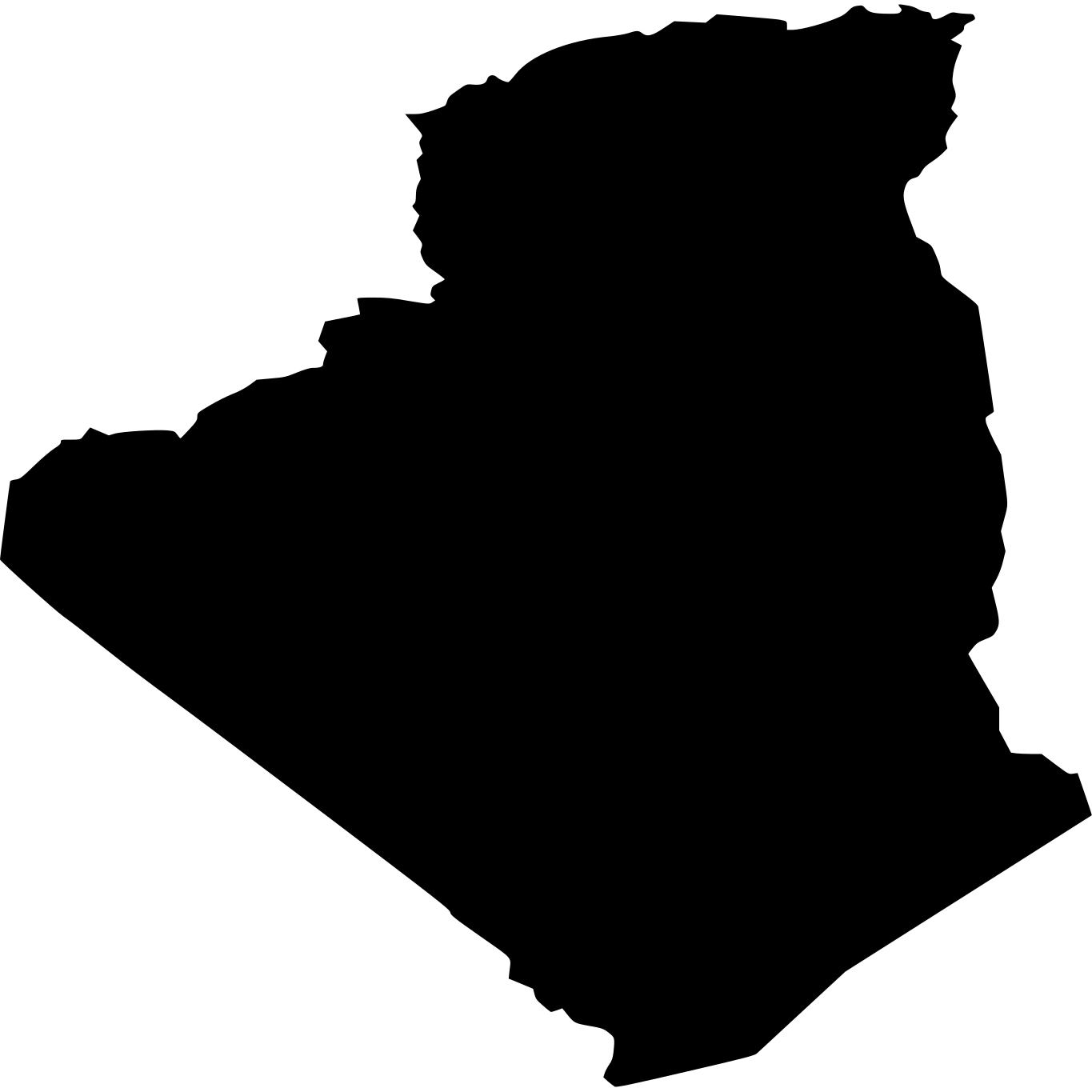
Touché is a Algerian brand

We're dedicated to providing you with the most up-to-date and science-backed ingredient info out there.
The data we've presented on this page has been verified by a member of the SkinSort Team.
Read more about us· Updated June 17, 2026 • Added by inesfetouhi


