Primark PS... Creamy Face Wash
A face cleanser with 22 ingredients, including vitamin E.
Face cleanser with 22 ingredients that contains Vitamin E
Worth noting
Contains Linalool, an EU-listed fragrance allergen.
We independently verify ingredients, backed by peer-reviewed research. Suggest an update.
What's inside
Ingredients List
Water
Skin ConditioningSodium Laureth Sulfate
Cleansing



Cocamidopropyl Betaine
Cleansing

Cocamide Mea
Emulsifying
Sodium Chloride
MaskingAcrylates Copolymer
Parfum
Masking

Phenoxyethanol
Preservative
Styrene/Acrylates Copolymer
Prunus Amygdalus Dulcis Oil
Skin Conditioning



PEG-150 Distearate
Emulsifying
Rosa Damascena Flower Water
Masking

Tocopheryl Acetate
Antioxidant


Chlorphenesin
Antimicrobial
Ethylhexylglycerin
Skin ConditioningSodium Hydroxide
BufferingDisodium EDTA
ChelatingTocopherol
Antioxidant


Phytic Acid
Chelating
Linoleic Acid
Cleansing
Linalool
Perfuming
CI 77891
Cosmetic ColorantWater, Sodium Laureth Sulfate, Cocamidopropyl Betaine, Cocamide Mea, Sodium Chloride, Acrylates Copolymer, Parfum, Phenoxyethanol, Styrene/Acrylates Copolymer, Prunus Amygdalus Dulcis Oil, PEG-150 Distearate, Rosa Damascena Flower Water, Tocopheryl Acetate, Chlorphenesin, Ethylhexylglycerin, Sodium Hydroxide, Disodium EDTA, Tocopherol, Phytic Acid, Linoleic Acid, Linalool, CI 77891
Key Ingredients
Benefits
Concerns
Ingredients Explained
Water. It's the most common cosmetic ingredient of all. You'll usually see it at the top of ingredient lists, meaning that it makes up the largest part of the product.
So why is it so popular? Water most often acts as a solvent - this means that it helps dissolve other ingredients into the formulation.
You'll also recognize water as that liquid we all need to stay alive. If you see this, drink a glass of water. Remember to stay hydrated!
Learn more about WaterSodium Laureth Sulfate (SLES) is a foaming, cleansing, and emulsifying ingredient. It is created from palm kernel oil or coconut oil. SLES is not the same as sodium lauryl sulfate. It is much milder and less likely to irritate.
SLES helps create foam in personal products. It also prevents ingredients from separating, helping to elongate the shelf life.
Sodium Laureth Sulfate is a type of sulfate. It can be drying. We recommend speaking with a professional about using this ingredient if you have concerns.
Learn more about Sodium Laureth SulfateCocamidopropyl Betaine is a fatty acid created by mixing similar compounds in coconut oil and dimethylaminopropylamine, a compound with two amino groups.
This ingredient is a surfactant and cleanser. It helps gather the dirt, pollutants, and other impurities in your skin to be washed away. It also helps thicken a product and make the texture more creamy.
Being created from coconut oil means Cocamidopropyl Betaine is hydrating for the skin.
While Cocamidopropyl Betaine was believed to be an allergen, a study from 2012 disproved this. It found two compounds in unpure Cocamidopropyl Betaine to be the irritants: aminoamide and 3-dimethylaminopropylamine. High-grade and pure Cocamidopropyl Betaine did not induce allergic reactions during this study.
Learn more about Cocamidopropyl BetaineThis ingredient is made by combining the fatty acids from coconut oil with monoethanolamine. It is an emulsifier that helps boost foam, thicken texture, and help keep ingredients together in a formula.
Chances are, you eat sodium chloride every day. Sodium Chloride is also known as table salt. This ingredient has many purposes in skincare: thickener, emulsifier, and exfoliator.
You'll most likely find this ingredient in cleansers where it is used to create a gel-like texture. As an emulsifier, it also prevents ingredients from separating.
You might see people debate whether Sodium Chloride is comedogenic, but there actually haven't been any comedogenic tests done on it. Either way, the overall formulation of a product matters a lot more than any single ingredient.
You might see this ingredient used in scrubs as a primary exfoliating ingredient.
Learn more about Sodium ChlorideAcrylates Copolymer is used as a film-forming agent and texture enhancer.
After applied, Acrylates Copolymer forms a thin film cover that helps skin feel more soft. It can help sunscreens become more water-resistant.
It is also used to make a product more thick.
Learn more about Acrylates CopolymerParfum is a catch-all term for an ingredient or more that is used to give a scent to products.
Also called "fragrance", this ingredient can be a blend of hundreds of chemicals or plant oils. This means every product with "fragrance" or "parfum" in the ingredients list is a different mixture.
For instance, Habanolide is a proprietary trade name for a specific aroma chemical. When used as a fragrance ingredient in cosmetics, most aroma chemicals fall under the broad labeling category of “FRAGRANCE” or “PARFUM” according to EU and US regulations.
The term 'parfum' or 'fragrance' is not regulated in many countries. In many cases, it is up to the brand to define this term.
For instance, many brands choose to label themselves as "fragrance-free" because they are not using synthetic fragrances. However, their products may still contain ingredients such as essential oils that are considered a fragrance by INCI standards.
One example is Calendula flower extract. Calendula is an essential oil that still imparts a scent or 'fragrance'.
Depending on the blend, the ingredients in the mixture can cause allergies and sensitivities on the skin. Some ingredients that are known EU allergens include linalool and citronellol.
Parfum can also be used to mask or cover an unpleasant scent.
The bottom line is: not all fragrances/parfum/ingredients are created equally. If you are worried about fragrances, we recommend taking a closer look at an ingredient. And of course, we always recommend speaking with a professional.
Learn more about ParfumPhenoxyethanol is one of the most widely used preservatives in skincare (and for good reason!).
It has a large spectrum of antimicrobial activity and especially effective bacteria, yeast, and mold while only having a weak effect on your skin's natural microbiome.
On a cellular level, it disrupts the cell membranes of microbes by poking holes that make the cell leak. This shuts down the chemical reactions the microbe needs to make energy so it can no longer survive.
Another perk of this ingredient is that it stays functional across a wide pH range (3-10).
You'll often see it paired with boosters like Ethylhexylglycerin; one study showed that a 1:9 ratio of Ethylhexylglycerin to Phenoxyethanol damages bacterial membranes as effectively as doubling the Phenoxyethanol concentration on its own.
Typical use concentrations range from 0.3-1% depending on the formula, and this ingredient is capped at 1% int the EU.
Safety-wise, the fear mongering does not hold up to the evidence. The EU's Scientific Committee on Consumer Safety and FDA consider it safe as a preservative at up to 1%, including for children of all ages.
Adverse systemic effects only showed up in animal studies at exposures roughly 200x higher than what people get from cosmetics. And despite its very widespread use, this ingredient is a rare sensitizer and allergic reactions are uncommon.
Learn more about PhenoxyethanolThis ingredient is a synthetic polymer that mainly works as a film former. It creates a thin, flexible film on the surface of your skin. Once applied, it helps improves wear, durability, and resistance to water/smudging.
Due to its large molecule size, it sits on top of your skin rather than absorbing into it.
This ingredient is also known as sweet almond oil. It is a lightweight, cold-pressed oil from the ripe seeds of the sweet almond tree.
Sweet almond oil is rich in skin-nourishing fatty acids such as oleic acid (55-86%) and linolenic acid (7-35%).
As an emollient, it softens and hydrates skin by forming a thin barrier that locks in moisture.
Clinical studies have found it to be non-irritating and non-sensitizing. The CIR Expert Panel has evaluated the available safety data and concluded it is safe for topical use.
Because of the oleic acid content, this ingredient may not be fungal acne safe.
This ingredient does have a comedogenic rating of 3, but this doesn't mean a formula with this ingredient will clog pores.
Human testing has proved that any finished product with a comedogenic ingredient won't automatically make you break out; it really comes down to concentration, formula, and your skin.
Learn more about Prunus Amygdalus Dulcis OilPEG-150 Distearate is a hardworking ingredient that is usually found at the end of a lot of cleansers whose main job is to act as a micellar thickening agent for surfactant-based cleansers.
It works by physically linking up surfactant micelles already in a formula to bump up viscosity and gives products a pourable-but-not-runny body.
Safety-wise, it's been found safe in cosmetics with minimal skin irritation and no evidence of toxicity.
This ingredient may not be fungal acne safe; it's a diester of stearic acid (C18) that falls into the C11-24 range that the Malassezia yeast feeds on. In vitro studies have also shown the Malassezia can metabolize PEG stearates by cleaving the ester bond to release the fatty acid.
Learn more about PEG-150 DistearateRosa Damascena Flower Water is the water-based byproduct of steam-distilling damask rose petals. It has skin conditioning, masking, and skin protecting properties.
Research shows that Rosa damascena is rich in flavonoids and phenolic compounds like gallic acid that contribute to its antioxidant activity.
In vitro studies have shown that Rosa damascena can scavenge free radicals and reduce melanin overproduction. Research has also found this extract offers some degree of UV absorption but this should not replace your sunscreen.
Learn more about Rosa Damascena Flower WaterTocopheryl Acetate is a stable, shelf-friendly form of vitamin E.
Formulators love it because plain vitamin E oxidizes quickly once it hits air. This acetate version stays stable and resists going off, helping to extend a product's shelf life.
It's actually inactive on its own and works like a slow-release "storage" form; the enzymes in your skin called esterases gradually convert it into active vitamin E over time.
One in vivo study showed 5% of the acetate in the living layer of the epidermis converted to vitamin E after 5 days of application. This study also found the skin gained protection against UV damage even though the conversion was slow and small.
Once converted, vitamin E acts as a skin's main fat-soluble antioxidant that fights free radicals to protect skin from damage.
Topical vitamin E generally boosts the skin's photoprotection, and it reduced UV-damage in animal models.
This ingredient has some brightening potential but it's more of a prevention ingredient than spot-fader. Cell studies show it can slow down melanin production but it's worth noting that it's not the most powerful brightener out there.
Overall, it has a pretty solid safety profile and has been found to be non-irritating and non-comedogenic. Allergic reactions may happen but stay rare due to how widely the ingredient gets used.
The concentration will vary depending on the formula; industry data shows 0.1% in baby lotions, 3% in lipsticks, and 5% in foot powders. You can also find this ingredient at 100% in a pure vitamin E oil.
Most leave-on skincare keeps it at the lower end, often between 0.5-1%.
Learn more about Tocopheryl AcetateChlorphenesin is a synthetic preservative. It helps protect a product against bacteria in order to extend shelf life. In most cases, Chlorphenesin is paired with other preservatives such as phenoxyethanol and caprylyl glycol.
Chlorphenesin is a biocide. This means it is able to help fight the microorganisms on our skin. It is also able to fight odor-releasing bacteria.
Chlorphenesin is soluble in both water and glycerin.
Studies show Chlorphenesin is easily absorbed by our skin. You should speak with a skincare professional if you have concerns about using Chlorphenesin.
Learn more about ChlorphenesinEthylhexylglycerin is created from glycerin. It is a multitasker ingredient that:
The CIR Expert Panel found minimal skin absorption or sensitization of any kind in a safety assessment. Though this ingredient is considered well-tolerated, a small number of cases of allergic dermatitis have been published since 2002. Just be sure to patch test if you are unsure.
Industry-reported use ranges from 8% in rinse-off products and 2% in leave-on formulations.
Learn more about EthylhexylglycerinSodium Hydroxide is also known as lye or caustic soda. It is used to adjust the pH of products; many ingredients require a specific pH to be effective.
In small amounts, sodium hydroxide is considered safe to use. However, large amounts may cause chemical burns due to its high alkaline.
Your skin has a natural pH and acid mantle. This acid mantle helps prevent harmful bacteria from breaking through. The acid mantle also helps keep your skin hydrated.
"Alkaline" refers to a high pH level. A low pH level would be considered acidic.
Learn more about Sodium HydroxideDisodium EDTA is a chelating agent. It grabs onto and deactivates metal ions that sneak into your products from water, packaging, or air.
This ingredient mainly works behind the scenes and helps with:
On top of that, this ingredient can counteract the effects of hard water by binding to the minerals in it.
One thing worth knowing is that Disodium EDTA has been shown to be a mild penetration enhancer. It can help other ingredients absorb into skin more effectively which can be a double-edged sword (great for actives, but can also make the active too strong if you have sensitive skin).
Clinical patch testing showed no significant skin irritation at typical use concentrations and minimal dermal absorption.
You'll most likely see this ingredient near the end of an ingredient list. It's typically found in concentrations less than 1%.
Learn more about Disodium EDTATocopherol is a fat-soluble antioxidant known as Vitamin E.
You'll find this ingredient in the vast majority of skincare (for good reason). It works to neutralize free radicals, or unstable molecules generated by UV exposure, pollution, and other environmental stressors, before they can cause oxidative damage to your skin cells.
Topically applied tocopherol has been shown to protect against UV damage by ramping up the skin's own natural defense enzymes.
It also acts as a skin conditioning agent; some studies show that regular topical use can improve the skin's water-binding capacity over 2-4 weeks.
This ingredient is especially loved for being a team player. When combined with Vitamin C, the photoprotective effect of both ingredients roughly doubles and the combo also helps reduce UV-induced DNA damage.
This ingredient has some brightening potential but it's more of a prevention ingredient than spot-fader. Cell studies show it can slow down melanin production but it's worth noting that it's not the most powerful brightener out there.
In formulations, it also serves as a stabilizer that helps protect other oxidation-prone ingredients from degrading.
Concentrations usually range from 0.1-1% in most leave-on products.
Learn more about TocopherolPhytic Acid is a gentle AHA and antioxidant. AHAs are chemical exfoliants that help remove dead skin cells. Phytic Acid has a slight and mild exfoliating effect.
The chemical makeup makes it classified as an AHA, much like lactic acid.
In some cases, it is a chelating agent. Chelating agents help prevent metals from binding to water, helping to stabilize the ingredients in a product.
An interesting fact about phytic acid is that it is considered an antinutrient. People do not have the enzyme needed to properly breakdown and digest phytic acid. When ingested, phytic acid binds to minerals and prevents them from being absorbed.
Read more about some other popular AHA's here:
Learn more about Phytic AcidLinoleic Acid is also known as Vitamin F. It is a fatty acid with emollient and skin conditioning properties.
Our top layer of skin, or epidermis, naturally contains high amounts of linoleic acid.
Your body uses linoleic acid to build ceramides and prostaglandins. Ceramides keep your skin's barrier hydrated and strong while prosaglandins help control inflammation and healing.
Needless to say, linoleic acid is crucial for having a strong skin barrier.
One study found applying linoleic acid rich sunflower oil to be more effective at repairing the skin barrier than olive oil.
This ingredient can also help treat acne by softening sebum to prevent clogged pores. Another study found using 2.5% linoleic acid gel for 4 weeks showed a 25% reduction in small comedones.
Studies show it can also help lighten hyperpigmentation or sun spots by disrupting the melanin production process. It also helps your skin shed melanin pigment from your skin caused by UV exposure.
Due to its role in the production of the fatty acid prostaglandin, linoleic acid can also help reduce inflammation and support wound healing.
Fun fact: Linoleic acid is an essential fatty acid. This means our bodies cannot create it on its own and we need to get it through foods such as nuts and vegetable oils.
Just know this ingredient is not always fungal-acne safe because it is a long-chain fatty acid (with 18 carbon atoms) that directly feeds the Malassezia yeast responsible for fungal acne.
Learn more about Linoleic AcidLinalool is a small, naturally occurring scent molecule found in plants like lavender, coriander, bergamot, and more.
It is one of the two most-used fragrance ingredients in cosmetics and added purely for smell. Since it's not used for a skin benefit, there's no "effective dose". Concentration depends on the fragrance load of the product.
The EU requires it to be named on the label above 0.001% in leave-on and 0.01% in rinse-off products.
Fresh linalool is a weak sensitizer but air exposure turns some of it into hydroperoxides, which are strong sensitizers. Those oxidation products are the actual allergy concern.
Patch-test clinics see positive reactions to linalool hydroperoxides in about 4% to 12% of dermatitis patients depending on country and test concentration.
Resassuringly, one analytical study found hydroperoxide levels in real fragranced products to be orders of magnitude below what induced sensitization in animal studies with no evidence of oxidation building up during normal storage.
The practical takeaway is that linalool is fine for most people but worth avoiding if you have a confirmed fragrance contact allergy or a badly compromised barrier.
Products stored a long time after opening are also the high-risk scenario since that is when oxidation happens.
The scent of linalool is described as floral, spicy tropical, and citrus-like.
Learn more about LinaloolCi 77891 is a white pigment from Titanium dioxide. It is naturally found in minerals such as rutile and ilmenite.
It's main function is to add a white color to cosmetics. It can also be mixed with other colors to create different shades.
Ci 77891 is commonly found in sunscreens due to its ability to block UV rays.
Learn more about CI 77891Reviews
No written reviews yet. Be the first to review this product.
Recent searches
Search reviews by skin type, ingredient, or keyword.
Where it's from
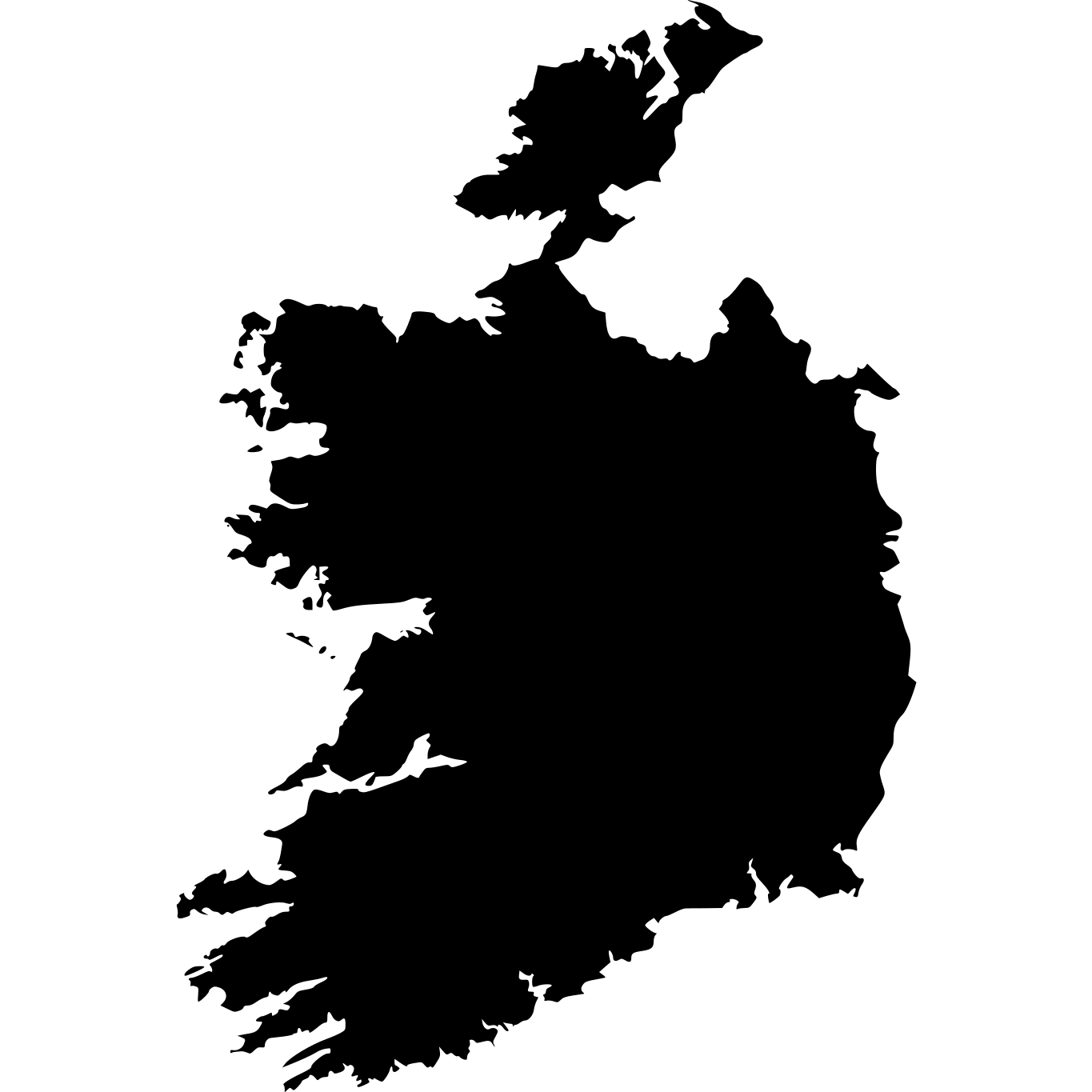
Primark is a Irish brand

We're dedicated to providing you with the most up-to-date and science-backed ingredient info out there.
The data we've presented on this page has been verified by a member of the SkinSort Team.
Read more about us· Updated July 14, 2025 • Added by christianelink


