PMPM Dual Rose Poly Vitamin C Glowing Brightening Oil Essence
A essence with 26 ingredients, including vitamin C, vitamin E, and hyaluronic acid.
This brightening essence is formulated around 3-O-Ethyl Ascorbic Acid and Tetrahexyldecyl Ascorbate to brighten dull-looking skin and fade the look of dark spots.
Worth noting
Contains EU-listed fragrance allergens, including Rosa Centifolia Flower Extract and Rosa Damascena Flower Oil.
We independently verify ingredients, backed by peer-reviewed research. Suggest an update.
What's inside
Ingredients List
Water
Skin ConditioningSqualane
Emollient


Butylene Glycol
Humectant
Rosa Rugosa Flower Water
Masking
3-O-Ethyl Ascorbic Acid
Skin Conditioning





Tetrahexyldecyl Ascorbate
Antioxidant
Sodium Chloride
MaskingPentylene Glycol
Skin Conditioning
Sodium Hyaluronate
Humectant
Phenoxyethanol
Preservative
Camellia Japonica Seed Oil
Emollient


Pongamia Glabra Seed Oil
Skin Conditioning
Rosa Centifolia Flower Extract
Astringent
Limnanthes Alba Seed Oil
Skin Conditioning
Helianthus Annuus Seed Oil
Emollient
Acetyl Glucosamine
Skin Conditioning
Scutellaria Baicalensis Root Extract
Astringent
Glycyrrhiza Inflata Root Extract
Skin Conditioning
Sophora Angustifolia Root Extract
Skin ConditioningSodium Citrate
BufferingTocopherol
Antioxidant
Rosa Damascena Flower Oil
Masking

Citric Acid
Buffering
Glycine Soja Oil
Emollient



Bixa Orellana Seed Oil
Emollient
Ethylhexylglycerin
Skin ConditioningWater, Squalane, Butylene Glycol, Rosa Rugosa Flower Water, 3-O-Ethyl Ascorbic Acid, Tetrahexyldecyl Ascorbate, Sodium Chloride, Pentylene Glycol, Sodium Hyaluronate, Phenoxyethanol, Camellia Japonica Seed Oil, Pongamia Glabra Seed Oil, Rosa Centifolia Flower Extract, Limnanthes Alba Seed Oil, Helianthus Annuus Seed Oil, Acetyl Glucosamine, Scutellaria Baicalensis Root Extract, Glycyrrhiza Inflata Root Extract, Sophora Angustifolia Root Extract, Sodium Citrate, Tocopherol, Rosa Damascena Flower Oil, Citric Acid, Glycine Soja Oil, Bixa Orellana Seed Oil, Ethylhexylglycerin
Key Ingredients
Benefits
Concerns
Ingredients Explained
Water. It's the most common cosmetic ingredient of all. You'll usually see it at the top of ingredient lists, meaning that it makes up the largest part of the product.
So why is it so popular? Water most often acts as a solvent - this means that it helps dissolve other ingredients into the formulation.
You'll also recognize water as that liquid we all need to stay alive. If you see this, drink a glass of water. Remember to stay hydrated!
Learn more about WaterSqualane is the hydrogenated and shelf-stable form of squalene (a lipid that naturally occurs in human sebum).
It is an emollient and skin conditioning agent that is able to integrate seamlessly into the skin's lipid barrier without clogging pores.
This is due to how structurally similar it is to what your skin already produces.
Though it is mostly an emollient that helps soften and hydrate skin, it also has some humectant and occlusive action. Humectants help the skin retain moisture while occlusives seal it in, making squalane a triple-threat moisturizer.
Research shows it has antioxidant capabilities that help protect against stressors like UV exposure, specifically UVA induced oxidative stress. This study also found that it supports collagen biosynthesis in human dermal fibroblasts.
No clinical study has reported significant adverse effects and irritation reactions are very rare from this ingredient (even at 100% concentration).
Overall, it's a fantastic ingredient for hydration and is suitable for all skin types.
This depends on the source. Squalane can be derived from both plants and animals. Most squalane used in skincare comes from plants.
Please note: the source of squalane is only known if disclosed by the brand. We recommend reaching out to the brand if you have any questions about their squalane.
Read more about squalene with an "e".
Though squalane is often called an oil, it’s technically not one. It is a hydrocarbon, meaning it is only made of carbon and hydrogen. True oils are triglycerides and made of fatty acids and glycerol.
The term “oil-free” isn’t regulated so companies can define it however they want. Some exclude all oils, while others just avoid mineral oil or comedogenic oils.
Squalane has a comedogenic rating of 1 from the original 1972 study that tested raw ingredients under occlusion on rabbit ears. This system is not standardized or peer-reviewed, and using the raw ingredients is very different from how diluted cosmetic formulations are used on human skin.
A comedogenic rating of 1 means it is "unlikely to clog pores" according to the original rating system.
The overall formula of a product matters more than the individual ingredients on whether or not it will cause clogged pores.
Learn more about SqualaneButylene Glycol (or BG) is used within cosmetic products for a few different reasons:
Overall, Butylene Glycol is a safe and well-rounded ingredient that works well with other ingredients.
Though this ingredient works well with most skin types, some people with sensitive skin may experience a reaction such as allergic rashes, closed comedones, or itchiness.
Learn more about Butylene GlycolRosa Rugosa Flower Water is a fragrance.
3-O-Ethyl Ascorbic Acid is one of the most popular "stable" vitamin C derivatives in skincare.
Plain ascorbic acid is fantastic but notoriously fragile; it browns, oxidizes, and loses potency fast. So attaching an ethyl group to the third carbon of the molecule gives it some cool perks:
In a formula, it does the 3 classic vitamin C jobs: it acts as an antioxidant, helps brighten skin tone by inhibiting tyrosinase, and supports collagen.
The evidence is reasonably solid for a cosmetic ingredient; Liao and colleagues (2018) showed it's significantly more stable than ascorbic acid while still being effective.
A 2021 study by Zerbinati and colleagues tested a serum with 30% 3-O-ethyl-l-ascorbic acid and 1% lactic acid significantly increased collagen production, reduced UVB-induced DNA damage, and decreased melanin on a reconstructed pigmented skin model.
Typical real world usage sits around 0.5-5% (and 1-2% is common for daily serums).
Amounts up to 30% have been shown to be non-irritating on human skin samples, but two isolated cases reported allergic contact dermatitis so a patch test is sensible if you have reactive skin.
Learn more about 3-O-Ethyl Ascorbic AcidTetrahexyldecyl Ascorbate (THD) is a stable and oil-soluble form of Vitamin C.
THD is special in that it has the ability to travel deeper into skin than traditional ascorbic acid while maintaining the same skin benefits (double win!).
Because it’s oil-soluble, THD dives deep into your skin’s fatty layers (think ceramides and cholesterol) to fight off the kind of free radicals that mess with your skin barrier. This makes it a great pair with water-based vitamin C (ascorbic acid) that mainly works on the surface.
Even at just 0.1%, THD is already showing great antioxidant activity. When used up to 2%, it helps keep your skin happy and calm, especially when it’s stressed from pollution or sun.
Want to fade dark spots or tackle hyperpigmentation? You’ll want 5% or more. Pairing it with brightening buddies like niacinamide or licorice root gives even better results. One study even used 30% THD with other brighteners and saw real results on stubborn discoloration, even in melasma-prone skin.
A note on THD: It’s has a slightly silky, oily texture and usually shows up colorless or pale yellow (though the exact shade can vary by supplier).
While you can sneak it into water-based formulas, it really shines when paired with silicones or oils, which help your skin soak it up better.
THD is pretty stable, but it’s still vulnerable to degradation like ascorbic acid. Too much light or heat (above 113°F / 45°C) can break it down over time. Go for dark and opaque packaging that keeps it safe and shady!
Read more about other types of Vitamin C:
Learn more about Tetrahexyldecyl AscorbateChances are, you eat sodium chloride every day. Sodium Chloride is also known as table salt. This ingredient has many purposes in skincare: thickener, emulsifier, and exfoliator.
You'll most likely find this ingredient in cleansers where it is used to create a gel-like texture. As an emulsifier, it also prevents ingredients from separating.
You might see people debate whether Sodium Chloride is comedogenic, but there actually haven't been any comedogenic tests done on it. Either way, the overall formulation of a product matters a lot more than any single ingredient.
You might see this ingredient used in scrubs as a primary exfoliating ingredient.
Learn more about Sodium ChloridePentylene Glycol (1,2-pentanediol) is a multitasking little diol with three main roles in a formula:
Research on alkanediols (the family pentylene glycol belongs to) show they work by disrupting microbial cell membranes. This disruption helps the primary preservative system in a product work more effectively at lower doses.
On the safety side, the Cosmetic Ingredient Review Expert Panel has concluded this ingredient to be safe as used in current cosmetic practices + concentrations.
Typical use levels in a formula run about 1-5%.
Learn more about Pentylene GlycolSodium Hyaluronate is the salt form of hyaluronic acid. It is a long sugar chain that is naturally found in your skin, joints, and connective tissue that maintains hydration and elasticity.
In skincare, it works as a humectant. It pulls water from the environment and deeper layers of skin and binds it to the surface.
Interestingly, the size of the molecule affects its behavior:
Some clinical evidence links low molecular weight versions to improved wrinkle depth, elasticity, anti-inflammatory effects, and barrier repair.
Many serums use a blend of both weights so you can get surface hydration plus longer-lasting and deeper effects.
You'll typically see concentrations between 0.1-2% for this ingredient.
Learn more about Sodium HyaluronatePhenoxyethanol is one of the most widely used preservatives in skincare (and for good reason!).
It has a large spectrum of antimicrobial activity and especially effective bacteria, yeast, and mold while only having a weak effect on your skin's natural microbiome.
On a cellular level, it disrupts the cell membranes of microbes by poking holes that make the cell leak. This shuts down the chemical reactions the microbe needs to make energy so it can no longer survive.
Another perk of this ingredient is that it stays functional across a wide pH range (3-10).
You'll often see it paired with boosters like Ethylhexylglycerin; one study showed that a 1:9 ratio of Ethylhexylglycerin to Phenoxyethanol damages bacterial membranes as effectively as doubling the Phenoxyethanol concentration on its own.
Typical use concentrations range from 0.3-1% depending on the formula, and this ingredient is capped at 1% int the EU.
Safety-wise, the fear mongering does not hold up to the evidence. The EU's Scientific Committee on Consumer Safety and FDA consider it safe as a preservative at up to 1%, including for children of all ages.
Adverse systemic effects only showed up in animal studies at exposures roughly 200x higher than what people get from cosmetics. And despite its very widespread use, this ingredient is a rare sensitizer and allergic reactions are uncommon.
Learn more about PhenoxyethanolThis ingredient is also known as Tsubaki oil, or the fixed oil from the seeds of the Japanese camellia.
It's basically a fatty acid delivery system (~75-85% oleic acid) plus some minor extras like squalene, tocopherols, and phytosterols.
That profile makes it a classic emollient; it works by hanging out with the skin's surface lipids, softens, and slows down water loss.
The most cited study on it was done on skin cells in a dish where this oil got them to make more of the building blocks for collagen while also slowing down the enzyme that breaks collagen down. Researchers tested this on human skin too; it didn't cause irritation and helped skin hold onto moisture better.
Another study done on cells and mice found this oil quieted down some of the body's inflammation signals.
These studies are still small, early, and not done on humans, so it's best to think of this ingredient as a great supporting ingredient for the rest of your routine and not the main active.
Concentrations can range from 1-5% in serums to 100% as a single face oil (how it's most traditionally used).
Because this ingredient is a triglyceride of long-chain fatty acids, this ingredient may not be Malassezia safe.
Allergies to this protein are quite rare as the refined seed oil contains very little residual protein. Human irritation testing also came back clean. But it is a plant and as with any botanical ingredient, contact allergy is possible.
Learn more about Camellia Japonica Seed OilPongamia Glabra Seed Oil is the fixed oil expressed from seeds of of Pongamia glabra, Fabaceae
Pongamia glabra is a member of the pea family and it most commonly known as Indian Beech. The species is native to Southeast Asia, the Pacific Islands, and Australia.
This extract comes from Rosa centifolia petals and flowers. It has astringent, masking, skin conditioning, and tonic properties.
The compounds in this ingredient can give skin a toning feel, which is why it's sometimes described as a mild astringent. It's often described as a tonic because rose ingredients have long been used in facial waters and toners for refreshing the skin.
Rosa centifolia has a natural floral scent that can mask or soften unpleasant odors from other ingredients.
Like other botanical extracts, people with very fragrance-sensitive skin may prefer to patch test.
Learn more about Rosa Centifolia Flower ExtractLimnanthes Alba Seed Oil is from the seeds of the meadowfoam plant. It is a skin conditioning agent and emollient that sits on top of skin to soften and hydrate it.
Over 98% of the oil is made up of long-chain fatty acids, mostly aachidic acid (61%), docosenoic acid (~16%), and docosadienoic acid (~18%).
This combination is not really found in any other plant oil and is the reason this is one of the most stable botanical oils available.
Some studies show it to be more stable than jojoba oil, helps a product resist going rancid, and can help extend the shelf life of a formula.
It also naturally contains vitamin E and phytosterols that give it a mild antioxidant benefit.
This ingredient is typically used from around 1% to fairly high levels since it's gentle; it's well-tolerated and low on the irritation scale.
Learn more about Limnanthes Alba Seed OilHelianthus Annuus Seed Oil is a plant oil derived from the seeds of a sunflower.
It is rich in fatty acids, primarily linoleic acid and oleic acid. This gives it emollient and skin conditioning properties.
The reason this ingredient is so effective is because it forms a thin film on the skin that reduces transepidermal water loss (TEWL) while supplying linoleic acid to the stratum corneum to improve barrier strength.
The high linoleic acid content is particularly noteworthy for acne-prone skin.
Research suggests that acne-prone skin tends to be deficient in linoleic acid in sebum. Topical application may help replenish this to support a healthier follicular environment and less comedone-promoting sebum.
One randomized study found sunflower seed oil preserved skin barrier integrity in adult volunteers with and without atopic dermatitis (outperforming olive oil).
This ingredient is well-studied, gentle, and an effective emollient suitable for most skin types.
On fungal acne: This ingredient may not be Fungal acne (Malassezia folliculitis) safe. This is because it contains fatty acids with carbon chain lengths in the C11-C24 range.
Learn more about Helianthus Annuus Seed OilAcetyl Glucosamine is an antioxidant and humectant. It is an amino acid sugar and is naturally found in our skin.
The cool thing about this ingredient? It helps the skin produce hyaluronic acid and boost hydration. It also has antioxidant benefits to protect skin cells.
When paired with niacinamide, Acetyl Glucosamine has been shown to be effective at reducing discoloration.
Learn more about Acetyl GlucosamineScutellaria Baicalensis Root Extract comes from the Baikal skullcap or Chinese skullcap plant. This plant is native to Northeast Asia and can be found in China, Mongolia, Korea, and Siberia.
In cosmetics, Scutellaria Baicalensis Root Extract provides antioxidant and anti-inflammatory benefits. This is due to the flavonoid composition of Scutellaria Baicalensis Root Extract.
In Chinese traditional folk medicine, Scutellaria Baicalensis Root Extract is used to help treat lung issues and hypertension.
Learn more about Scutellaria Baicalensis Root ExtractThis ingredient comes from the Chinese licorice species, Glycyrrhiza Inflata. It has skin conditioning, soothing, and antioxidant properties.
The flavonoids in this ingredient show anti-inflammatory and antioxidant activities in lab studies. These compounds may also play a role in supporting a more even skin tone and helping to control microbial activity on acne-prone skin.
We don't have a description for Sophora Angustifolia Root Extract yet.
Sodium Citrate is the sodium salts of citric acid. In skincare, it is used to alter pH levels and acts as a preservative.
Its main functions are to maintain the pH of a product and neutralize metal ions.
The acidity of our skin is maintained by our glands and skin biome; normal pH level of skin is slightly acidic (~4.75-5.5).
Being slightly acidic allows our skin to create an "acid mantle". This acid mantle is a thin barrier that protects our skin from bacteria and contaminants.
Learn more about Sodium CitrateTocopherol is a fat-soluble antioxidant known as Vitamin E.
You'll find this ingredient in the vast majority of skincare (for good reason). It works to neutralize free radicals, or unstable molecules generated by UV exposure, pollution, and other environmental stressors, before they can cause oxidative damage to your skin cells.
Topically applied tocopherol has been shown to protect against UV damage by ramping up the skin's own natural defense enzymes.
It also acts as a skin conditioning agent; some studies show that regular topical use can improve the skin's water-binding capacity over 2-4 weeks.
This ingredient is especially loved for being a team player. When combined with Vitamin C, the photoprotective effect of both ingredients roughly doubles and the combo also helps reduce UV-induced DNA damage.
This ingredient has some brightening potential but it's more of a prevention ingredient than spot-fader. Cell studies show it can slow down melanin production but it's worth noting that it's not the most powerful brightener out there.
In formulations, it also serves as a stabilizer that helps protect other oxidation-prone ingredients from degrading.
Concentrations usually range from 0.1-1% in most leave-on products.
Learn more about TocopherolRosa Damascena Flower Oil is an essential oil made from the Damask Rose. It is often used as a fragrance in cosmetics.
Rose Oil has antibacterial and antioxidant properties due to its terpene, glycoside, flavonoid, anthocyanin, and Vitamin C content.
Other major parts of Rose Oil include citronellol and geraniol. Both of these are known EU allergens and cause contact-allergies.
The downsides of this ingredient outweight the positives.
Learn more about Rosa Damascena Flower OilCitric Acid is an alpha hydroxy acid (AHA) naturally found in citrus fruits like oranges, lemons, and limes.
Like other AHAs, citric acid can exfoliate skin by breaking down the bonds that hold dead skin cells together. This helps reveal smoother and brighter skin underneath.
However, this exfoliating effect only happens at high concentrations (20%) which can be hard to find in cosmetic products.
Due to this, citric acid is usually included in small amounts as a pH adjuster. This helps keep products slightly more acidic and compatible with skin's natural pH.
In skincare formulas, citric acid can:
While it can provide some skin benefits, research shows lactic acid and glycolic acid are generally more effective and less irritating exfoliants.
Most citric acid used in skincare today is made by fermenting sugars (usually from molasses). This synthetic version is identical to the natural citrus form but easier to stabilize and use in formulations.
Rosacea skin has a lower threshold for acids generally, with 62.5% of rosacea subjects in one study reacting to lactic acid in a sting test. This is why we mark citric acid as a potential rosacea trigger.
However, this ingredient shows up as a pH adjuster or chelator at roughly 0.1-1% in many products. These low levels are unlikely to be an issue for rosacea skin and becomes a potential trigger at exfoliating concentrations (20%). Because everybody's skin is unique, we recommend a patch test if you are unsure.
Learn more about Citric AcidGlycine Soja Oil is a plant-derived oil from soybean seeds. Like other oils, it is rich in essential fatty acids (mostly linoleic and oleic) that support skin hydration and barrier function.
The fatty acids are able to integrate into the lipid matrix of the stratum corneum to help soften skin and reduce water loss.
On top of that, soybean oil is rich in vitamins like vitamin E, a potent antioxidant.
Research on soybean's active components also point to anti-inflammatory, collagen-stimulating, antioxidant activity, and protection against UV-induced oxidative damage.
Most of this research applies to the broader soybean plant and not just the oil fraction alone.
This ingredient does carry a comedogenic rating of 3 from the old rabbit-ear assay. Just remember testing finished products in humans showed that formulas built with "comedogenic" ingredients are not necessarily comedogenic themselves. It's worth patch testing if you're breakout prone, and always listen to your skin.
Because this ingredient is a saturated triglyceride, it may not be fungal acne safe. This is because Malassezia breaks down sebum triglycerides into fatty acids it can consume, making this ingredient a possible source for the yeast.
Learn more about Glycine Soja OilBixa Orellana Seed Oil is an oil and isn't fungal acne safe.
Ethylhexylglycerin is created from glycerin. It is a multitasker ingredient that:
The CIR Expert Panel found minimal skin absorption or sensitization of any kind in a safety assessment. Though this ingredient is considered well-tolerated, a small number of cases of allergic dermatitis have been published since 2002. Just be sure to patch test if you are unsure.
Industry-reported use ranges from 8% in rinse-off products and 2% in leave-on formulations.
Learn more about EthylhexylglycerinReviews
No written reviews yet. Be the first to review this product.
Recent searches
Search reviews by skin type, ingredient, or keyword.
Where it's from
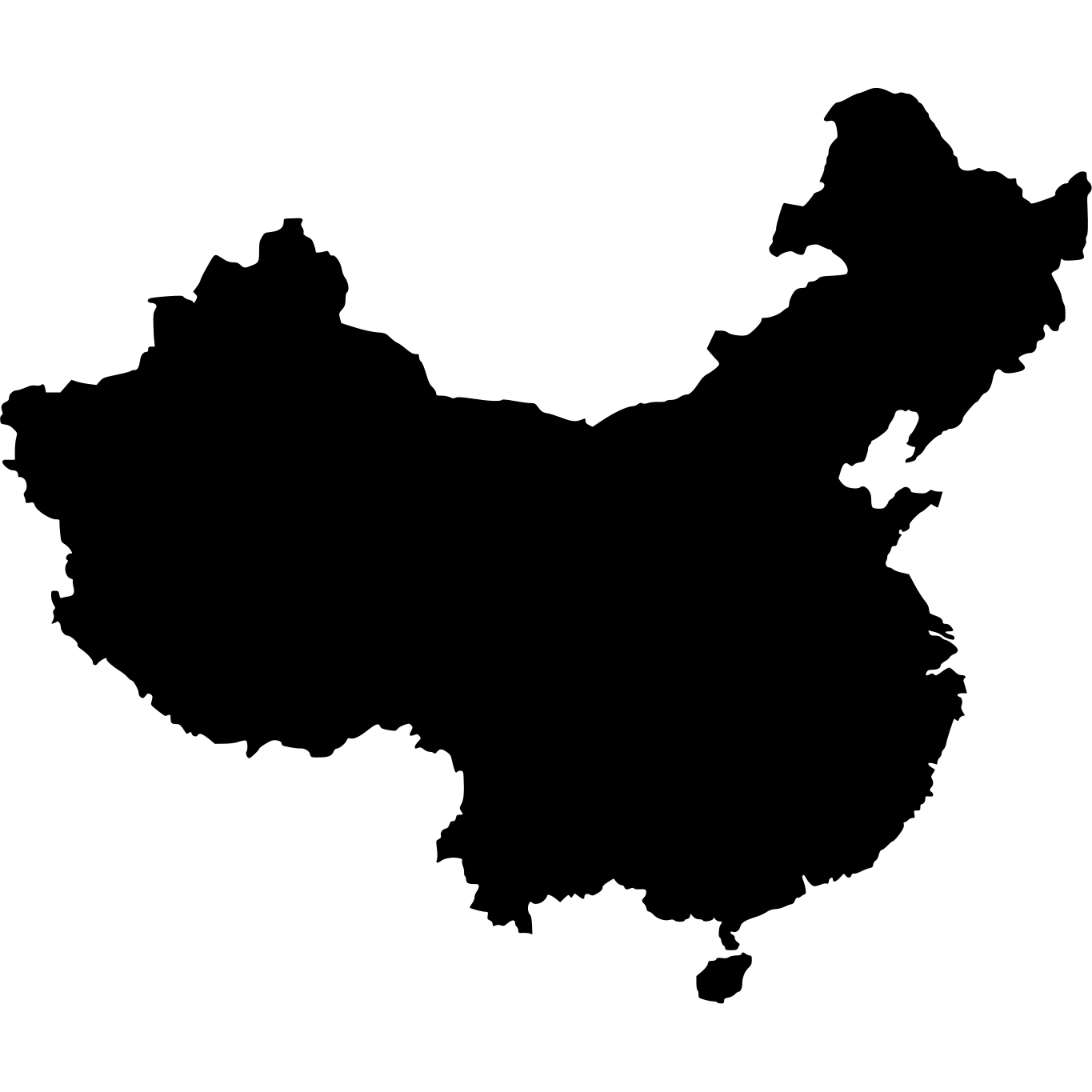
PMPM is a Chinese brand

We're dedicated to providing you with the most up-to-date and science-backed ingredient info out there.
The data we've presented on this page has been verified by a member of the SkinSort Team.
Read more about us· Updated July 29, 2026 • Added by Btinana


