Pharmaceris T Cream Azeloacne With 20% Azelaic Acid
A facial treatment with 28 ingredients, including azelaic acid.
This acne treatment is formulated around Azelaic Acid and Ellagic Acid to clear breakouts and calm redness.
Worth noting
Contains Benzyl Alcohol, an EU-listed fragrance allergen.
We independently verify ingredients, backed by peer-reviewed research. Suggest an update.
What's inside
Ingredients List
Water
Skin ConditioningAzelaic Acid
Buffering









Propylene Glycol
Humectant


Glyceryl Stearate
Emollient
Cetearyl Ethylhexanoate
Emollient
Glycerin
Humectant
PEG-30 Stearate
Emulsifying
Lecithin
Emollient
Ellagic Acid
Skin Conditioning
Glabridin
BleachingHonokiol
Antioxidant
Magnolol
Antioxidant
Isopropyl Myristate
Emollient


Isohexadecane
EmollientCetearyl Alcohol
Emollient

Cetyl Palmitate
Emollient
Cocoglycerides
Emollient
Sodium Acrylate/Sodium Acryloyldimethyl Taurate Copolymer
Emulsion StabilisingPolysorbate 80
Emulsifying
Cellulose
Absorbent
Hydroxyethylcellulose
Emulsion StabilisingSorbitan Oleate
Emulsifying
Ethylhexylglycerin
Skin ConditioningBenzoic Acid
Masking
Benzyl Alcohol
Perfuming



Potassium Sorbate
Preservative
Sodium Benzoate
Masking
Dehydroacetic Acid
Preservative
Water, Azelaic Acid, Propylene Glycol, Glyceryl Stearate, Cetearyl Ethylhexanoate, Glycerin, PEG-30 Stearate, Lecithin, Ellagic Acid, Glabridin, Honokiol, Magnolol, Isopropyl Myristate, Isohexadecane, Cetearyl Alcohol, Cetyl Palmitate, Cocoglycerides, Sodium Acrylate/Sodium Acryloyldimethyl Taurate Copolymer, Polysorbate 80, Cellulose, Hydroxyethylcellulose, Sorbitan Oleate, Ethylhexylglycerin, Benzoic Acid, Benzyl Alcohol, Potassium Sorbate, Sodium Benzoate, Dehydroacetic Acid
Key Ingredients
Benefits
Concerns
Ingredients Explained
Water. It's the most common cosmetic ingredient of all. You'll usually see it at the top of ingredient lists, meaning that it makes up the largest part of the product.
So why is it so popular? Water most often acts as a solvent - this means that it helps dissolve other ingredients into the formulation.
You'll also recognize water as that liquid we all need to stay alive. If you see this, drink a glass of water. Remember to stay hydrated!
Learn more about WaterAzelaic acid is a multitasker ingredient that helps treat acne, pigmentation, and irritation. It is a great option for sensitive skin.
What makes it special?
OTC Azelaic acid is usually available in concentrations from 10-15% and anything over requires a prescription.
Here's what each tier does best:
Unlike other acids, azelaic acid will not make your skin more photosensitive/sun sensitive.
Though this ingredient is naturally occurring in grains like wheat, rye, and barley, it is usually synthetically created for cosmetics to ensure stability and effectiveness.
Learn more about Azelaic AcidPropylene Glycol is a synthetic, colorless, odorless liquid that has been a staple in cosmetics for decades. It is a skin conditioning agent, humectant, and solvent.
As a humectant, it draw water to the skin to reduce flaking and restore suppleness. It's also a solvent that helps dissolve other actives and keeps formulas stable across temperature changes.
The CIR Expert Panel has confirmed this ingredient to be nontoxic and clinical studies show no sensitization at cosmetic use concentrations.
True allergic reactions are quite rare: a 15-year retrospective study of 6,751 patients found only 0.31% had a positive reaction (and less than half were considered clinically relevant).
It seemed that when sensitization does occur, it's most commonly linked to topical medication (like corticosteroids) and not cosmetics. Allergic contact dermatitis also appears largely limited to individuals with underlying skin conditions.
Overall, propylene glycol is a well-studied ingredient that most people can tolerate without issue.
Learn more about Propylene GlycolGlyceryl Stearate is made by reacting glycerin with stearic acid (typically sourced from plant oils like palm or coconut). It's an emulsifier, emollient, and mild occlusive.
Emulsifiers help ingredients like oil and water stay mixed so your formula stays nicely blended and uniform in texture.
This ingredient is typically used in concentrations between 1-10%. Studies have found it to be non-sensitizing, non-phototoxic, and non-photoallergenic.
A close cousin of this ingredient is Glyceryl Stearate SE ("self-emulsifying"). This just has a small amount of sodium or potassium stearate added so it can emulsify without a co-emulsifier.
Since this ingredient is an ester of a C18 fatty acid, it may not be fungal acne safe. The Malassezia yeast can potentially metabolize within the C11-C24 range.
Fun fact: The human body also creates Glyceryl Stearate naturally.
Learn more about Glyceryl StearateCetearyl Ethylhexanoate is derived from cetearyl alcohol and sorbic acid.
It is an emollient and helps hydrate the skin. Emollients form a barrier on the skin to prevent water from escaping.
Glycerin (or glycerol) is a compound naturally found in your skin. It's a powerhouse humectant that pulls water into the stratum corneum.
Topically, glycerin does several things at once:
Your skin makes glycerin on its own (mostly from sebaceous oil breakdown) and shuttles it to your outermost layer of skin, or your epidermis, via aquaporin-3.
Aquaporin-3 is a transporter that is essential for normal skin hydration, elasticity, and repair. Interestingly, mice lacking in AQP3 have dry and less elastic skin that can be fully corrected with glycerin.
This ingredient is non-irritating, plays well with almost every ingredient, and works across all skin types. Typical use is anywhere between 3-10% but can go up to 79% in some leave-on products.
Just know very high concentrations (>40%) can feel tacky in low humidity.
Glycerin is the name for this ingredient in American English. British English uses Glycerol/Glycerine.
Learn more about GlycerinPEG-30 Stearate isn't fungal acne safe.
Lecithin is a term for a group of substances found in the cell membranes of plants, animals, and humans. They are made up of phospholipids.
Thanks to its amphiphilic structure (water-loving head and oil-loving tail), it is a true multitasker:
It plays well with most ingredients and is typically used at 0.1-1%. However, concentrations up to 50% have been reported in moisturizers.
Learn more about LecithinEllagic acid is an antioxidant found in pomegranates, raspberries, strawberries, and nuts. It mainly acts as a brightening agent and antioxidant in cosmetics.
By interrupting the enzyme that kicks off melanin production (tyrosinase), it slows down how much new pigment your skin makes. It's antioxidant side helps by neutralizing UV-generated reactive oxygen species and also activates the skin's own defense pathway.
Studies show interesting results:
It's also worth nothing that none of these studies reported adverse effects from this ingredient.
You'll often see this ingredient paired with specific solvents or encapsulated because it is poorly water soluble (this limits bioavailability).
Learn more about Ellagic AcidWe don't have a description for Glabridin yet.
Honokiol is an antioxidant. It can help to reduce redness.
Magnolol is an antioxidant. It can help to reduce redness.
Isopropyl Myristate is an ester made by combining isopropyl alcohol with myristic acid.
It is primarily an emollient and penetration enhancer that gives products a lightweight, silky feel without the heaviness of oils.
This ingredient is generally considered non-toxic, non-irritating, and has low absorption potential.
This ingredient does have a comedogenic rating of 3-5, but this doesn't mean a formula with this ingredient will clog pores.
Dermatologist Dr. Zoe Draelos has also confirmed in a peer-reviewed paper that products containing comedogenic ingredients are not necessarily comedogenic themselves.
A small subset of people (~2%) may experience contact sensitivity so patch testing is a reasonable idea if you have reactive skin.
Since this ingredient is an ester of myristic acid (a C14 fatty acid), it falls within the carbon chain range that is known to feed Malassezia. This ingredient may not be fungal acne safe.
Learn more about Isopropyl MyristateIsohexadecane is added to enhance texture, emulsify, and to help cleanse. It is an isoparrafin. It is a component of petrolatum.
Due to its large size, Isohexadecane is not absorbed by the skin. Instead, it sits on top and acts as an emollient. Emollients help keep your skin soft and smooth by trapping moisture within.
Isohexadecane is often used in products designed to help oily skin. It is lightweight and non-greasy while helping to moisturize. When mixed with silicones, it gives a product a silky feel.
Learn more about IsohexadecaneCetearyl alcohol is a waxy mixture of two fatty alcohols: cetyl alcohol and stearyl alcohol. It is an emollient and emulsifier.
Despite having "alcohol" in its name, it has nothing to do with drying solvent alcohols; the FDA also allows "alcohol-free" products to contain fatty alcohols like this ingredient.
It plays several roles in a formula:
Typical use levels for this ingredient sit around 1-10% and the Cosmetic Ingredient Review Expert Panel has affirmed safety at concentrations up to 25% in leave-on products.
Multiple assessments have found it to be non-irritating and non-sensitizing to most people.
However, there have been some cases of allergic contact dermatitis in patients with chronically compromised skin barriers.
Cetearyl alcohol has a comedogenic rating of 2 and irritancy rating of 1. Both of these numbers come from the 1989 study that used rabbit ears; a "2" means mildly comedogenic and a "1" means low irritancy.
Here's the catch: rabbit skin is more sensitive than human skin and throws a lot of false positives. A 1996 reappraisal found that ingredients rated 1-2 in the rabbit ear tests are generally safe for humans.
Remember comedogenic ratings are unable to assess the entire formula of a product or how it will react on your skin. Just be sure to patch test if you are unsure about certain ingredients.
This ingredient is not fungal acne safe. Cetearyl alcohol is a fatty alcohol with chain lengths that fall within the range that Malassezia can metabolize.
A 2019 study has also observed Malassezia growth in the presence of this ingredient, confirming it to be not-fungal acne safe.
Learn more about Cetearyl AlcoholCetyl Palmitate is a wax-ester that pulls triple duty as an emollient, thickener, and emulsion enhancer.
It helps enhance the texture of products by giving a smooth, silky feel while helping to stabilize the formula. The emollient action softens skin and reduces moisture loss.
This ingredient is considered safe and human testing of concentrations between 2.5-2.7% were found minimal irritation. Just know, there have been very rare cases of the palmitate family causing contact dermatitis.
This ingredient may not be fungal acne safe because it contains a C16 ester (palmitic acid) that falls into the C11-24 range that Malassezia can feed on.
Learn more about Cetyl PalmitateCocoglycerides is made from the mono, di and triglycerides of coconut oil. It is an emollient and emulsifer.
Emollients are a type of moisturizer. They create a thin film on top of the skin. This film prevents moisture from escaping, keeping the skin hydrated.
Emulsifiers prevent ingredients from separating. Examples of this include oils and water, which naturally do not mix. Emulsifiers helps elongate the shelf life of a product. They also help the product stay consistent in texture.
Learn more about CocoglyceridesThis long ingredient is a copolymer of sodium acrylate and sodium acryloyldimethyl taurate monomers.
It is used to help stabilize other ingredients and create a thicker gel-like texture.
Emulsifiers prevent oils and waters from separating.
Learn more about Sodium Acrylate/Sodium Acryloyldimethyl Taurate CopolymerPolysorbate 80 is a synthetic surfactant and emulsifier derived from sorbitol and oleic acid.
It reduces the surface tension between oil and water phases to help them stay mixed and stable in a formulation. In other words, it prevents your formulas from separating into an oily mess.
The CIR Expert Panel has evaluated the scientific data and found this ingredient to be safe, non-irritating, and non-sensitizing at concentrations up to 5% (it's even approved by the FDA as an OTC eye drop ingredient).
Learn more about Polysorbate 80Cellulose is the main component of plant cell walls. It is used as an emulsifier, absorbent, and texture enhancer.
This ingredient has many functions:
Fun fact: Cellulose is the most abundant form of organic polymer on Earth.
Learn more about CelluloseHydroxyethylcellulose is used to improve the texture of products. It is created from a chemical reaction involving ethylene oxide and alkali-cellulose. Cellulose is a sugar found in plant cell walls and help give plants structure.
This ingredient helps stabilize products by preventing ingredients from separating. It can also help thicken the texture of a product.
This ingredient can also be found in pill medicines to help our bodies digest other ingredients.
Learn more about HydroxyethylcelluloseSorbitan Oleate is a PEG-free emulsifier made by esterifying sorbitol with oleic acid.
You'll likely see it paired with Polysorbate 80 to create the right emulsification balance.
Typical use levels in formulas range from 2-10%.
The CIR Expert Panel has concluded this ingredient to be safe as a cosmetic ingredient.
Since this ingredient is an ester of oleic acid, it may not be fungal acne safe. Oleic acid is a fatty acid that falls into the C11-24 range that Malassezia can metabolize.
This ingredient does have a comedogenic rating of 3, but this doesn't mean a formula with this ingredient will clog pores. Human testing has proved that any finished product with a comedogenic ingredient won't automatically make you break out; it really comes down to concentration, formula, and your skin.
Learn more about Sorbitan OleateEthylhexylglycerin is created from glycerin. It is a multitasker ingredient that:
The CIR Expert Panel found minimal skin absorption or sensitization of any kind in a safety assessment. Though this ingredient is considered well-tolerated, a small number of cases of allergic dermatitis have been published since 2002. Just be sure to patch test if you are unsure.
Industry-reported use ranges from 8% in rinse-off products and 2% in leave-on formulations.
Learn more about EthylhexylglycerinBenzoic Acid is an organic acid that shows up in cosmetics as a preservative. It helps keep a product from spoiling by holding back the growth of yeast, mold, and some bacteria.
This ingredient also functions as a fragrance ingredient that helps mask the unpleasant scent of other ingredients.
The way it works is worth understanding; benzoic acid works when the formula is acidic. It is able to sneak into a microbe's cell and mess up how it functions to stop it from growing in an acidic product.
However, the acid switches to an inactive form and stops working if a product isn't acidic enough (above ~5 pH). This is why you'll often see it in low pH products or teamed up with other preservatives to cover the gap.
Safety wise, it's one of the better studied preservatives out there.
The Cosmetic Ingredient Review Expert Panel has concluded this ingredient to be safe for use in cosmetic formulations at concentrations up to 5%.
A large international review found this ingredient had no effects on the human body and had low irritation potential.
Just so you know, real world use is usually much lower than the 5% ceiling (usually 1% of less).
The EU caps it at 2.5% in rinse-off products, 1.7% in oral care, and 0.5% in leave-on products.
One thing worth mentioning (it's nothing to worry about): some people get a little stinging or flushing where they apply it. This isn't a true allergy; it's a temporary and harmless reaction. This is the same kind of mild tingle you might notice from sorbic acid.
Learn more about Benzoic AcidBenzyl Alcohol is an aromatic alcohol with several roles: it's a preservative, solvent, and mild fragrance component with a floral scent.
This ingredient has been deemed safe for use in cosmetic formulations at concentrations up to 5%, and up to 10% in hair dyes. You'll typically see 0.5-2% in most rinse-off or leave-on products.
As a preservative, it works by disrupting the membrane of microbial proteins. This helps keep bacteria and fungi from growing in your products.
The sensitization picture is actually quite assuring as well:of nearly 71,000 patients patch tested with benzyl alcohol, only 0.21% showed a positive reaction with most of them being weakly positive.
This led researchers to conclude that benzyl alcohol cannot be regarded as a significant contact allergen.
It is worth noting this ingredient is classified as one of the EU's regulated fragrance allergens and restricted to 1% in finished products.
Labels must also declare it in concentrations above 0.001% in leave-on products and 0.01% in rinse-off products.
At concentrations around 5%, localized redness and itching can appear as a direct irritant response and not as a true allergic reaction.
Learn more about Benzyl AlcoholPotassium Sorbate is a preservative used to prevent yeast and mold in products. It is commonly found in both cosmetic and food products.
This ingredient comes from potassium salt derived from sorbic acid. Sorbic acid is a natural antibiotic and effective against fungus.
Both potassium sorbate and sorbic acid can be found in baked goods, cheeses, dried meats, dried fruit, ice cream, pickles, wine, yogurt, and more.
You'll often find this ingredient used with other preservatives.
Learn more about Potassium SorbateSodium Benzoate is a preservative. It's used in both cosmetic and food products to inhibit the growth of mold and bacteria. It is typically produced synthetically.
Both the US FDA and EU Health Committee have approved the use of sodium benzoate. In the US, levels of 0.1% (of the total product) are allowed.
Sodium benzoate works as a preservative by inhibiting the growth of bacteria inside of cells. It prevents the cell from fermenting a type of sugar using an enzyme called phosphofructokinase.
It is the salt of benzoic acid. Foods containing sodium benzoate include soda, salad dressings, condiments, fruit juices, wines, and snack foods.
Studies for using ascorbic acid and sodium benzoate in cosmetics are lacking, especially in skincare routines with multiple steps.
We always recommend speaking with a professional, such as a dermatologist, if you have any concerns.
Learn more about Sodium BenzoateDehydroacetic Acid is a synthetic preservative that keeps your products safe from microbes.
As an organic acid, it penetrates microbial cell walls and disrupts cellular metabolism. This makes it effective against bacteria, yeast, and mold.
It is effective at low concentrations (<0.6%). Clinical studies have found it to be non-irritating, non-sensitizing, and non-photosensitizing.
Learn more about Dehydroacetic AcidReviews
No written reviews yet. Be the first to review this product.
Recent searches
Search reviews by skin type, ingredient, or keyword.
Where it's from
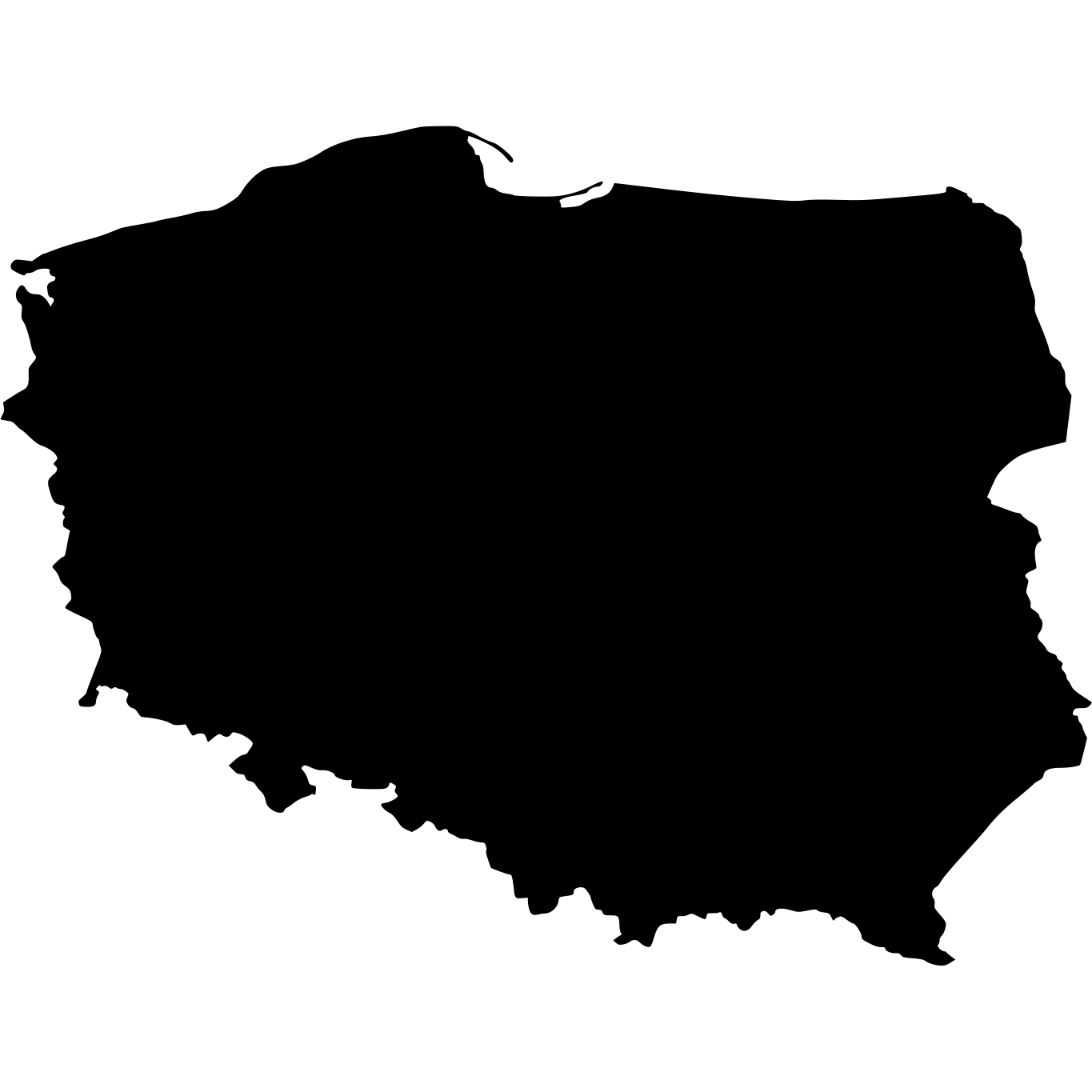
Pharmaceris is a Polish brand
Often compared with

We're dedicated to providing you with the most up-to-date and science-backed ingredient info out there.
The data we've presented on this page has been verified by a member of the SkinSort Team.
Read more about us· Updated March 24, 2026 • Added by prestonhemmerich


