Novaclear Panthenol Face & Body S.O.S. Cream
A after sun care with 18 ingredients, including vitamin E.
This calming after sun care is formulated around Panthenol and Butyrospermum Parkii Butter to calm redness and strengthen the skin barrier.
We independently verify ingredients, backed by peer-reviewed research. Suggest an update.
What's inside
Ingredients List
Water
Skin ConditioningPanthenol
Skin Conditioning




Isopropyl Myristate
Emollient





Butyrospermum Parkii Butter
Skin Conditioning
Glyceryl Stearate Se
Emulsifying
Cetearyl Alcohol
Emollient

Cannabis Sativa Seed Oil
Emollient
Lanolin
Emollient
Tocopheryl Acetate
Antioxidant


Linum Usitatissimum Seed Oil
Perfuming
Aloe Barbadensis Leaf Juice
Skin Conditioning
Propylene Glycol
Humectant
Arnica Montana Flower Extract
Masking
Glycyrrhiza Glabra Root Extract
Bleaching
Parfum
Masking
Phenoxyethanol
Preservative
Ethylhexylglycerin
Skin ConditioningLactic Acid
Buffering




Water, Panthenol, Isopropyl Myristate, Butyrospermum Parkii Butter, Glyceryl Stearate Se, Cetearyl Alcohol, Cannabis Sativa Seed Oil, Lanolin, Tocopheryl Acetate, Linum Usitatissimum Seed Oil, Aloe Barbadensis Leaf Juice, Propylene Glycol, Arnica Montana Flower Extract, Glycyrrhiza Glabra Root Extract, Parfum, Phenoxyethanol, Ethylhexylglycerin, Lactic Acid
Key Ingredients
Benefits
Concerns
Ingredients Explained
Water. It's the most common cosmetic ingredient of all. You'll usually see it at the top of ingredient lists, meaning that it makes up the largest part of the product.
So why is it so popular? Water most often acts as a solvent - this means that it helps dissolve other ingredients into the formulation.
You'll also recognize water as that liquid we all need to stay alive. If you see this, drink a glass of water. Remember to stay hydrated!
Learn more about WaterPanthenol is a common ingredient that helps hydrate and soothe the skin. It is found naturally in our skin and hair.
There are two forms of panthenol: D and L.
D-panthenol is also known as dexpanthenol. Most cosmetics use dexpanthenol or a mixture of D and L-panthenol.
Panthenol is famous due to its ability to go deeper into the skin's layers. Using this ingredient has numerous pros (and no cons):
Like hyaluronic acid, panthenol is a humectant. Humectants are able to bind and hold large amounts of water to keep skin hydrated.
This ingredient works well for wound healing. It works by increasing tissue in the wound and helps close open wounds.
Once oxidized, panthenol converts to pantothenic acid. Panthothenic acid is found in all living cells.
This ingredient is also referred to as pro-vitamin B5.
Learn more about PanthenolIsopropyl Myristate is an ester made by combining isopropyl alcohol with myristic acid.
It is primarily an emollient and penetration enhancer that gives products a lightweight, silky feel without the heaviness of oils.
This ingredient is generally considered non-toxic, non-irritating, and has low absorption potential.
This ingredient does have a comedogenic rating of 3-5, but this doesn't mean a formula with this ingredient will clog pores.
Dermatologist Dr. Zoe Draelos has also confirmed in a peer-reviewed paper that products containing comedogenic ingredients are not necessarily comedogenic themselves.
A small subset of people (~2%) may experience contact sensitivity so patch testing is a reasonable idea if you have reactive skin.
Since this ingredient is an ester of myristic acid (a C14 fatty acid), it falls within the carbon chain range that is known to feed Malassezia. This ingredient may not be fungal acne safe.
Learn more about Isopropyl MyristateThis ingredient is also known as shea butter. It is a plant-derived extract from the nuts of the Africa shea tree and one of the most well-studied emollients.
Because it has a high concentration of fatty acids (primarily oleic, stearic, and linoleic) it is able to form a protective barrier on the skin's surface. This helps seal in moisture and prevents transepidermal water loss (TEWL).
In vitro research found an increase in skin hydration by 58% and a decrease in TEWL by 37.8% after 24 hours of applying this ingredient (pretty impressive for a single ingredient!).
Besides hydration, shea butter also contains triterpenes that have anti-inflammatory potential. In particule, lupeol cinnamate has shown the highest anti-inflammatory activity in vivo.
Shea butter also contains vitamins A and E which may contribute to antioxidant activity.
While Shea Butter has an SPF rating of about 3-4, it is not a sunscreen replacement.
This ingredient may not be fungal acne safe because its fatty acids fall within the C11-C24 range that the Malassezia yeast can metabolize.
This ingredient shows up on a lot of "pore-clogging" lists but there's no real evidence behind that. It doesn't even have a comedogenic rating from an actual study; the numbers you'll find online come from blogs citing other blogs.
Ratings for other ingredients mostly come from a 1980s rabbit ear test. This test doesn't translate well to human skin or to real products because the ingredient sits at a much lower percentage.
Some people still find it breaks them out. So if that's you, definitely trust your skin. Just know this one's based on experience and not evidence.
Learn more about Butyrospermum Parkii ButterGlyceryl Stearate SE is a self-emulsifying (SE) form of Glyceryl Stearate. It comes with a small amount of soap (usually potassium or sodium stearate) that gives it the "SE" part.
That soap lets it pull oil and water together on its own which is why it shows up as an emulsifier, thickener, and emollient.
Industry survey data shows this ingredient is used around 1-5% but Glyceryl Stearate goes as high at 17% in a leave-on deodorant.
Safety-wise, it's pretty boring: it's been deemed safe for topical use in 1982 and again most recently in 2021 by the CIR. Human repeat insult patch tests come back non-irritating, non-sensitizing, non-phototoxic, and non-photoallergenic.
This ingredient does carry a comedogenic rating of 3 from the old rabbit-ear assay. Just remember testing finished products in humans showed that formulas built with "comedogenic" ingredients are not necessarily comedogenic themselves. It's worth patch testing if you're breakout prone, and always listen to your skin.
The Malassezia yeast can potentially metabolize the stearic acid in this ingredient, so it may not be fungal acne safe.
Allergy is rare: a 310-patient patch test study of common emulsifiers found this ingredient was not a meaningful reactor. Isolated case reports do exist so a true contact allergy is possible but uncommon.
Learn more about Glyceryl Stearate SeCetearyl alcohol is a waxy mixture of two fatty alcohols: cetyl alcohol and stearyl alcohol. It is an emollient and emulsifier.
Despite having "alcohol" in its name, it has nothing to do with drying solvent alcohols; the FDA also allows "alcohol-free" products to contain fatty alcohols like this ingredient.
It plays several roles in a formula:
Typical use levels for this ingredient sit around 1-10% and the Cosmetic Ingredient Review Expert Panel has affirmed safety at concentrations up to 25% in leave-on products.
Multiple assessments have found it to be non-irritating and non-sensitizing to most people.
However, there have been some cases of allergic contact dermatitis in patients with chronically compromised skin barriers.
Cetearyl alcohol has a comedogenic rating of 2 and irritancy rating of 1. Both of these numbers come from the 1989 study that used rabbit ears; a "2" means mildly comedogenic and a "1" means low irritancy.
Here's the catch: rabbit skin is more sensitive than human skin and throws a lot of false positives. A 1996 reappraisal found that ingredients rated 1-2 in the rabbit ear tests are generally safe for humans.
Remember comedogenic ratings are unable to assess the entire formula of a product or how it will react on your skin. Just be sure to patch test if you are unsure about certain ingredients.
This ingredient is not fungal acne safe. Cetearyl alcohol is a fatty alcohol with chain lengths that fall within the range that Malassezia can metabolize.
A 2019 study has also observed Malassezia growth in the presence of this ingredient, confirming it to be not-fungal acne safe.
Learn more about Cetearyl AlcoholCannabis Sativa Seed Oil is the fixed oil expressed from the seeds of the Cannabis sativa plant. This is also known as hemp oil.
Hemp oil is an emollient and nourishes the skin. It contains many fatty acids such as linoleic acid, amino acids, phospholipids, and vitamin E.
The difference between hemp and cannabis is their psychoactive component. Hemp has low amounts of THC.
Learn more about Cannabis Sativa Seed OilLanolin is a waxy substance secreted by the sebaceous glands of wool-bearing sheep. It is an effective moisturizer that works as both a humectant and emollient.
As a humectant, it is able to absorb up to 400% of its own weight in water; this also gives it emulsifying properties as it can help stabilize water-in-oil emulsions.
On the other hand, lanolin is able to reduce transepidermal water loss (TEWL) by about 20-30%. It can also incorporate into the lipid matrix to surround skin cells and reinforce the skin barrier.
This is why you'll see lanolin as an ingredient for heavy-duty moisturizers.
You might have seen an "allergy concern" that gives lanolin a bad reputation. The rate of lanolin contact allergy in the general population is estimated to be under 0.5%, and most of these are seen in people with compromised-skin dealing with eczema, atopic dermatitis, or leg ulcers.
Healthy, intact skin tolerates lanolin well. Even people who have previously reacted to it test negative on patch tests when the test is done on normal skin.
Because lanolin comes from an animal, it is not considered vegan. Sheep secrete lanolin through sebaceous glands to help protect their skin from the environment.
Lanolin has a reputation as pore clogging but that comes almost entirely from rabbit ear testing done decades ago (and that model has aged badly).
This ingredient does have a comedogenic rating of 0-1; the tests state this score means the ingredient has low or non-existent chance of clogging your pores.
Keep in mind that the authors of the rabbit ear test proposed that a material needs to score consistently above 3 in the rabbit assay before it means anything for real skin.
A separate review found the model has serious performance problems and no correlation with human experience. Concentration matters a lot too: in one study, Acetylated Lanolin Alcohol scored 4 to 5 at full strength but dropped to a 1 when diluted to 2.5%, and finished products containing "comedogenic" ingredients didn't raise microcomedone counts in people.
Lanolin contains esters exactly in the range that the Malassezia yeast can synthesize, making this ingredient not fungal acne safe.
Learn more about LanolinTocopheryl Acetate is a stable, shelf-friendly form of vitamin E.
Formulators love it because plain vitamin E oxidizes quickly once it hits air. This acetate version stays stable and resists going off, helping to extend a product's shelf life.
It's actually inactive on its own and works like a slow-release "storage" form; the enzymes in your skin called esterases gradually convert it into active vitamin E over time.
One in vivo study showed 5% of the acetate in the living layer of the epidermis converted to vitamin E after 5 days of application. This study also found the skin gained protection against UV damage even though the conversion was slow and small.
Once converted, vitamin E acts as a skin's main fat-soluble antioxidant that fights free radicals to protect skin from damage.
Topical vitamin E generally boosts the skin's photoprotection, and it reduced UV-damage in animal models.
This ingredient has some brightening potential but it's more of a prevention ingredient than spot-fader. Cell studies show it can slow down melanin production but it's worth noting that it's not the most powerful brightener out there.
Overall, it has a pretty solid safety profile and has been found to be non-irritating and non-comedogenic. Allergic reactions may happen but stay rare due to how widely the ingredient gets used.
The concentration will vary depending on the formula; industry data shows 0.1% in baby lotions, 3% in lipsticks, and 5% in foot powders. You can also find this ingredient at 100% in a pure vitamin E oil.
Most leave-on skincare keeps it at the lower end, often between 0.5-1%.
Learn more about Tocopheryl AcetateThis ingredient is also known as flaxseed oil or linseed oil. It is created by cold-pressing the seeds of the flax plant and is rich in fatty acids.
This oil is packed with omega-3 (ALA), omega-6, and omega-9 fatty acids that closely mimic the skin's own natural lipid barrier. The high omega-3 content gives it solid anti-inflammatory properties.
Clinical studies have found it can reduce water loss and improve smoothness/hydration, particularly in sensitive skin types. Studies also suggest it helps maintain the lipid layer that is compromised in atopic (eczema-prone) skin.
Wound healing studies showed that low-concentration linseed oil formulations (1-5%) produced significant barrier repair, but it should be noted that high concentrations showed diminishing returns.
This ingredient shows up on a lot of "pore-clogging" lists but there's no real evidence behind that. It doesn't even have a comedogenic rating from an actual study; the numbers you'll find online come from blogs citing other blogs.
Ratings for other ingredients mostly come from a 1980s rabbit ear test. This test doesn't translate well to human skin or to real products because the ingredient sits at a much lower percentage.
Some people still find it breaks them out. So if that's you, definitely trust your skin.
The Malassezia yeast feeds on fatty acids in the C11-24 range, and this ingredient is basically all C16-18 fatty acids. Therefore, this ingredient may not be fungal acne safe.
Learn more about Linum Usitatissimum Seed OilAloe Barbadensis Leaf Juice is the filtered, stabilized liquid pressed from the inner gel of the aloe vera leaf.
In cosmetics, it shows up as either soothing active or a water-replacement base. It is roughly 98-99% water and the last 1-2% is an interesting mix of polysaccharides, amino acids, vitamins, minerals, and enzymes.
The polysaccharides do most of the work: they bind water at the skin surface for a light, non-greasy hydration boost. And one of the polysaccharides, glycomannan, is linked to fibroblast stimulation + collagen synthesis. This is also why aloe has such a long track record in wound and burn healing.
This ingredient is also calming with anti-inflammatory and mild antimicrobial activity, making it a great pick for sensitive, irritated, or post-sun skin.
Realistic expectations matter though; the solid evidence is mostly limited to hydration, soothing, and wound support. Deeper claims about anti-aging or sun protection are not well backed, and science reviews note it does not prevent radiation-induced skin injury.
Because it plays well with almost everything, it's commonly used as a base alongside other actives like niacinamide or vitamin C.
Typical usage concentrations range from 0.5% (where hydration benefits already show up) all the way to 90%+ (where it replaces water as the main base).
The safety for this ingredient is well-establish as well. Overall, this is a great supporting ingredient for those who want a boost in hydration.
Learn more about Aloe Barbadensis Leaf JuicePropylene Glycol is a synthetic, colorless, odorless liquid that has been a staple in cosmetics for decades. It is a skin conditioning agent, humectant, and solvent.
As a humectant, it draw water to the skin to reduce flaking and restore suppleness. It's also a solvent that helps dissolve other actives and keeps formulas stable across temperature changes.
The CIR Expert Panel has confirmed this ingredient to be nontoxic and clinical studies show no sensitization at cosmetic use concentrations.
True allergic reactions are quite rare: a 15-year retrospective study of 6,751 patients found only 0.31% had a positive reaction (and less than half were considered clinically relevant).
It seemed that when sensitization does occur, it's most commonly linked to topical medication (like corticosteroids) and not cosmetics. Allergic contact dermatitis also appears largely limited to individuals with underlying skin conditions.
Overall, propylene glycol is a well-studied ingredient that most people can tolerate without issue.
Learn more about Propylene GlycolArnica Montana Flower is more commonly known as Wolf's Bane. While this flower has been used in traditional medicine, its skin benefits are in question.
The FDA considers Wolf's Bane to be an unsafe herb. They advise against taking it orally or applying it to broken skin.
Wolf's Bane has been said to have anti-inflammatory properties. However, studies are conflicting about whether this is true.
According to the Final report on the safety assessment of Arnica montana, this plant has not been found to cause dermal irritation.
This flower contains numerous fatty acids such as palmitic, linoleic, myristic, and linolenic acids. The presence and amount of fatty acids depends on where the flower is harvested.
Like other flowers, this ingredient has a natural fragrance. It can also be used to mask, or cover, the unpleasant scents from other ingredients.
Learn more about Arnica Montana Flower ExtractGlycyrrhiza Glabra Root Extract is an extract of the roots of Licorice. It has been found to have several benefits such as skin hydrating, conditioning, and soothing.
One component, glabridin, has extra potent antioxidant and soothing properties. It has also been found to block pigmentation from UVB rays in guinea pigs.
Licorice Root also contains a flavonoid. Flavonoids are a natural substance from in plants. Flavonoids also have antioxidant properties.
Another component, glycyrrhizin, has been found to have anti-inflammatory and antimicrobial benefits. This may make licorice root extract effective at treating acne. However, more research is needed to support this.
Liquiritin is one of the flavone compounds found in licorice. It has been found to help lighten skin by preventing tyrosinase from reacting with tyrosine. When the two react, protein is converted to melanin. Melanin is the substance in your body that gives your features pigmentation.
Learn more about Glycyrrhiza Glabra Root ExtractParfum is a catch-all term for an ingredient or more that is used to give a scent to products.
Also called "fragrance", this ingredient can be a blend of hundreds of chemicals or plant oils. This means every product with "fragrance" or "parfum" in the ingredients list is a different mixture.
For instance, Habanolide is a proprietary trade name for a specific aroma chemical. When used as a fragrance ingredient in cosmetics, most aroma chemicals fall under the broad labeling category of “FRAGRANCE” or “PARFUM” according to EU and US regulations.
The term 'parfum' or 'fragrance' is not regulated in many countries. In many cases, it is up to the brand to define this term.
For instance, many brands choose to label themselves as "fragrance-free" because they are not using synthetic fragrances. However, their products may still contain ingredients such as essential oils that are considered a fragrance by INCI standards.
One example is Calendula flower extract. Calendula is an essential oil that still imparts a scent or 'fragrance'.
Depending on the blend, the ingredients in the mixture can cause allergies and sensitivities on the skin. Some ingredients that are known EU allergens include linalool and citronellol.
Parfum can also be used to mask or cover an unpleasant scent.
The bottom line is: not all fragrances/parfum/ingredients are created equally. If you are worried about fragrances, we recommend taking a closer look at an ingredient. And of course, we always recommend speaking with a professional.
Learn more about ParfumPhenoxyethanol is one of the most widely used preservatives in skincare (and for good reason!).
It has a large spectrum of antimicrobial activity and especially effective bacteria, yeast, and mold while only having a weak effect on your skin's natural microbiome.
On a cellular level, it disrupts the cell membranes of microbes by poking holes that make the cell leak. This shuts down the chemical reactions the microbe needs to make energy so it can no longer survive.
Another perk of this ingredient is that it stays functional across a wide pH range (3-10).
You'll often see it paired with boosters like Ethylhexylglycerin; one study showed that a 1:9 ratio of Ethylhexylglycerin to Phenoxyethanol damages bacterial membranes as effectively as doubling the Phenoxyethanol concentration on its own.
Typical use concentrations range from 0.3-1% depending on the formula, and this ingredient is capped at 1% int the EU.
Safety-wise, the fear mongering does not hold up to the evidence. The EU's Scientific Committee on Consumer Safety and FDA consider it safe as a preservative at up to 1%, including for children of all ages.
Adverse systemic effects only showed up in animal studies at exposures roughly 200x higher than what people get from cosmetics. And despite its very widespread use, this ingredient is a rare sensitizer and allergic reactions are uncommon.
Learn more about PhenoxyethanolEthylhexylglycerin is created from glycerin. It is a multitasker ingredient that:
The CIR Expert Panel found minimal skin absorption or sensitization of any kind in a safety assessment. Though this ingredient is considered well-tolerated, a small number of cases of allergic dermatitis have been published since 2002. Just be sure to patch test if you are unsure.
Industry-reported use ranges from 8% in rinse-off products and 2% in leave-on formulations.
Learn more about EthylhexylglycerinLactic Acid is another well-loved alpha hydroxy acid (AHA). It is gentler than glycolic acid but still highly effective.
Its main role is to exfoliate the surface of the skin by loosening the “glue” that holds dead skin cells together. Shedding those old cells leads to smoother, softer, and more even-toned skin.
Because lactic acid molecules are larger than glycolic acid, they don’t penetrate as deeply. This means they’re less likely to sting or irritate, making it a great choice for beginners or those with sensitive skin.
Like glycolic acid, it can:
Lactic acid also acts as a humectant (like hyaluronic acid). It can draw water into the skin to improve hydration and also plays a role in the skin's natural moisturizing factor (NMF) in the form of sodium lactate.
Studies show it can boost ceramide production to strengthen the skin barrier and even help balance the skin’s microbiome.
To get results, choose products with a pH between 3-4.
Lower strengths (5-12%) focus on surface exfoliation; higher strengths (12% and up) can reach deeper in the dermis (deeper, supportive layer) to improve skin texture and firmness over time.
Though it was originally derived from milk, most modern lactic acid used in skincare is vegan. It is made through non-dairy fermentation to create a bio-identical and stable form suitable for all formulations.
When lactic acid shows up near the end of an ingredient list, it usually means the brand added just a tiny amount to adjust the product’s pH.
Legend has it that Cleopatra used to bathe in sour milk to help reduce wrinkles.
Lactic acid is truly a gentle multitasker: it exfoliates, hydrates, strengthens, and brightens. It's a great ingredient for giving your skin a smooth, glowing, and healthy look without the harshness of stronger acids.
Read more about some other popular AHA's here:
Learn more about Lactic AcidReviews
No written reviews yet. Be the first to review this product.
Recent searches
Search reviews by skin type, ingredient, or keyword.
Where it's from
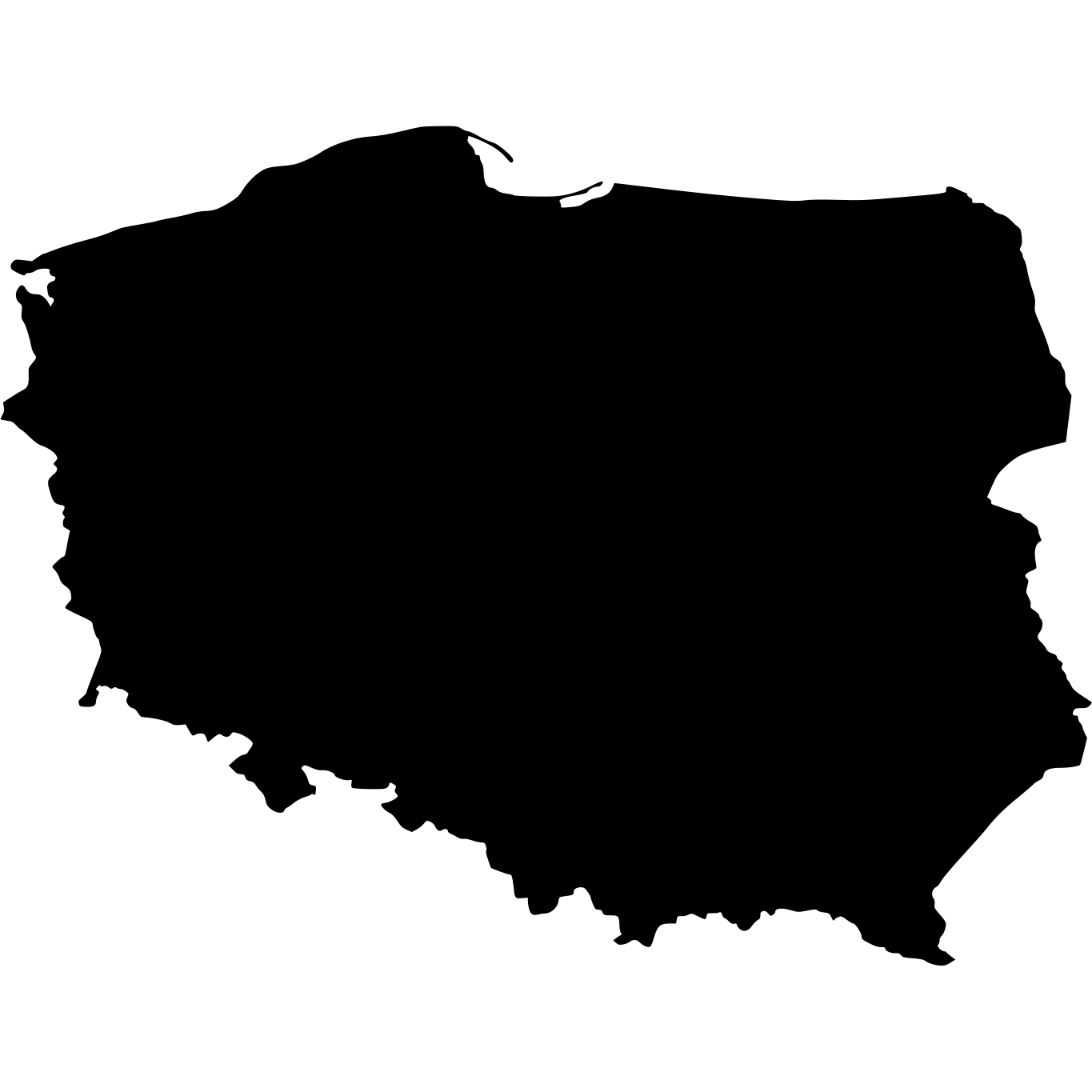
Novaclear is a Polish brand

We're dedicated to providing you with the most up-to-date and science-backed ingredient info out there.
The data we've presented on this page has been verified by a member of the SkinSort Team.
Read more about us· Published March 12, 2026 • Added by Rieza


