Matas Striber Hydra Ansigtslotion SPF 50 Uden Parfume
A sunscreen with 36 ingredients, including vitamin C, spf, and exfoliants.
This chemical sunscreen covers the full UV range and blocks ~98% of UVB at SPF 50.
We independently verify ingredients, backed by peer-reviewed research. Suggest an update.
What's inside
Ingredients List
Water
Skin ConditioningDibutyl Adipate
EmollientDiethylamino Hydroxybenzoyl Hexyl Benzoate
UV Filter
C12-15 Alkyl Benzoate
AntimicrobialGlycerin
Humectant


Diethylhexyl Butamido Triazone
UV Absorber
Ethylhexyl Triazone
UV Absorber
Phenoxyethyl Caprylate
Dicocoyl Pentaerythrityl Distearyl Citrate
Emollient
Bis-Ethylhexyloxyphenol Methoxyphenyl Triazine
UV Absorber
Cocoglycerides
Emollient

Ascorbyl Glucoside
Antioxidant



Oryza Sativa Starch
AbsorbentPhenylbenzimidazole Sulfonic Acid
UV Absorber
CI 77220
Cosmetic ColorantPropanediol
Solvent
Ceteareth-30
CleansingHydroxyapatite
Abrasive

Glyceryl Laurate
Emollient
C12-13 Alkyl Lactate
Emollient1,2-Hexanediol
Skin Conditioning
Hydrolyzed Hyaluronic Acid
Humectant
Saccharide Isomerate
Humectant
Caprylyl Glycol
Emollient
Diisopropyl Adipate
EmollientHydroxyacetophenone
Antioxidant
Ethylcellulose
Hydrolyzed Jojoba Esters
Skin Conditioning
Jojoba Esters
Emollient
Microcrystalline Cellulose
AbsorbentCellulose Gum
Emulsion StabilisingSodium Citrate
BufferingSodium Gluconate
ChelatingSodium Hydroxide
BufferingCitric Acid
Buffering
Phenoxyethanol
Preservative
Water, Dibutyl Adipate, Diethylamino Hydroxybenzoyl Hexyl Benzoate, C12-15 Alkyl Benzoate, Glycerin, Diethylhexyl Butamido Triazone, Ethylhexyl Triazone, Phenoxyethyl Caprylate, Dicocoyl Pentaerythrityl Distearyl Citrate, Bis-Ethylhexyloxyphenol Methoxyphenyl Triazine, Cocoglycerides, Ascorbyl Glucoside, Oryza Sativa Starch, Phenylbenzimidazole Sulfonic Acid, CI 77220, Propanediol, Ceteareth-30, Hydroxyapatite, Glyceryl Laurate, C12-13 Alkyl Lactate, 1,2-Hexanediol, Hydrolyzed Hyaluronic Acid, Saccharide Isomerate, Caprylyl Glycol, Diisopropyl Adipate, Hydroxyacetophenone, Ethylcellulose, Hydrolyzed Jojoba Esters, Jojoba Esters, Microcrystalline Cellulose, Cellulose Gum, Sodium Citrate, Sodium Gluconate, Sodium Hydroxide, Citric Acid, Phenoxyethanol
Key Ingredients
Benefits
Ingredients Explained
Water. It's the most common cosmetic ingredient of all. You'll usually see it at the top of ingredient lists, meaning that it makes up the largest part of the product.
So why is it so popular? Water most often acts as a solvent - this means that it helps dissolve other ingredients into the formulation.
You'll also recognize water as that liquid we all need to stay alive. If you see this, drink a glass of water. Remember to stay hydrated!
Learn more about WaterDibutyl Adipate is a lightweight, oil-soluble ester that acts as an emollient and solvent. It helps products spread more easily and leaves a soft, silky, dry-touch finish without being greasy.
You'll likely see this ingredient in sunscreens because it does a nice job dissolving UV filters and keeping them evenly distributed.
This ingredient has been found to be safe as used in cosmetics, wasn't a skin or eye irritant in clinical patch testing, and wasn't phototoxic.
In a clinical comedogenicity test, this ingredient tested negative so it isn't likely to clog pores.
Typical use levels are about 5-8% for sunscreens + nail products, but can range from 0.005%-8% depending on the product.
Learn more about Dibutyl AdipateDiethylamino Hydroxybenzoyl Hexyl Benzoate (DHHB) is a chemical UV-A absorber. It is formulated for high UVA protection (320-400 nm).
DHHB is well-liked for:
DHHB has been approved by the EU, Japan, Taiwan, and South America for use up to 10%. Unfortunately, it has not been approved for use in the US or Canada due to slow regulatory processes.
This ingredient is soluble in oils, fats, and lipids.
Learn more about Diethylamino Hydroxybenzoyl Hexyl BenzoateC12-15 Alkyl Benzoate is a lightweight emollient made by combinig benzoic acid with fatty alcohols that are 12-15 carbons long.
In cosmetics, it plays several roles:
The Cosmetic Review Expert Panel has concluded the alkyl benzoate group to be safe as used in cosmetics; it wasn't found to be a skin irritant and unlikely to be absorbed due to its low water solubility.
This report recorded almost 1000 reported uses with concentrations up to 59% in leave-on products but your cosmetics will typically use 0.5-15% depending on the product.
It's often called a "SPF booster": this is because it keeps UV filters properly dissolved and evenly distributed to support a sunscreen's performance. It doesn't actually raise SPF on its own.
Overall, this ingredient is well tolerated.
This ingredient is fungal acne safe because it is an ester of benzoic acid.
Think of this ingredient as two parts stuck together: an oily part and an acid part. Malassezia only gets a meal when it can snip off a fatty acid to eat. With C12-15 Alkyl Benzoate, the acid part is benzoic acid, which isn't a fatty acid and which the yeast can't use as food.
Benzoic acid is actually used as a preservative to stop yeast from growing.
The oily part is a blend of C12-15 fatty alcohols but fatty alcohols in this size range can support only a little Malassezia growth (mostly for one species of Malassezia as well).
In the ingredient, those alcohols stay locked inside the molecule. The yeast can only reach them by snipping the benzoate bond, and that type of bond is harder for it to cut than a normal fatty bond.
So not much gets released. And whatever does get snipped comes packaged with benzoic acid, which discourages yeast growth.
Learn more about C12-15 Alkyl BenzoateGlycerin (or glycerol) is a compound naturally found in your skin. It's a powerhouse humectant that pulls water into the stratum corneum.
Topically, glycerin does several things at once:
Your skin makes glycerin on its own (mostly from sebaceous oil breakdown) and shuttles it to your outermost layer of skin, or your epidermis, via aquaporin-3.
Aquaporin-3 is a transporter that is essential for normal skin hydration, elasticity, and repair. Interestingly, mice lacking in AQP3 have dry and less elastic skin that can be fully corrected with glycerin.
This ingredient is non-irritating, plays well with almost every ingredient, and works across all skin types. Typical use is anywhere between 3-10% but can go up to 79% in some leave-on products.
Just know very high concentrations (>40%) can feel tacky in low humidity.
Glycerin is the name for this ingredient in American English. British English uses Glycerol/Glycerine.
Learn more about GlycerinDiethylhexyl Butamido Triazone (aka Iscotrizinol) is an oil-soluble organic UV filter that mainly absorbs UVB and a bit of UVA II light.
This ingredient is great at preventing sunburn but doesn't cover the deep UVA I range. This is why it's often paired with a UVA filter like Avobenzone or Bemotrizinol.
Two of its biggest selling points are efficiency and stability:
Most of the other chemical filters are considered "photostable" if they can last for two hours.
Because this ingredient is oil-loving, it can sit neatly into the oil phase of emulsions and shines in water-repellent/water-resistant formulations.
The EU and Canada allow it to be used up to 10% and Japan allows it up to 5%.
Unfortunately, it's not yet an FDA approved sunscreen agent so you won't be able to find it in sunscreens in the US.
Safety-wise, it has a pretty solid record: the EU's Scientific Committee on Consumer Safety (SCCS) has reviewed it and found low skin absorption, no capacity to produce skin irritation or photo-irritation.
In vitro testing has found less than 0.1% of the applied dose is absorbed by the skin over 24 hours (mostly due to its large molecule size).
Fun fact: This ingredient even has anti-inflammatory properties similar to those of ketoprofe, an anti-inflammatory medication.
Learn more about Diethylhexyl Butamido TriazoneEthylhexyl Triazone (aka Octyl Triazone) is an oil-soluble organic UVB filter. It has peak absorption around 314 nm, right in the middle of the UVB range.
This ingredient is described as one of the most effective UVB filters available and small concentrations are enough to deliver a high SPF thanks to its strong UV absorbing power.
Formulators love it for its stability; its ability to filter UV stays practically unchanged even under intense radiation and it can also help boost the photostability of less stable filters like avobenzone.
It's also a great pick for water resistant products because it's insoluble in water and has a good affinity for keratin.
Because it's a big, heavy molecule, the European Scientific Committee has found to to have very low dermal penetration and negative results for allergenicity.
In vitro testing also showed a low absorption rate and clean results on irritation.
Typical use levels are 1-5% with 5% being the maximum in the EU, Japan, and other markets that allow it. However, this ingredient is not approved yet in the US or Canada.
Learn more about Ethylhexyl TriazoneWe don't have a description for Phenoxyethyl Caprylate yet.
We don't have a description for Dicocoyl Pentaerythrityl Distearyl Citrate yet.
This ingredient is better known as bemotrizinol or Tinosorb S and is one of the best broad-spectrum UV filters in modern sunscreen.
It works by absorbing UV light across a whole range (280-400 nm) with peaks around 310 nm (UVB) and 340-345 nm (UVA). This means it covers UVB plus the deeper UVA wavelengths that drive photoaging and pigmentation.
Another pro?
It's exceptionally photostable, barely degrades in sunlight, and acts as a "bodyguard" for less stable filters.
That's why you'll see it paired with avobenzone or octinoxate; this team up ensures they keep working through sun exposure.
Safety reviews have been reassuring across the board. This ingredient shows low absorption through the skin, rarely irritates, and lab studies found it doesn't act like a hormone in the body (a concern that's been raised about some older sunscreen filters).
On maximum concentrations:
In 2026, the US F.D.A finally added it as an OTC sunscreen ingredient at concentrations up to 6% for adults / children 6 months and older
Learn more about Bis-Ethylhexyloxyphenol Methoxyphenyl TriazineCocoglycerides is made from the mono, di and triglycerides of coconut oil. It is an emollient and emulsifer.
Emollients are a type of moisturizer. They create a thin film on top of the skin. This film prevents moisture from escaping, keeping the skin hydrated.
Emulsifiers prevent ingredients from separating. Examples of this include oils and water, which naturally do not mix. Emulsifiers helps elongate the shelf life of a product. They also help the product stay consistent in texture.
Learn more about CocoglyceridesAscorbyl Glucoside (AA-2G) is one of the most stable vitamin C derivatives out there.
It's made by attaching a glucose molecule to ascorbic acid; this glucose "cap" shields the vitamin C from air, light, heat, and metal ions that normally cause pure ascorbic acid to oxidize.
Once on your skin, the enzyme alpha-glucosidase snips off the glucose and gradually releases active ascorbic acid right where it's needed. Basically, it behaves like a slow-release pro-vitamin C with less of a stinging that high-strength ascorbic acid can cause.
The research supports the classic vitamin C benefits as well. In lab and human studies, AA-2G slowed down the skin's production of melanin (the pigment behind dark spots) and helped shield skin cells against sun damage better than ascorbyl phosphate.
These studies also showed AA-2G released vitamin C over a longer period.
A frequently cited manufacturer trial found that a 2% AA-2G face cream significantly improved wrinkle depth and skin roughness after 45 days.
And in 2009, a clinical trial showed it meaningfully lightened dark patches on the gums compared to a placebo.
There's also collagen-synthesis support (since vitamin C is a required cofactor for that) and an antioxidant effect too.
Typical usage is usually between 0.5-5% and most studies/products land around 2%.
AA-2G performs best when formulated at a mildly acidic pH (~5-7) which is much gentler than the pH that pure vitamin C demands (~2.5-3.5).
Just one thing worth knowing: the in-skin conversation rate is only about 55-60% by weight. So a 5% AA-2G product delivers roughly 2.75-3% of actual active vitamin C. On top of that, skin absorption is relatively low because the ingredient is water-soluble.
Learn more about Ascorbyl GlucosideOryza Sativa Starch is an absorbent and used to mattify the skin. It is a natural carbohydrate and the main component of rice. A more common name for this ingredient is 'rice starch'.
Rice starch is created by steeping broken grains in a caustic soda.
Rice extract has many skin benefits. Read more about rice extract here.
Learn more about Oryza Sativa StarchPhenylbenzimidazole Sulfonic Acid (aka Ensulizole) is a chemical UV filter that's a bit of a unicorn in the sunscreen world: it's water-soluble where most organic filters are oil-based.
Being water-solubility is the headline because it feels lightweight and non-greasy in formulations. This makes it suitable for oily or acne-prone skin in gel/water-based products.
Ensulizole primarily protects against UVB radiation (~290-320 nm) but offers some minimal UVA protection. You'll see it often paired with UVA filters to ensure broad-spectrum coverage.
Interestingly, it can help boost SPF and stabilize finicky filters when combined with other UVB absorbers.
The FDA has approved this ingredient for OTC sunscreens up to 4% and the EU's Scientific Committee on Consumer Products concluded that up to 8% is allowed in cosmetics.
In practice, you'll most likely see it formulated around 1-4%.
Safety-wise, it is neither irritating nor sensitizing, shows no photoallergenic potential, and in vivo tests show no mutagenic potential.
You might see discussion about the "double-edged sword" effect of this ingredient. This is because lab tests done on cells in a dish (not on humans) showed Ensulizole can create small amounts of unstable molecules called free radicals that can damage DNA when exposed to UV light. It sounds scary but this is just test-tube research. There hasn't been proof that this can happen when used in a sunscreen on skin.
Learn more about Phenylbenzimidazole Sulfonic AcidWe don't have a description for CI 77220 yet.
Propanediol is an all-star ingredient. It softens, hydrates, and smooths the skin.
It’s often used to:
Propanediol is not likely to cause sensitivity and considered safe to use. It is derived from corn or petroleum with a clear color and no scent.
Learn more about PropanediolWe don't have a description for Ceteareth-30 yet.
Hydroxyapatite is an exfoliant. It can be good for oily skin.
Glyceryl Laurate isn't fungal acne safe.
We don't have a description for C12-13 Alkyl Lactate yet.
1,2-Hexanediol is a synthetic liquid and another multi-functional powerhouse.
It is a:
- Humectant, drawing moisture into the skin
- Emollient, helping to soften skin
- Solvent, dispersing and stabilizing formulas
- Preservative booster, enhancing the antimicrobial activity of other preservatives
Hydrolyzed Hyaluronic Acid is hyaluronic acid (HA) that is broken down into lower molecular weight fragments.
It's a humectant that pulls and holds water in the skin to help with hydration, plumpness, and reduce transepidermal water loss.
Because hydrolyzed hyaluronic acid is smaller in size, it can slip past your outermost layer of skin more easily than full-sized HA.
Most formulations will combine all sizes to get the best of both worlds.
Typical usage levels range from 0.01-1%. Any percentage higher than 2% might become goopy and tacky.
Learn more about Hydrolyzed Hyaluronic AcidSaccharide Isomerate comes from sugars found in corn. It is a skin hydrator.
The structure of this ingredient can be altered to be more similar to the carbohydrates found in our skin. This ability to mimic our skin gives it hydrating properties.
Specifically, saccharide Isomerate is a humectant. Humectants draw moisture from the air to our skin.
Research shows Saccharide Isomerate to be an effective moisturizer.
Learn more about Saccharide IsomerateCaprylyl Glycol is a humectant, skin conditioner, emollient, and preservative booster derived from either caprylic acid or synthetically created.
Typical use levels vary from 0.3-1% as a preservative booster and go up to 2% to condition skin.
Because it is not a free-fatty acid, this ingredient is fungal acne safe (there's nothing for Malassezia to feed on).
Learn more about Caprylyl GlycolDiisopropyl Adipate comes from isopropyl alcohol and Adipic Acid.
It is a solvent and emollient. As a solvent, it is used to help other ingredients dissolve into the solution. It is also often used to soften hard ingredients.
Emollients help hydrate the skin by creating a thin barrier. This thin barrier prevents moisture from escaping.
Learn more about Diisopropyl AdipateHydroxyacetophenone is a small phenolic molecule that earns its place in a formulas as an antioxidant and preservative booster.
As a phenol, it is able to neutralize free radicals to protect both the product and the skin from oxidative stress.
Though it can't kill microbes on its own, it works as a good supporting agent when combined with other preservatives like Phenoxyethanol or 1,2-Hexanediol.
This ingredient naturally occurs as piceol in Norwegian spruce needles (~0.4-1.1% dry weight and in cloudberries). Though the cosmetic-grade material is synthesized for purity and consistency.
You'll usually see it used at low levels and suppliers recommend up to 1% added to a water phase.
Safety testing was done at concentrations like 0.05% in SPF products and 0.5% in a Human Repeated Insult Patch Test. The safety evidence is assuring; this ingredient is safe for cosmetics in current use and also holds safety status as a food flavoring as well.
An honest caveat: the "soothing" and "anti-inflammatory" claims come mostly from supplier marketing rather than published clinical trials. The Cosmetic Ingredient Review's own literature search found no useful efficacy studies on this ingredient.
So the antioxidant and preservative-boosting roles are the well supported ones while the calming benefit is plausible but thinly evidenced.
Overall, this is a well-tolerated, low-irritation multitasker that quietly helps a formula stay fresh and stable.
Learn more about HydroxyacetophenoneWe don't have a description for Ethylcellulose yet.
Hydrolyzed Jojoba Esters (HJE) are an emollient and skin-conditioning agent made by breaking down jojoba oil into a blend of fatty acids and fatty alcohols.
Jojoba is pretty cool because it's a liquid wax ester rather than a triglyceride like most plant oils. Its structure closely resembles the wax esters in human sebum so it slots nicely into the skin's own lipid layer.
In cosmetics, HJE works mainly to soften skin, reinforce the barrier, and lock in moisture by reducing water loss. This ingredient also holds onto the skin even after rinsing which is why you'll see it in cleansers or wipes.
There's a decent clinical backing for the moisturizing claims: a small controlled study found that pairing HJE with glycerin lowered transepidermal water loss significantly than glycerin alone (and this effect lasted up to 24 hours).
Follow-up work showed HJE appear to "trap" glycerin in the film they form on skin to boost its hydrating power.
Typical use levels are low: the glycering-synergy research used around 1.25% (a common pairing is roughly 1.25% HJE and 3.75% glycerin).
This ingredient has been found safe as used in cosmetics with low irritation risk.
As for fungal acne, the fatty acids and alcohols in jojoba fall in roughly the C18-24 range. This overlaps the C11-24 window that Malassezia yeast can feed on in lab studies, so this ingredient may not be fungal acne safe.
Learn more about Hydrolyzed Jojoba EstersJojoba Esters is a wax created from Jojoba oil. It is an emollient and film-forming ingredient. In bead form, it is an exfoliator.
This ingredient has high oxidative stability, meaning it doesn't break down when exposed to oxygen.
Its similarity to our skin's natural oils makes it a great emollient. Emollients help soften and soothe our skin by creating a barrier on top. This barrier helps trap moisture in, keeping skin hydrated.
It is created using either the hydrogenation or transesterification processes on jojoba oil.
Learn more about Jojoba EstersMicrocrystalline Cellulose is another name for refined wood pulp. It is used as an emulsifier and mattifying ingredient. As an emulsifier, it helps keep ingredients together.
Cellulose Gum is a water-soluble polymer that comes from cellulose. It is used to change the texture of a product and to help stabilize emulsions.
As an emulsifier, cellulose gum specifically thicken the texture of water-based products.
This ingredient is considered hypoallergenic and non-toxic. Cellulose Gum can be found in cosmetics, food, and other household goods such as paper products.
Learn more about Cellulose GumSodium Citrate is the sodium salts of citric acid. In skincare, it is used to alter pH levels and acts as a preservative.
Its main functions are to maintain the pH of a product and neutralize metal ions.
The acidity of our skin is maintained by our glands and skin biome; normal pH level of skin is slightly acidic (~4.75-5.5).
Being slightly acidic allows our skin to create an "acid mantle". This acid mantle is a thin barrier that protects our skin from bacteria and contaminants.
Learn more about Sodium CitrateSodium Gluconate is the sodium salt of gluconic acid. In skincare, its main job is as a chelator.
Chelators grab onto stray metal ions like iron and copper that sneak in through water, raw materials, or manufacturing equipment. This stops them from triggering reactions that cause oils to go rancid, formulas to change color, and actives like vitamin C to fall apart.
This ingredient is often chosen as a biodegradable, gentler-sounding alternative to EDTA. It also pulls double duty as a mild humectant and pH buffer.
Typical use levels sit around 0.1-1% and supplier documents list up to 10% as an acceptable ceiling. Industry data found this ingredient family is mostly used well below 1% in leave on products.
Allergy risk is very low; animal testing has found it to be non-irritating to skin and eyes, mutagenicity assays came back negative, and there are no published reports of allergic contact dermatitis to it.
Learn more about Sodium GluconateSodium Hydroxide is also known as lye or caustic soda. It is used to adjust the pH of products; many ingredients require a specific pH to be effective.
In small amounts, sodium hydroxide is considered safe to use. However, large amounts may cause chemical burns due to its high alkaline.
Your skin has a natural pH and acid mantle. This acid mantle helps prevent harmful bacteria from breaking through. The acid mantle also helps keep your skin hydrated.
"Alkaline" refers to a high pH level. A low pH level would be considered acidic.
Learn more about Sodium HydroxideCitric Acid is an alpha hydroxy acid (AHA) naturally found in citrus fruits like oranges, lemons, and limes.
Like other AHAs, citric acid can exfoliate skin by breaking down the bonds that hold dead skin cells together. This helps reveal smoother and brighter skin underneath.
However, this exfoliating effect only happens at high concentrations (20%) which can be hard to find in cosmetic products.
Due to this, citric acid is usually included in small amounts as a pH adjuster. This helps keep products slightly more acidic and compatible with skin's natural pH.
In skincare formulas, citric acid can:
While it can provide some skin benefits, research shows lactic acid and glycolic acid are generally more effective and less irritating exfoliants.
Most citric acid used in skincare today is made by fermenting sugars (usually from molasses). This synthetic version is identical to the natural citrus form but easier to stabilize and use in formulations.
Rosacea skin has a lower threshold for acids generally, with 62.5% of rosacea subjects in one study reacting to lactic acid in a sting test. This is why we mark citric acid as a potential rosacea trigger.
However, this ingredient shows up as a pH adjuster or chelator at roughly 0.1-1% in many products. These low levels are unlikely to be an issue for rosacea skin and becomes a potential trigger at exfoliating concentrations (20%). Because everybody's skin is unique, we recommend a patch test if you are unsure.
Learn more about Citric AcidPhenoxyethanol is one of the most widely used preservatives in skincare (and for good reason!).
It has a large spectrum of antimicrobial activity and especially effective bacteria, yeast, and mold while only having a weak effect on your skin's natural microbiome.
On a cellular level, it disrupts the cell membranes of microbes by poking holes that make the cell leak. This shuts down the chemical reactions the microbe needs to make energy so it can no longer survive.
Another perk of this ingredient is that it stays functional across a wide pH range (3-10).
You'll often see it paired with boosters like Ethylhexylglycerin; one study showed that a 1:9 ratio of Ethylhexylglycerin to Phenoxyethanol damages bacterial membranes as effectively as doubling the Phenoxyethanol concentration on its own.
Typical use concentrations range from 0.3-1% depending on the formula, and this ingredient is capped at 1% int the EU.
Safety-wise, the fear mongering does not hold up to the evidence. The EU's Scientific Committee on Consumer Safety and FDA consider it safe as a preservative at up to 1%, including for children of all ages.
Adverse systemic effects only showed up in animal studies at exposures roughly 200x higher than what people get from cosmetics. And despite its very widespread use, this ingredient is a rare sensitizer and allergic reactions are uncommon.
Learn more about PhenoxyethanolReviews
No written reviews yet. Be the first to review this product.
Recent searches
Search reviews by skin type, ingredient, or keyword.
Where it's from
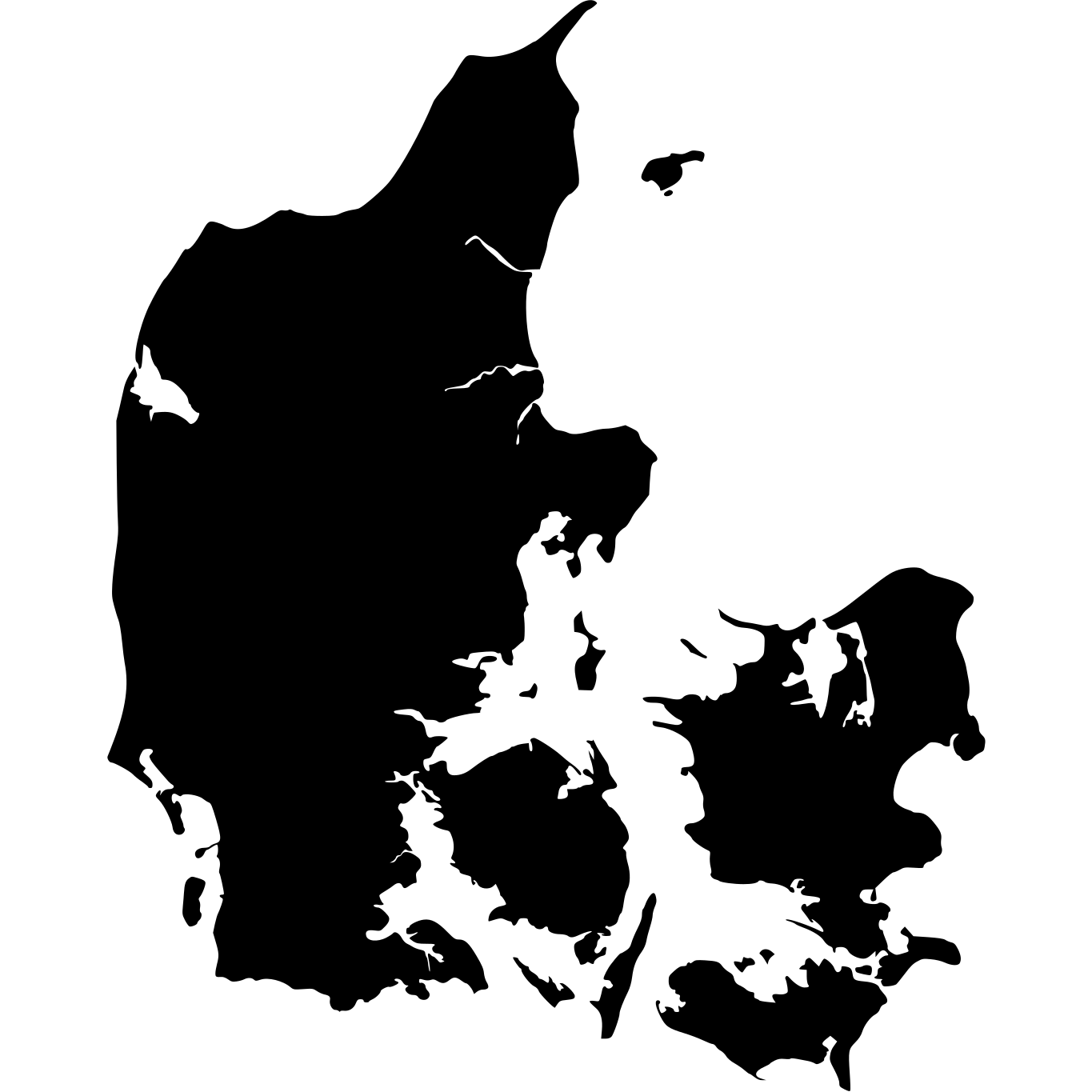
Matas is a Danish brand
50 SPF Rating
With an SPF rating of 50, this product protects against 98.0% of UVB rays

We're dedicated to providing you with the most up-to-date and science-backed ingredient info out there.
The data we've presented on this page has been verified by a member of the SkinSort Team.
Read more about us· Updated March 16, 2026 • Added by FIQ130


