FOREO Luna Micro-Foam Cleanser 2.0
A face cleanser with 27 ingredients, including vitamin E.
This mild foaming cleanser is made to cleanse without leaving your skin tight or dry.
We independently verify ingredients, backed by peer-reviewed research. Suggest an update.
What's inside
Ingredients List
Water
Skin ConditioningGlycerin
Humectant


Sodium Cocoyl Glycinate
Cleansing
Cocamidopropyl Betaine
Cleansing


PEG-150 Distearate
Emulsifying
1,2-Hexanediol
Skin Conditioning
Glycol Distearate
Emollient
Disodium Cocoamphodiacetate
CleansingOlive Oil PEG-7 Esters
Emollient

Sodium Chloride
MaskingPolyquaternium-7
Glutamic Acid
Humectant
Hexylene Glycol
EmulsifyingCarbomer
Emulsion StabilisingPullulan
Tocopheryl Acetate
Antioxidant


Saccharide Hydrolysate
HumectantEthylhexylglycerin
Skin ConditioningPortulaca Oleracea Extract
Skin Conditioning
Butylene Glycol
Humectant
Centella Asiatica Extract
Cleansing

Houttuynia Cordata Extract
Skin Conditioning
Salvia Hispanica Seed Extract
Emollient
Fructooligosaccharides
Humectant
Propanediol
Solvent
Sodium Benzoate
Masking
Hydroxyacetophenone
Antioxidant
Water, Glycerin, Sodium Cocoyl Glycinate, Cocamidopropyl Betaine, PEG-150 Distearate, 1,2-Hexanediol, Glycol Distearate, Disodium Cocoamphodiacetate, Olive Oil PEG-7 Esters, Sodium Chloride, Polyquaternium-7, Glutamic Acid, Hexylene Glycol, Carbomer, Pullulan, Tocopheryl Acetate, Saccharide Hydrolysate, Ethylhexylglycerin, Portulaca Oleracea Extract, Butylene Glycol, Centella Asiatica Extract, Houttuynia Cordata Extract, Salvia Hispanica Seed Extract, Fructooligosaccharides, Propanediol, Sodium Benzoate, Hydroxyacetophenone
Key Ingredients
Benefits
Concerns
Ingredients Explained
Water. It's the most common cosmetic ingredient of all. You'll usually see it at the top of ingredient lists, meaning that it makes up the largest part of the product.
So why is it so popular? Water most often acts as a solvent - this means that it helps dissolve other ingredients into the formulation.
You'll also recognize water as that liquid we all need to stay alive. If you see this, drink a glass of water. Remember to stay hydrated!
Learn more about WaterGlycerin (or glycerol) is a compound naturally found in your skin. It's a powerhouse humectant that pulls water into the stratum corneum.
Topically, glycerin does several things at once:
Your skin makes glycerin on its own (mostly from sebaceous oil breakdown) and shuttles it to your outermost layer of skin, or your epidermis, via aquaporin-3.
Aquaporin-3 is a transporter that is essential for normal skin hydration, elasticity, and repair. Interestingly, mice lacking in AQP3 have dry and less elastic skin that can be fully corrected with glycerin.
This ingredient is non-irritating, plays well with almost every ingredient, and works across all skin types. Typical use is anywhere between 3-10% but can go up to 79% in some leave-on products.
Just know very high concentrations (>40%) can feel tacky in low humidity.
Glycerin is the name for this ingredient in American English. British English uses Glycerol/Glycerine.
Learn more about GlycerinSodium Cocoyl Glycinate is a cleansing agent. It can be naturally derived or synthetically-created.
As a surfactant, it helps clean your skin by gathering dirt, oil, and other pollutants to be rinsed away more easily.
Cocamidopropyl Betaine is a fatty acid created by mixing similar compounds in coconut oil and dimethylaminopropylamine, a compound with two amino groups.
This ingredient is a surfactant and cleanser. It helps gather the dirt, pollutants, and other impurities in your skin to be washed away. It also helps thicken a product and make the texture more creamy.
Being created from coconut oil means Cocamidopropyl Betaine is hydrating for the skin.
While Cocamidopropyl Betaine was believed to be an allergen, a study from 2012 disproved this. It found two compounds in unpure Cocamidopropyl Betaine to be the irritants: aminoamide and 3-dimethylaminopropylamine. High-grade and pure Cocamidopropyl Betaine did not induce allergic reactions during this study.
Learn more about Cocamidopropyl BetainePEG-150 Distearate is a hardworking ingredient that is usually found at the end of a lot of cleansers whose main job is to act as a micellar thickening agent for surfactant-based cleansers.
It works by physically linking up surfactant micelles already in a formula to bump up viscosity and gives products a pourable-but-not-runny body.
Safety-wise, it's been found safe in cosmetics with minimal skin irritation and no evidence of toxicity.
This ingredient may not be fungal acne safe; it's a diester of stearic acid (C18) that falls into the C11-24 range that the Malassezia yeast feeds on. In vitro studies have also shown the Malassezia can metabolize PEG stearates by cleaving the ester bond to release the fatty acid.
Learn more about PEG-150 Distearate1,2-Hexanediol is a synthetic liquid and another multi-functional powerhouse.
It is a:
- Humectant, drawing moisture into the skin
- Emollient, helping to soften skin
- Solvent, dispersing and stabilizing formulas
- Preservative booster, enhancing the antimicrobial activity of other preservatives
Glycol Distearate is an emulsifier and emollient that adds a "pearly" appearance to formulations.
That lustrous look you see in many shampoos is due to this ingredient: when cooled, it crystallizes into small platelets that reflect light to give products that rich, shimmering look.
This ingredient is considered safe at present practices of use and concentration and repeated insult patch test with 50% Glycol Distearate on 125 subjects found no evidence of skin irritation, hypersensitivity, or acute toxicity.
Typical use concentrations range from 0.1-10%.
Because it's an ester of stearic acid, it falls into the range that Malassezia likes to metabolize. This ingredient may not be fungal acne safe.
Learn more about Glycol DistearateDisodium Cocoamphodiacetate is a surfactant and helps cleanse skin. It is created from the fatty acids of coconut oil.
Surfactants help rinse oil, dirt, and other pollutants easily from skin. It has a faint fruit-like scent.
Chances are, you eat sodium chloride every day. Sodium Chloride is also known as table salt. This ingredient has many purposes in skincare: thickener, emulsifier, and exfoliator.
You'll most likely find this ingredient in cleansers where it is used to create a gel-like texture. As an emulsifier, it also prevents ingredients from separating.
You might see people debate whether Sodium Chloride is comedogenic, but there actually haven't been any comedogenic tests done on it. Either way, the overall formulation of a product matters a lot more than any single ingredient.
You might see this ingredient used in scrubs as a primary exfoliating ingredient.
Learn more about Sodium ChloridePolyquaternium-7 is a light to clear colored liquid. It is commonly found in haircare products for its film-forming and anti-static properties.
According to a manufacturer, it is a non-paraben and specially developed for negatively charged surfactant systems. This makes it a great hairstyle holder and helps to improve wet hair detangling without adding buildup.
Glutamic Acid is an amino acid that is found in all living organisms. Our bodies use this to help nerve cells in the brain communicate with other cells.
In cosmetics, glutamic acid is a famous humectant. It draws water from the air to your skin, keeping your skin hydrated (like hyaluronic acid).
An in-vitro study from 2024 found glutamic acid to play a role in inhibiting inflammation and thus a potential skin-soothing ingredient.
Other studies show it to be have potential wound healing, skin barrier repair, and hair growth properties.
Glutamic acid has poor solubility in water and other solvents.
Learn more about Glutamic AcidHexylene Glycol is a multitasker ingredient that works as a solvent, humectant, emulsifier, viscosity reducer, and preservative booster.
It is able to dissolve both water and oil-soluble ingredients to stabilize tricky actives and make products spread more easily.
As a humectant, it pulls water into the skin. But it's a pretty minor moisturizing ingredient compared to other humectants, like glycerin.
Interestingly, it can act as a mild penetration enhancer. One in vitro study on human skin found a 12% concentration upped the absorption of mometasone furoate (a medicinal ingredient used to treat inflammatory skin conditions) up to 7%.
This ingredient is typically used at levels of 0.1-10% depending on the role it's playing.
A patch test study on eczema patients didn't find a significant increase in irritation versus the control group, but the potential for irritation rises at higher concentrations.
Learn more about Hexylene GlycolCarbomer is a synthetic thickening and gelling agent. It's basically the ingredient that gives a lot of serums, gels, creams, and sunscreens their smooth, non-sticky texture.
Although legally permitted at very high levels, carbomers are normally used at concentrations below 1%.
It also needs to be neutralized to actually thicken, and because it is a large molecule, it doesn't really penetrate the skin barrier.
Allergy-wise, the risk is very low. Clinical studies show carbomers have low potential for skin irritation/sensitization even at concentrations up to 100%.
A 2024 UK study patch-tested 1,302 patients and found true allergy to the parent group of carbomer to be rare with no confirmed relevant reactions.
Learn more about CarbomerPullulan is a low viscosity polysaccharide (a long chain carbohydrate) with binding and film forming properties when dissolved in water. It is used to create a "silicone-like" or silky feel in cosmetics without adding viscosity.
According to a manufacturer, this ingredient's ability to easily dissolves makes it a great carrier for active ingredients.
Due to it being edible and tasteless, you'll likely find this ingredient in breath freshener strips. This ingredient is produced from the starch of the fungus, Aureobasidium pullulans.
Pullulan is stable over a broad-range of pH.
Learn more about PullulanTocopheryl Acetate is a stable, shelf-friendly form of vitamin E.
Formulators love it because plain vitamin E oxidizes quickly once it hits air. This acetate version stays stable and resists going off, helping to extend a product's shelf life.
It's actually inactive on its own and works like a slow-release "storage" form; the enzymes in your skin called esterases gradually convert it into active vitamin E over time.
One in vivo study showed 5% of the acetate in the living layer of the epidermis converted to vitamin E after 5 days of application. This study also found the skin gained protection against UV damage even though the conversion was slow and small.
Once converted, vitamin E acts as a skin's main fat-soluble antioxidant that fights free radicals to protect skin from damage.
Topical vitamin E generally boosts the skin's photoprotection, and it reduced UV-damage in animal models.
This ingredient has some brightening potential but it's more of a prevention ingredient than spot-fader. Cell studies show it can slow down melanin production but it's worth noting that it's not the most powerful brightener out there.
Overall, it has a pretty solid safety profile and has been found to be non-irritating and non-comedogenic. Allergic reactions may happen but stay rare due to how widely the ingredient gets used.
The concentration will vary depending on the formula; industry data shows 0.1% in baby lotions, 3% in lipsticks, and 5% in foot powders. You can also find this ingredient at 100% in a pure vitamin E oil.
Most leave-on skincare keeps it at the lower end, often between 0.5-1%.
Learn more about Tocopheryl AcetateWe don't have a description for Saccharide Hydrolysate yet.
Ethylhexylglycerin is created from glycerin. It is a multitasker ingredient that:
The CIR Expert Panel found minimal skin absorption or sensitization of any kind in a safety assessment. Though this ingredient is considered well-tolerated, a small number of cases of allergic dermatitis have been published since 2002. Just be sure to patch test if you are unsure.
Industry-reported use ranges from 8% in rinse-off products and 2% in leave-on formulations.
Learn more about EthylhexylglycerinThis extract comes from Purslane, a succulent. It has anti-inflammatory, antioxidant, and hydrating properties.
Purslane is very nutritious. It contains omega-3 fatty acids, NMFs, many vitamins, minerals, and antioxidants. The vitamins found in purslane include: Vitamin C, Vitamin A, and Vitamin E.
Fun fact: Purslane is a succulent with an extensive habitat. It is used in traditional Korean medicine to treat irritated skin.
Nowadays, purslane is becoming a superfood due to its highly nutritious content.
Learn more about Portulaca Oleracea ExtractButylene Glycol (or BG) is used within cosmetic products for a few different reasons:
Overall, Butylene Glycol is a safe and well-rounded ingredient that works well with other ingredients.
Though this ingredient works well with most skin types, some people with sensitive skin may experience a reaction such as allergic rashes, closed comedones, or itchiness.
Learn more about Butylene GlycolCentella Asiatica Extract (Centella) is one of the most researched botanical extracts in skincare with decades of studies backing its effects on inflammation, collagen, and the skin barrier.
That research keeps pointing back to the same four triterpenoid saponins: Asiaticoside, Madecassoside, Asiatic Acid, and Madecassic Acid.
These compounds allow centella to dial back inflammation, encourage the skin to build and hold onto collagen, support the barrier and hydration, and bring solid antioxidant activity to protect against signs of aging.
Centella also carries a nice supporting cast of Vitamin A, vitamin C, several B vitamins, and amino acids. Put it all together and you get an ingredient that soothes, hydrates, and protects, all at once.
Most of centella's magic comes from the four big compounds (Asiaticoside, Madecassoside, Asiatic Acid, and Madecassic Acid). These are the actives doing the heavy lifting in almost every centella study.
Here is the short version of what they do in the skin:
So it is not just soothing for the sake of soothing. Centella calms the skin AND helps it rebuild.
Just FYI, not all centella on an ingredient list is the same. What you are getting actually depends on the extract:
Fun fact on the ratios: the leaves tend to be richest in Madecassoside and Asiaticoside, and lower in the two acids. The exact amounts shift with where the plant is grown and how it is processed. This means purity really does vary brand to brand.
Centella is one of the most easygoing actives out there.
It layers well with basically everything: niacinamide, hyaluronic acid, peptides, and vitamin C, and also pairs nicely with stronger actives like retinoids and exfoliating acids where it can help take the edge off irritation.
On the safety side, centella and its triterpenes are classified as weak sensitizers, meaning allergic reactions are possible but uncommon.
Patch tests at 1% and 5% came back negative in test panels, and creams at typical use levels did not cause allergic reactions across large groups of people.
But as with any new active, a patch test is still a smart move for very reactive skin.
Centella is widely used because it is effective at low percentages. For context, human safety testing found no meaningful irritation from creams containing centella extract at everyday use levels (the tested amounts were well under 1%).
The irritancy threshold in animal testing was also above 30% (so real-world formulas sit far below anything concerning).
In collagen lab studies, higher concentrations drove more collagen synthesis, so serums built around centella tend to feature it more prominently.
Bottom line: you will find centella working nicely anywhere from a fraction of a percent up to hero-ingredient levels depending on whether it is a supporting soother or the main event.
Fun fact: Centella has been used as a medicine and in food for many centuries. As a medicine, it is used to treat burns, scratches, and wounds.
Learn more about Centella Asiatica ExtractHouttuynia Cordata Extract is more commonly known as Heart Leaf, Fish Mint, or Chameleon plant.
The components found in Heart Leaf give it antioxidant, hydrating, antimicrobial, and anti-inflammatory properties.
Heart Leaf is rich in flavonoids such as quercetin, apigenin, and more. It also contains polysaccharides, the most common type of carbs in food.
Flavonoids have been shown to be effective antioxidants. They help neutralize free-radical molecules. Free-radical molecules are unstable molecules that may damage our skin cells and DNA. The flavonoids in Heart Leaf also help soothe the skin.
Polysaccharides are naturally found in our skin. They play a role in hydrating and repairing the top layer of skin. The polysaccharides in Heart Leaf help moisturize our skin.
Studies show decanoyl acetaldehyde, a component of Heart Leaf oil, is effective at killing bacteria.
The name 'Fish Mint' comes from the herb's natural fishy smell. Is is native to southeast Asia and used throughout the continent for traditional cooking and medicine.
Learn more about Houttuynia Cordata ExtractThis ingredient comes from chia seeds (the same ones you put in your smoothie!). It has emollient and skin conditioning properties due to its rich concentration of linoleic acid and polyunsaturated fatty acids.
One small clinical study of 10 people found that a 4% chia seed oil formulation significantly improved skin hydration and soothed itchiness in 8 weeks. Another study showed using a chia seed extract enriched with vitamin F told skin cells to produce more of their own hydration factors.
There's also some lab evidence that chia seed extract, when paired with pomegranate extract, may help reduce excess pigment production.
Learn more about Salvia Hispanica Seed ExtractFructooligosaccharides (FOS) are a type of prebiotic sugar with humectant and skin conditioning properties. As a humectant, they help attract and hold moisture in the skin.
FOS essentially acts as a food source for the "good" bacteria on your skin and make it harder for "bad" bacteria to thrive. A 2022 study using a reconstructured human skin model found that just 1% of FOS was enough to shift the bacteria balance in favor of beneficial species. This suggests it could help support a healthier skin microbiome over time.
This ingredient has a low sensitization risk and testing shows it does not classify as a skin irritant or sensitizer.
FOS are usually produced from sugar beets and can also be found in foods like bananas, garlic, and onions.
Learn more about FructooligosaccharidesPropanediol is an all-star ingredient. It softens, hydrates, and smooths the skin.
It’s often used to:
Propanediol is not likely to cause sensitivity and considered safe to use. It is derived from corn or petroleum with a clear color and no scent.
Learn more about PropanediolSodium Benzoate is a preservative. It's used in both cosmetic and food products to inhibit the growth of mold and bacteria. It is typically produced synthetically.
Both the US FDA and EU Health Committee have approved the use of sodium benzoate. In the US, levels of 0.1% (of the total product) are allowed.
Sodium benzoate works as a preservative by inhibiting the growth of bacteria inside of cells. It prevents the cell from fermenting a type of sugar using an enzyme called phosphofructokinase.
It is the salt of benzoic acid. Foods containing sodium benzoate include soda, salad dressings, condiments, fruit juices, wines, and snack foods.
Studies for using ascorbic acid and sodium benzoate in cosmetics are lacking, especially in skincare routines with multiple steps.
We always recommend speaking with a professional, such as a dermatologist, if you have any concerns.
Learn more about Sodium BenzoateHydroxyacetophenone is a small phenolic molecule that earns its place in a formulas as an antioxidant and preservative booster.
As a phenol, it is able to neutralize free radicals to protect both the product and the skin from oxidative stress.
Though it can't kill microbes on its own, it works as a good supporting agent when combined with other preservatives like Phenoxyethanol or 1,2-Hexanediol.
This ingredient naturally occurs as piceol in Norwegian spruce needles (~0.4-1.1% dry weight and in cloudberries). Though the cosmetic-grade material is synthesized for purity and consistency.
You'll usually see it used at low levels and suppliers recommend up to 1% added to a water phase.
Safety testing was done at concentrations like 0.05% in SPF products and 0.5% in a Human Repeated Insult Patch Test. The safety evidence is assuring; this ingredient is safe for cosmetics in current use and also holds safety status as a food flavoring as well.
An honest caveat: the "soothing" and "anti-inflammatory" claims come mostly from supplier marketing rather than published clinical trials. The Cosmetic Ingredient Review's own literature search found no useful efficacy studies on this ingredient.
So the antioxidant and preservative-boosting roles are the well supported ones while the calming benefit is plausible but thinly evidenced.
Overall, this is a well-tolerated, low-irritation multitasker that quietly helps a formula stay fresh and stable.
Learn more about HydroxyacetophenoneReviews
No written reviews yet. Be the first to review this product.
Recent searches
Search reviews by skin type, ingredient, or keyword.
Where it's from
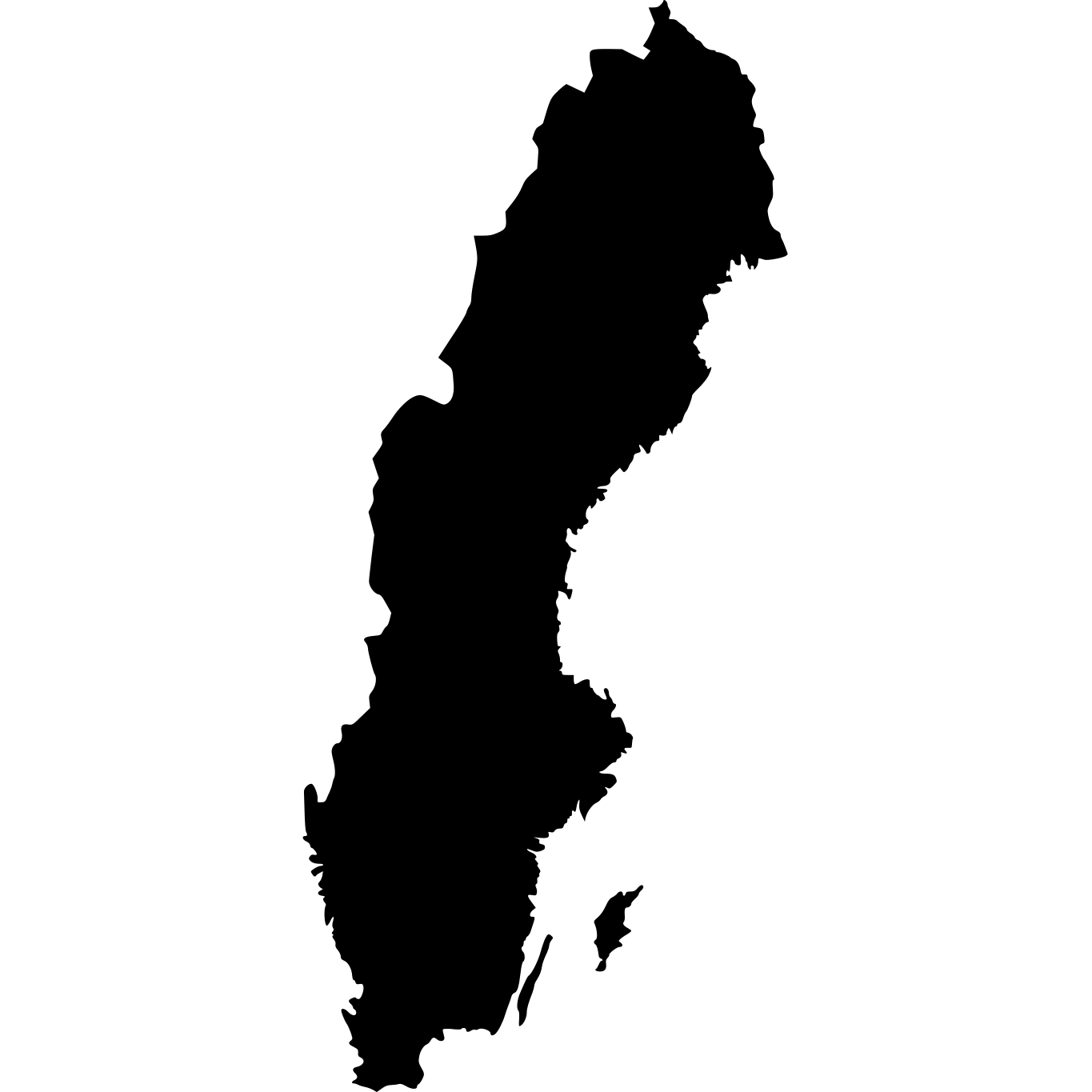
FOREO is a Swedish brand
Often compared with

We're dedicated to providing you with the most up-to-date and science-backed ingredient info out there.
The data we've presented on this page has been verified by a member of the SkinSort Team.
Read more about us· Updated August 19, 2024 • Added by starstellastar_407


