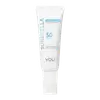
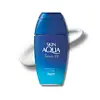
Y.O.U Sunbrella Intensive Care Aqua Sunscreen SPF50+ PA++++ Versus Skin Aqua Hyaluronic Serum UV SPF 50+ PA++++
This chemical sunscreen covers most of the UV range, lighter on the deep UVA that drives aging.
This chemical sunscreen covers the full UV range and blocks ~98% of UVB at SPF 50.


What's inside
What's inside
 Key Ingredients
Benefits
Concerns
Ingredients Side-by-side
Water
Skin ConditioningGlycerin
Humectant


Propylene Glycol
Humectant

Polymethyl Methacrylate

PPG-24-Glycereth-24
EmulsifyingButyl Methoxydibenzoylmethane
UV Absorber
Ethylhexyl Triazone
UV Absorber
Acrylates/C10-30 Alkyl Acrylate Crosspolymer
Emulsion StabilisingAminomethyl Propanol
BufferingPhenoxyethanol
Preservative
Hydroxyacetophenone
Antioxidant
Allantoin
Skin Conditioning

Butylene Glycol
Humectant
Xanthan Gum
EmulsifyingDisodium EDTA
ChelatingPentylene Glycol
Skin Conditioning
Sodium Hyaluronate
Humectant

Gentiana Scabra Root Extract
Skin ConditioningPropanediol
Solvent
Ectoin
Skin Conditioning
Armillaria Matsutake Extract
Zea Mays Starch
Absorbent
Hydrogenated Lecithin
Emulsifying
Hydrolyzed Corn Starch
HumectantHydrolyzed Corn Starch Octenylsuccinate
AbsorbentLimonia Acidissima Extract
Skin ConditioningButyrospermum Parkii Butter
Skin Conditioning


Cocamidopropyl Dimethylamine
Emulsifying
Buddleja Officinalis Flower Extract
UV FilterPhenylethyl Resorcinol
Antioxidant

Moringa Oleifera Seed Extract
Skin Conditioning
Ceramide NP
Skin Conditioning
Lactic Acid
Buffering



1,2-Hexanediol
Skin Conditioning
Hydrated Silica
Abrasive
Palmitoyl Tripeptide-5
Skin Conditioning
Ceramide As
Skin Conditioning
Ceramide Ns
Skin Conditioning
Ceramide Ng
Skin Conditioning
Ethylhexylglycerin
Skin ConditioningErgothioneine
Antioxidant
Ceramide EOP
Skin Conditioning
Ceramide AP
Skin Conditioning
Water, Glycerin, Propylene Glycol, Polymethyl Methacrylate, PPG-24-Glycereth-24, Butyl Methoxydibenzoylmethane, Ethylhexyl Triazone, Acrylates/C10-30 Alkyl Acrylate Crosspolymer, Aminomethyl Propanol, Phenoxyethanol, Hydroxyacetophenone, Allantoin, Butylene Glycol, Xanthan Gum, Disodium EDTA, Pentylene Glycol, Sodium Hyaluronate, Gentiana Scabra Root Extract, Propanediol, Ectoin, Armillaria Matsutake Extract, Zea Mays Starch, Hydrogenated Lecithin, Hydrolyzed Corn Starch, Hydrolyzed Corn Starch Octenylsuccinate, Limonia Acidissima Extract, Butyrospermum Parkii Butter, Cocamidopropyl Dimethylamine, Buddleja Officinalis Flower Extract, Phenylethyl Resorcinol, Moringa Oleifera Seed Extract, Ceramide NP, Lactic Acid, 1,2-Hexanediol, Hydrated Silica, Palmitoyl Tripeptide-5, Ceramide As, Ceramide Ns, Ceramide Ng, Ethylhexylglycerin, Ergothioneine, Ceramide EOP, Ceramide AP
Water
Skin ConditioningEthylhexyl Methoxycinnamate
UV Absorber
Butylene Glycol
Humectant
Isononyl Isononanoate
EmollientDiethylamino Hydroxybenzoyl Hexyl Benzoate
UV Filter
Ethylhexyl Triazone
UV Absorber
Bis-Ethylhexyloxyphenol Methoxyphenyl Triazine
UV Absorber
Sodium Hyaluronate
Humectant
Hydrolyzed Sodium Hyaluronate
Skin Conditioning
Hydroxypropyltrimonium Hyaluronate
Pentylene Glycol
Skin Conditioning
Dimethicone
Emollient
Propanediol
Solvent
Caprylhydroxamic Acid
ChelatingSilica
Abrasive
Acrylates/C10-30 Alkyl Acrylate Crosspolymer
Emulsion StabilisingPolyglyceryl-10 Pentaisostearate
Emollient
Triethanolamine
BufferingBis-PEG-18 Methyl Ether Dimethyl Silane
EmollientDisodium EDTA
ChelatingXanthan Gum
EmulsifyingPhenoxyethanol
Preservative
Water, Ethylhexyl Methoxycinnamate, Butylene Glycol, Isononyl Isononanoate, Diethylamino Hydroxybenzoyl Hexyl Benzoate, Ethylhexyl Triazone, Bis-Ethylhexyloxyphenol Methoxyphenyl Triazine, Sodium Hyaluronate, Hydrolyzed Sodium Hyaluronate, Hydroxypropyltrimonium Hyaluronate, Pentylene Glycol, Dimethicone, Propanediol, Caprylhydroxamic Acid, Silica, Acrylates/C10-30 Alkyl Acrylate Crosspolymer, Polyglyceryl-10 Pentaisostearate, Triethanolamine, Bis-PEG-18 Methyl Ether Dimethyl Silane, Disodium EDTA, Xanthan Gum, Phenoxyethanol
Reviews
Ingredients Explained
These ingredients are found in both products.
Ingredients higher up in an ingredient list are typically present in a larger amount.
Acrylates/C10-30 Alkyl Acrylate Crosspolymer is a synthetic polymer. It is used to thicken, emulsify, and improve the texture of products.
As an emulsifier, it helps stabilize oil-in-water emulsions to give products an elegant feel when applied.
It can also form a thin protective film on skin. One study found that a formula using this polymer helped slow down how quickly other ingredients (like DEET) were absorbed through skin.
A 2024 study of over 1,300 patients confirmed that sensitization to this ingredient is rare. It is also non-mutagenic and has a clean track record.
Learn more about Acrylates/C10-30 Alkyl Acrylate CrosspolymerButylene Glycol (or BG) is used within cosmetic products for a few different reasons:
Overall, Butylene Glycol is a safe and well-rounded ingredient that works well with other ingredients.
Though this ingredient works well with most skin types, some people with sensitive skin may experience a reaction such as allergic rashes, closed comedones, or itchiness.
Learn more about Butylene GlycolDisodium EDTA is a chelating agent. It grabs onto and deactivates metal ions that sneak into your products from water, packaging, or air.
This ingredient mainly works behind the scenes and helps with:
On top of that, this ingredient can counteract the effects of hard water by binding to the minerals in it.
One thing worth knowing is that Disodium EDTA has been shown to be a mild penetration enhancer. It can help other ingredients absorb into skin more effectively which can be a double-edged sword (great for actives, but can also make the active too strong if you have sensitive skin).
Clinical patch testing showed no significant skin irritation at typical use concentrations and minimal dermal absorption.
You'll most likely see this ingredient near the end of an ingredient list. It's typically found in concentrations less than 1%.
Learn more about Disodium EDTAEthylhexyl Triazone (aka Octyl Triazone) is an oil-soluble organic UVB filter. It has peak absorption around 314 nm, right in the middle of the UVB range.
This ingredient is described as one of the most effective UVB filters available and small concentrations are enough to deliver a high SPF thanks to its strong UV absorbing power.
Formulators love it for its stability; its ability to filter UV stays practically unchanged even under intense radiation and it can also help boost the photostability of less stable filters like avobenzone.
It's also a great pick for water resistant products because it's insoluble in water and has a good affinity for keratin.
Because it's a big, heavy molecule, the European Scientific Committee has found to to have very low dermal penetration and negative results for allergenicity.
In vitro testing also showed a low absorption rate and clean results on irritation.
Typical use levels are 1-5% with 5% being the maximum in the EU, Japan, and other markets that allow it. However, this ingredient is not approved yet in the US or Canada.
Learn more about Ethylhexyl TriazonePentylene Glycol (1,2-pentanediol) is a multitasking little diol with three main roles in a formula:
Research on alkanediols (the family pentylene glycol belongs to) show they work by disrupting microbial cell membranes. This disruption helps the primary preservative system in a product work more effectively at lower doses.
On the safety side, the Cosmetic Ingredient Review Expert Panel has concluded this ingredient to be safe as used in current cosmetic practices + concentrations.
Typical use levels in a formula run about 1-5%.
Learn more about Pentylene GlycolPhenoxyethanol is one of the most widely used preservatives in skincare (and for good reason!).
It has a large spectrum of antimicrobial activity and especially effective bacteria, yeast, and mold while only having a weak effect on your skin's natural microbiome.
On a cellular level, it disrupts the cell membranes of microbes by poking holes that make the cell leak. This shuts down the chemical reactions the microbe needs to make energy so it can no longer survive.
Another perk of this ingredient is that it stays functional across a wide pH range (3-10).
You'll often see it paired with boosters like Ethylhexylglycerin; one study showed that a 1:9 ratio of Ethylhexylglycerin to Phenoxyethanol damages bacterial membranes as effectively as doubling the Phenoxyethanol concentration on its own.
Typical use concentrations range from 0.3-1% depending on the formula, and this ingredient is capped at 1% int the EU.
Safety-wise, the fear mongering does not hold up to the evidence. The EU's Scientific Committee on Consumer Safety and FDA consider it safe as a preservative at up to 1%, including for children of all ages.
Adverse systemic effects only showed up in animal studies at exposures roughly 200x higher than what people get from cosmetics. And despite its very widespread use, this ingredient is a rare sensitizer and allergic reactions are uncommon.
Learn more about PhenoxyethanolPropanediol is an all-star ingredient. It softens, hydrates, and smooths the skin.
It’s often used to:
Propanediol is not likely to cause sensitivity and considered safe to use. It is derived from corn or petroleum with a clear color and no scent.
Learn more about PropanediolSodium Hyaluronate is the salt form of hyaluronic acid. It is a long sugar chain that is naturally found in your skin, joints, and connective tissue that maintains hydration and elasticity.
In skincare, it works as a humectant. It pulls water from the environment and deeper layers of skin and binds it to the surface.
Interestingly, the size of the molecule affects its behavior:
Some clinical evidence links low molecular weight versions to improved wrinkle depth, elasticity, anti-inflammatory effects, and barrier repair.
Many serums use a blend of both weights so you can get surface hydration plus longer-lasting and deeper effects.
You'll typically see concentrations between 0.1-2% for this ingredient.
Learn more about Sodium HyaluronateWater. It's the most common cosmetic ingredient of all. You'll usually see it at the top of ingredient lists, meaning that it makes up the largest part of the product.
So why is it so popular? Water most often acts as a solvent - this means that it helps dissolve other ingredients into the formulation.
You'll also recognize water as that liquid we all need to stay alive. If you see this, drink a glass of water. Remember to stay hydrated!
Learn more about WaterXanthan gum is used as a stabilizer and thickener within cosmetic products. It helps give products a sticky, thick feeling - preventing them from being too runny.
On the technical side of things, xanthan gum is a polysaccharide - a combination consisting of multiple sugar molecules bonded together.
Xanthan gum is a pretty common and great ingredient. It is a natural, non-toxic, non-irritating ingredient that is also commonly used in food products.
Learn more about Xanthan Gum

