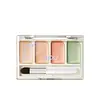
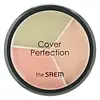
Y.O.U Cloud Touch Correcting Concealer Palette Versus The Saem Cover Perfection Triple Pot Concealer


What's inside
What's inside
 Key Ingredients
Benefits
Concerns
Ingredients Side-by-side
Hydrogenated Polydecene
EmollientEthylhexyl Palmitate
Emollient




Silica
Abrasive


Mica
Cosmetic ColorantPolyisobutene
Ozokerite
Emulsion StabilisingDimethicone
Emollient

Polyethylene
Abrasive
Microcrystalline Wax
Emulsion StabilisingDimethicone Crosspolymer
Emulsion Stabilising
PEG-30 Dipolyhydroxystearate
Emulsifying
Phenoxyethanol
Preservative
Parfum
Masking


Ceramide EOP
Skin Conditioning





Ethylhexylglycerin
Skin ConditioningCentella Asiatica Extract
Cleansing
CI 77891
Cosmetic ColorantCI 77492
Cosmetic ColorantCI 77491
Cosmetic ColorantCI 19140
Cosmetic ColorantCI 77499
Cosmetic ColorantCI 42090
Cosmetic ColorantHydrogenated Polydecene, Ethylhexyl Palmitate, Silica, Mica, Polyisobutene, Ozokerite, Dimethicone, Polyethylene, Microcrystalline Wax, Dimethicone Crosspolymer, PEG-30 Dipolyhydroxystearate, Phenoxyethanol, Parfum, Ceramide EOP, Ethylhexylglycerin, Centella Asiatica Extract, CI 77891, CI 77492, CI 77491, CI 19140, CI 77499, CI 42090
CI 77891
Cosmetic ColorantCaprylic/Capric Triglyceride
Masking
Polyisobutene
Mica
Cosmetic ColorantIsodecyl Neopentanoate
EmollientDiisostearyl Malate
EmollientHydrogenated Castor Oil
Emollient
Dipentaerythrityl Hexahydroxystearate/Hexastearate/Hexarosinate
Skin ConditioningMethyl Methacrylate Crosspolymer
Butyloctyl Salicylate
Skin Conditioning

CI 77492
Cosmetic ColorantParaffin
Skin Conditioning
Aluminum Hydroxide
Emollient1,2-Hexanediol
Skin Conditioning
Sorbitan Sesquioleate
Emulsifying
Microcrystalline Wax
Emulsion StabilisingCI 77491
Cosmetic ColorantMethicone
Emollient
CI 77499
Cosmetic ColorantCaprylyl Glycol
Emollient
Squalane
Emollient
Parfum
Masking
Prunus Amygdalus Dulcis Oil
Skin Conditioning
Water
Skin ConditioningBHT
Antioxidant
Butylene Glycol
Humectant
Aspalathus Linearis Leaf Extract
Skin ConditioningThymus Vulgaris Extract
Perfuming
Foeniculum Vulgare Leaf Extract
HumectantLinalool
Perfuming
Limonene
Perfuming
Hexyl Cinnamal
Perfuming
Titanium Dioxide
Cosmetic Colorant
CI 77288
Cosmetic ColorantAlpha-Isomethyl Ionone
Perfuming
CI 77891, Caprylic/Capric Triglyceride, Polyisobutene, Mica, Isodecyl Neopentanoate, Diisostearyl Malate, Hydrogenated Castor Oil, Dipentaerythrityl Hexahydroxystearate/Hexastearate/Hexarosinate, Methyl Methacrylate Crosspolymer, Butyloctyl Salicylate, CI 77492, Paraffin, Aluminum Hydroxide, 1,2-Hexanediol, Sorbitan Sesquioleate, Microcrystalline Wax, CI 77491, Methicone, CI 77499, Caprylyl Glycol, Squalane, Parfum, Prunus Amygdalus Dulcis Oil, Water, BHT, Butylene Glycol, Aspalathus Linearis Leaf Extract, Thymus Vulgaris Extract, Foeniculum Vulgare Leaf Extract, Linalool, Limonene, Hexyl Cinnamal, Titanium Dioxide, CI 77288, Alpha-Isomethyl Ionone
Reviews
Ingredients Explained
These ingredients are found in both products.
Ingredients higher up in an ingredient list are typically present in a larger amount.
Ci 77491 is also hydrated iron III oxide. It's sole purpose is to give a red/pink hue to products.
Iron III oxides are classified as inorganic chemicals for coloring.
Synthetically created Ci 77491 is considered safer than those naturally found. This is because the synthetically created version may contain less impurities. Iron oxides are generally non-toxic and non-allergenic.
Learn more about CI 77491CI 77492 is also hydrated iron III oxide. It's sole purpose is to give a yellow hue to products.
Iron III oxides are classified as inorganic chemicals for coloring.
Synthetically created CI 77492 is considered safer than those naturally found. This is because the synthetically created version may contain less impurities. Iron oxides are generally non-toxic and non-allergenic.
Learn more about CI 77492Ci 77499 is also hydrated iron III oxide. It is created from mixing red and black iron oxides. This helps give shades of darkness to a product.
Iron III oxides are classified as inorganic chemicals for coloring.
Ci 77891 is a white pigment from Titanium dioxide. It is naturally found in minerals such as rutile and ilmenite.
It's main function is to add a white color to cosmetics. It can also be mixed with other colors to create different shades.
Ci 77891 is commonly found in sunscreens due to its ability to block UV rays.
Learn more about CI 77891Mica is a naturally occurring mineral used to add shimmer and color in cosmetics. It can also help improve the texture of a product or give it an opaque, white/silver color.
Serecite is the name for very fine but ragged grains of mica.
This ingredient is often coated with metal oxides like titanium dioxide. Trace amounts of heavy metals may be found in mica, but these metals are not harmful in our personal products.
Mica has been used since prehistoric times throughout the world. Ancient Egyptian, Indian, Greek, Roman, Aztec, and Chinese civilizations have used mica.
Learn more about MicaMicrocrystalline Wax is derived from petroleum through a de-oiling process, then highly refined and purified before use in cosmetics.
In skincare formulations, it is used to improve texture and create a smooth, even consistency. It also helps stabilize products by preventing ingredients from separating.
Parfum is a catch-all term for an ingredient or more that is used to give a scent to products.
Also called "fragrance", this ingredient can be a blend of hundreds of chemicals or plant oils. This means every product with "fragrance" or "parfum" in the ingredients list is a different mixture.
For instance, Habanolide is a proprietary trade name for a specific aroma chemical. When used as a fragrance ingredient in cosmetics, most aroma chemicals fall under the broad labeling category of “FRAGRANCE” or “PARFUM” according to EU and US regulations.
The term 'parfum' or 'fragrance' is not regulated in many countries. In many cases, it is up to the brand to define this term.
For instance, many brands choose to label themselves as "fragrance-free" because they are not using synthetic fragrances. However, their products may still contain ingredients such as essential oils that are considered a fragrance by INCI standards.
One example is Calendula flower extract. Calendula is an essential oil that still imparts a scent or 'fragrance'.
Depending on the blend, the ingredients in the mixture can cause allergies and sensitivities on the skin. Some ingredients that are known EU allergens include linalool and citronellol.
Parfum can also be used to mask or cover an unpleasant scent.
The bottom line is: not all fragrances/parfum/ingredients are created equally. If you are worried about fragrances, we recommend taking a closer look at an ingredient. And of course, we always recommend speaking with a professional.
Learn more about ParfumPolyisobutene is a synthetic polymer made from isobutene.
It is a film-forming agent and helps bind ingredients together.
Polyisobutene is not absorbed by the skin.
Learn more about Polyisobutene

