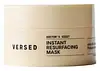
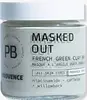
Versed Doctor's Visit Instant Resurfacing Mask Versus Provence Beauty Masked Out French Green Clay Mask
This wash off mask is formulated around Salicylic Acid to clear breakouts and unclog pores.

What's inside
What's inside
 Key Ingredients
Benefits
Concerns
Ingredients Side-by-side
Water
Skin ConditioningGlycerin
Humectant


Polyacrylate Crosspolymer-6
Emulsion StabilisingPropanediol
Solvent
Lactic Acid
Buffering









Glycolic Acid
Buffering

Salicylic Acid
Masking


Ananas Sativus Fruit Extract
Skin ConditioningLactobacillus/Papaya Fruit Ferment Extract
Abrasive
Ocimum Basilicum Flower/Leaf Extract
TonicCurcuma Longa Root Extract
Antioxidant

Evodia Rutaecarpa Fruit Extract
Skin ConditioningMelia Azadirachta Flower Extract
Skin ConditioningMelia Azadirachta Leaf Extract
Skin ConditioningOcimum Sanctum Leaf Extract
Skin ConditioningCorallina Officinalis Extract
Skin Conditioning

Lactobacillus Ferment
Skin Conditioning
1,2-Hexanediol
Skin Conditioning
Caprylhydroxamic Acid
ChelatingLeuconostoc/Radish Root Ferment Filtrate
Antimicrobial
Potassium Hydroxide
BufferingWater, Glycerin, Polyacrylate Crosspolymer-6, Propanediol, Lactic Acid, Glycolic Acid, Salicylic Acid, Ananas Sativus Fruit Extract, Lactobacillus/Papaya Fruit Ferment Extract, Ocimum Basilicum Flower/Leaf Extract, Curcuma Longa Root Extract, Evodia Rutaecarpa Fruit Extract, Melia Azadirachta Flower Extract, Melia Azadirachta Leaf Extract, Ocimum Sanctum Leaf Extract, Corallina Officinalis Extract, Lactobacillus Ferment, 1,2-Hexanediol, Caprylhydroxamic Acid, Leuconostoc/Radish Root Ferment Filtrate, Potassium Hydroxide
Water
Skin ConditioningBentonite
Absorbent
Kaolin
Abrasive
Caprylic/Capric Triglyceride
Masking
Glycerin
Humectant
Propanediol
Solvent
Arachidyl Alcohol
Emollient
Niacinamide
Smoothing
Helianthus Annuus Seed Wax
Skin Conditioning
Salix Alba Bark Extract
Astringent
Caffeine
Skin Conditioning
Prunus Armeniaca Fruit Extract
Skin ConditioningTerminalia Ferdinandiana Fruit Extract
Antioxidant
Morus Alba Leaf Extract
Skin ConditioningPinus Pinaster Bark Extract
Antioxidant
Helichrysum Italicum Flower Extract
Perfuming
Melia Azadirachta Leaf Extract
Skin ConditioningMelia Azadirachta Flower Extract
Skin ConditioningLecithin
Emollient
Butyrospermum Parkii Butter
Skin Conditioning
Behenyl Alcohol
Emollient
Arachidyl Glucoside
EmulsifyingCetyl Alcohol
Emollient
Tocopherol
Antioxidant
Polyacrylate-13
Caprylhydroxamic Acid
Chelating1,2-Hexanediol
Skin Conditioning
Polyacrylate Crosspolymer-6
Emulsion StabilisingPolyisobutene
Polysorbate 20
Emulsifying
Water, Bentonite, Kaolin, Caprylic/Capric Triglyceride, Glycerin, Propanediol, Arachidyl Alcohol, Niacinamide, Helianthus Annuus Seed Wax, Salix Alba Bark Extract, Caffeine, Prunus Armeniaca Fruit Extract, Terminalia Ferdinandiana Fruit Extract, Morus Alba Leaf Extract, Pinus Pinaster Bark Extract, Helichrysum Italicum Flower Extract, Melia Azadirachta Leaf Extract, Melia Azadirachta Flower Extract, Lecithin, Butyrospermum Parkii Butter, Behenyl Alcohol, Arachidyl Glucoside, Cetyl Alcohol, Tocopherol, Polyacrylate-13, Caprylhydroxamic Acid, 1,2-Hexanediol, Polyacrylate Crosspolymer-6, Polyisobutene, Polysorbate 20
Reviews
Ingredients Explained
These ingredients are found in both products.
Ingredients higher up in an ingredient list are typically present in a larger amount.
1,2-Hexanediol is a synthetic liquid and another multi-functional powerhouse.
It is a:
- Humectant, drawing moisture into the skin
- Emollient, helping to soften skin
- Solvent, dispersing and stabilizing formulas
- Preservative booster, enhancing the antimicrobial activity of other preservatives
Caprylhydroxamic Acid is a chelating agent that helps cosmetics stay fresh, stable, and consistent over time.
Chelating agents help prevent metal ions from binding to other ingredients. This helps prevent unwanted reactions and effects from using the product. It also helps prevent the growth of unwanted microbes in products that contain water.
Caprylhydroxamic Acid is often used with natural antimicrobial products as an alternative to preservatives.
Learn more about Caprylhydroxamic AcidGlycerin (or glycerol) is a compound naturally found in your skin. It's a powerhouse humectant that pulls water into the stratum corneum.
Topically, glycerin does several things at once:
Your skin makes glycerin on its own (mostly from sebaceous oil breakdown) and shuttles it to your outermost layer of skin, or your epidermis, via aquaporin-3.
Aquaporin-3 is a transporter that is essential for normal skin hydration, elasticity, and repair. Interestingly, mice lacking in AQP3 have dry and less elastic skin that can be fully corrected with glycerin.
This ingredient is non-irritating, plays well with almost every ingredient, and works across all skin types. Typical use is anywhere between 3-10% but can go up to 79% in some leave-on products.
Just know very high concentrations (>40%) can feel tacky in low humidity.
Glycerin is the name for this ingredient in American English. British English uses Glycerol/Glycerine.
Learn more about GlycerinMelia Azadirachta Flower Extract is from the Neem tree. Neem trees originate from India.
Melia Azadirachta Flower Extract contains antioxidants. Antioxidants help fight free-radicals. Free-radicals are molecules that may damage your skin cells, such as pollution.
The flowers of this tree are lilac colored.
Learn more about Melia Azadirachta Flower ExtractThis ingredient is also known as neem leaf extract. It contains natural compounds like nimbidin, quercetin, and other polyphenols that give it antibacterial, antifungal, and anti-inflammatory activity.
Lab studies have shown neem leaf extract can inhibit acne-related bacteria and help calm skin. Animal studies on wound gels using 1-3% neem leaf extract found it sped up healing without causing irritation.
A wound-healing study testing gels with the extract at 1%, 2%, and 3% concentrations and found none of them irritated the skin.
Most commercial products also use it in a similar low range (typically under 5%).
Allergy-wise, there are some case reports on neem oil causing allergic contact dermatitis so people with plant/botanical sensitivities may want to patch test first.
Learn more about Melia Azadirachta Leaf ExtractPolyacrylate Crosspolymer-6 is a texture enhancer and pH adjuster.
It is be used to thicken water-based products and create a gel-texture with a velvet feel.
One manufacturer claims this ingredient to have a pH range of 2-8 and to be biodegradable.
This ingredient is also known as Sepimax Zen.
Learn more about Polyacrylate Crosspolymer-6Propanediol is an all-star ingredient. It softens, hydrates, and smooths the skin.
It’s often used to:
Propanediol is not likely to cause sensitivity and considered safe to use. It is derived from corn or petroleum with a clear color and no scent.
Learn more about PropanediolWater. It's the most common cosmetic ingredient of all. You'll usually see it at the top of ingredient lists, meaning that it makes up the largest part of the product.
So why is it so popular? Water most often acts as a solvent - this means that it helps dissolve other ingredients into the formulation.
You'll also recognize water as that liquid we all need to stay alive. If you see this, drink a glass of water. Remember to stay hydrated!
Learn more about Water

