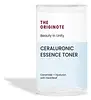
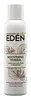
The Originote Ceraluronic Essence Toner with Ceramide + Hyaluronic Acid Versus Garden of Eden Soothing Toner
This hydrating toner is formulated around Sodium Hyaluronate and Beta-Glucan to hydrate skin and strengthen the skin barrier.
This calming toner is formulated around Allantoin and Aloe Barbadensis Leaf Extract to calm redness and hydrate skin.


What's inside
What's inside
 Key Ingredients
Benefits
Concerns
Ingredients Side-by-side
Water
Skin ConditioningButylene Glycol
Humectant

Glycerin
Humectant
Glycereth-26
Humectant
Erythritol
Humectant
1,2-Hexanediol
Skin Conditioning
Hydroxyacetophenone
Antioxidant
Acrylates/C10-30 Alkyl Acrylate Crosspolymer
Emulsion StabilisingHydroxyethylcellulose
Emulsion StabilisingTriethanolamine
BufferingDisodium EDTA
PEG-40 Hydrogenated Castor Oil
Emulsifying


Stephania Tetrandra Root Extract
Skin ConditioningSodium Hyaluronate
Humectant


Beta-Glucan
Skin Conditioning
Propylene Glycol
Humectant
Bisabolol
Antioxidant
Houttuynia Cordata Extract
Skin Conditioning
Caprylic/Capric Triglyceride
Masking
Hydrogenated Lecithin
Emulsifying
Hexylene Glycol
EmulsifyingStearic Acid
Cleansing
Cholesterol
Emollient
Zingiber Officinale Root Extract
Masking
Ceramide NP
Skin Conditioning
Water, Butylene Glycol, Glycerin, Glycereth-26, Erythritol, 1,2-Hexanediol, Hydroxyacetophenone, Acrylates/C10-30 Alkyl Acrylate Crosspolymer, Hydroxyethylcellulose, Triethanolamine, Disodium EDTA, PEG-40 Hydrogenated Castor Oil, Stephania Tetrandra Root Extract, Sodium Hyaluronate, Beta-Glucan, Propylene Glycol, Bisabolol, Houttuynia Cordata Extract, Caprylic/Capric Triglyceride, Hydrogenated Lecithin, Hexylene Glycol, Stearic Acid, Cholesterol, Zingiber Officinale Root Extract, Ceramide NP
Water
Skin ConditioningPropylene Glycol
Humectant
Glycerin
Humectant
Polysorbate 20
Emulsifying
1,2-Hexanediol
Skin Conditioning
Caprylyl Glycol
Emollient
Allantoin
Skin Conditioning
Lavandula Angustifolia Oil
Masking



Aloe Barbadensis Leaf Extract
Emollient
Lactic Acid
Buffering





Tetrasodium EDTA
Hamamelis Virginiana Leaf Extract
Skin Conditioning
Ginkgo Biloba Leaf Extract
Skin Conditioning
Vitis Vinifera Seed Extract
Antimicrobial
Potassium Sorbate
Preservative
Sodium Benzoate
Masking
Water, Propylene Glycol, Glycerin, Polysorbate 20, 1,2-Hexanediol, Caprylyl Glycol, Allantoin, Lavandula Angustifolia Oil, Aloe Barbadensis Leaf Extract, Lactic Acid, Tetrasodium EDTA, Hamamelis Virginiana Leaf Extract, Ginkgo Biloba Leaf Extract, Vitis Vinifera Seed Extract, Potassium Sorbate, Sodium Benzoate
Ingredients Explained
These ingredients are found in both products.
Ingredients higher up in an ingredient list are typically present in a larger amount.
1,2-Hexanediol is a synthetic liquid and another multi-functional powerhouse.
It is a:
- Humectant, drawing moisture into the skin
- Emollient, helping to soften skin
- Solvent, dispersing and stabilizing formulas
- Preservative booster, enhancing the antimicrobial activity of other preservatives
Glycerin (or glycerol) is a compound naturally found in your skin. It's a powerhouse humectant that pulls water into the stratum corneum.
Topically, glycerin does several things at once:
Your skin makes glycerin on its own (mostly from sebaceous oil breakdown) and shuttles it to your outermost layer of skin, or your epidermis, via aquaporin-3.
Aquaporin-3 is a transporter that is essential for normal skin hydration, elasticity, and repair. Interestingly, mice lacking in AQP3 have dry and less elastic skin that can be fully corrected with glycerin.
This ingredient is non-irritating, plays well with almost every ingredient, and works across all skin types. Typical use is anywhere between 3-10% but can go up to 79% in some leave-on products.
Just know very high concentrations (>40%) can feel tacky in low humidity.
Glycerin is the name for this ingredient in American English. British English uses Glycerol/Glycerine.
Learn more about GlycerinPropylene Glycol is a synthetic, colorless, odorless liquid that has been a staple in cosmetics for decades. It is a skin conditioning agent, humectant, and solvent.
As a humectant, it draw water to the skin to reduce flaking and restore suppleness. It's also a solvent that helps dissolve other actives and keeps formulas stable across temperature changes.
The CIR Expert Panel has confirmed this ingredient to be nontoxic and clinical studies show no sensitization at cosmetic use concentrations.
True allergic reactions are quite rare: a 15-year retrospective study of 6,751 patients found only 0.31% had a positive reaction (and less than half were considered clinically relevant).
It seemed that when sensitization does occur, it's most commonly linked to topical medication (like corticosteroids) and not cosmetics. Allergic contact dermatitis also appears largely limited to individuals with underlying skin conditions.
Overall, propylene glycol is a well-studied ingredient that most people can tolerate without issue.
Learn more about Propylene GlycolWater. It's the most common cosmetic ingredient of all. You'll usually see it at the top of ingredient lists, meaning that it makes up the largest part of the product.
So why is it so popular? Water most often acts as a solvent - this means that it helps dissolve other ingredients into the formulation.
You'll also recognize water as that liquid we all need to stay alive. If you see this, drink a glass of water. Remember to stay hydrated!
Learn more about Water

