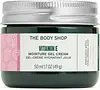
This brightening moisturizer is formulated around Tocopheryl Acetate and Sodium Hyaluronate to brighten dull-looking skin and hydrate skin.
This oil-control moisturizer is formulated around Aluminum Starch Octenylsuccinate and Zinc Sulfate to balance excess oil.

What's inside
What's inside
 Key Ingredients

No key ingredients
Benefits
Concerns
Ingredients Side-by-side
Butylene Glycol
Humectant

Alcohol Denat.
Antimicrobial




Glycerin
Humectant
Carbomer
Emulsion StabilisingPolyglyceryl-4 Caprate
EmulsifyingPhenoxyethanol
Preservative
Caprylyl Glycol
Emollient
Tocopheryl Acetate
Antioxidant


Sodium Hydroxide
BufferingSodium Hyaluronate
Humectant


Parfum
Masking

Salicylic Acid
Masking




Trisodium Ethylenediamine Disuccinate
Benzyl Benzoate
Antimicrobial
Rubus Idaeus Juice
AstringentBenzyl Alcohol
Perfuming
Geraniol
Perfuming
Linalool
Perfuming
Limonene
Perfuming
Hydroxycitronellal
Perfuming
Sodium Benzoate
Masking
Alpha-Isomethyl Ionone
Perfuming
Potassium Sorbate
Preservative
CI 14700
Cosmetic ColorantButylene Glycol, Alcohol Denat., Glycerin, Carbomer, Polyglyceryl-4 Caprate, Phenoxyethanol, Caprylyl Glycol, Tocopheryl Acetate, Sodium Hydroxide, Sodium Hyaluronate, Parfum, Salicylic Acid, Trisodium Ethylenediamine Disuccinate, Benzyl Benzoate, Rubus Idaeus Juice, Benzyl Alcohol, Geraniol, Linalool, Limonene, Hydroxycitronellal, Sodium Benzoate, Alpha-Isomethyl Ionone, Potassium Sorbate, CI 14700
Water
Skin ConditioningGlycerin
Humectant
Butylene Glycol
Humectant
Caprylic/Capric Triglyceride
Masking
Butyrospermum Parkii Butter
Skin Conditioning


Sodium Polyacrylate
Absorbent
Phenoxyethanol
Preservative
Caprylyl Glycol
Emollient
Aluminum Starch Octenylsuccinate
Absorbent
Carbomer
Emulsion StabilisingSesamum Indicum Seed Oil
Emollient
Inulin
Skin Conditioning
Trisodium Ethylenediamine Disuccinate
Parfum
Masking
Sodium Hydroxide
BufferingGlyceryl Acrylate/Acrylic Acid Copolymer
HumectantLaminaria Saccharina Extract
Skin ProtectingLecithin
Emollient
Zinc Sulfate
Antimicrobial
Xanthan Gum
EmulsifyingLinalool
Perfuming
Benzyl Salicylate
Perfuming
Benzyl Alcohol
Perfuming
Pyridoxine Hcl
Skin ConditioningCitric Acid
Buffering
CI 42090
Cosmetic ColorantCI 19140
Cosmetic ColorantCI 60730
Cosmetic ColorantCI 60725
Cosmetic ColorantWater, Glycerin, Butylene Glycol, Caprylic/Capric Triglyceride, Butyrospermum Parkii Butter, Sodium Polyacrylate, Phenoxyethanol, Caprylyl Glycol, Aluminum Starch Octenylsuccinate, Carbomer, Sesamum Indicum Seed Oil, Inulin, Trisodium Ethylenediamine Disuccinate, Parfum, Sodium Hydroxide, Glyceryl Acrylate/Acrylic Acid Copolymer, Laminaria Saccharina Extract, Lecithin, Zinc Sulfate, Xanthan Gum, Linalool, Benzyl Salicylate, Benzyl Alcohol, Pyridoxine Hcl, Citric Acid, CI 42090, CI 19140, CI 60730, CI 60725
Reviews
Ingredients Explained
These ingredients are found in both products.
Ingredients higher up in an ingredient list are typically present in a larger amount.
Benzyl Alcohol is an aromatic alcohol with several roles: it's a preservative, solvent, and mild fragrance component with a floral scent.
This ingredient has been deemed safe for use in cosmetic formulations at concentrations up to 5%, and up to 10% in hair dyes. You'll typically see 0.5-2% in most rinse-off or leave-on products.
As a preservative, it works by disrupting the membrane of microbial proteins. This helps keep bacteria and fungi from growing in your products.
The sensitization picture is actually quite assuring as well:of nearly 71,000 patients patch tested with benzyl alcohol, only 0.21% showed a positive reaction with most of them being weakly positive.
This led researchers to conclude that benzyl alcohol cannot be regarded as a significant contact allergen.
It is worth noting this ingredient is classified as one of the EU's regulated fragrance allergens and restricted to 1% in finished products.
Labels must also declare it in concentrations above 0.001% in leave-on products and 0.01% in rinse-off products.
At concentrations around 5%, localized redness and itching can appear as a direct irritant response and not as a true allergic reaction.
Learn more about Benzyl AlcoholButylene Glycol (or BG) is used within cosmetic products for a few different reasons:
Overall, Butylene Glycol is a safe and well-rounded ingredient that works well with other ingredients.
Though this ingredient works well with most skin types, some people with sensitive skin may experience a reaction such as allergic rashes, closed comedones, or itchiness.
Learn more about Butylene GlycolCaprylyl Glycol is a humectant, skin conditioner, emollient, and preservative booster derived from either caprylic acid or synthetically created.
Typical use levels vary from 0.3-1% as a preservative booster and go up to 2% to condition skin.
Because it is not a free-fatty acid, this ingredient is fungal acne safe (there's nothing for Malassezia to feed on).
Learn more about Caprylyl GlycolCarbomer is a synthetic thickening and gelling agent. It's basically the ingredient that gives a lot of serums, gels, creams, and sunscreens their smooth, non-sticky texture.
Although legally permitted at very high levels, carbomers are normally used at concentrations below 1%.
It also needs to be neutralized to actually thicken, and because it is a large molecule, it doesn't really penetrate the skin barrier.
Allergy-wise, the risk is very low. Clinical studies show carbomers have low potential for skin irritation/sensitization even at concentrations up to 100%.
A 2024 UK study patch-tested 1,302 patients and found true allergy to the parent group of carbomer to be rare with no confirmed relevant reactions.
Learn more about CarbomerGlycerin (or glycerol) is a compound naturally found in your skin. It's a powerhouse humectant that pulls water into the stratum corneum.
Topically, glycerin does several things at once:
Your skin makes glycerin on its own (mostly from sebaceous oil breakdown) and shuttles it to your outermost layer of skin, or your epidermis, via aquaporin-3.
Aquaporin-3 is a transporter that is essential for normal skin hydration, elasticity, and repair. Interestingly, mice lacking in AQP3 have dry and less elastic skin that can be fully corrected with glycerin.
This ingredient is non-irritating, plays well with almost every ingredient, and works across all skin types. Typical use is anywhere between 3-10% but can go up to 79% in some leave-on products.
Just know very high concentrations (>40%) can feel tacky in low humidity.
Glycerin is the name for this ingredient in American English. British English uses Glycerol/Glycerine.
Learn more about GlycerinLinalool is a fragrance and helps add scent to products. It's derived from common plants such as cinnamon, mint, citrus, and lavender.
Like Limonene, this ingredient oxidizes when exposed to air. Oxidized linalool can cause allergies and skin sensitivity.
This ingredient has a scent that is floral, spicy tropical, and citrus-like.
Learn more about LinaloolParfum is a catch-all term for an ingredient or more that is used to give a scent to products.
Also called "fragrance", this ingredient can be a blend of hundreds of chemicals or plant oils. This means every product with "fragrance" or "parfum" in the ingredients list is a different mixture.
For instance, Habanolide is a proprietary trade name for a specific aroma chemical. When used as a fragrance ingredient in cosmetics, most aroma chemicals fall under the broad labeling category of “FRAGRANCE” or “PARFUM” according to EU and US regulations.
The term 'parfum' or 'fragrance' is not regulated in many countries. In many cases, it is up to the brand to define this term.
For instance, many brands choose to label themselves as "fragrance-free" because they are not using synthetic fragrances. However, their products may still contain ingredients such as essential oils that are considered a fragrance by INCI standards.
One example is Calendula flower extract. Calendula is an essential oil that still imparts a scent or 'fragrance'.
Depending on the blend, the ingredients in the mixture can cause allergies and sensitivities on the skin. Some ingredients that are known EU allergens include linalool and citronellol.
Parfum can also be used to mask or cover an unpleasant scent.
The bottom line is: not all fragrances/parfum/ingredients are created equally. If you are worried about fragrances, we recommend taking a closer look at an ingredient. And of course, we always recommend speaking with a professional.
Learn more about ParfumPhenoxyethanol is one of the most widely used preservatives in skincare (and for good reason!).
It has a large spectrum of antimicrobial activity and especially effective bacteria, yeast, and mold while only having a weak effect on your skin's natural microbiome.
On a cellular level, it disrupts the cell membranes of microbes by poking holes that make the cell leak. This shuts down the chemical reactions the microbe needs to make energy so it can no longer survive.
Another perk of this ingredient is that it stays functional across a wide pH range (3-10).
You'll often see it paired with boosters like Ethylhexylglycerin; one study showed that a 1:9 ratio of Ethylhexylglycerin to Phenoxyethanol damages bacterial membranes as effectively as doubling the Phenoxyethanol concentration on its own.
Typical use concentrations range from 0.3-1% depending on the formula, and this ingredient is capped at 1% int the EU.
Safety-wise, the fear mongering does not hold up to the evidence. The EU's Scientific Committee on Consumer Safety and FDA consider it safe as a preservative at up to 1%, including for children of all ages.
Adverse systemic effects only showed up in animal studies at exposures roughly 200x higher than what people get from cosmetics. And despite its very widespread use, this ingredient is a rare sensitizer and allergic reactions are uncommon.
Learn more about PhenoxyethanolSodium Hydroxide is also known as lye or caustic soda. It is used to adjust the pH of products; many ingredients require a specific pH to be effective.
In small amounts, sodium hydroxide is considered safe to use. However, large amounts may cause chemical burns due to its high alkaline.
Your skin has a natural pH and acid mantle. This acid mantle helps prevent harmful bacteria from breaking through. The acid mantle also helps keep your skin hydrated.
"Alkaline" refers to a high pH level. A low pH level would be considered acidic.
Learn more about Sodium HydroxideTrisodium Ethylenediamine Disuccinate is used to help stabilize a product.
It is a chelating agent, meaning it helps prevent metal ions from binding to other ingredients. This prevents unwanted reactions in products. Metal ions can come into a product via the water ingredient. They are found in trace amounts and are not known to be harmful.


