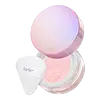
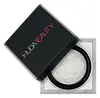
Tarte Creaseless Setting & Brightening Powder Versus Huda Beauty Easy Bake Loose Baking & Setting Powder

What's inside
What's inside
 Key Ingredients
Benefits
Concerns
Ingredients Side-by-side
Mica
Cosmetic ColorantSilica
Abrasive


Tapioca Starch
Zea Mays Starch
Absorbent
Aluminum Starch Octenylsuccinate
Absorbent
Lauroyl Lysine
Skin Conditioning
Alumina
Abrasive
Boron Nitride
Absorbent
Kaolin
Abrasive
Water
Skin ConditioningBenzyl Alcohol
Perfuming






Cetyl Alcohol
Emollient



Phenoxyethanol
Preservative
Propanediol
Solvent

Decylene Glycol
Skin Conditioning1,2-Hexanediol
Skin Conditioning
Glycerin
Humectant
Lonicera Japonica Flower Extract
Skin ConditioningOcimum Basilicum Extract
Antioxidant
Trisodium Ethylenediamine Disuccinate
ChelatingLinalool
Perfuming
Citrus Paradisi Fruit Extract
Skin ConditioningVegetable Oil
Skin Conditioning
Usnea Barbata Extract
Caprylhydroxamic Acid
ChelatingTocopherol
Antioxidant




CI 77163
Cosmetic Colorant
CI 77742
Cosmetic ColorantCI 77007
Cosmetic ColorantIron Oxides
CI 19140
Cosmetic ColorantMica, Silica, Tapioca Starch, Zea Mays Starch, Aluminum Starch Octenylsuccinate, Lauroyl Lysine, Alumina, Boron Nitride, Kaolin, Water, Benzyl Alcohol, Cetyl Alcohol, Phenoxyethanol, Propanediol, Decylene Glycol, 1,2-Hexanediol, Glycerin, Lonicera Japonica Flower Extract, Ocimum Basilicum Extract, Trisodium Ethylenediamine Disuccinate, Linalool, Citrus Paradisi Fruit Extract, Vegetable Oil, Usnea Barbata Extract, Caprylhydroxamic Acid, Tocopherol, CI 77163, CI 77742, CI 77007, Iron Oxides, CI 19140
Talc
Abrasive
Synthetic Fluorphlogopite
Silica
Abrasive
Dimethicone
Emollient
Nylon-12

Caprylyl Glycol
Emollient
Pentylene Glycol
Skin Conditioning
Oryza Sativa Starch
AbsorbentPhenyl Trimethicone
Skin Conditioning
Sodium Dehydroacetate
Preservative
Octyldodecyl Stearoyl Stearate
Emollient
Diisostearyl Malate
EmollientParfum
Masking
Tocopheryl Acetate
Antioxidant
Benzyl Salicylate
Perfuming
Sorbitan Sesquioleate
Emulsifying
Hexyl Cinnamal
Perfuming
Linalool
Perfuming
Coumarin
Perfuming
Hydroxycitronellal
Perfuming
Benzyl Benzoate
Antimicrobial
Iron Oxides
CI 77492
Cosmetic ColorantCI 77491
Cosmetic ColorantUltramarines
CI 77007
Cosmetic ColorantCI 19140
Cosmetic ColorantCI 77499
Cosmetic ColorantCI 73360
Cosmetic ColorantTalc, Synthetic Fluorphlogopite, Silica, Dimethicone, Nylon-12, Caprylyl Glycol, Pentylene Glycol, Oryza Sativa Starch, Phenyl Trimethicone, Sodium Dehydroacetate, Octyldodecyl Stearoyl Stearate, Diisostearyl Malate, Parfum, Tocopheryl Acetate, Benzyl Salicylate, Sorbitan Sesquioleate, Hexyl Cinnamal, Linalool, Coumarin, Hydroxycitronellal, Benzyl Benzoate, Iron Oxides, CI 77492, CI 77491, Ultramarines, CI 77007, CI 19140, CI 77499, CI 73360
Reviews
Ingredients Explained
These ingredients are found in both products.
Ingredients higher up in an ingredient list are typically present in a larger amount.
CI 19140 is also known as Tartrazine. Tartrazine is a synthetic dye used in cosmetics, foods, and medicine to add a yellow color.
Tartrazine is created from petroleum and is water-soluble.
Some people may experience allergies from this dye, especially asthmatics and those with an aspirin intolerance.
Learn more about CI 19140This pigment is called Ultramarine blue lazurite. It gives a saturated blue color, but can be used to create other colors as well.
According to the manufacturer, it is usually made from kaolin, sodium sulfate, sodium carbonate, sulfur, and charcoal.
Linalool is a small, naturally occurring scent molecule found in plants like lavender, coriander, bergamot, and more.
It is one of the two most-used fragrance ingredients in cosmetics and added purely for smell. Since it's not used for a skin benefit, there's no "effective dose". Concentration depends on the fragrance load of the product.
The EU requires it to be named on the label above 0.001% in leave-on and 0.01% in rinse-off products.
Fresh linalool is a weak sensitizer but air exposure turns some of it into hydroperoxides, which are strong sensitizers. Those oxidation products are the actual allergy concern.
Patch-test clinics see positive reactions to linalool hydroperoxides in about 4% to 12% of dermatitis patients depending on country and test concentration.
Resassuringly, one analytical study found hydroperoxide levels in real fragranced products to be orders of magnitude below what induced sensitization in animal studies with no evidence of oxidation building up during normal storage.
The practical takeaway is that linalool is fine for most people but worth avoiding if you have a confirmed fragrance contact allergy or a badly compromised barrier.
Products stored a long time after opening are also the high-risk scenario since that is when oxidation happens.
The scent of linalool is described as floral, spicy tropical, and citrus-like.
Learn more about LinaloolSilica, also known as silicon dioxide, is a naturally occurring mineral. It is used as a fine, spherical, and porous powder in cosmetics.
Though it has exfoliant properties, the function of silica varies depending on the product.
The unique structure of silica enhances the spreadability and adds smoothness, making it a great texture enhancer.
It is also used as an active carrier, emulsifier, and mattifier due to its ability to absorb excess oil.
In some products, tiny microneedles called spicules are made from silica or hydrolyzed sponge. When you rub them in, they lightly polish away dead skin layers and enhance the penetration of active ingredients.
Learn more about SilicaThis ingredient is a combination of red, black, and yellow iron oxide pigments. This combination of colors is usually found in foundation, because it results in a "skin" color.
The EU typically uses CI numbers for colorants when applicable, such as CI 77489. In the US, iron oxides are regulated as color additives and "iron oxides" is the most commonly used name in US cosmetic practice.
A 2021 paper looked at skincare formulations containing iron oxides and found that they reduced transmission of blue light when measured optically. In simple terms, the pigment particles helped block or scatter part of the visible light spectrum in lab testing and the authors suggest this could translate into better protection against blue-light-related skin effects.
There is also clinical and experimental research showing that tinted products containing iron oxides can reduce visible light-induced pigmentation:
Please note, whether a product reduces visible or blue light depends on things like:
In the EU's CosIng database, iron oxides are only listed as a colorant. CosIng groups ingredients by their main cosmetic role, such as colorant, preservative, or UV filter.
Though studies say iron oxides can "attenuate blue light", they're describing an optical property and not an officially recognized cosmetic function.
So CosIng isn’t contradicting the research. It’s just classifying iron oxides by what they officially are: pigments that add color.
Learn more about Iron Oxides

