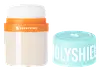
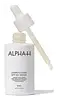
Somethinc No Sebum Mineral Blur Translucent Loose Powder SPF39 PA++++ Versus Alpha-H Dawn to Dusk SPF 50+ SPF Serum
This chemical sunscreen covers burning UVB but little of the UVA that drives aging.
This chemical sunscreen covers the full UV range and blocks ~98% of UVB at SPF 50.


What's inside
What's inside
 Key Ingredients
Benefits
Concerns
Ingredients Side-by-side
CI 77891
Cosmetic ColorantPolymethyl Methacrylate

Mica
Cosmetic ColorantSilica
Abrasive

Zea Mays Starch
Absorbent
Vinyl Dimethicone/Methicone Silsesquioxane Crosspolymer

Ethylhexyl Methoxycinnamate
UV Absorber


Talc
Abrasive
Magnesium Myristate


Ethylhexyl Salicylate
UV Absorber
CI 77492
Cosmetic ColorantButyloctyl Salicylate
Skin Conditioning
Caprylyl Glycol
Emollient
Ethylhexylglycerin
Skin ConditioningTriethoxycaprylylsilane
Methicone
Emollient
Aluminum Hydroxide
EmollientCI 77491
Cosmetic ColorantCI 77499
Cosmetic ColorantBHT
Antioxidant
Tocopherol
Antioxidant






CI 77891, Polymethyl Methacrylate, Mica, Silica, Zea Mays Starch, Vinyl Dimethicone/Methicone Silsesquioxane Crosspolymer, Ethylhexyl Methoxycinnamate, Talc, Magnesium Myristate, Ethylhexyl Salicylate, CI 77492, Butyloctyl Salicylate, Caprylyl Glycol, Ethylhexylglycerin, Triethoxycaprylylsilane, Methicone, Aluminum Hydroxide, CI 77491, CI 77499, BHT, Tocopherol
Water
Skin ConditioningHomosalate
Skin Conditioning
Ethylhexyl Salicylate
UV Absorber
Dibutyl Adipate
EmollientGlycerin
Humectant
Butyl Methoxydibenzoylmethane
UV Absorber
Bis-Ethylhexyloxyphenol Methoxyphenyl Triazine
UV Absorber
Dimethicone
Emollient
Ethylhexyl Triazone
UV Absorber
Butyloctyl Salicylate
Skin Conditioning
Vp/Hexadecene Copolymer
Aloe Barbadensis Leaf Juice
Skin Conditioning
Phenylbenzimidazole Sulfonic Acid
UV Absorber
Niacinamide
Smoothing


Phenoxyethanol
Preservative
Aminomethyl Propanol
BufferingBenzyl Alcohol
Perfuming



Acrylates/C10-30 Alkyl Acrylate Crosspolymer
Emulsion StabilisingTocopheryl Acetate
Antioxidant
Ethylhexylglycerin
Skin ConditioningSodium Hyaluronate
Humectant
Disodium EDTA
ChelatingWater, Homosalate, Ethylhexyl Salicylate, Dibutyl Adipate, Glycerin, Butyl Methoxydibenzoylmethane, Bis-Ethylhexyloxyphenol Methoxyphenyl Triazine, Dimethicone, Ethylhexyl Triazone, Butyloctyl Salicylate, Vp/Hexadecene Copolymer, Aloe Barbadensis Leaf Juice, Phenylbenzimidazole Sulfonic Acid, Niacinamide, Phenoxyethanol, Aminomethyl Propanol, Benzyl Alcohol, Acrylates/C10-30 Alkyl Acrylate Crosspolymer, Tocopheryl Acetate, Ethylhexylglycerin, Sodium Hyaluronate, Disodium EDTA
Ingredients Explained
These ingredients are found in both products.
Ingredients higher up in an ingredient list are typically present in a larger amount.
Butyloctyl Salicylate is a chemical UV filter structurally similar to octisalate. It is a photostabilizer, SPF booster, emollient and solvent. This ingredient helps evenly spread out ingredients.
According to a manufacturer, it is suitable for pairing with micro Titanium Dioxide, Zinc Oxide, and pigments.
Photostabilizers help stabilize UV-filters and prevents them from degrading quickly.
Learn more about Butyloctyl SalicylateEthylhexyl Salicylate (also called Octisalate or Octyl Salicylate) is an oil-soluble organic UV filter that's been used in sunscreen since the 1950's.
It absorbs UVB light in the 280-320 nm range with a peak absorbance around 306 nm.
You'll often see it paired with other UV filters to boost overall SPF because octisalate is a fairly week filter on its own.
The reason you'll see it so often is because it can help solubilize and stabilize the trickier filters like oxybenzone and avobenzone.
Unlike these filters, octisalate has pretty good photostability and doesn't create skin-damaging free radicals when exposed to sunlight.
The fatty-alcohol part of the molecule also gives it a light, emollient feel so it doubles as a nice texture enhancer.
Usage levels vary around the world:
Safety-wise, this ingredient has a pretty reassuring track record. The EU's Scientific Committee on Consumer Products (SCCP) found very low skin penetration in human skin tests and negative results for irritation, phototoxicity, and photoallergy.
The real-world allergy risk is pretty low too; a 2012 European study of 1,031 people recorded only 2 reactions to it (a rate of 0.19%).
You might have seen scary headlines about sunscreen getting into your blood.
In 2019, the FDA found that several chemical filters can absorb through the skin and show up in the bloodstream at small but measurable levels.
Here's the important part: these tiny levels are just a cutoff the FDA uses to decide which ingredients need more testing and doesn't mean anything harmful was found.
The researchers were clear that the results are no reason to stop wearing sunscreen.
Learn more about Ethylhexyl SalicylateEthylhexylglycerin is created from glycerin. It is a multitasker ingredient that:
The CIR Expert Panel found minimal skin absorption or sensitization of any kind in a safety assessment. Though this ingredient is considered well-tolerated, a small number of cases of allergic dermatitis have been published since 2002. Just be sure to patch test if you are unsure.
Industry-reported use ranges from 8% in rinse-off products and 2% in leave-on formulations.
Learn more about Ethylhexylglycerin

