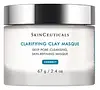
This wash off mask is formulated around Salicylic Acid to clear breakouts and unclog pores.


What's inside
What's inside
 Key Ingredients
Benefits
Concerns
Ingredients Side-by-side
Water
Skin ConditioningKaolin
Abrasive



Bentonite
Absorbent
Aloe Barbadensis Leaf Extract
Emollient

Aloe Barbadensis Leaf Juice
Skin Conditioning
Propylene Glycol
Humectant

Glycerin
Humectant

CI 77891
Cosmetic ColorantCaprylic/Capric Triglyceride
Masking
Cetearyl Alcohol
Emollient



Dimethicone
Emollient
Lithium Magnesium Sodium Silicate
AbsorbentPhenoxyethanol
Preservative
Vaccinium Myrtillus Fruit Extract
Skin ConditioningCaprylyl Glycol
Emollient
Helianthus Annuus Seed Oil
Emollient
Saccharum Officinarum Extract
MoisturisingSodium Hydroxide
BufferingCitrus Aurantium Dulcis Fruit Water
MaskingCitrus Limon Fruit Extract
Masking
Acer Saccharum Extract
Skin ConditioningChamomilla Recutita Extract
Skin Conditioning
Rosmarinus Officinalis Leaf Oil
Masking
Cucumis Sativus Fruit Extract
Emollient
Pelargonium Graveolens Flower Oil
Masking


Lavandula Hybrida Oil
Emollient
Curcuma Longa Root Extract
Antioxidant
Sclareolide
Masking
Rosa Damascena Flower Oil
Masking
Jasminum Officinale Extract
Masking
Jasminum Sambac Flower Extract
Masking
Water, Kaolin, Bentonite, Aloe Barbadensis Leaf Extract, Aloe Barbadensis Leaf Juice, Propylene Glycol, Glycerin, CI 77891, Caprylic/Capric Triglyceride, Cetearyl Alcohol, Dimethicone, Lithium Magnesium Sodium Silicate, Phenoxyethanol, Vaccinium Myrtillus Fruit Extract, Caprylyl Glycol, Helianthus Annuus Seed Oil, Saccharum Officinarum Extract, Sodium Hydroxide, Citrus Aurantium Dulcis Fruit Water, Citrus Limon Fruit Extract, Acer Saccharum Extract, Chamomilla Recutita Extract, Rosmarinus Officinalis Leaf Oil, Cucumis Sativus Fruit Extract, Pelargonium Graveolens Flower Oil, Lavandula Hybrida Oil, Curcuma Longa Root Extract, Sclareolide, Rosa Damascena Flower Oil, Jasminum Officinale Extract, Jasminum Sambac Flower Extract
Water
Skin ConditioningKaolin
Abrasive
Squalane
Emollient
Glycerin
Humectant
Dimethyl Isosorbide
SolventSilica Cetyl Silylate
Salicylic Acid
Masking



Sodium Polyacrylate
Absorbent
Pentylene Glycol
Skin Conditioning
Charcoal Powder
Abrasive
4-T-Butylcyclohexanol
Masking
Sclerotium Gum
Emulsion StabilisingAcacia Senegal Gum
MaskingXanthan Gum
EmulsifyingPhytic Acid
Chelating
Polysorbate 20
Emulsifying
Trisodium Ethylenediamine Disuccinate
ChelatingChlorphenesin
Antimicrobial
Phenoxyethanol
Preservative
Water, Kaolin, Squalane, Glycerin, Dimethyl Isosorbide, Silica Cetyl Silylate, Salicylic Acid, Sodium Polyacrylate, Pentylene Glycol, Charcoal Powder, 4-T-Butylcyclohexanol, Sclerotium Gum, Acacia Senegal Gum, Xanthan Gum, Phytic Acid, Polysorbate 20, Trisodium Ethylenediamine Disuccinate, Chlorphenesin, Phenoxyethanol
Reviews
Ingredients Explained
These ingredients are found in both products.
Ingredients higher up in an ingredient list are typically present in a larger amount.
Glycerin (or glycerol) is a compound naturally found in your skin. It's a powerhouse humectant that pulls water into the stratum corneum.
Topically, glycerin does several things at once:
Your skin makes glycerin on its own (mostly from sebaceous oil breakdown) and shuttles it to your outermost layer of skin, or your epidermis, via aquaporin-3.
Aquaporin-3 is a transporter that is essential for normal skin hydration, elasticity, and repair. Interestingly, mice lacking in AQP3 have dry and less elastic skin that can be fully corrected with glycerin.
This ingredient is non-irritating, plays well with almost every ingredient, and works across all skin types. Typical use is anywhere between 3-10% but can go up to 79% in some leave-on products.
Just know very high concentrations (>40%) can feel tacky in low humidity.
Glycerin is the name for this ingredient in American English. British English uses Glycerol/Glycerine.
Learn more about GlycerinKaolin is a clay. It is used for oil control and to help minimize pores. Like other clays, kaolin has the ability to absorb excess sebum or oil. This can help clean out pores and mattify the skin.
Some types of kaolin may have exfoliating properties. When water is added to kaolin, it becomes a paste with small abrasive particles.
Most kaolin is a white color, but may be pink/orange/red depending on where it comes from.
The name 'kaolin' comes from a Chinese village named 'Gaoling'. Kaolin clay comes from rocks rich in kaolinite. Kaolinite, the mineral, has a silicate layered structure. Kaolinite is formed from chemical weathering of aluminum siilicate minerals.
Besides skincare, kaolin is commonly used to make glossy paper, in ceramics, toothpaste, and as medicine to soothe stomach issues.
Learn more about KaolinPhenoxyethanol is one of the most widely used preservatives in skincare (and for good reason!).
It has a large spectrum of antimicrobial activity and especially effective bacteria, yeast, and mold while only having a weak effect on your skin's natural microbiome.
On a cellular level, it disrupts the cell membranes of microbes by poking holes that make the cell leak. This shuts down the chemical reactions the microbe needs to make energy so it can no longer survive.
Another perk of this ingredient is that it stays functional across a wide pH range (3-10).
You'll often see it paired with boosters like Ethylhexylglycerin; one study showed that a 1:9 ratio of Ethylhexylglycerin to Phenoxyethanol damages bacterial membranes as effectively as doubling the Phenoxyethanol concentration on its own.
Typical use concentrations range from 0.3-1% depending on the formula, and this ingredient is capped at 1% int the EU.
Safety-wise, the fear mongering does not hold up to the evidence. The EU's Scientific Committee on Consumer Safety and FDA consider it safe as a preservative at up to 1%, including for children of all ages.
Adverse systemic effects only showed up in animal studies at exposures roughly 200x higher than what people get from cosmetics. And despite its very widespread use, this ingredient is a rare sensitizer and allergic reactions are uncommon.
Learn more about PhenoxyethanolWater. It's the most common cosmetic ingredient of all. You'll usually see it at the top of ingredient lists, meaning that it makes up the largest part of the product.
So why is it so popular? Water most often acts as a solvent - this means that it helps dissolve other ingredients into the formulation.
You'll also recognize water as that liquid we all need to stay alive. If you see this, drink a glass of water. Remember to stay hydrated!
Learn more about Water

