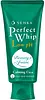
This mild gel cleanser is made to cleanse while calming and soothing your skin.

What's inside
What's inside
 Key Ingredients
Benefits
Concerns
Ingredients Side-by-side
Water
Skin ConditioningGlycerin
Humectant


Dipropylene Glycol
HumectantCocamidopropyl Betaine
Cleansing



Butylene Glycol
Humectant
Bentonite
Absorbent


Sodium Methyl Cocoyl Taurate
Cleansing
Potassium Cocoyl Glutamate
Surfactant
Xanthan Gum
EmulsifyingSodium Acetylated Hyaluronate
Humectant

Sodium Hyaluronate
Humectant
Sericin
Skin ConditioningGlycine Soja Seed Extract
Skin Conditioning
Citric Acid
Buffering

Sodium Citrate
BufferingSodium Metabisulfite
Antioxidant

Ethoxydiglycol
HumectantBis-Ethoxydiglycol Cyclohexane 1,4-Dicarboxylate
EmollientCentella Asiatica Extract
Cleansing
Potassium Sorbate
Preservative
Tocopherol
Antioxidant
Phenoxyethanol
Preservative
Parfum
Masking

CI 77288
Cosmetic ColorantWater, Glycerin, Dipropylene Glycol, Cocamidopropyl Betaine, Butylene Glycol, Bentonite, Sodium Methyl Cocoyl Taurate, Potassium Cocoyl Glutamate, Xanthan Gum, Sodium Acetylated Hyaluronate, Sodium Hyaluronate, Sericin, Glycine Soja Seed Extract, Citric Acid, Sodium Citrate, Sodium Metabisulfite, Ethoxydiglycol, Bis-Ethoxydiglycol Cyclohexane 1,4-Dicarboxylate, Centella Asiatica Extract, Potassium Sorbate, Tocopherol, Phenoxyethanol, Parfum, CI 77288
Water
Skin ConditioningStearic Acid
Cleansing

PEG-8
HumectantMyristic Acid
Cleansing
Potassium Hydroxide
BufferingGlycerin
Humectant
Lauric Acid
Cleansing
Alcohol
Antimicrobial

Butylene Glycol
Humectant
Glyceryl Stearate Se
Emulsifying
Polyquaternium-7
Parfum
Masking
Disodium EDTA
Sodium Benzoate
Masking
Sodium Metabisulfite
Antioxidant
Sodium Hyaluronate
Humectant
Sericin
Skin ConditioningSodium Acetylated Hyaluronate
Humectant
Citric Acid
Buffering
Potassium Sorbate
Preservative
Hydrolyzed Silk
Humectant
Water, Stearic Acid, PEG-8, Myristic Acid, Potassium Hydroxide, Glycerin, Lauric Acid, Alcohol, Butylene Glycol, Glyceryl Stearate Se, Polyquaternium-7, Parfum, Disodium EDTA, Sodium Benzoate, Sodium Metabisulfite, Sodium Hyaluronate, Sericin, Sodium Acetylated Hyaluronate, Citric Acid, Potassium Sorbate, Hydrolyzed Silk
Reviews
Ingredients Explained
These ingredients are found in both products.
Ingredients higher up in an ingredient list are typically present in a larger amount.
Butylene Glycol (or BG) is used within cosmetic products for a few different reasons:
Overall, Butylene Glycol is a safe and well-rounded ingredient that works well with other ingredients.
Though this ingredient works well with most skin types, some people with sensitive skin may experience a reaction such as allergic rashes, closed comedones, or itchiness.
Learn more about Butylene GlycolCitric Acid is an alpha hydroxy acid (AHA) naturally found in citrus fruits like oranges, lemons, and limes.
Like other AHAs, citric acid can exfoliate skin by breaking down the bonds that hold dead skin cells together. This helps reveal smoother and brighter skin underneath.
However, this exfoliating effect only happens at high concentrations (20%) which can be hard to find in cosmetic products.
Due to this, citric acid is usually included in small amounts as a pH adjuster. This helps keep products slightly more acidic and compatible with skin's natural pH.
In skincare formulas, citric acid can:
While it can provide some skin benefits, research shows lactic acid and glycolic acid are generally more effective and less irritating exfoliants.
Most citric acid used in skincare today is made by fermenting sugars (usually from molasses). This synthetic version is identical to the natural citrus form but easier to stabilize and use in formulations.
Rosacea skin has a lower threshold for acids generally, with 62.5% of rosacea subjects in one study reacting to lactic acid in a sting test. This is why we mark citric acid as a potential rosacea trigger.
However, this ingredient shows up as a pH adjuster or chelator at roughly 0.1-1% in many products. These low levels are unlikely to be an issue for rosacea skin and becomes a potential trigger at exfoliating concentrations (20%). Because everybody's skin is unique, we recommend a patch test if you are unsure.
Learn more about Citric AcidGlycerin (or glycerol) is a compound naturally found in your skin. It's a powerhouse humectant that pulls water into the stratum corneum.
Topically, glycerin does several things at once:
Your skin makes glycerin on its own (mostly from sebaceous oil breakdown) and shuttles it to your outermost layer of skin, or your epidermis, via aquaporin-3.
Aquaporin-3 is a transporter that is essential for normal skin hydration, elasticity, and repair. Interestingly, mice lacking in AQP3 have dry and less elastic skin that can be fully corrected with glycerin.
This ingredient is non-irritating, plays well with almost every ingredient, and works across all skin types. Typical use is anywhere between 3-10% but can go up to 79% in some leave-on products.
Just know very high concentrations (>40%) can feel tacky in low humidity.
Glycerin is the name for this ingredient in American English. British English uses Glycerol/Glycerine.
Learn more about GlycerinParfum is a catch-all term for an ingredient or more that is used to give a scent to products.
Also called "fragrance", this ingredient can be a blend of hundreds of chemicals or plant oils. This means every product with "fragrance" or "parfum" in the ingredients list is a different mixture.
For instance, Habanolide is a proprietary trade name for a specific aroma chemical. When used as a fragrance ingredient in cosmetics, most aroma chemicals fall under the broad labeling category of “FRAGRANCE” or “PARFUM” according to EU and US regulations.
The term 'parfum' or 'fragrance' is not regulated in many countries. In many cases, it is up to the brand to define this term.
For instance, many brands choose to label themselves as "fragrance-free" because they are not using synthetic fragrances. However, their products may still contain ingredients such as essential oils that are considered a fragrance by INCI standards.
One example is Calendula flower extract. Calendula is an essential oil that still imparts a scent or 'fragrance'.
Depending on the blend, the ingredients in the mixture can cause allergies and sensitivities on the skin. Some ingredients that are known EU allergens include linalool and citronellol.
Parfum can also be used to mask or cover an unpleasant scent.
The bottom line is: not all fragrances/parfum/ingredients are created equally. If you are worried about fragrances, we recommend taking a closer look at an ingredient. And of course, we always recommend speaking with a professional.
Learn more about ParfumPotassium Sorbate is a preservative used to prevent yeast and mold in products. It is commonly found in both cosmetic and food products.
This ingredient comes from potassium salt derived from sorbic acid. Sorbic acid is a natural antibiotic and effective against fungus.
Both potassium sorbate and sorbic acid can be found in baked goods, cheeses, dried meats, dried fruit, ice cream, pickles, wine, yogurt, and more.
You'll often find this ingredient used with other preservatives.
Learn more about Potassium SorbateWe don't have a description for Sericin yet.
Sodium Acetylated Hyaluronate is a type of Hyaluronic Acid.
Hyaluronic Acids help moisturize, soothe, and protect the skin.
Read about common types of Hyaluronic Acid here:
Learn more about Sodium Acetylated HyaluronateSodium Hyaluronate is the salt form of hyaluronic acid. It is a long sugar chain that is naturally found in your skin, joints, and connective tissue that maintains hydration and elasticity.
In skincare, it works as a humectant. It pulls water from the environment and deeper layers of skin and binds it to the surface.
Interestingly, the size of the molecule affects its behavior:
Some clinical evidence links low molecular weight versions to improved wrinkle depth, elasticity, anti-inflammatory effects, and barrier repair.
Many serums use a blend of both weights so you can get surface hydration plus longer-lasting and deeper effects.
You'll typically see concentrations between 0.1-2% for this ingredient.
Learn more about Sodium HyaluronateSodium metabisulfite is also known as Sodium Pyrosulfite. It is a preservative, antioxidant, and disinfectant.
As a preservative, it helps stabilize cosmetic formulas without affecting their color or scent.
Water. It's the most common cosmetic ingredient of all. You'll usually see it at the top of ingredient lists, meaning that it makes up the largest part of the product.
So why is it so popular? Water most often acts as a solvent - this means that it helps dissolve other ingredients into the formulation.
You'll also recognize water as that liquid we all need to stay alive. If you see this, drink a glass of water. Remember to stay hydrated!
Learn more about Water

